Artist
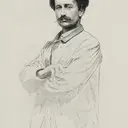
Ernest Slingeneyer
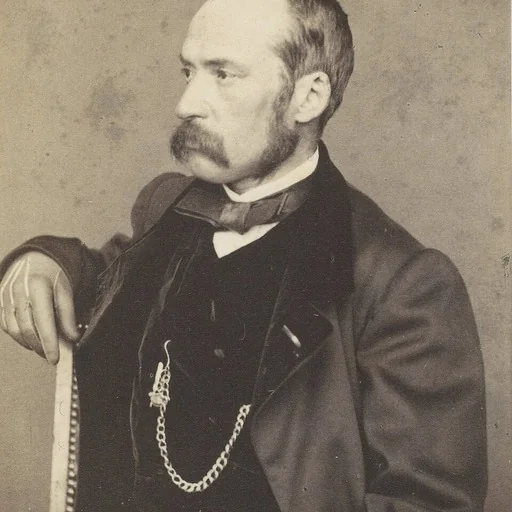
Belgian, 1820–1894
Ernest Slingeneyer was a Belgian Realism artist. 4 works are cataloged here, principally at Royal Museum of Fine Arts Antwerp. Ernest Slingeneyer was born in Lochristi.
Overview
Ernest Slingeneyer, Ernest Isidore Hubert Slingeneyer or Ernst Slingeneyer (28 May 1820 – 27 April 1894) was a Belgian painter of history paintings, portraits, genre scenes and the occasional landscape. Slingeneyer is regarded as one of the last representatives of Romanticism in Belgian painting and of Academism in Romanticism in Belgian art. In his later career he was one of the leading representatives of Orientalism in Belgium. An excellent portraitist, Slingeneyer made portraits of historical figures as well as of well-known figures from his time. Slingeneyer was also a politician and was a member of the Belgian Chamber of Representatives for the Independists of Brussels, a coalition of personalities bound by their opposition to the Radicalist liberals. As a politician he promoted Academic art and agitated against new artistic currents as promoted by, amongst others, the Société Libre des Beaux-Arts in Brussels.
Life
Ernest Slingeneyer was born in Lochristi as the second son of the tax collector Joannes Andreas Slingeneyer and Anna Marie Josephina Juliana Pauwels, a homemaker. The family moved in 1825 to Geraardsbergen and later to Antwerp. Destined for a military career, Slingeneyer met with his father's opposition to his wish to study art. In the end he was allowed to attend classes at the Academy of Fine Arts of Antwerp. Here he studied during the day painting under the leading Antwerp Romantic painter Gustaf Wappers while in the evening he took drawing classes. While still a student he exhibited a big canvas entitled The arrest of Louis, Count of Crécy which was received with critical acclaim. When a National Fund for the encouragement of historical painting art and sculpture was established by Royal Decree of 25 November 1839, Slingeneyer was quick to sign up for it. He was selected by the National Fund to paint various religious and historical subjects which he executed in an Academic and theatrical style.
Encouraged by his success he created an even more ambitious and larger composition entitled The sinking of the French battleship Le Vengeur. Its subject was an episode of the naval combat in which, on 1 June 1794, the French fleet commanded by French Admiral Louis Thomas Villaret de Joyeuse was defeated by the English fleet commanded by Richard Howe. The canvas measuring 16 square metres was exhibited in 1842. It created a sensation with its freer, more spontaneous and warmer form than that usually association with the academic school of painting. It was thus a victory for the Romanticism introduced by Slingeneyer's master Wappers. Wappers himself had been inspired by French Romanticism. The sinking of the French battleship Le Vengeur was compared with The Raft of the Medusa by the French Romantic painter Théodore Géricault.
The success of the painting secured for the young painter an elite patronage including from King William II of the Netherlands who commissioned in 1844 his The death of sea captain Claessens and King Leopold I of Belgium who bought his The death of Jacobsen, which had won the Gold Medal at the Brussels Salon of 1845. The Belgian government commissioned a large historical painting from Slingeneyer. Slingeneyer chose the Battle of Lepanto as its subject. The Battle of Lepanto was a naval engagement that took place on 7 October 1571 when a fleet of the Holy League, led by the Venetian Republic and the Spanish Empire, inflicted a major defeat on the fleet of the Ottoman Empire in the Gulf of Patras. When The battle of Lepanto was finally finished and exhibited in 1848, it fell short of expectations in spite of its qualities in terms of composition and execution. This was likely a reflection of the public's growing disappointment with the historical school of painting promoted by the faculty and alumni of the Academy of Antwerp whereas the school of Brussels was gaining in prominence. The latter had abandoned Academism in favour of a Romanticism that was less theatrical and materialistic and more sentimental and elegant. This school was represented by Louis Gallait, a pupil of Paul Delaroche. Slingeneyer was advised by his critics to go to Paris to immerse himself in the new art movements there and to leave Antwerp for Brussels. Taking this advice to heart, he traveled to the Netherlands and Germany, to Rome and to Paris. In Paris he visited the studios of Paul Delaroche, Joseph-Nicolas Robert-Fleury and Ary
Work
Ernest Slingeneyer painted history paintings, portraits, Orientalist subjects, genre scenes and the occasional landscape. A prominent member of the Belgian Romantic-historical school of painting, he was also one of its most academic representatives. Unlike other Belgian Romantic painters he did not primarily treat subjects from Belgium's history unless he received a commission to do so. Rather, he explored subjects that allowed him to create dramatic scenes that combined acts of heroism with tragedy, such as in Le Vengeur, the deaths of the sea captains such as Jacobsen, Claessens, Nelson and Camoëns, the Christian martyr, etc. In the later part of his career he focused more on Belgian themes for his great historical pieces, as witnessed by his Cry of independence. The historical themes in the decoration of the Palace of the Academies were predominantly derived from Flemish history. The reason for this is the Belgian government's decision to start promoting monumental art in Belgium from the mid 1850s. The government provided financial assistance to artists on various projects. The promotion of monumental art dealing with episodes from the Belgian national history was regarded by the government of the young Belgian state as an important means of creating a national identity. The Belgian prime minister Charles Rogier was in particular in support of this movement. Jean-François Portaels and Jean Baptiste van Eycken, both pupils of François-Joseph Navez, helped launch the monumentalist movement in Belgium. They did this by introducing into Belgium new fresco techniques such as water glass painting, which they had studied abroad. The monumentalist movement was subsequently taken up by artists such as Jan Swerts and Godfried Guffens who had learned about the movement in Germany. In 1861, the development of monumental art gained momentum thanks to the award by the minister of the interior Charles Rogier of an annual budget allocation of 30,000 Belgian Francs to support this type of art. The sum was doubled in subsequent years. It is with these funds that the Belgian government was able to pay Slingeneyer the 122,000 Belgian Francs for the large Les Gloires de Belgique (The Glories of Belgium) and a series of twelve decorative panels with historical subjects for the great hall of the Academy Palace in Brussels.
Slingeneyer was a commercially astute artist who was able to adapt to the changing taste of the moneyed class of Belgium, which initially was liberal and partly favorable to the French Revolution and also in awe of the major maritime nations of the time. This explains the subjects from French, Dutch, Portuguese and English maritime history to which Slingeneyer returned repeatedly early in his career. Around the great anniversaries of Belgium (1855 and 1880) there was a great outpouring of Belgian national feeling, while the French-speaking establishment also showed a great sympathy for the Flemish (often medieval) past. It is in this context that Slingeneyer painted his series of works of portraits and scenes of Flemish medieval heroes such a Nicolaas Zannekin, Jacob van Artevelde, Jan Breydel, Frans Anneessens, the Battle of Roosebeke. etc. Slingeneyer was also an excellent portrait painter. Further he created countless genre pieces with themes from the folk culture of Italy and North Africa, which are about the only works of Slingeneyer that can still count on the interest of today's collectors. The titles of some of these
Collections represented


Artists in a similar vein