Artist
Christian Gottlieb Kratzenstein-Stub
1783–1816
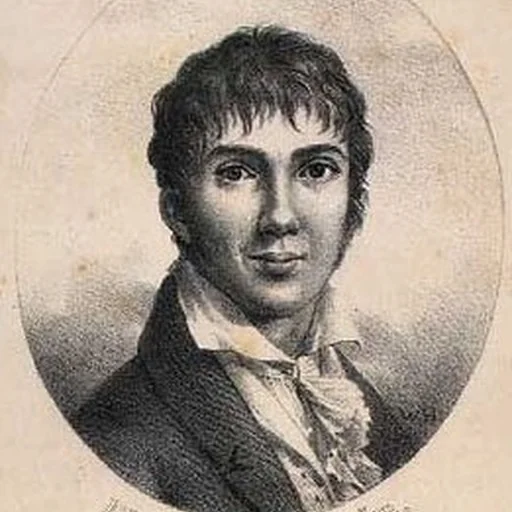
Christian Gottlieb Kratzenstein-Stub was a Biedermeier artist. 5 works are cataloged here, principally at Statens Museum for Kunst. Christian Gottlieb Kratzenstein-Stub was born in Copenhagen.
Overview
Christian Gottlieb Kratzenstein Stub (15 August 1783 – 24 July 1816), also written Kratzenstein-Stub, was a Danish Golden Age painter. He is primarily known for his mythological compositions, which were popular in Denmark during his lifetime.
Early life and education
Stub was born in Copenhagen in 1783. He was the son of Otto Frederik Stub (1753–1827), an officer in the Royal Danish Navy, and Louise Elisabeth née Kratzenstein (1757–1844). He adopted the surname of his maternal grandfather, Professor Christian Gottlieb Kratzenstein. Following his grandfather's death in 1795, Stub attended Salzmann's school near Gotha, where he showed an early artistic talent for wax figure sculptures. He returned to Copenhagen and passed the matriculation exam in 1802 with distinction. Although an inheritance initially led him to study mechanics and hydraulics, he soon transitioned to fine art. After briefly studying under Nicolai Abildgaard, Stub chose to continue his artistic development largely as self-taught.
France and Italy
To further his artistic education, Stub traveled to France and Italy in 1809. In Paris, he was influenced by François Gérard, and in Rome by Bertel Thorvaldsen. He completed the painting Cupid with the butterfly in 1810 during his Italian stay.
Return to Denmark
Returning to Copenhagen in 1811, Stub married and began producing lively portraits, primarily depicting Copenhagen’s elite. He also focused on mythological compositions, especially themes from Ossian's poetry. Although many of his compositions remained sketches, he completed notable works like Ossian and Alphin's son and Hother and the three forest nymphs, earning membership at the Danish Academy.
Death
Stub's health deteriorated after the death of his daughter. Suffering from depression and reliant on music to paint, he contracted tuberculosis in 1816 and died at Kalundborg Ladegård. He was buried at St. Olai’s Cemetery, Kalundborg.
Appreciation of his art
Stub's works were highly praised during his lifetime for their emotional beauty and skilled allegory, admired notably by Friederike Brun. His paintings were often compared to those of Asmus Jacob Carstens, reflecting lyrical beauty and sentimental charm.
Collections represented

Museum
Artists in a similar vein