Artist
Jean Delville
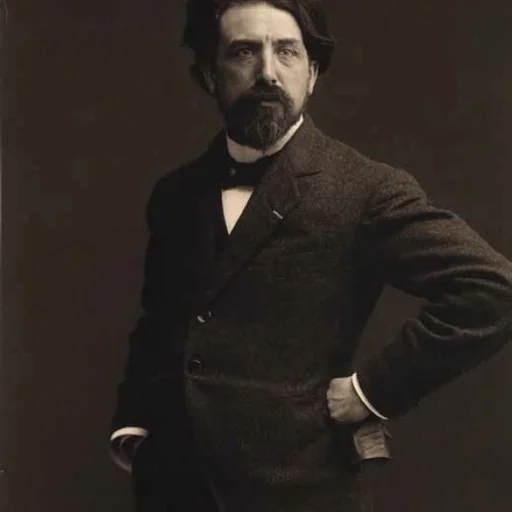
Belgian, 1867–1953
Jean Delville was a Belgian Symbolism artist. 3 works are cataloged here, principally at Groeningemuseum. Jean Delville was born in Leuven.
Overview
Jean Delville (born Jean Libert; 19 January 1867 – 19 January 1953) was a Belgian symbolist painter, author, poet, polemicist, teacher, and Theosophist. Delville was the leading exponent of the Belgian Idealist movement in art during the 1890s. He held, throughout his life, the belief that art should be the expression of a higher spiritual truth and that it should be based on the principle of Ideal, or spiritual Beauty. He executed a great number of paintings during his active career from 1887 to the end of the second World War (many now lost or destroyed) expressing his Idealist aesthetic. Delville was trained at the Académie des Beaux-arts in Brussels and proved to be a highly precocious student, winning most of the prestigious competition prizes at the Academy while still a young student. He later won the Belgian Prix de Rome which allowed him to travel to Rome and Florence and study at first hand the works of the artists of the Renaissance. During his time in Italy he created his celebrated masterpiece L'Ecole de Platon (1898), which stands as a visual summary of his Idealist aesthetic which he promoted during the 1890s in his writings, poetry and exhibitions societies, notably the Salons d'Art Idéaliste. Characteristically, Delville's paintings are idea-based, expressing philosophical ideals derived from contemporary hermetic and esoteric traditions. At the start of his career, his esoteric perspective was mostly influenced by the work of Eliphas Levi, Edouard Schuré, Joséphin Péladan and Saint-Yves d'Alveydre, and later by the Theosophical writings of Helena Blavatsky and Annie Besant. The main underlying theme of his paintings, especially during his early career, has to do with initiation and the transfiguration of the inner life of the soul towards a higher spiritual purpose. Specifically they deal with themes symbolising Ideal love, death and transfiguration as well as representations of Initiates ('light bringers'), and the relationship between the material and metaphysical dimensions. His paintings and finished drawings are an expression of a highly sensitive visionary imagination articulated through precisely observed forms drawn from nature. He also had a brilliant gift for colour and composition and excelled in the representation of human anatomy. Many of his major paintings, such as his Les Trésors de Sathan (1895), l'Homme-Dieu (1903) and Les Ames errantes (1942), represent dozens of figures intertwined in complex arrangements and painted with highly detailed anatomical accuracy. He was an astonishingly skilled draughtsman and painter capable of producing highly expressive works on a grand scale, many of which can be seen in public buildings in Brussels, including the Palais de Justice. Delville's artistic style is strongly influenced by the Classical tradition. He was a lifelong advocate of the value of the Classical training taught in the Academies. He believed that the discipline acquired as a result of this training was not an end in itself, but rather a valuable means of acquiring a solid drawing and painting technique to allow artists freely to develop their personal artistic style, without inhibiting their individual creative personality. Delville was a respected Academic art teacher. He was employed at the Glasgow School of Art from 1900 to 1906 and as Professor of drawing at the Académie des Beaux-arts in Brussels thereafter until 1937. He was also a prolific and talented author. He published a very great number
Early years and training
Delville was born on 19 January 1867 at 2:00 a.m., rue des Dominicains in Louvain. He was born illegitimate into a working class household. His mother was Barbe Libert (1833–1905), the daughter of a canal worker who earned a living as a journalière as an adult. Delville never knew his father Joachim Thibault who was a lecturer in Latin and Greek at a local college and who came from a bourgeoisie family. He bore his mother's name until she married a functionary working in Louvain, Victor Delville (1840–1918). Victor adopted Jean who, until then, was known as Jean Libert. The family moved to Brussels in 1870 and settled in Boulevard Waterloo near Porte de Hal. The Delville family later moved to St Gilles where Delville began his schooling at the Ecole Communale in rue du Fort. Delville took an early interest in drawing, even though his initial career ambitions were to become a Doctor. He was introduced to the artist Stiévenart by his adoptive grandfather, François Delville, while still a young boy. Delville recalls that this was 'the first artist I had ever seen, and for me, as a child, still unaware of my vocation, this was an enchanting experience.' At the age of twelve, Delville entered the famous Athénée Royal in Brussels. His interest in art developed around this time and he received his father's permission to enroll in evening drawing classes at the Académie des Beaux-arts in the rue du Midi in 1879. He entered the course for drawing après la tête antique (after the classical head) and in 1882 classes for drawing après le torse et figure (after torso and face). Soon after he gave up his schooling at the Athénée to study full-time at the Académie. In 1883, he enrolled in the cours de peinture d’après nature (class in painting after nature) under the direction of the celebrated teacher Jean-François Portaels (1818–1895). Portaels objected to Delville's youth, but he excelled in the entrance examination and was unconditionally admitted to study painting under Portaels and Joseph Stallaert. Delville was a precocious talent and at age 17 won many of the major prizes at the Academy including 'drawing after nature', 'painting after nature', 'historical composition' (with high distinction), 'drawing after the antique', and ‘figure painting’.
L'Essor, 1887–1891
Delville first exhibited in a public context at the moderate exhibition society called l'Essor from 1887 to 1891. His early works were largely depictions of working-class and peasant life executed in a contemporary realist style influenced by Constant Meunier. Delville's early efforts exhibited in 1887 were largely favourably reviewed in the contemporary press, notably L'Art Moderne and the Journal de Bruxelles, even if they were seen to be eclectic and derivative of the works of older established artists. These included works inspired by Baudelaire's poetry including his Frontispiece and L'épave (now lost) and his main work La Terre of which a detailed drawing still survives. The following year his works were singled out as among the most outstanding of the 1888 exhibitors at L'Essor. This was the year in which he exhibited his highly controversial study for his painting La Mère depicting a woman in labour. A contemporary review described it in the following: 'On a huge bed with purple sheets ... a dishevelled standing woman displays her nudity as she writhes in spasmodic movements, bending under the pains of childbirth. Her face is contorted, her gnashing teeth alternate with the curse, her clenched hands lift the bed cover over her belly in an unconscious reflex of modesty ... abominable vision ....! and poor women!' This subject, rarely depicted in art, was seen to be shocking and contrary to bourgeois taste. It does however signal an aspect of Delville's art to depict ideas that are vivid and provocative. During the 1880s, Delville's work tended towards social realism. This included images of workers and peasants (Soir and Paysan, 1888); of beggars and destitution (Asile de nuit, 1885); of hunger (L’Affamé,1887) and ultimately of death (Le Dernier Sommeil, 1888). Here he focussed on themes of poverty, despair and hopelessness. In an undated drawing titled Le las d’Aller Delville depicts a fallen figure curled up on his side in a barren landscape, asleep, or perhaps even dead. However, during the period 1888–1889 his artistic interests started developing in a more non-realist direction and began to move towards Idealism, which dominated his work from then on. This was first indicated in his Fragment d’une composition: Le cycle de la passion (now lost) displayed at L'Essor in 1889. The final work Le Cycle passionnel (9 × 6 metres) was displayed at L'Essor the following year (1890) and was inspired by Dante's Divine Comedy. It depicts a vast composition of intertwined figures floating through the nether regions of hell. The theme concerns lovers who have succumbed to their erotic passions. One of the main themes of initiation is to control one's lower passions in order to achieve spiritual transcendence. This painting of this work represents this idea in metaphoric form. This is an early major work by Delville sadly destroyed in the incendiary attack on Louvain in 1914. Despite its importance, it was not received with much enthusiasm in the contemporary press. Another work that display Delville's growing interest in non-realist ideas during the 1880s is his more well-known Tristan et Yseult (Royal Museums of Fine Art, Brussels, 1887). The work is inspired by Wagner's eponymous opera and deals with the relationship between love and death and the idea of transcendence that can be achieved through both. It is an early work that reveals themes closely related to the initiatory tradition which is fully discussed in Brendan Cole's recent bo
Pour L'Art 1892–1895
Delville's growing interest in Idealist art led him to instigate a succession from L'Essor to start a new exhibition society called Pour L'Art. Many of the younger artists of L'Essor followed him which led to the dissolution of that group. Pour L'Art became one of the noted avant-garde exhibition societies on Brussels at the time. The leading avant-garde exhibition forum at the time was Les XX. Following Les XX, Pour L'Art invited international artists as well, several of whom became well known in Symbolist circles, including Carlos Schwabe, Alexandre Séon, Charles Filiger and Jan Verkade. Their first exhibition took place in November 1892 and the works displayed were executed in either an Impressionist or Symbolist idiom. Delville designed the poster for the first exhibition depicting a long-necked sphinx – a key symbol of the period – cupping a flaming chalice in her hands. Delville's main work of that year was his L'Idole de la Perversité which can be considered one of the major images of the period. The new group received a largely positive press during the time. The group was closely associated with Joséphin Péladan's Salons de la Rose + Croix in Paris, and Péladan was frequently invited to lecture in Brussels at the time by members of the Pour L'Art group. The second exhibition of the Pour L'Art group took place in January 1894. Significantly the society also included the applied, or decorative arts, which were become widely popular at the time and a particular feature of Art Nouveau. Tapestries, book-bindings, and wrought-iron work were displayed alongside the paintings. The influence of Delville and Péladan was evident in the predominance of idealist works of art influenced by late fifteenth-century Florentine art, the work of Gustave Moreau, Puvis de Chavannes and the tendency towards large-scale figure compositions. The show was enthusiastically received by the press. Delville's main works exhibited that year were his celebrated La Mort d'Orphée (1893, Royal Museums of Fine Art, Brussels) and his Mysteriosa or Portrait of Mrs Stuart Madame Stuart Merrill (1892, Royal Museums of Fine Art, Brussels). His work was enthusiastically praised in the press. The leading critic Ernest Verlant wrote:
One of the principal members of the Pour L'Art group, in view of his talent and astonishing fecundity, is Jean Delville, who is also a writer and a poet; with a powerful imagination that is funereal and tormented. These epithets are equally suited to his large painting La Proie, a crimson vision of apocalyptic murder, similar to his vast composition from last year, Vers l’inconnu, and of several before that. … Here and there, for example, in L’homme du glaive, the Murmure profane, and Mysteriosa, he pushes the intensity of expression to its extreme. Elsewhere, as in Satana, he draws together, rather bizarrely, esoteric attributes in a figure derived from da Vinci. But we are able only to express praise in front of Orphée, a dead head floating between the shafts of a large lyre; in front of Elegia, a long and supple female body appearing under the spurting and cascading waters of a fountain; in front of Au Loin and Maternitas, two figures pensively leaning on their elbows, of which the first of the two has a great nobility. These works are monochrome, or nearly so. Their expression is accurate, fine, subtle, refined, not too explicit, and all the more eloquent. The final Pour L'Art show took place in January 1895. Delville also participated
Delville and Péladan's Salons de la Rose + Croix 1892–1895
Delville exhibited at Joséphin Péladan's Salons de la Rose + Croix for the first four years of their existence (1892–1895), which coincided with his own Pour l'Art salons. At this time Delville was closely allied to Péladan and his ideals. Delville probably met Péladan in Paris when he accompanied one of the touring exhibitions of L'Essor, around 1888. Delville shared Péladan's concept of creating a forum that showcased art of an exclusively Idealist persuasion. Delville sought to bring Idealist art into the public eye in Belgium through the Pour l'Art salons, but more specifically in the Salons d'Art Idéalist which he founded in 1895 and opened to the public in 1896. By 1896, Delville began severing formal ties with Péladan, which cleared the way for his move towards Theosophy later that decade. Delville records his association with Péladan in his autobiography:
'... my personality as an idealist painter emerged more and more. I made the acquaintance of Péladan and became interested in and started participating in the esoteric movement in Paris and Brussels. I exhibited at the Rosicrucian Salon where only idealist art was allowed. Péladan exhibited several of my works there, notably La Mort d’Orphée which he placed at the centre of the exhibition, along with La chair et l’esprit and some drawings. Under his influence, I went to live in Paris, where I stayed on the Quai Bourbon among some Rosicrucian friends, disciples of Péladan. I stayed there for several months occupying my time not only with the organization of the Péladanesque salons, but also in painting the set of Babylone which was an overall success.'
Salon de la Rose + Croix: 1892
In 1892, at the first Salon, Delville exhibited his La symbolisation de la chair et de l’esprit (which was reproduced in the catalogue to the first exhibition) as well as his l’Idole de la Perversité.
Salon de la Rose + Croix: 1893
In 1893, at the second Salon, Delville exhibited eight works: Imperia; Élegia; La symbolisation de la chair et de l’esprit; L’Annonciateur; Le Murmure profane; Mysteriosa; Vers l’Inconnu; and L’Homme de Glaive.
Salon de la Rose + Croix: 1894
In 1894, at the third Salon, Delville exhibited seven works: La Mort d’Orphée; La Fin d’un règne; Le Geste d’Ame; Satana; Maternitas; Etude féminine; and La Tranquille.
Salon de la Rose + Croix: 1895
In 1895, at the fourth and final Salon, Delville exhibited four works, including his portrait of Péladan: Portrait du Grand Maître de la Rose+Croix en habit de choeur and L’Ange des splendeurs. Many of these works would be displayed in Brussels as well in Delville's Pour l'Art exhibitions.
Prix de Rome and sojourn in Italy, 1895
Delville lived as an indigent artist in St Gilles in Brussels during the course of his early career. By the middle of the 1890s he was married and had a growing family which he struggled to support as an artist. On the advice of his close friend, the sculptor Victor Rousseau, he was motivated to enter the prestigious Prix de Rome, which came with a very generous bursary that also covered the costs for a lengthy sojourn in Italy. Delville won the 1895 competition, but his entry created a controversy amongst his peers given the 'Establishment' nature of the Prix that ran counter to the ideals of the avant-garde at the time. Delville was by then a fairly established figure in avant-garde circles and his association with the Prix de Rome appeared to be a betrayal of their cause. The Prix de Rome, however, also meant that Delville could spend a significant amount of time in Italy studying the Classical art of the Renaissance that he admired so much. The rules of the competition were stringent. Competitors were isolated in small studios in the Academy of Fine Arts in Antwerp which ran the competition and were expected to produce a finished drawing of their composition before setting to work on the final painting. A strict time-limit was imposed on competitors to finish the work. The competition opened in June 1895 and the winner was announced in October. The theme of the competition that year was Le Christ glorifié par les enfants. Delville recorded his experience in his autobiography:
The rules were demanding … At that time the six selected competitors for the final exam had to paint their work in a secluded lodge, after leaving the original preliminary drawing in a hallway of the Antwerp Academy. It was strictly forbidden to bring any drawings into the lodge, only live models were allowed there. While working on their painting, the competitors had to change their clothes each time they entered their lodge, after having been visited by a specially appointed supervisor. These procedural requirements were the moral guarantee of this great contest in which these artists from the country took part…. As soon as they were selected, they entered into a lodge in order to produce, over three days, the sketch of the requisite painting, and they were given eighty days to complete it without receiving any visitors or advice from anyone – in order to ensure that the competitors were the unique and personal author of the work so that the jury, composed of the country’s most well-known artists, could cast a definitive judgement. During his stay Delville was expected to paint original works reflecting his studies of classical art as well as to make copies after the old masters. He was also expected to send regular reports back to the Antwerp Academy relating to his work there. The experience proved to be a turning point in his career and brought to focus his ideal to synthesise the classical tendency in art with his interest in esoteric philosophy which was the defining attribute of his Idealist aesthetic form then onwards. Delville produced several remarkable paintings during his time in Rome that reflect a dramatic evolution in his art towards a more refined expression of this Idealist aesthetic. These included his outstanding Orphée aux enfers (1896), a key initiatory work, as well as his great masterpiece of the period, his L'Ecole de Platon (1898), which he exhibited at the 1898 Salon d'Art Idéalist to universal praise. In 1895, Delville published his
The Salons d'Art Idéaliste 1896–1898
Delville's Salons D'Art Idéaliste were exclusively devoted to exhibiting artwork of an Idealist nature. Delville signalled his programme in a series of polemical articles during the course of the months preceding the opening of the first Salon, which created some controversy amongst his contemporaries. Delville's ideas were bold and confrontational, but it was characteristic of him to stick to the courage of his convictions and to carry his projects through with relentless energy and determination. The aim of the Salons were couched in a short manifesto published before the opening of the first Salon. This is an early instance of a new avant-garde art movement supported by a manifesto, something that would be a commonplace in later Modernist movements and after. The salons were also accompanied by a series of lectures and musical soirées. Delville's salons were also significant for their inclusion of women artists, something almost unheard of in other contemporary avant-garde exhibition societies. The manifesto provides a valuable record of the Idealist movement founded by Delville:
The intention of the Salons d’Art Idéaliste is to give rise to an aesthetic Renaissance in Belgium. They bring together, in one annual grouping, all the scattered elements of artistic idealism, that is to say, works with the same leanings towards beauty. Wishing in this way to react against the decadence, against the confusion of the so-called realist, impressionist or libriste schools (degenerate art forms), the Salons d’Art Idéaliste champion the following as eternal principles of perfection in a work of art: thought, style, and technique. The only thing they recognize as free, within aesthetics, is the creative personality of the artist, and maintain, in the name of harmony, that no work is susceptible to true art unless it is composed of the three absolute terms, namely: spiritual beauty, plastic beauty and technical beauty. Similar, if not identical, to the Parisian Rose & Croix Salons created by Sâr Joséphin Péladan and to the Pre-Raphaelite movement in London, the Salons d’Art Idéaliste claim to wish to continue, through modern developments, the great tradition of idealist art, from the ancient masters to present-day masters. Delville's main work exhibited that year was his visionary Trésors de Sathan (1895, Royal Museums of Fine Art, Brussels). The work had previously been on show at the Salon de Gand. The depiction of a satanic figure represented under water was unique in Western Art. Instead of wings he is represented with long octopus tentacles. His 'treasures' are the sleeping figures surrounded with jewels and gold coins, objects representing materialism and avarice. The figures show no sign of torment, but are rather represented in a state of somnolent bliss, as though they have succumbed to all that is 'satanic' in Delville's occult view: sensual pleasure and materialism. The work is an apotropaic icon against the snares of the lower passions and the world of matter and sensuality generally. The second Salon took place in March 1897 at Edmond Picard's arts venue, la Maison d'Art. Delville's contributions were small and included his Orphée aux Enfers, Parsifal and L’Oracle à Dodone, which are now, apart from Parsifal, in private collections. At the time Delville was in Italy on his prescribed sojourn there after winning the coveted Prix de Rome. The show received largely positive reviews in the press and Delville's Salons were becoming more w
After 1900
In 1895, Delville published his Dialogue entre nous, a text in which he outlined his views on occultism and esoteric philosophy. Brendan Cole discusses this text in detail his book on Delville, pointing out that, although the Dialogue reflects the ideas of a number of occultists, it also reveals a new interest in Theosophy. In the late 1890s, Delville joined the Theosophical Society. He was probably introduced to Theosophy directly through his friendship with Edouard Schuré, the author of the widely influential book Les Grandes Initiés. Schuré wrote the preface to Delville's work on Idealist Art, La Mission de l'Art (1900). Delville also came into close alliance with Annie Besant who inherited the leadership of the Theosophical movement. Besant gave a series of lectures in Brussels in 1899 titled La Sagesse Antique. Delville reviewed her talks in an article published in Le Thyrse that year. It is probably from this point onwards that Delville became actively involved in the Theosophical Movements as such. Delville founded La Lumière, a journal devoted to Theosophical ideas in 1899, and published articles from leading Theosophists of the day, including Besant. Delville became the first General Secretary of the Belgian branch of the Theosophical Society in 1911. Delville's art flourished after 1900 and he produced some of his greatest works during this period up to the First World War. He worked with undiminished strength and imagination and his paintings revealed a visionary sense of the transcendental inspired by his involvement in the Theosophical movement, seen typically in works such as his monumental L'Homme-Dieu (1903, Brughes: Groeninge Museum) and Prométhée (1907, Free University Brussels). His most striking achievement, however, is his series of five vast canvases that decorated the Cour d'Assises in the Palais de Justice on the theme of 'Justice through the Ages'. These works, monumental in conception and scale and no doubt amongst his finest, were unfortunately destroyed during the second World War as a result of German bombing of the Palais de Justice on 3 September 1944. The irony of this action in relation to the theme of this cycle of paintings cannot be overlooked. Small-scale replacements were installed during the reconstruction of the Palais after the War. The gigantic original central painting, titled La Justice, la Loi et la Pitié, measured 11 metres by 4.5 metres. This worked was flanked by two works, La Justice de Moïse and La Justice chrétienne (both 4 by 3 metres). The two remaining panels represents Justice of the past and present: La Justice d'autrefois and La Justice moderne.
Professor at the Glasgow School of Art, 1900–1906
Delville hoped to secure a teaching place at the Academy in Brussels, but was offered instead a teaching position at the flourishing Glasgow School of Art in 1900. His tenure there was highly successful, and the works of the students he trained were celebrated at the annual exhibitions in London. When Delville returned to Brussels in 1907, many of his British students followed him to further their training under his tutelage in his private studio in rue Morris. At that time, Delville fulfilled his ambition to teach at the Brussels Academy and was appointed Professor of Life Studies, a post he held until his retirement in 1937.
The First World War: Exile in London 1914–1918
When war broke out, Delville, amongst many Belgians, was welcomed in Britain as exiles. He moved there with his entire family, including his wife and four younger children and settled in Golders Green in London. His two oldest sons, Elie and Raphaël Delville, were conscripted into the Belgian war effort (both survived the conflict). Delville played an active role in London through his writings, art and public addresses (he was a gifted orator) in support of the Belgians in exile and the conflict against the Germans. He contributed to the Belgian expatriate newspaper in London, L'Indépendance Belge and wrote several articles and poems virulently condemning German aggression. He was an active member of the philanthropic society for Belgian refugees, La Ligue des Patriotes de Belgique, and was the president of La Ligue des Artistes belges that was responsible for the creation of the successful publication Belgian Art in Exile, the sale of which raised money for Belgian charities in England. The work contains a great number of representative paintings and other works of art by contemporary Belgian artists. The volume was generally well received. The Sketch ran a supportive editorial in their January edition and gave informative information about the volume:
Belgian Art in Exile is the title of a very attractive album of reproductions, mostly in colour, of paintings by exiled Belgian artists, with photographs of works by Belgian sculptors, which has been issued in aid of the Belgian Red Cross and other Belgian charitable institutions. The colour-plates, which are beautifully reproduced, show the high quality and great versatility of modern Belgian art. Particularly notable is a picture of a Moorish cavalry charge, by Alfred Bastien, who since he came to this country has done some fine work for the Illustrated London News. Among many other well-known Belgian artists represented are Albert Baertsoen, Jean Delville, Emile Claus, Herman Richir, Comte Jacques de Lalaing, and Paul Dubois. A fine painting by Frank Brangwyn – Mater Dolorosa Belgica – forms a pictorial introduction", as the frontispiece. Maeterlinck contributes a eulogy of King Albert, and there are poems by Emile Verhaeren, Marcel Wyseur, and Jean Delville, who also writes an introduction. The volume is published by Colour (25, Victoria Street, S.W. at 5s. and (in cloth) 73. 6d., with a limited edition de luxe at £1. Both for itself and the cause it should command a wide sale. At that time Delville was also an active Freemason and was involved in La Loge Albert 1er that reunited Belgian Freemasons in exile living in Britain. His time in exile also inspired several important paintings, including: La Belgique indomptable (1916), depicting a sword-wielding allegorical female figure holding off an attacking Germanic eagle, Les Mères (1919), depicting a group of mourning mothers surrounded by dead corpses of their fallen sons, and Sur l'Autel de la patrie (1918), a modern pieta depicting a female figure with the corpse of a bleeding dead soldier at her feet. His most notable work of this period is his Les Forces (completed in 1924), depicting two vast celestial armies confronting each other. The forces of light, represented on the right, are led by a Christ-like figure seated on a horse and a torch-bearing winged figure leading an army of angels into the fray against a battalion of dark forces streaming in from the left. The work is on open display in the Palais de Justice in the vast c
Collections represented

Museum

Artists in a similar vein