Artwork
View of the North Coast of Zealand at Dronningmølle
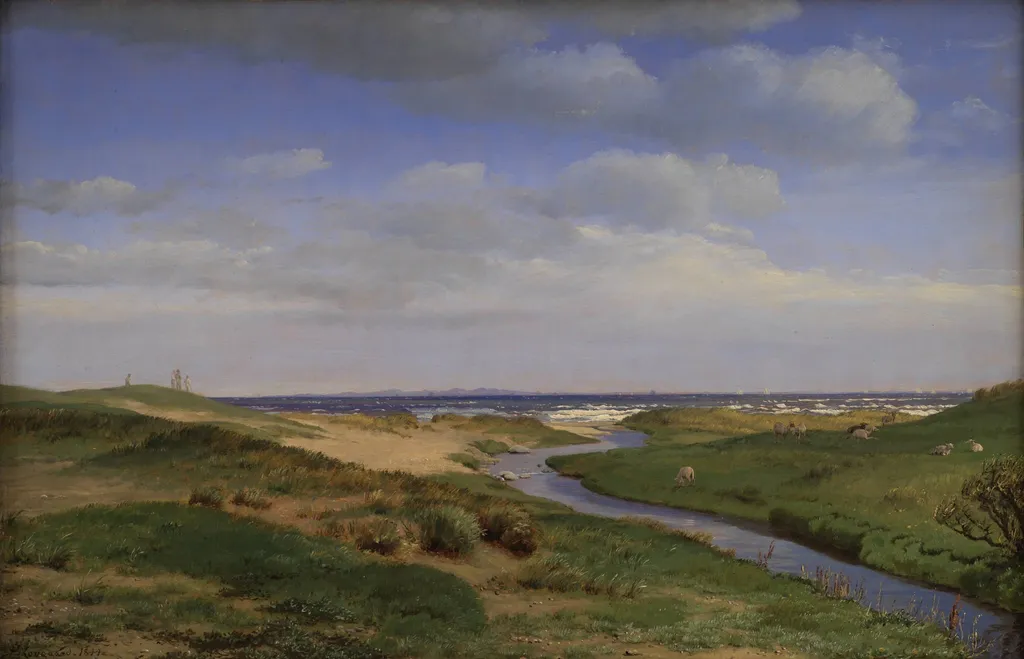
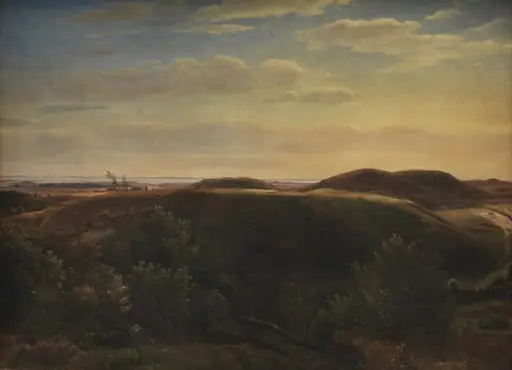
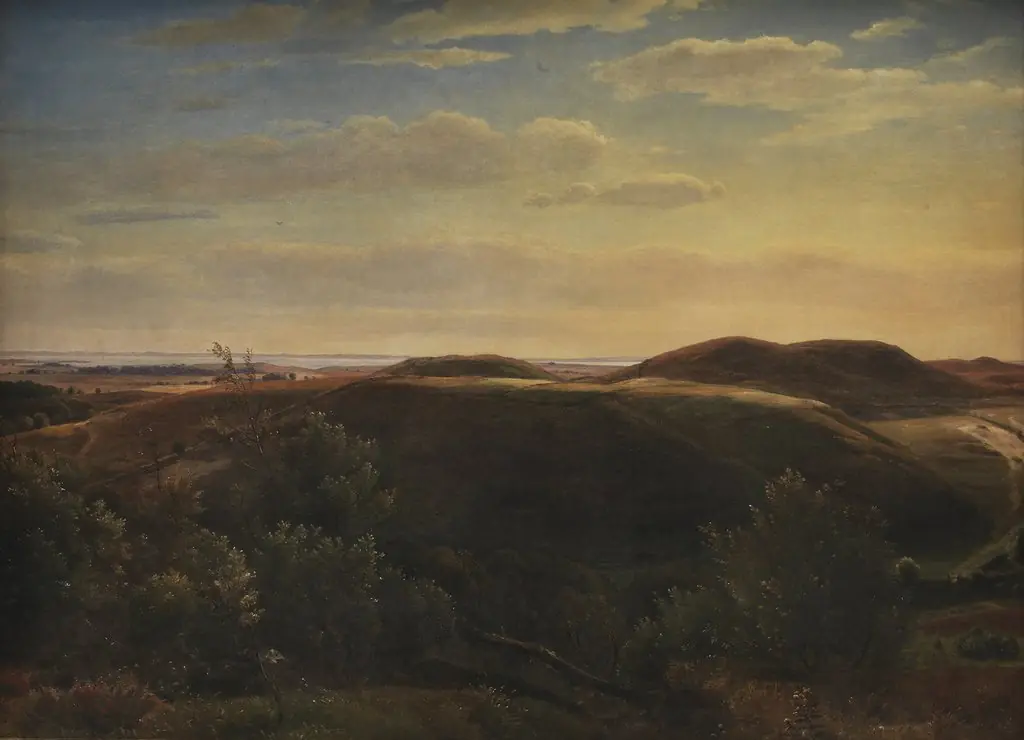
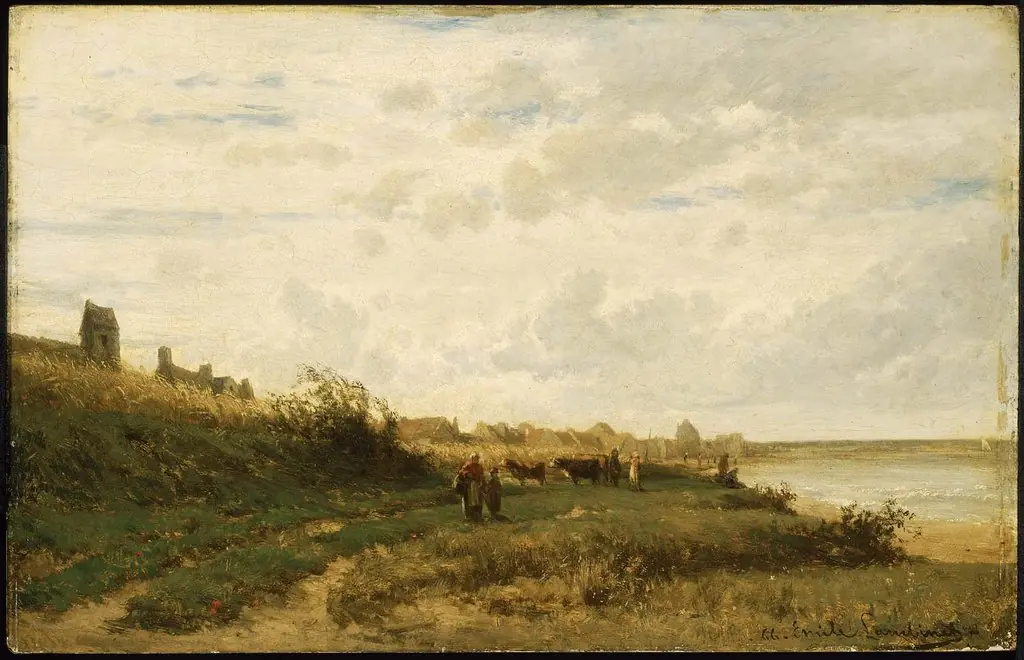
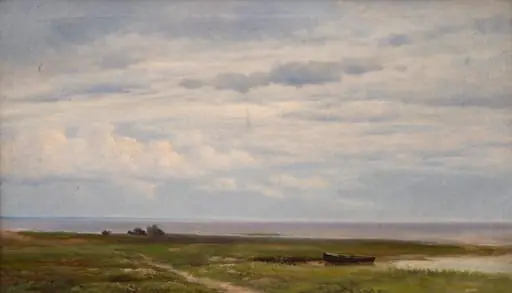
View of the North Coast of Zealand at Dronningmølle is a photography by the Romanticist artist Unknown. It dates from 1844 and is held in the collection of the Statens Museum for Kunst. Painted in 1844, this landscape depicts the northern coastline of Zealand near Dronningmølle.
About this work
Overview
Painted in 1844, this landscape depicts the northern coastline of Zealand near Dronningmølle. It captures a quiet stretch of shore where land meets sea, rendered with attention to natural elements rather than human activity. The work belongs to a collection focused on cultural artifacts, though its subject is purely environmental. Its scale and composition emphasize stillness and spatial depth.
Subject & Meaning
The painting invites quiet observation, aligning with 19th-century ideals of nature as a space for reflection and emotional resonance.
The scene presents an unpopulated coastal expanse, with only two distant figures observing the horizon. Their small scale underscores nature’s vastness, suggesting contemplation rather than narrative. The absence of buildings or industry reinforces a sense of solitude. The painting invites quiet observation, aligning with 19th-century ideals of nature as a space for reflection and emotional resonance.
Technique & Style
The artist employs soft brushwork to render light across grass, sand, and water, creating subtle tonal shifts. The sky, rendered in pale blues and whites, contrasts gently with the earth tones below. Horizontal bands of land, sea, and sky establish balance, while the winding stream introduces a quiet rhythm. Details are observed closely but not exaggerated, favoring atmospheric harmony over dramatic effect.
History & Provenance
The painting entered the Museum of Ethnography’s collection in the late 19th century, likely through donation or acquisition tied to Scandinavian cultural documentation. Its classification within an ethnographic institution reflects period practices of grouping natural landscapes with cultural records. No significant alterations or restorations are documented, preserving its original condition.
Context
Created during the height of Romanticism in Northern Europe, the work aligns with broader trends favoring nature as a source of spiritual and emotional depth. While not overtly symbolic, its emphasis on solitude and light echoes contemporaneous Scandinavian landscape traditions. Unlike urban scenes popular in other regions, this painting reflects a regional preference for undeveloped coastlines and quiet rural vistas.
Legacy
The painting remains a quiet example of mid-19th-century Danish landscape observation. It contributes to understanding how artists of the time engaged with local topography without idealization. Though not widely exhibited, it continues to be studied for its restrained technique and its role in documenting regional perceptions of nature during a period of rapid industrial change.
Artist & collection

 Domestic Scene
 Giacomo and Cardinal Marco, investing Andrea, Abbot of San Zeno, with his Benefice
 The Nymph of Fontainebleau
 Portrait of a Woman
 Madonna and Child with Saints in the Enclosed Garden
 Venus and Minerva
 Family Group of Four on Sofa
 Wall painting from Room H of the Villa of P. Fannius Synistor at Boscoreale