Artwork
A Visit to a Cobbler's Workshop
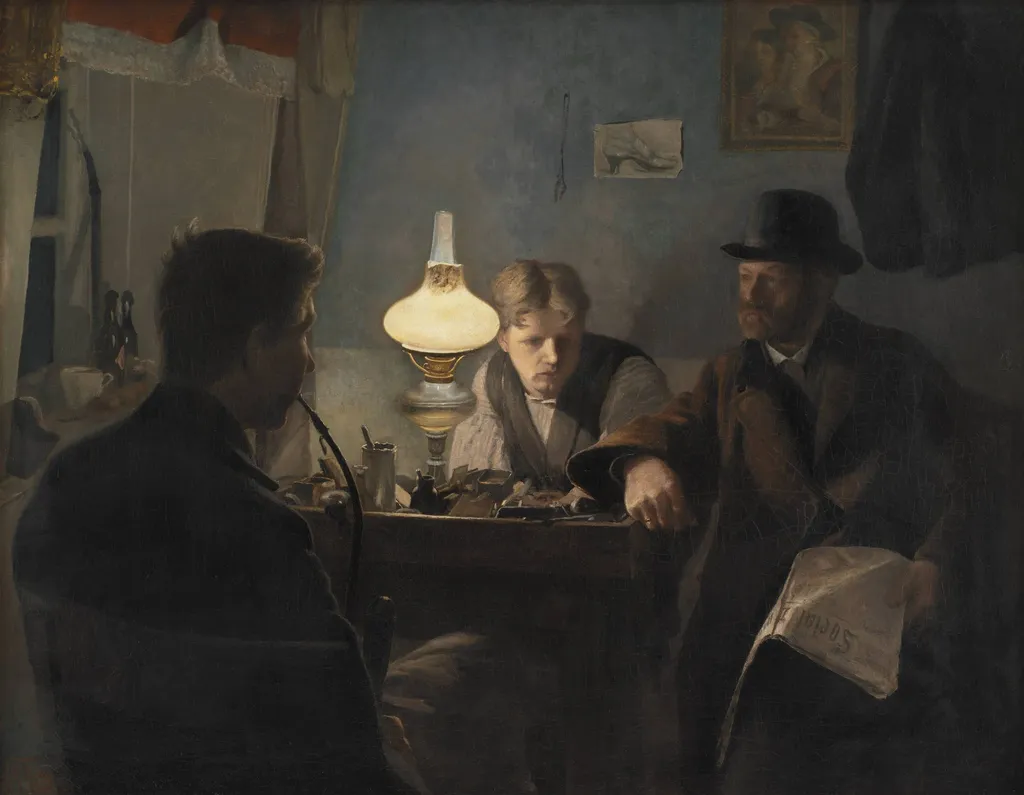
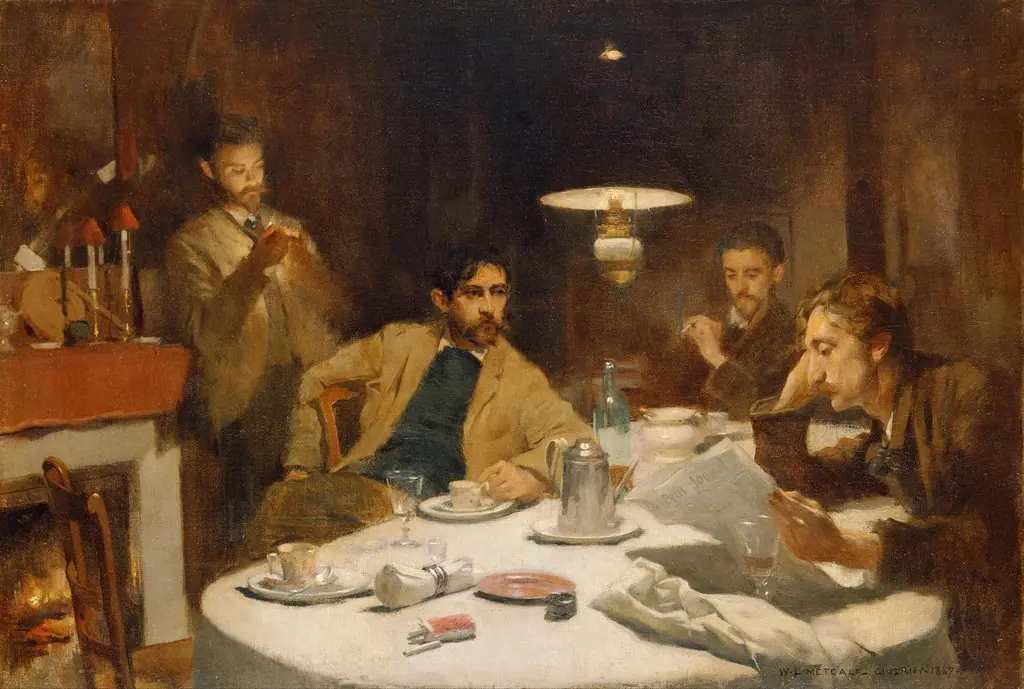
A Visit to a Cobbler's Workshop is a photography by the Impressionist artist Unknown. It dates from 1885 and is held in the collection of the Statens Museum for Kunst. Painted in 1885 by 1049_person, this work depicts an interior scene in a cobbler’s workshop.
About this work
Overview
Painted in 1885 by 1049_person, this work depicts an interior scene in a cobbler’s workshop. It is part of the collection at the Museum of Ethnography. The composition centers on three male figures engaged in quiet, solitary activities within a modest, dimly lit space. The lighting and spatial arrangement suggest a moment of stillness, emphasizing the ordinary rhythms of labor and leisure.
Subject & Meaning
The presence of the suit-clad man introduces an outsider’s perspective, subtly questioning the boundaries between labor and observation.
The scene portrays three men in a shared but disconnected space: a cobbler absorbed in his craft, a fellow worker smoking a pipe, and a formally dressed visitor reading a newspaper. Their physical proximity contrasts with their emotional distance, hinting at social stratification within a working-class environment. The presence of the suit-clad man introduces an outsider’s perspective, subtly questioning the boundaries between labor and observation.
Technique & Style
The artist employs chiaroscuro to model forms with soft contrasts between light and shadow, enhancing the three-dimensionality of the figures and objects. The warm glow from a single lamp anchors the composition, drawing attention to the cobbler’s hands and the tools on the table. Brushwork is restrained, favoring texture over detail, which reinforces the quiet, introspective mood of the scene.
History & Provenance
The painting entered the Museum of Ethnography’s collection shortly after its creation, likely through direct acquisition or donation. Its preservation in an institution focused on cultural artifacts suggests an early recognition of its documentary value. No significant alterations or restorations are recorded, and its provenance remains consistent since the late 19th century.
Context
Created during a period of industrial change, the painting reflects lingering traditions in artisanal trades. While urbanization and mechanization were transforming labor, this scene preserves a moment of handcraft in a time of transition. The inclusion of a newspaper hints at the encroachment of modern media into private, working spaces, adding a layer of social commentary to the quiet setting.
Legacy
Though not widely exhibited outside its home institution, the work is cited in studies of 19th-century labor representation and genre painting. Its restrained realism and psychological nuance influenced later artists interested in everyday life. It remains a quiet testament to the dignity of manual work, valued more for its observational honesty than for dramatic impact.
Artist & collection

 Domestic Scene
 Giacomo and Cardinal Marco, investing Andrea, Abbot of San Zeno, with his Benefice
 The Nymph of Fontainebleau
 Portrait of a Woman
 Madonna and Child with Saints in the Enclosed Garden
 Venus and Minerva
 Family Group of Four on Sofa
 Wall painting from Room H of the Villa of P. Fannius Synistor at Boscoreale
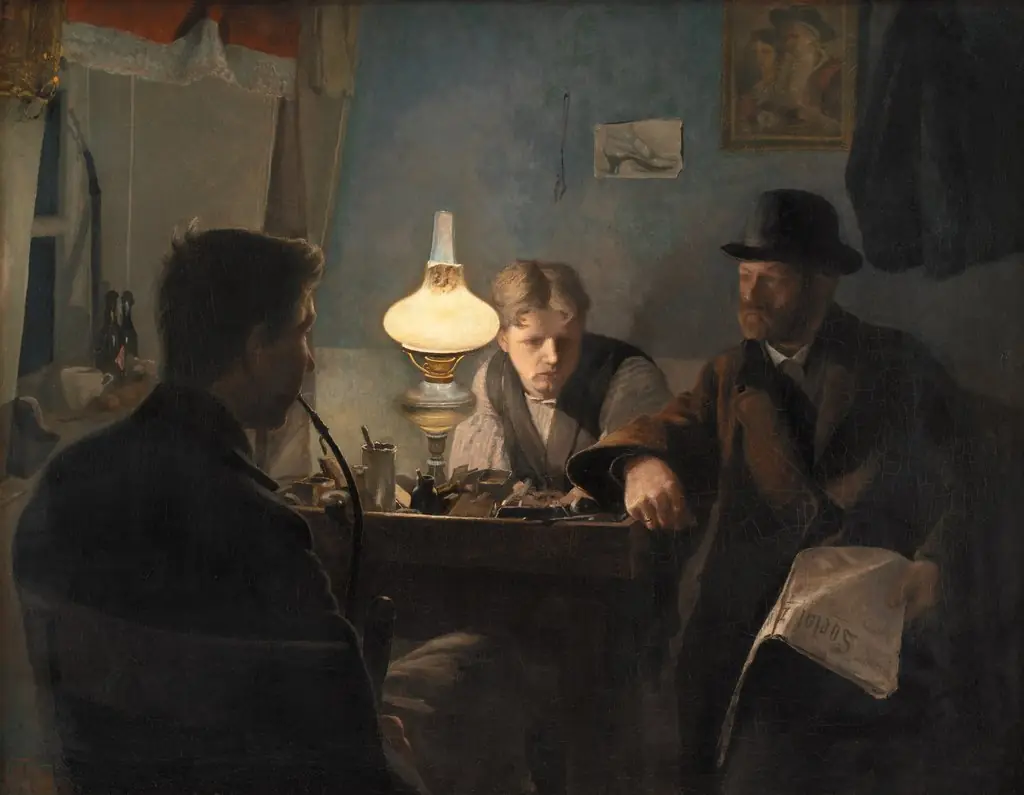 Et besøg i et skomagerværksted
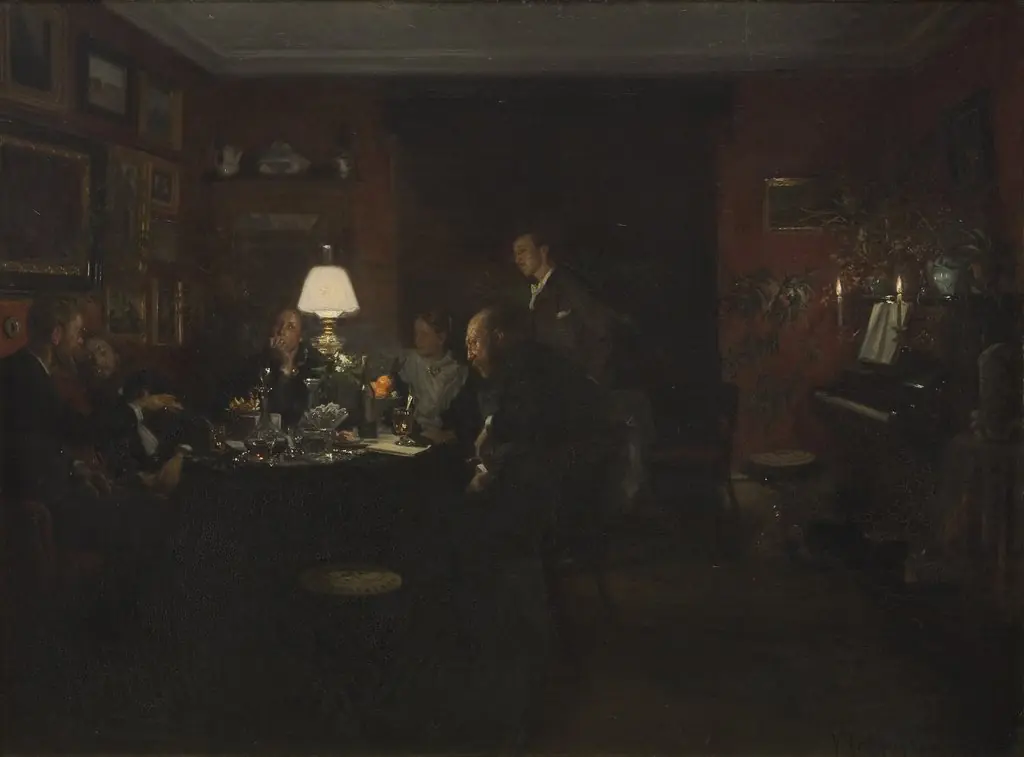 Evening talk
 Evening Talk
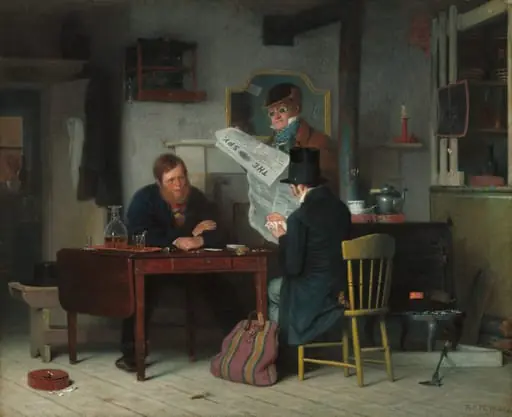 Waiting for the Stage
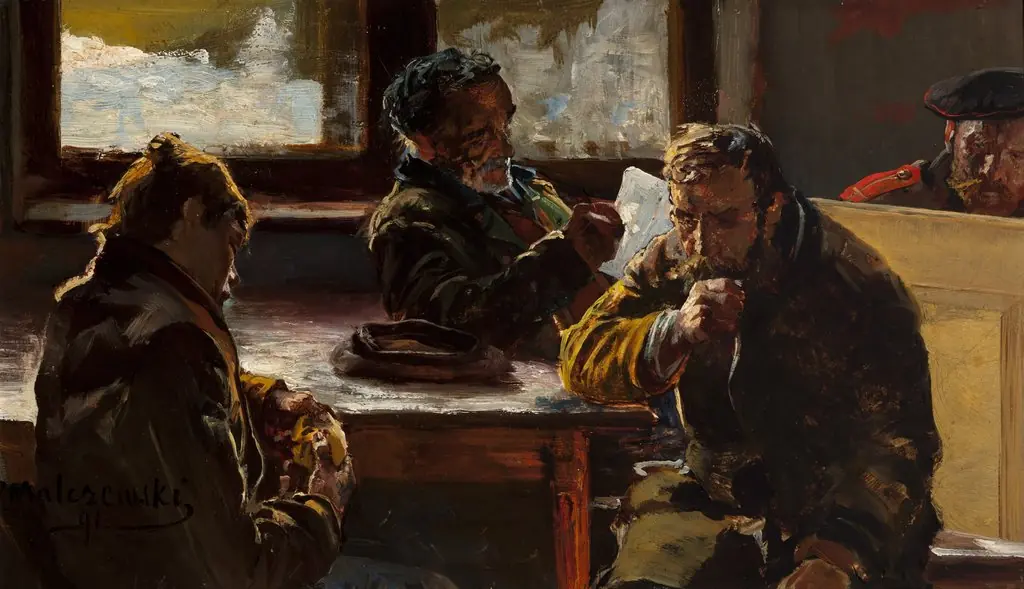 Exiles
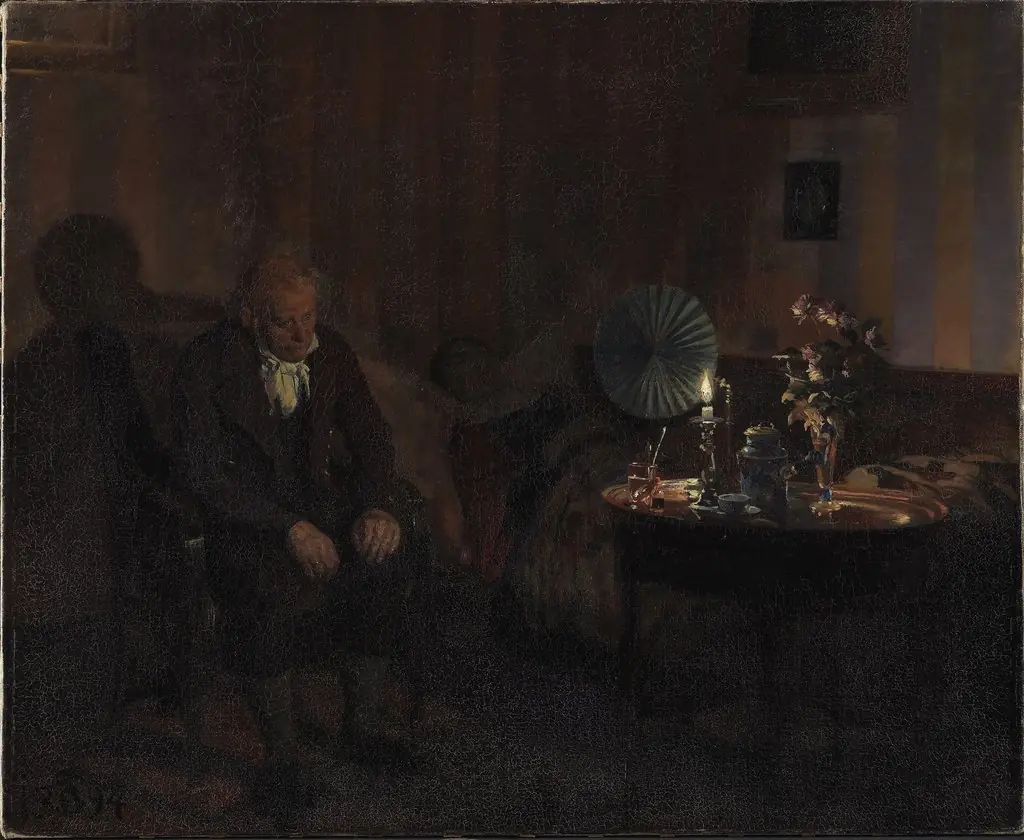 Rahbek ved sin hustrus dødsleje
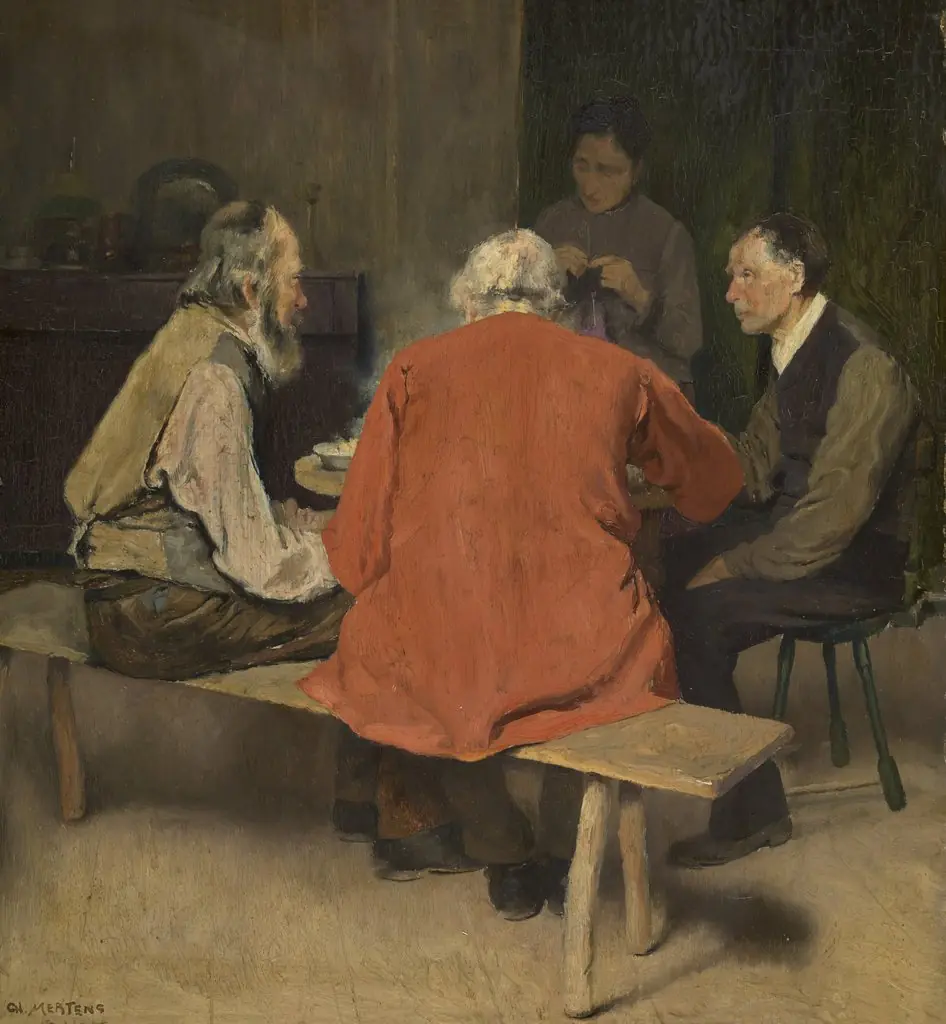 The Meal
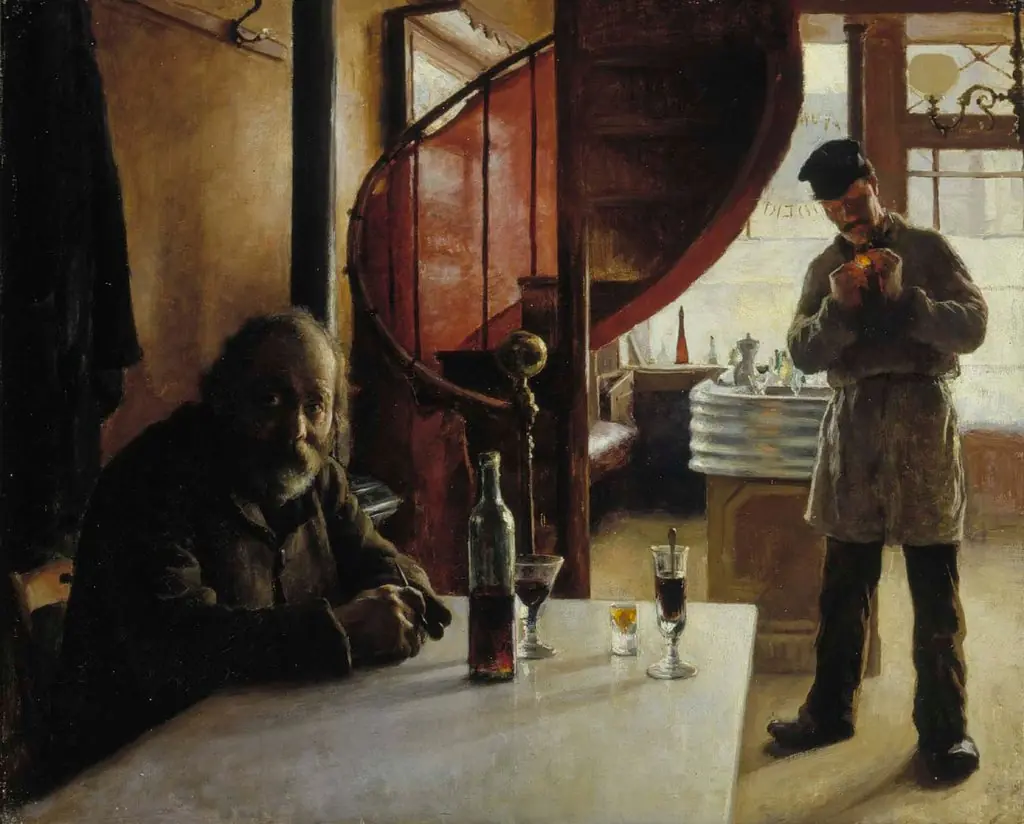 Le Franc, Wine Merchant, Boulevard de Clichy, Paris
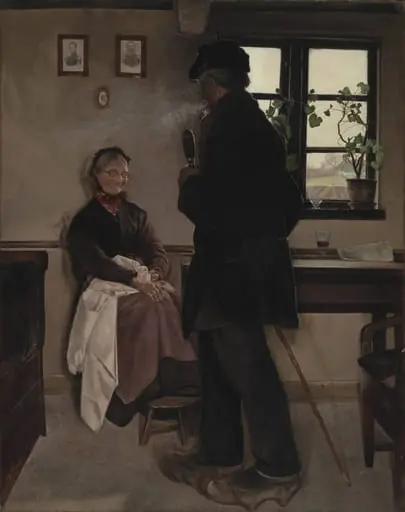 Small-Holders. Sealand
 Ranskalainen viinikapakka
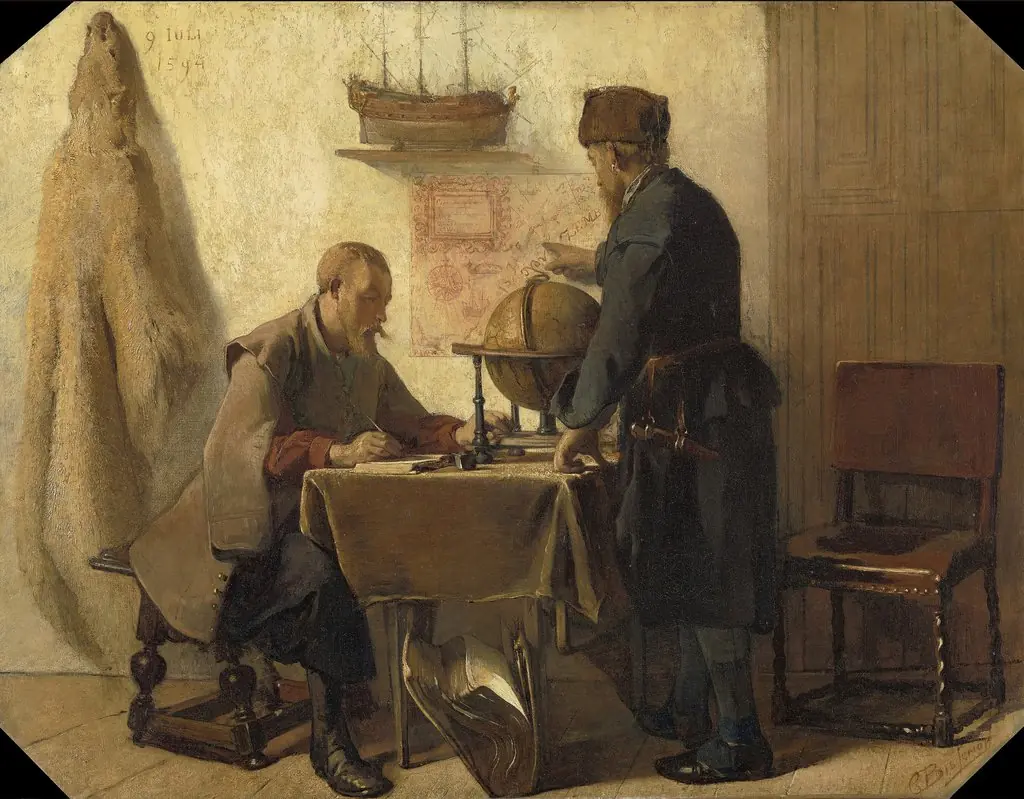 Heemskerck and Barents Planning their Second Expedition to the Far North
 The Ten Cent Breakfast