Artwork
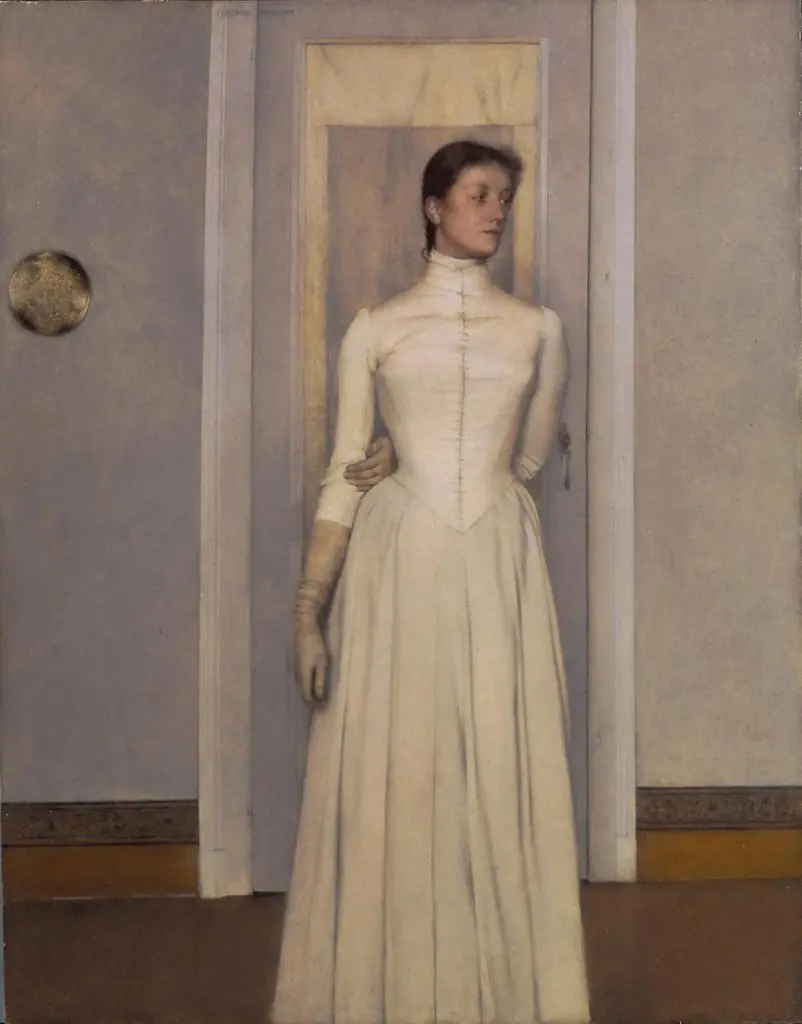
At the French Windows. The Artist's Wife
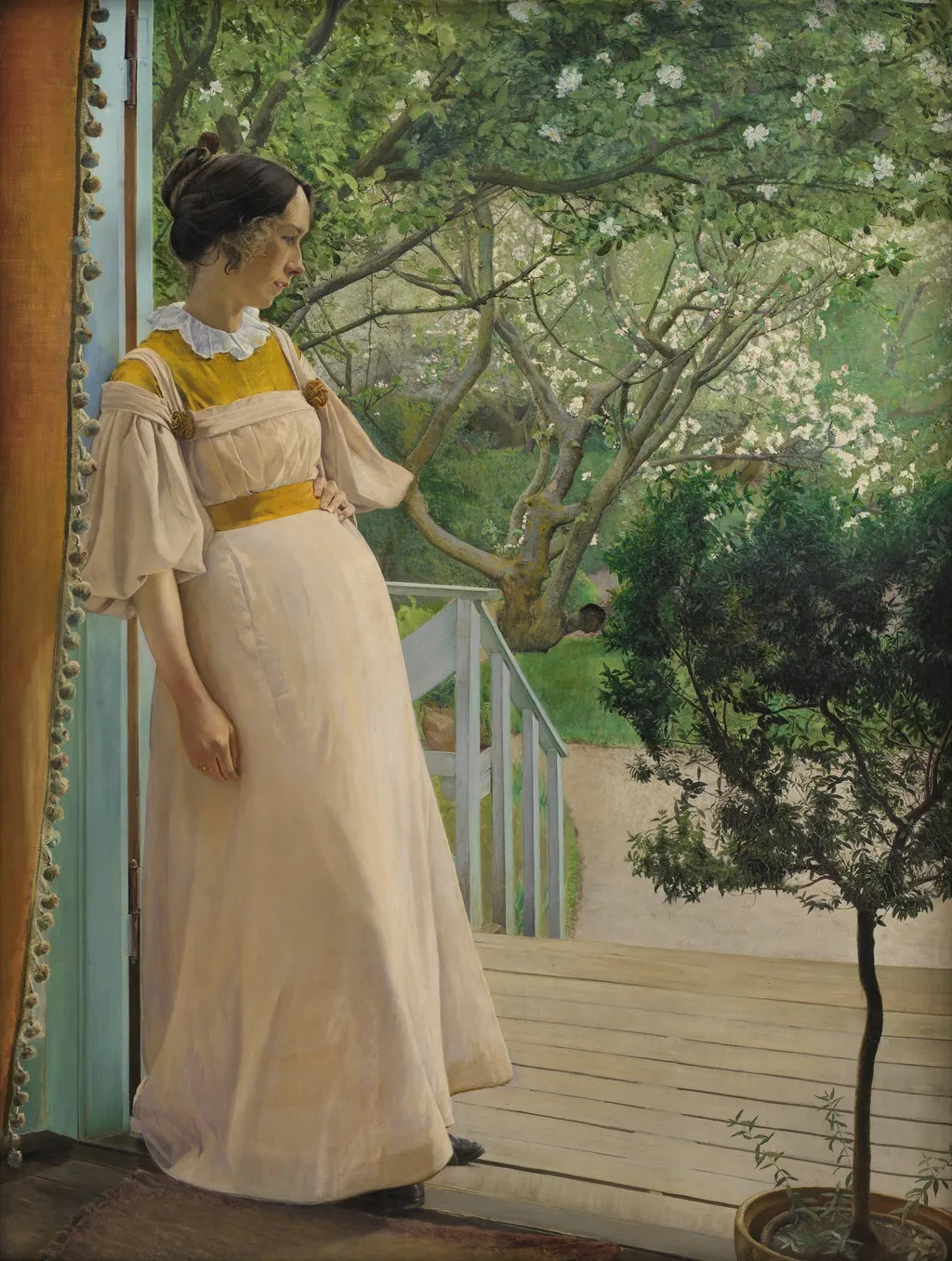
At the French Windows. The Artist's Wife is a photography by the Impressionist artist Unknown. It dates from 1897 and is held in the collection of the Statens Museum for Kunst.
About this work
Overview
Its composition emphasizes natural light and subtle color contrasts, aligning with photographic practices influenced by Impressionist aesthetics of the time.
Created in 1897, this photograph depicts the artist’s wife at a French window, caught in a moment of stillness between interior and exterior spaces. The image is part of the Museum of Ethnography’s collection and reflects a quiet, intimate observation of domestic life. Its composition emphasizes natural light and subtle color contrasts, aligning with photographic practices influenced by Impressionist aesthetics of the time.
Subject & Meaning
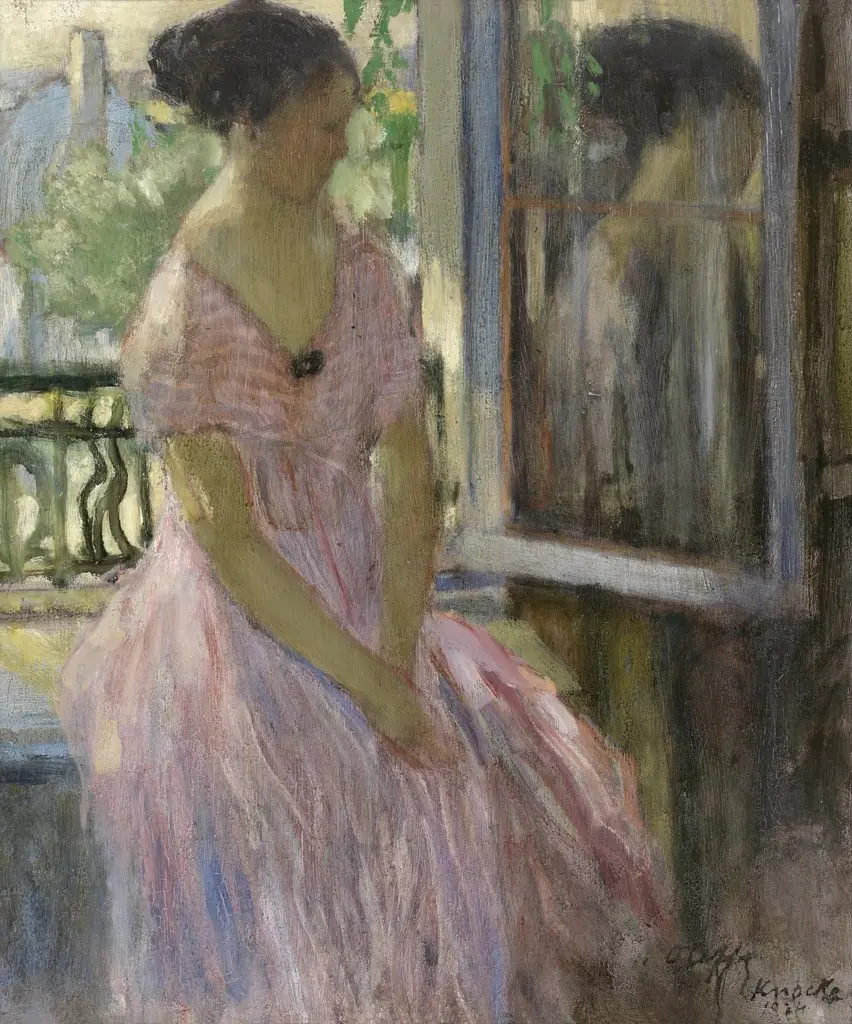
The woman, dressed in a light garment with a yellow bodice, stands partially within the frame of the window, her posture relaxed as she gazes sideways. Her position—neither fully inside nor outside—suggests a liminal state, evoking themes of transition and private contemplation. The absence of narrative action invites quiet reflection, transforming an ordinary moment into a contemplative study of presence.
Technique & Style
The photograph employs soft focus and natural lighting to blur boundaries between figure and environment. The white-flowered tree behind her dissolves into the background, enhancing the sense of atmosphere over detail. The wooden porch and railing are rendered with gentle tonal gradations, avoiding sharp definition. These choices reflect an affinity with Impressionist painting, prioritizing mood and light over documentary clarity.
History & Provenance
The work was made in 1897 and entered the Museum of Ethnography’s holdings at an unspecified later date. Its origins are tied to the artist’s personal circle, likely produced as a private experiment rather than a public commission. Though not widely exhibited during its early years, it has since been recognized for its quiet formal qualities and its place within late 19th-century photographic practice.
Context
In the 1890s, photography increasingly engaged with artistic movements like Impressionism, moving beyond mere documentation to explore light, texture, and emotional tone. This image aligns with contemporaneous efforts by photographers to emulate the painterly qualities of artists such as Monet and Renoir. The domestic setting and emphasis on natural light reflect broader cultural interests in the aesthetics of everyday life.
Legacy
The photograph endures as an example of how early photographers adapted visual language from painting to elevate ordinary scenes. Its restrained composition and sensitivity to light have influenced later generations interested in intimate, non-narrative imagery. Though not widely known, it remains a quiet reference point in discussions of photography’s artistic evolution at the turn of the century.
Artist & collection

 Domestic Scene
 Giacomo and Cardinal Marco, investing Andrea, Abbot of San Zeno, with his Benefice
 The Nymph of Fontainebleau
 Portrait of a Woman
 Madonna and Child with Saints in the Enclosed Garden
 Venus and Minerva
 Family Group of Four on Sofa
 Wall painting from Room H of the Villa of P. Fannius Synistor at Boscoreale