Artwork
View from a Road near Næstved, Zealand
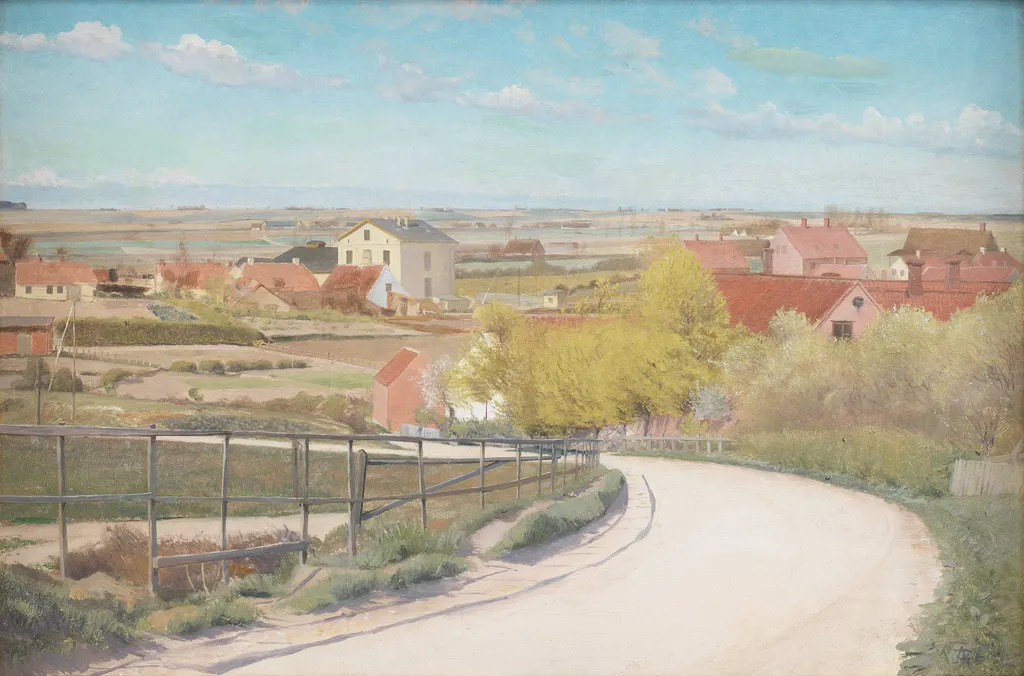
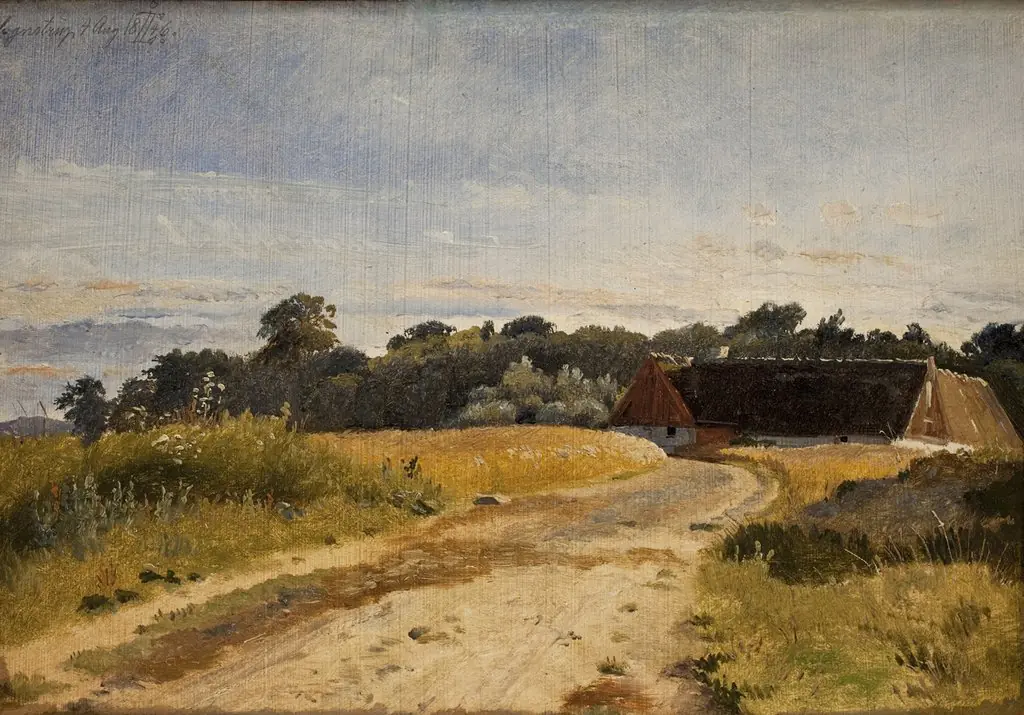
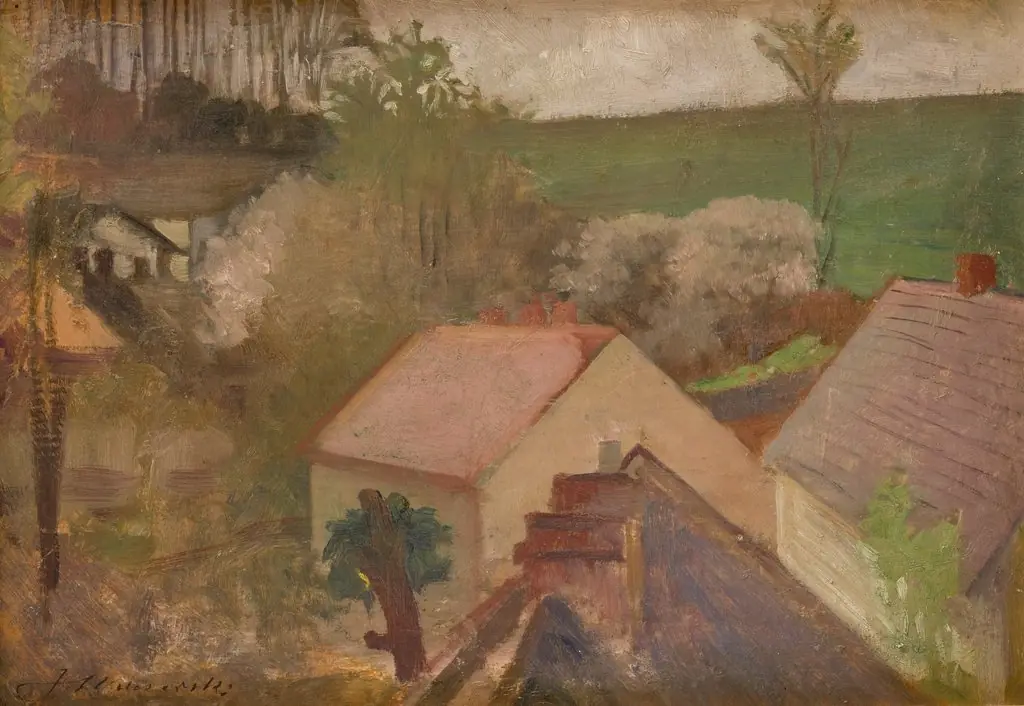
View from a Road near Næstved, Zealand is a photography by Unknown. It dates from 1850 and is held in the collection of the Statens Museum for Kunst. Painted around 1850, this landscape depicts a rural stretch near Næstved on the island of Zealand.
About this work
Overview
It is part of the collection at the Museum of Ethnography, where it is preserved as a record of 19th-century Danish rural life.
Painted around 1850, this landscape depicts a rural stretch near Næstved on the island of Zealand. Executed in oil or watercolor, the work captures a quiet, elevated perspective along a winding path. The scene is rendered with restrained tones and minimal detail, emphasizing atmosphere over drama. It is part of the collection at the Museum of Ethnography, where it is preserved as a record of 19th-century Danish rural life.
Subject & Meaning
The painting presents an unadorned view of a small village settlement, with modest homes, a dirt road, and sparse vegetation. There is no human presence, and the absence of architectural embellishment suggests an intentional focus on everyday rural existence. The composition invites contemplation of solitude and the rhythm of agricultural life, reflecting a quiet appreciation for the ordinary rather than the picturesque.
Technique & Style
The artist employed soft, muted hues and delicate brushwork to mimic the clarity of natural light. The road acts as a leading line, drawing the viewer’s gaze into the depth of the scene. Details are simplified—roofs, fences, and trees rendered with economy. The effect resembles photographic realism, yet the handling of texture and tone remains distinctly painterly, avoiding sharp definition in favor of atmospheric harmony.
History & Provenance
The work was likely created during a period of growing interest in domestic landscapes among Danish artists. It entered the Museum of Ethnography’s collection in the late 19th or early 20th century, possibly as part of a broader effort to document regional life. Its attribution to '1049_person' suggests the artist’s identity may be lost or unverified, though the style aligns with contemporaneous Danish landscape traditions.
Context
In mid-19th-century Denmark, artists increasingly turned to local scenery as national identity took shape beyond urban centers. This painting reflects that shift, favoring humble, unidealized views over grand historical or mythological themes. Its inclusion in an ethnographic museum underscores its value as cultural documentation, offering insight into the material conditions and spatial organization of rural communities at the time.
Legacy
Though not widely exhibited, the work contributes to a quiet tradition of Danish landscape painting that valued observation over ornament. It stands as a quiet testament to the aesthetic of restraint, influencing later generations interested in documenting everyday environments. Its preservation in an ethnographic context highlights its role as both art and historical record, bridging visual culture and social history.
Artist & collection

 Domestic Scene
 Giacomo and Cardinal Marco, investing Andrea, Abbot of San Zeno, with his Benefice
 The Nymph of Fontainebleau
 Portrait of a Woman
 Madonna and Child with Saints in the Enclosed Garden
 Venus and Minerva
 Family Group of Four on Sofa
 Wall painting from Room H of the Villa of P. Fannius Synistor at Boscoreale
 Country Lane with Trees. Kastrup
 Rayleigh, Essex
 A Bird's-Eye View
 The Village of Sannois
 A Landscape. The Island of Mors, jutland
 Grey day. Kozlovka
 A Landscape. The Island of Mors, jutland
 A Croft at Lodskov near Vognserup Manor. Study
 A Croft at Lodskov near Vognserup Manor. Study
 Autumn Landscape
 Houses Alongside a Road in Morsø, Jutland
 Countryside Landscape with Houses