Artwork
Under the Pont des Arts, Paris. Noon
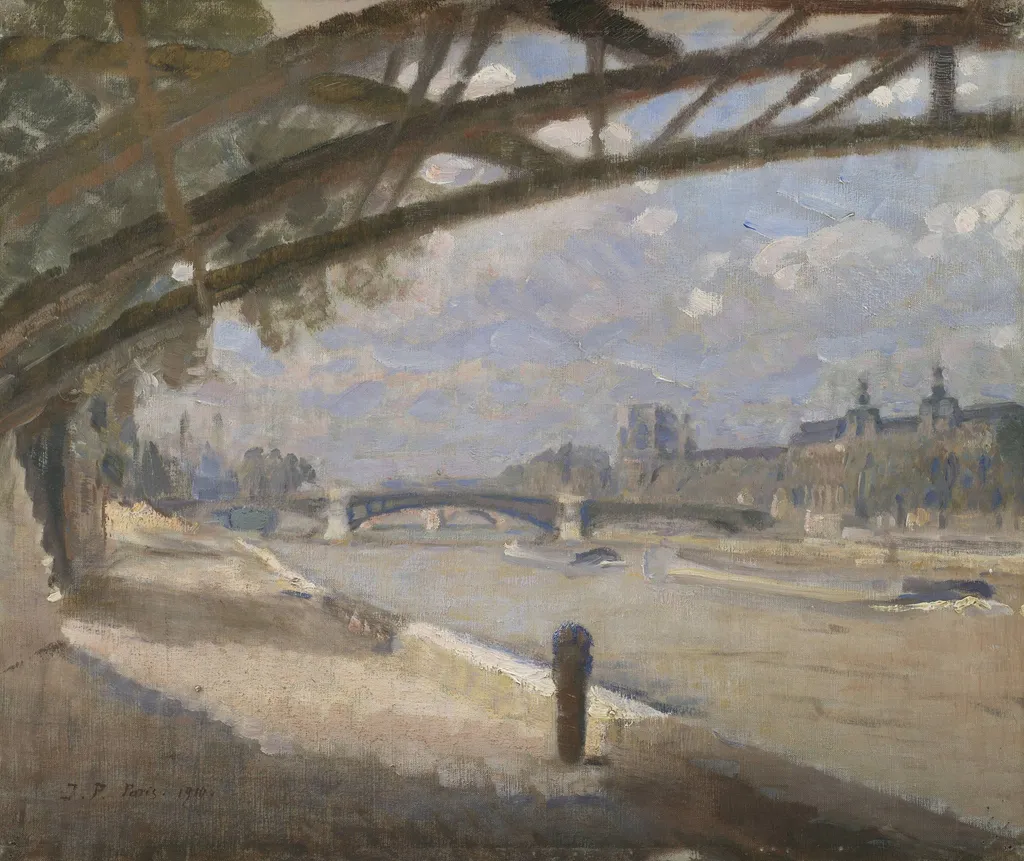
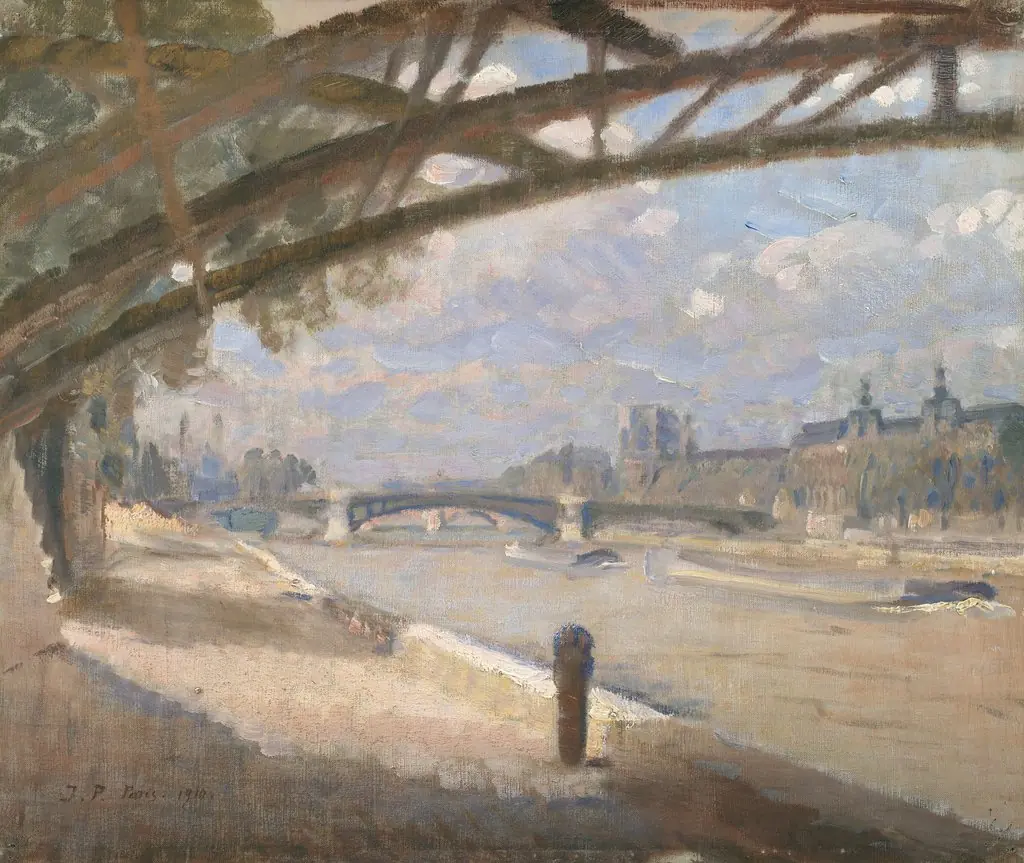
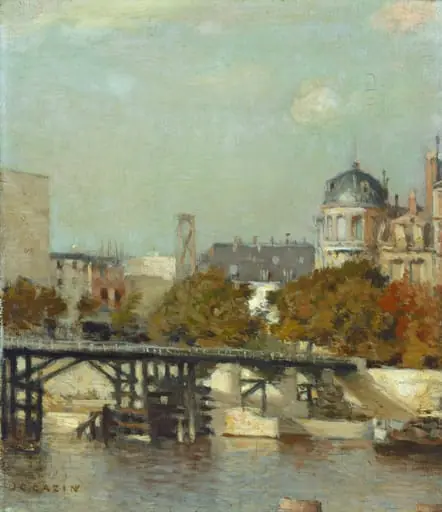
Under the Pont des Arts, Paris. Noon is a photography by Unknown. It dates from 1910 and is held in the collection of the Statens Museum for Kunst. Painted in 1910, this work captures a quiet moment beneath the Pont des Arts in Paris at midday.
About this work
Overview
The artist rendered the Seine’s surface with subtle tonal shifts, emphasizing the stillness of the water and the even quality of natural light.
Painted in 1910, this work captures a quiet moment beneath the Pont des Arts in Paris at midday. The artist rendered the Seine’s surface with subtle tonal shifts, emphasizing the stillness of the water and the even quality of natural light. The composition is restrained, focusing on the bridge’s structure and the riverbank’s edge without figures or movement. It resides in the Museum of Ethnography, though its subject is distinctly urban and topographical.
Subject & Meaning
The scene presents no human activity, only the architecture of the bridge and the calm river below. The absence of people shifts attention to the relationship between urban infrastructure and natural elements. The stillness suggests a pause in the city’s rhythm, inviting contemplation rather than narrative. The painting functions as a quiet observation of Parisian space, not a celebration or critique.
Technique & Style
The artist employed a muted palette of soft grays, blues, and pale ochres to convey the diffused light of noon. Brushwork is smooth and deliberate, avoiding texture or impasto. Perspective is constructed through the receding lines of the bridge and the low stone wall along the bank, creating depth without dramatic foreshortening. The technique favors atmospheric harmony over detail, aligning with observational rather than expressive aims.
History & Provenance
The painting was completed in 1910 and entered the collection of the Museum of Ethnography shortly thereafter. Its placement in an institution typically focused on non-European cultures raises questions about its curatorial context. No documented exhibition history or artist correspondence survives to clarify its original intent or reception, leaving its institutional journey largely unrecorded.
Context
In early 20th-century Paris, many artists depicted the Seine as a site of leisure or modern life. This work diverges by omitting pedestrians, boats, or signs of activity. It aligns more closely with quiet, almost documentary approaches emerging in the period—less impressionist, more attentive to light and structure. Its isolation from the dominant trends of the time makes it an unusual example of urban observation.
Legacy
The painting has not been widely reproduced or studied, remaining a minor entry in the artist’s oeuvre. Its presence in an ethnographic museum, rather than a fine arts institution, has limited its visibility in art historical discourse. It endures as a quiet record of a specific time and place, valued more for its understated precision than for its influence.
Artist & collection

 Domestic Scene
 Giacomo and Cardinal Marco, investing Andrea, Abbot of San Zeno, with his Benefice
 The Nymph of Fontainebleau
 Portrait of a Woman
 Madonna and Child with Saints in the Enclosed Garden
 Venus and Minerva
 Family Group of Four on Sofa
 Wall painting from Room H of the Villa of P. Fannius Synistor at Boscoreale