Artwork
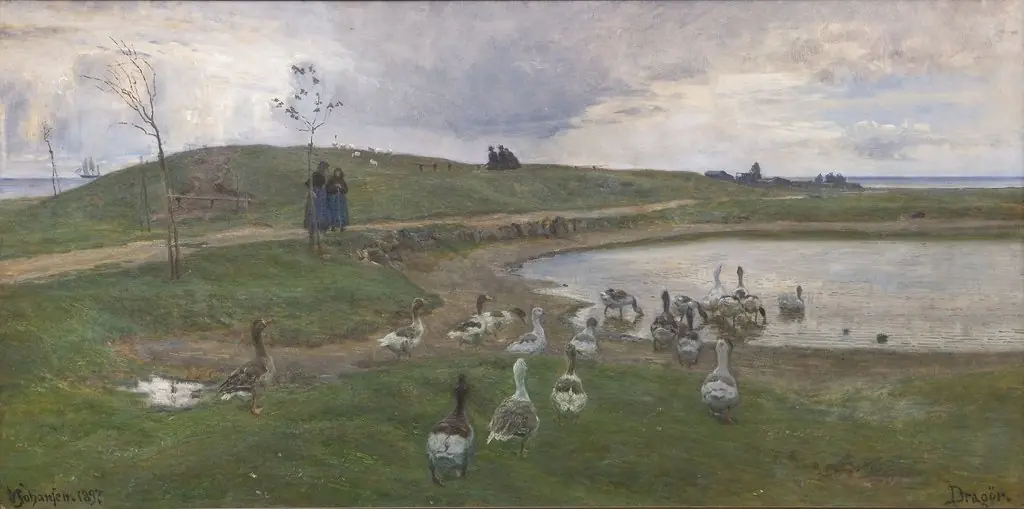
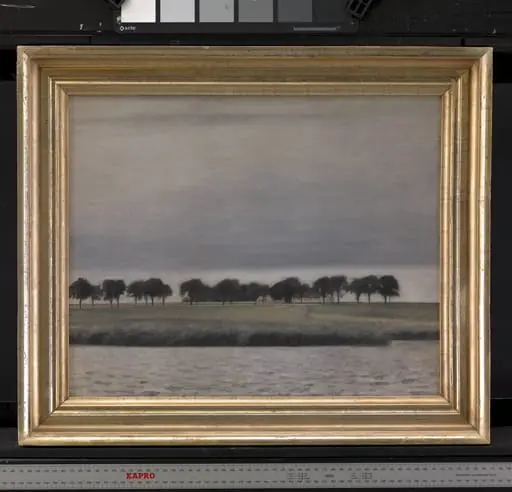
Gæs ved en sø. Mod uroligt vejr. Dragør
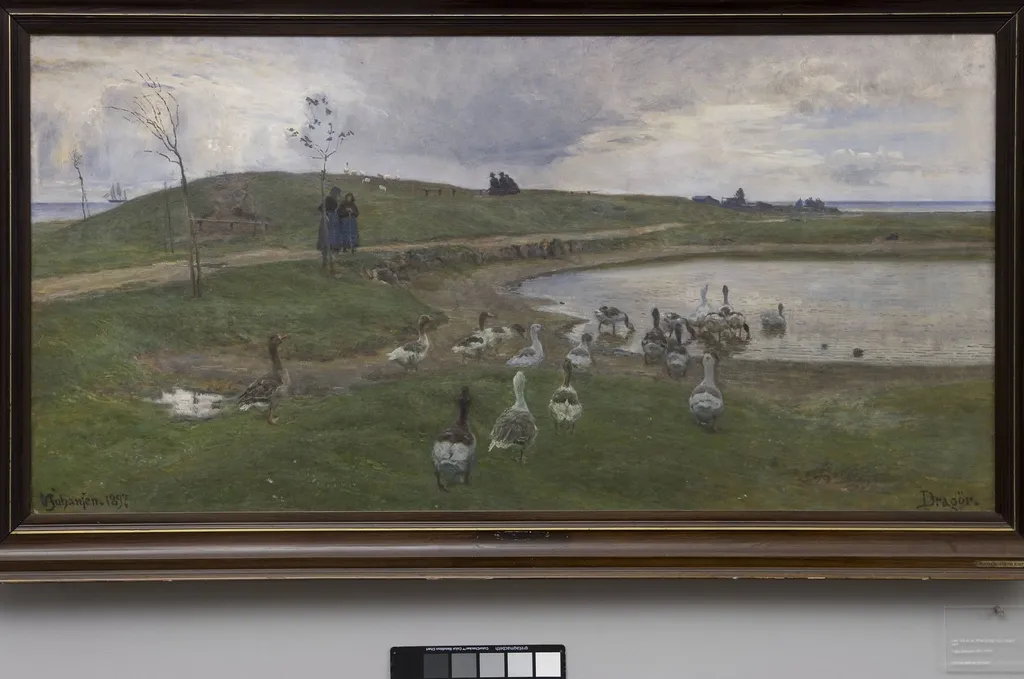
Gæs ved en sø. Mod uroligt vejr. Dragør is a photography by the Impressionist artist Unknown. It dates from 1897 and is held in the collection of the Statens Museum for Kunst. Painted in 1897 by an artist associated with Dragør, this work depicts a tranquil lakeside scene in Denmark.
About this work
Overview
The composition centers on a group of geese near the water’s edge, with two figures on a distant hillock and a modest dwelling visible in the background.
Painted in 1897 by an artist associated with Dragør, this work depicts a tranquil lakeside scene in Denmark. The composition centers on a group of geese near the water’s edge, with two figures on a distant hillock and a modest dwelling visible in the background. The atmosphere is subdued, shaped by overcast skies and gentle gradients of light. The painting is held in the collection of the Museum of Ethnography, though its thematic focus is landscape rather than cultural artifact.
Subject & Meaning
The scene captures a quiet rural moment, free of narrative drama. The geese, motionless yet poised, suggest stillness amid natural rhythms. The human figures are small and indistinct, emphasizing the dominance of the environment over human presence. The subdued palette and weathered sky imply a transient, unremarkable day—neither celebratory nor melancholic, but quietly observed. The work conveys an appreciation for ordinary, uneventful landscapes.
Technique & Style
Loose, fluid brushwork defines the sky and water, suggesting movement without detail. The clouds are rendered in soft washes, while the lake’s surface is suggested through broken strokes of muted color. The grassy slope and distant trees are indicated with minimal strokes, avoiding precise definition. This approach prioritizes atmospheric effect over realism, aligning with observational methods common in late 19th-century Nordic painting, though not strictly Impressionist.
History & Provenance
Created in 1897, the painting entered the Museum of Ethnography’s collection shortly after its completion. Its inclusion there reflects early 20th-century curatorial practices that sometimes grouped landscape works with ethnographic material, possibly due to their depiction of rural Danish life. No significant exhibition or ownership history beyond the museum is documented, suggesting it remained a lesser-known work within the artist’s oeuvre.
Context
In late 19th-century Denmark, artists increasingly turned to local landscapes as subjects, moving away from grand historical themes. This painting reflects that shift, capturing a modest coastal scene with sensitivity to light and weather. While contemporaries like Skovgaard or Krøyer pursued more dramatic or social narratives, this work opts for quietude, resonating with regional traditions of understated naturalism.
Legacy
The painting has not been widely reproduced or critically reevaluated since its creation. It remains a quiet example of Danish landscape painting from the period, valued more for its regional authenticity than stylistic innovation. Its presence in an ethnographic museum underscores how cultural institutions once blurred boundaries between art and daily life, though today it is primarily appreciated for its restrained visual tone.
Artist & collection

 Domestic Scene
 Giacomo and Cardinal Marco, investing Andrea, Abbot of San Zeno, with his Benefice
 The Nymph of Fontainebleau
 Portrait of a Woman
 Madonna and Child with Saints in the Enclosed Garden
 Venus and Minerva
 Family Group of Four on Sofa
 Wall painting from Room H of the Villa of P. Fannius Synistor at Boscoreale
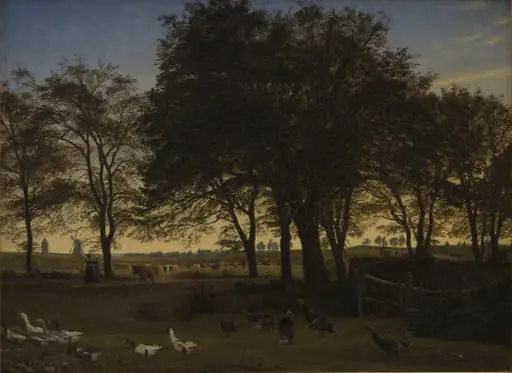 Parti ved Iselingen. I baggrunden Vordingborg Kirke og Gåsetårnet. Septemberaften
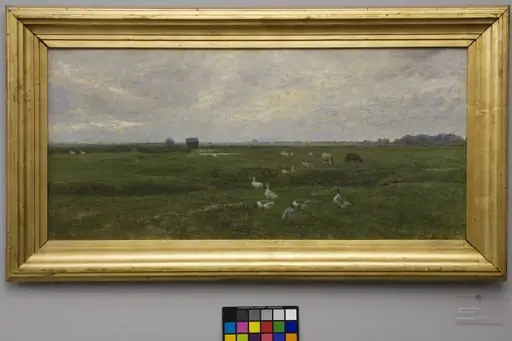 Geese by a Lake. A Storm is Brewing. Dragør, the Island of Amager
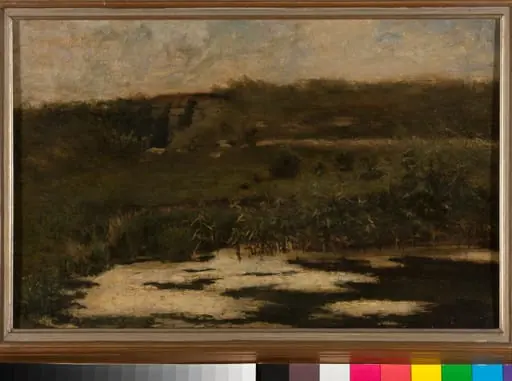 Der Teich
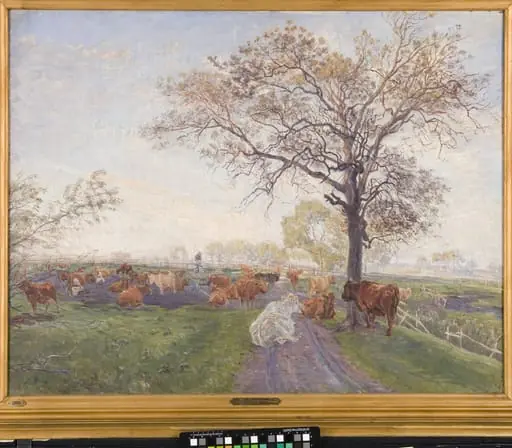 Malkepladsen ved Dyrehavegård
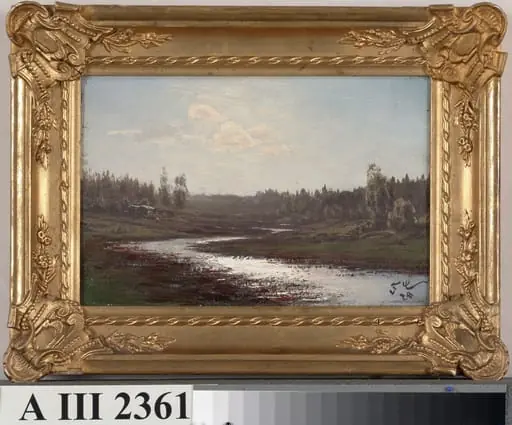 Jokimaisema
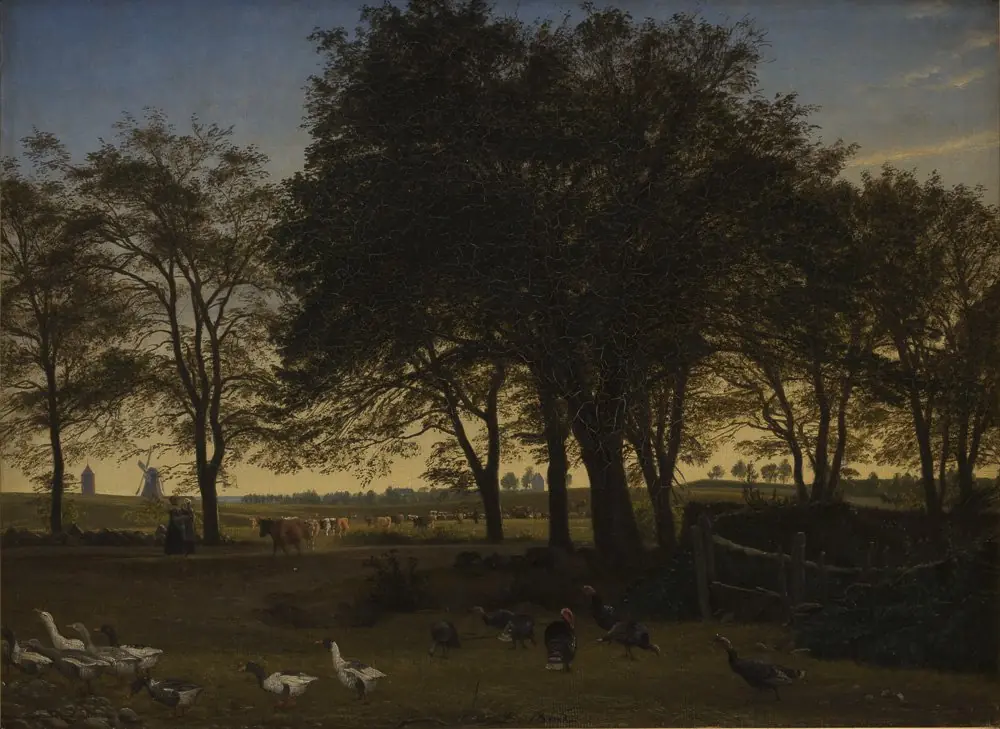 Parti ved Iselingen. I baggrunden Vordingborg Kirke og Gåsetårnet. Septemberaften
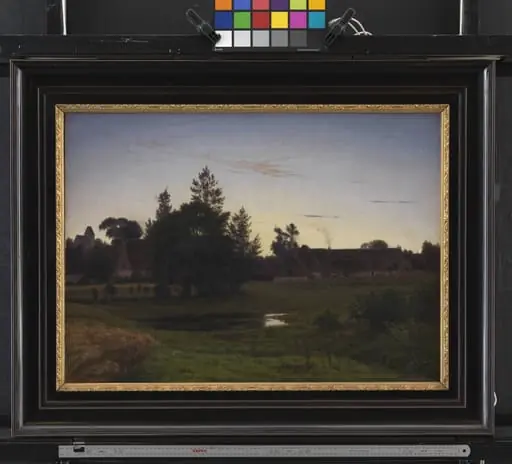 After Sunset in the Outskirts of a Village
 Hus med hønsegård
 Beneath the Birches. Motif from Mälaren
 Et hus på Alheden
 Gæs ved en sø. Mod uroligt vejr. Dragør
 Forstudie til "Solregn. Gentofte Sø"