Artwork
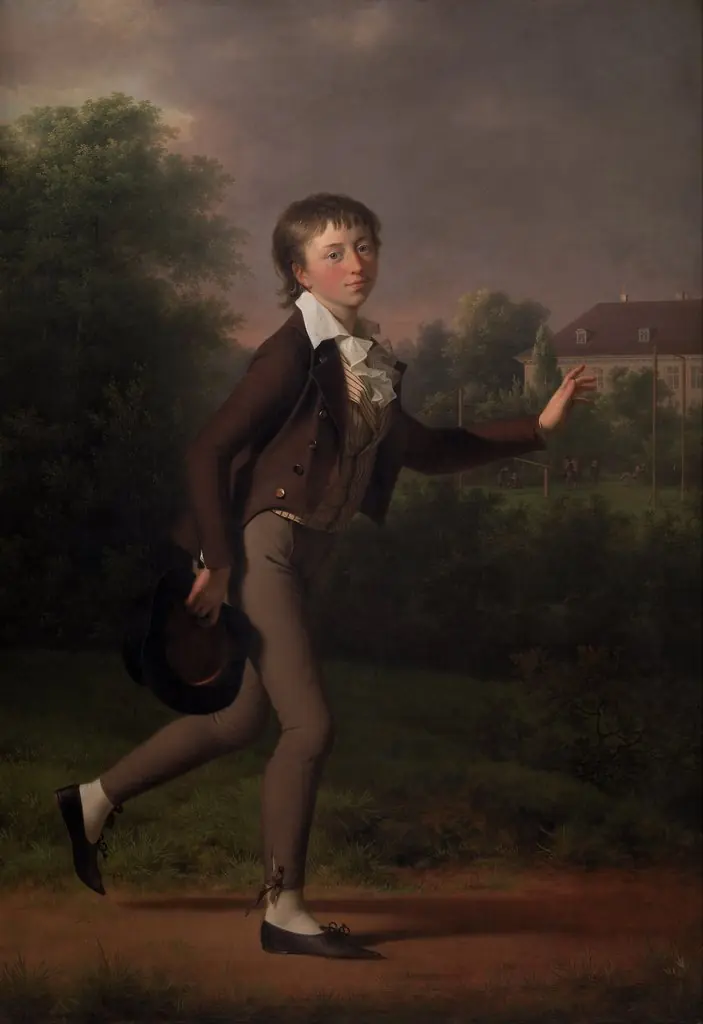
A Running Boy. Marcus Holst von Schmidten
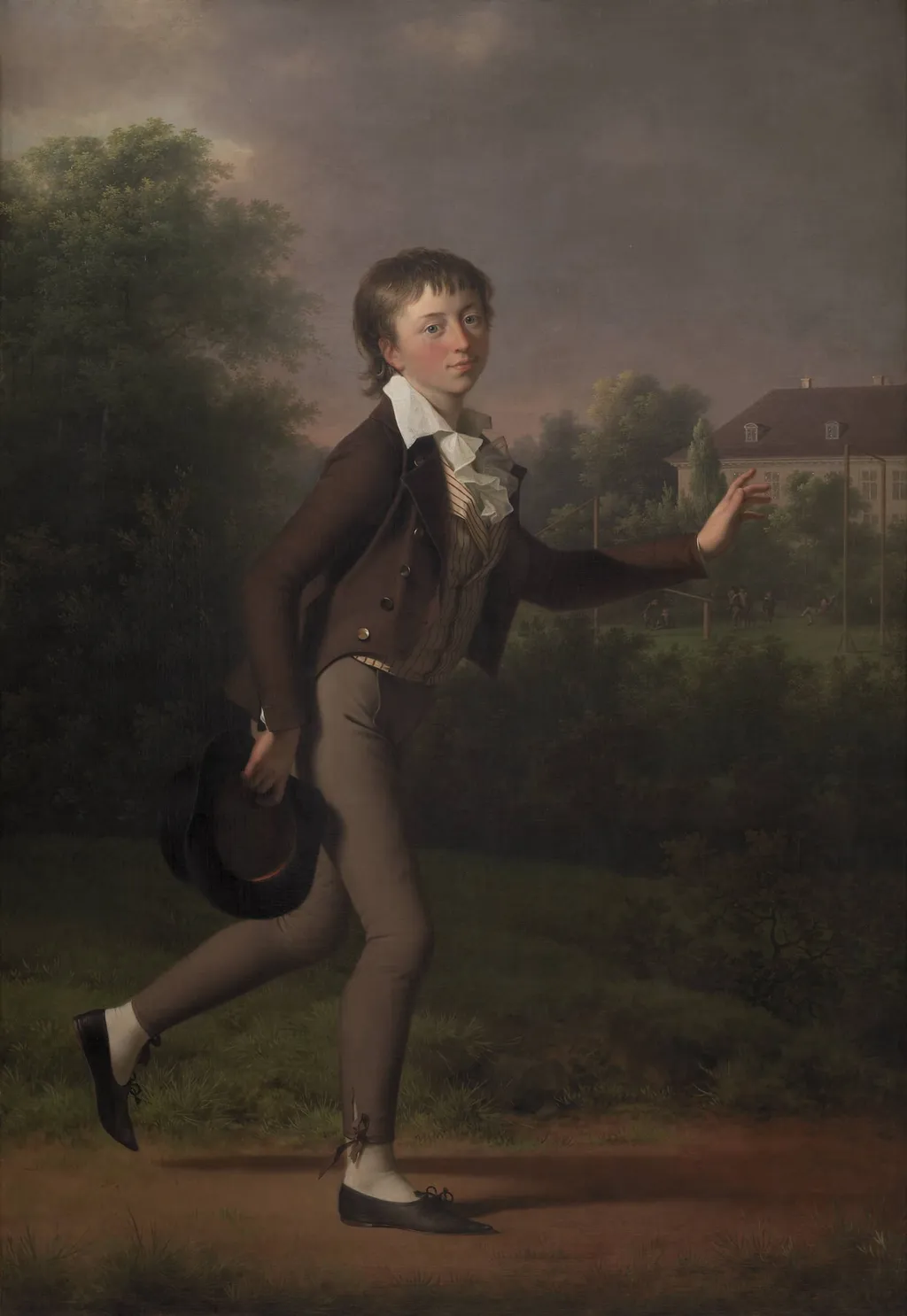
A Running Boy. Marcus Holst von Schmidten is a photography by the Romanticist artist Unknown. It dates from 1802 and is held in the collection of the Statens Museum for Kunst. Created in 1802 by Marcus Holst von Schmidten, this painting depicts a young boy in motion across a rural path.
About this work
Overview
Created in 1802 by Marcus Holst von Schmidten, this painting depicts a young boy in motion across a rural path. Executed in oil, the work is part of the Museum of Ethnography’s collection. Its focus on a solitary figure in transit reflects a quiet interest in everyday movement, rendered with attention to posture and atmosphere rather than narrative detail.
Subject & Meaning
The boy, captured mid-run, embodies transient youth and physical vitality. His attire—dark coat, white cravat, and buckled shoes—suggests modest middle-class dress of the early 19th century. The absence of context or companionship invites contemplation of solitude and private motion, avoiding overt symbolism in favor of a candid, unembellished moment.
Technique & Style
The artist employs chiaroscuro to model the boy’s form, using stark contrasts between light and shadow to define his limbs and facial features. Brushwork is controlled yet expressive, particularly in the rendering of fabric folds and the blurred edges of the background. The dark, overcast sky and indistinct garden elements recede into tone, emphasizing the figure’s forward momentum.
History & Provenance
The painting entered the Museum of Ethnography’s holdings in the late 19th century, likely through a private donation or institutional acquisition. Its origin prior to that remains undocumented. Unlike many works of the period, it was never widely exhibited or reproduced, preserving its status as a lesser-known but carefully observed study of human movement.
Context
Created during a time when portraiture often emphasized social status or idealized form, this work diverges by focusing on a fleeting, unposed moment.
Created during a time when portraiture often emphasized social status or idealized form, this work diverges by focusing on a fleeting, unposed moment. It aligns with emerging interests in naturalism and the observation of ordinary life, though it lacks the overt social commentary found in contemporaneous genre scenes. The setting suggests a private estate or suburban garden, typical of northern European domestic environments.
Legacy
Though not influential in broader art movements, the painting stands as a quiet example of early 19th-century observational realism. Its preservation in an ethnographic museum underscores its value as a record of dress, posture, and daily life rather than artistic innovation. It continues to be studied for its subtle handling of light and motion within a restrained compositional framework.
Artist & collection

 Domestic Scene
 Giacomo and Cardinal Marco, investing Andrea, Abbot of San Zeno, with his Benefice
 The Nymph of Fontainebleau
 Portrait of a Woman
 Madonna and Child with Saints in the Enclosed Garden
 Venus and Minerva
 Family Group of Four on Sofa
 Wall painting from Room H of the Villa of P. Fannius Synistor at Boscoreale
 Portrait of Count Alexei Bobrinsky as a Child
 Manuel Flores Calderón
 Portrait of Kennett Dixon playing shuttlecock
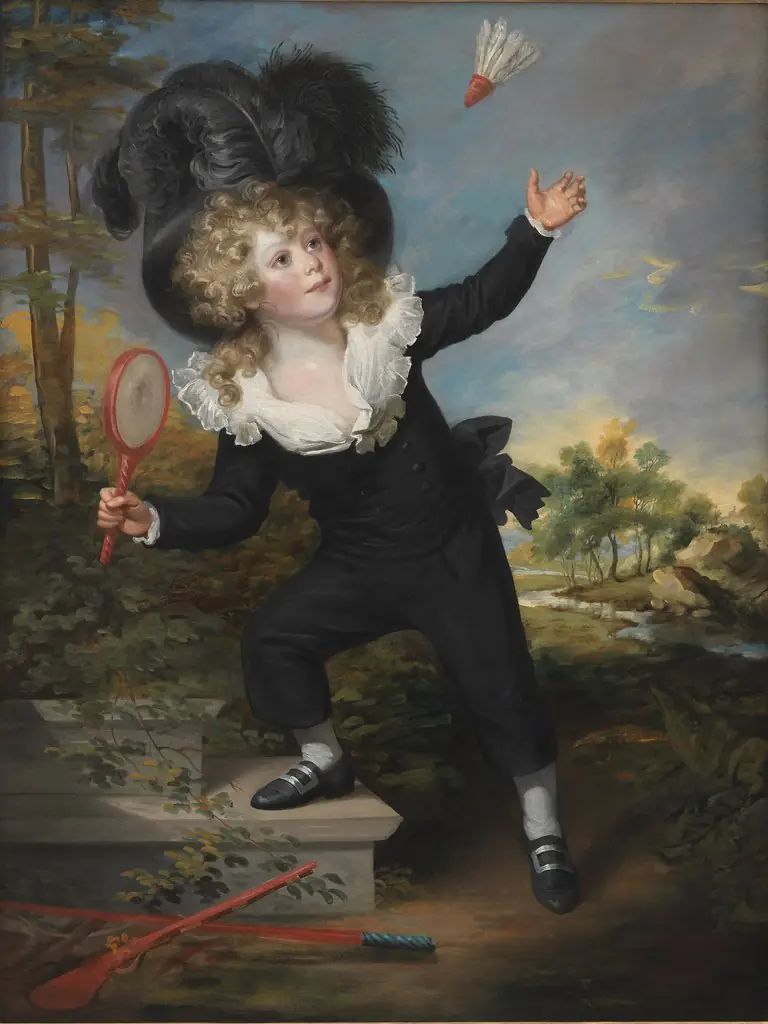 Portræt af Kennett Dixon, der spiller badminton
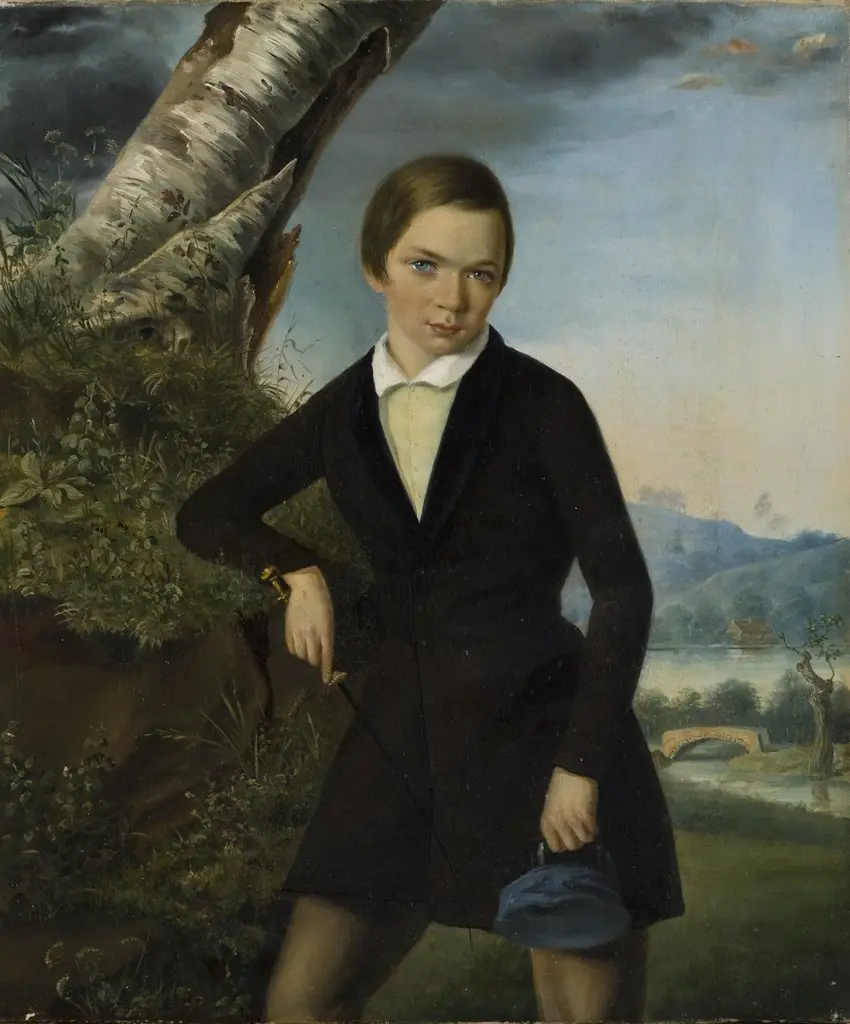 Portrait of Alexander Sokolovsky in Childhood
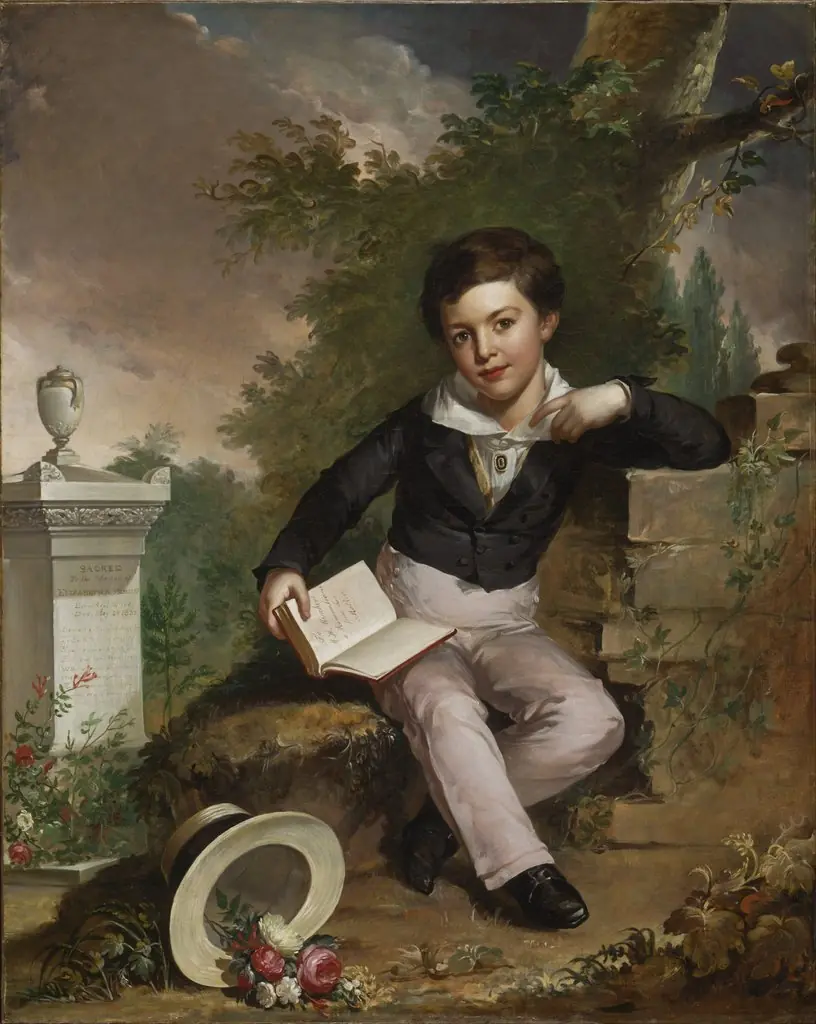 Matthew Huizinga Messchert
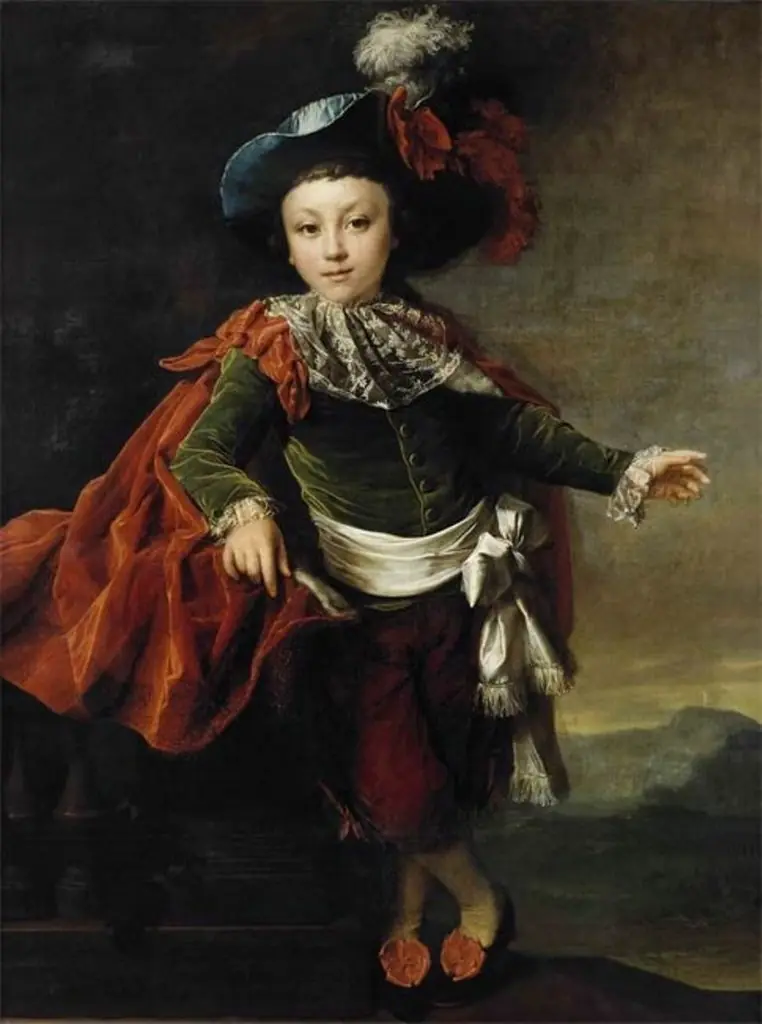 Portrait of F.P. Makerovsky in masquerade costume
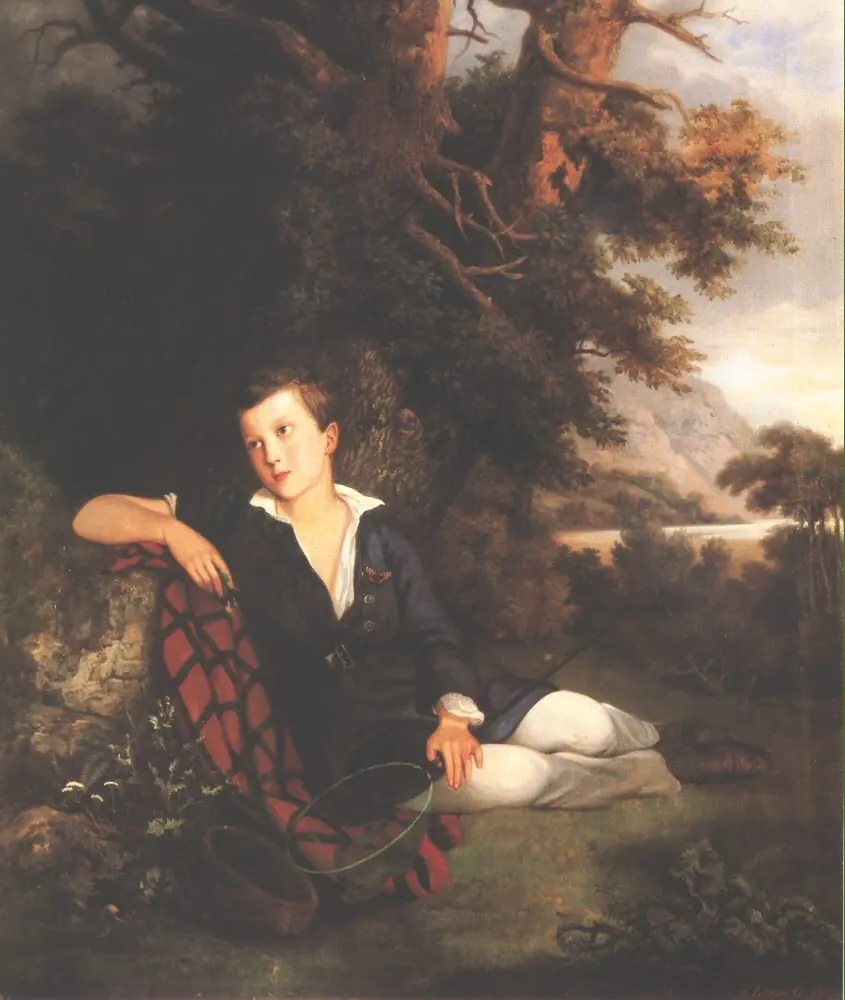 Portrait of Lóránd Eötvös as a Young Man
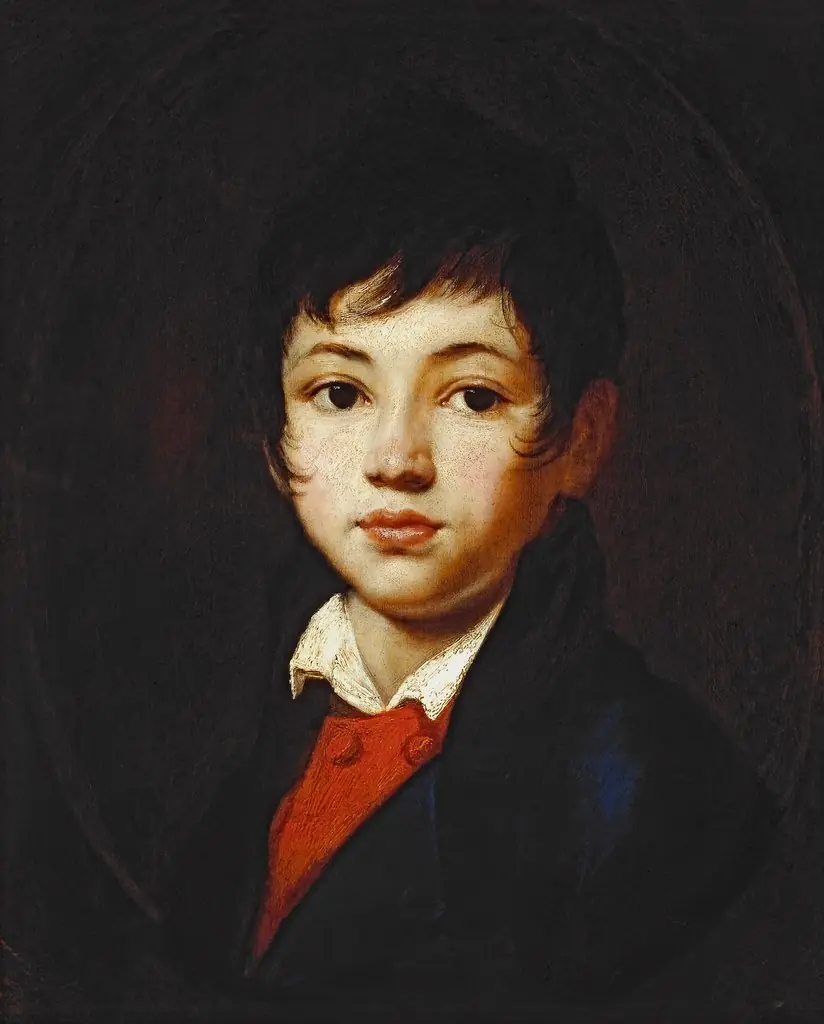 Portrait of A.A.Chelishchev
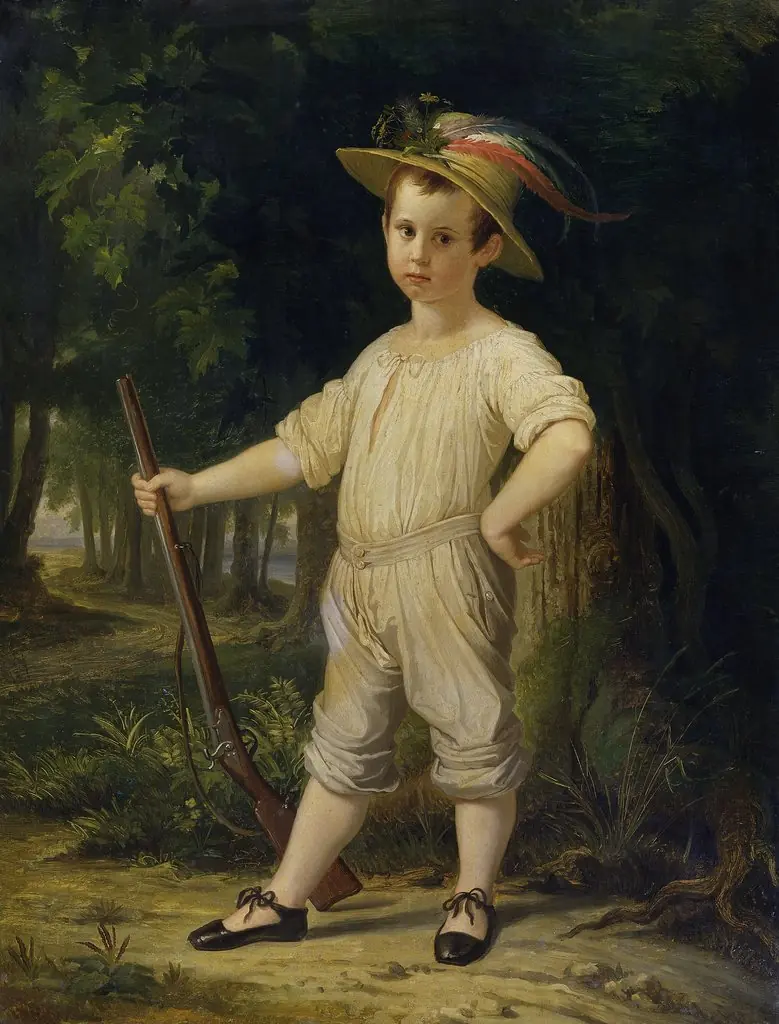 The Little Farmer (The Little Hunter)
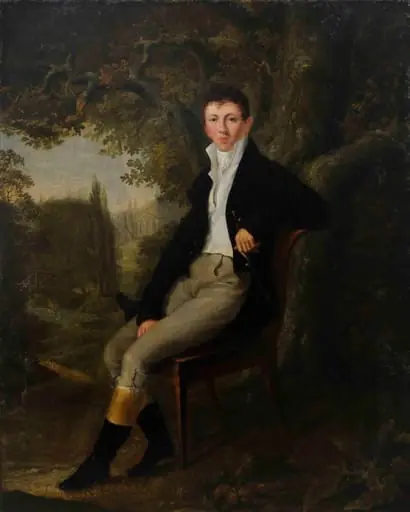 Portretul unui adolescent
 A Running Boy. Marcus Holst von Schmidten