Artwork
Portrait of the Artist´s Sister-in-Law Johanne Elisabeth Købke, née Sundbye
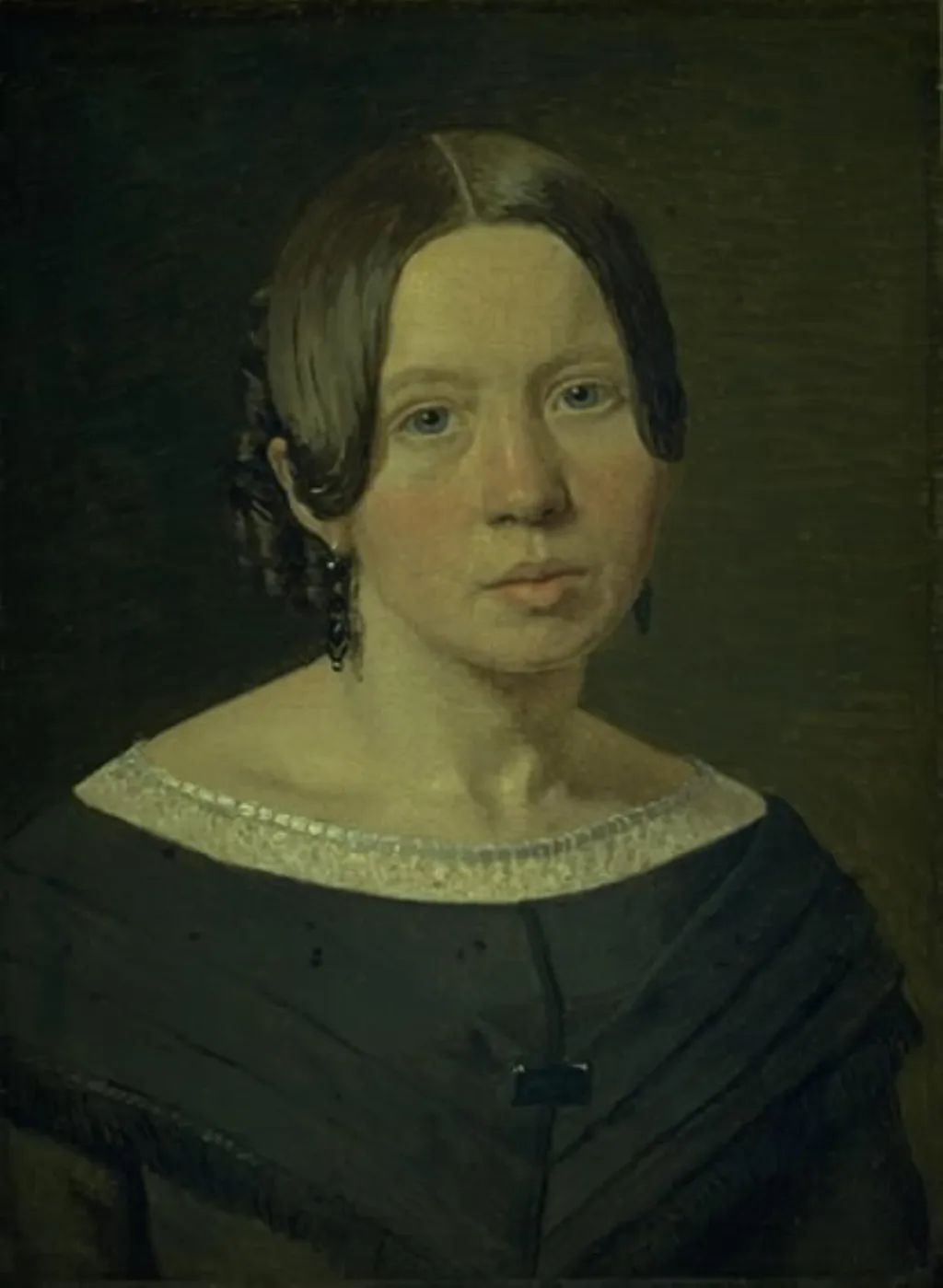
Portrait of the Artist´s Sister-in-Law Johanne Elisabeth Købke, née Sundbye is an unspecified painting by the Romanticist artist Unknown. It dates from 1842 and is held in the collection of the Statens Museum for Kunst.
About this work
If you're interested in learning more about the artist's style and technique, you might want to explore the work of 1117_person.
This painting depicts a woman with brown hair, pulled back and parted in the middle. She wears a dark dress with a white lace collar and a black necklace. Her face is turned slightly to the right, and she looks directly at the viewer with a neutral expression. The background is a dark brown color.
The woman's attire and hairstyle suggest a formal portrait from the 19th century. The painting's style and attention to detail are characteristic of the Romanticism movement.
If you're interested in learning more about the artist's style and technique, you might want to explore the work of 1117_person.
Overview
Portrait of the Artist's Sister-in-Law Johanne Elisabeth Købke, née Sundbye is a portrait painted in 1842 by 1117_person, currently housed at the Museum of Ethnography.
Subject & Meaning
The subject is Johanne Elisabeth Købke, the artist's sister-in-law, depicted in a formal, neutral demeanor, engaging the viewer directly with her gaze.
Technique & Style
The painting exhibits characteristics of the Romanticism movement through its meticulous attention to detail and stylistic approach.
History & Provenance
Created in 1842, the work is part of the collection at the Museum of Ethnography, though its history prior to acquisition is not detailed here.
Context
The subject's attire—a dark dress with a white lace collar and black necklace—and her centered, parted brown hair, place the portrait firmly within 19th-century formal portraiture traditions.
Artist & collection

 Domestic Scene
 Giacomo and Cardinal Marco, investing Andrea, Abbot of San Zeno, with his Benefice
 The Nymph of Fontainebleau
 Portrait of a Woman
 Madonna and Child with Saints in the Enclosed Garden
 Venus and Minerva
 Family Group of Four on Sofa
 Wall painting from Room H of the Villa of P. Fannius Synistor at Boscoreale
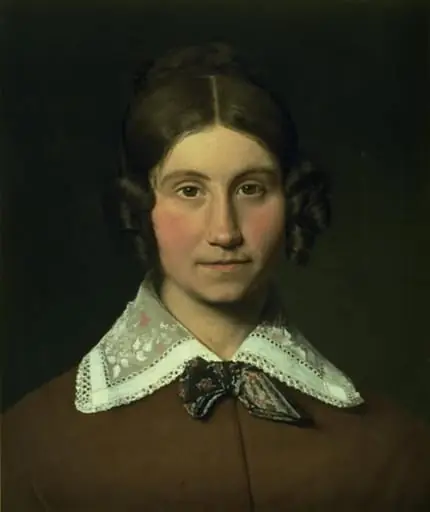 Portrait of Emilie Krohn, née Købke, the Artist´s Sister-in-Law
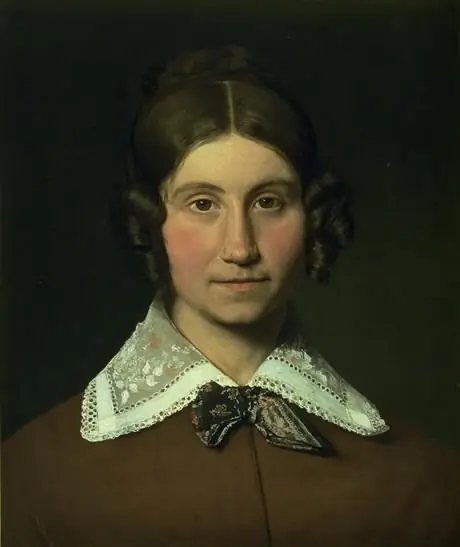 Portrait of Emilie Krohn, née Købke, the Artist´s Sister-in-Law
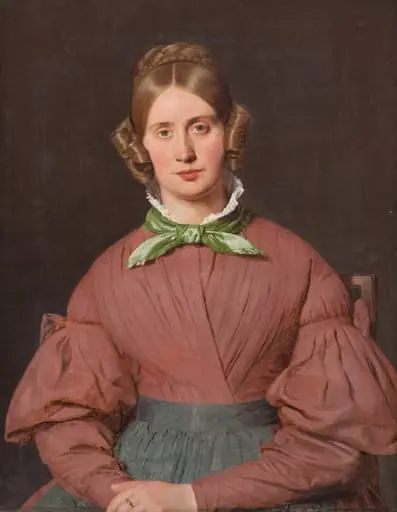 Portrait of Susanne Cecilie Købke, née Købke, the Artist´s Wife
 Portrait of the Artist's Sister, Karolina
 Portrait of artist’s wife
 Portrait of the Artist´s Mother, Cecilia Margrethe Købke, née Petersen
 Portrait of the Artist´s Cousin, Petrea Petersen