Artwork
Rough Sea on a Rocky Coast, Capri
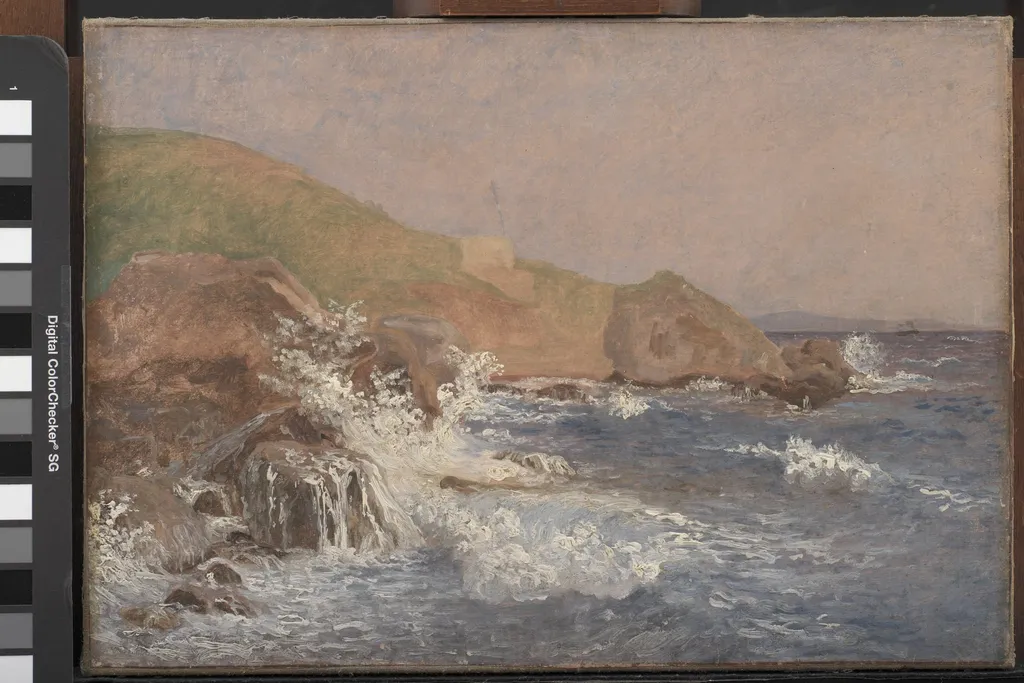
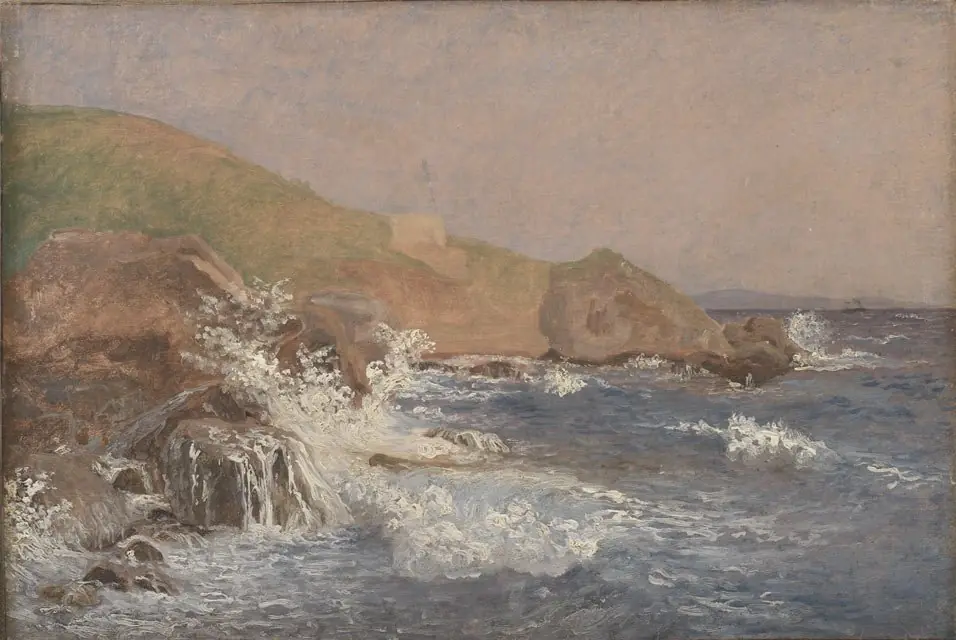
Rough Sea on a Rocky Coast, Capri is a photography by the Romanticist artist Unknown. It dates from 1839 and is held in the collection of the Statens Museum for Kunst. Painted in 1839, this landscape depicts a turbulent stretch of coastline near Capri.
About this work
Overview
Painted in 1839, this landscape depicts a turbulent stretch of coastline near Capri. The scene captures the force of the sea against rugged cliffs, rendered with a focus on natural elements rather than human presence. The work is held in the collection of the Museum of Ethnography, though its thematic focus aligns more closely with Romantic-era landscape traditions than ethnographic subjects.
Subject & Meaning
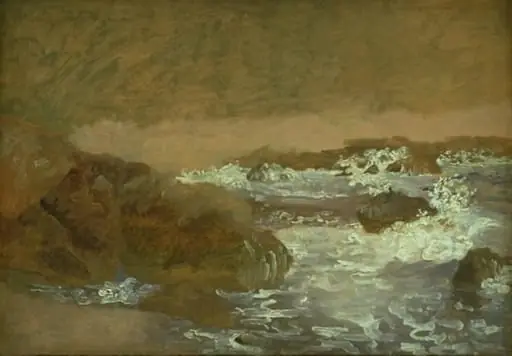
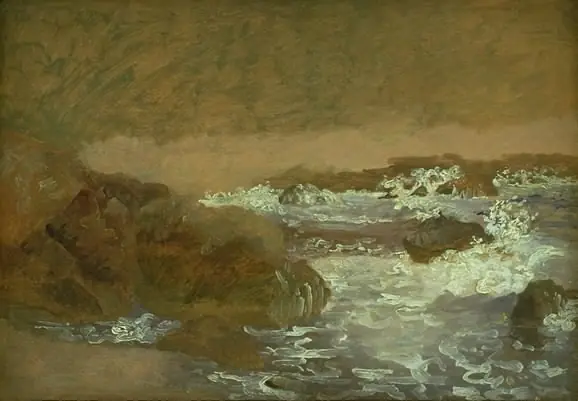
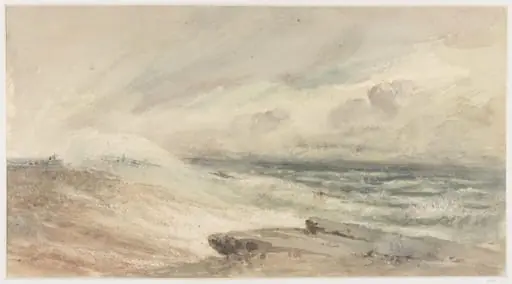
The painting presents nature as an untamed, elemental force. Waves collide violently with dark, angular rocks, emphasizing the sea’s power and the coast’s inhospitable character. The distant, hazy hill and pale sky suggest isolation and atmospheric tension. There is no human figure or sign of habitation, reinforcing a sense of nature’s indifference to human scale.
Technique & Style
The artist employs thick, textured brushwork—particularly in the crashing waves—to simulate the physicality of spray and foam. This impasto technique gives the water a tactile, almost sculptural quality. The palette remains subdued, dominated by grays and earth tones, with only the white crests of waves providing stark contrast, heightening the sense of motion and violence.
History & Provenance
Created in 1839, the painting entered the Museum of Ethnography’s collection at an unknown date. Its presence there may reflect broader 19th-century tendencies to classify natural landscapes as cultural artifacts, though its stylistic roots lie in European Romanticism rather than ethnographic documentation. No record of prior ownership or exhibition history is widely documented.
Context
This work emerged during a period when European artists increasingly turned to dramatic natural scenes as subjects of emotional and aesthetic inquiry. While Capri was a known destination for travelers, this painting avoids picturesque idealization, instead focusing on raw, unmediated nature—a shift aligned with Romantic sensibilities that valued wildness over order.
Legacy
The painting’s emphasis on material texture and atmospheric mood anticipates later developments in landscape painting, particularly the use of impasto to convey physical sensation. Though not widely reproduced or studied, it remains a quiet example of how 19th-century artists engaged with nature’s unpredictability through direct, tactile brushwork.
Artist & collection

 Domestic Scene
 Giacomo and Cardinal Marco, investing Andrea, Abbot of San Zeno, with his Benefice
 The Nymph of Fontainebleau
 Portrait of a Woman
 Madonna and Child with Saints in the Enclosed Garden
 Venus and Minerva
 Family Group of Four on Sofa
 Wall painting from Room H of the Villa of P. Fannius Synistor at Boscoreale