Artwork
A Croft at Lodskov near Vognserup Manor, Zealand
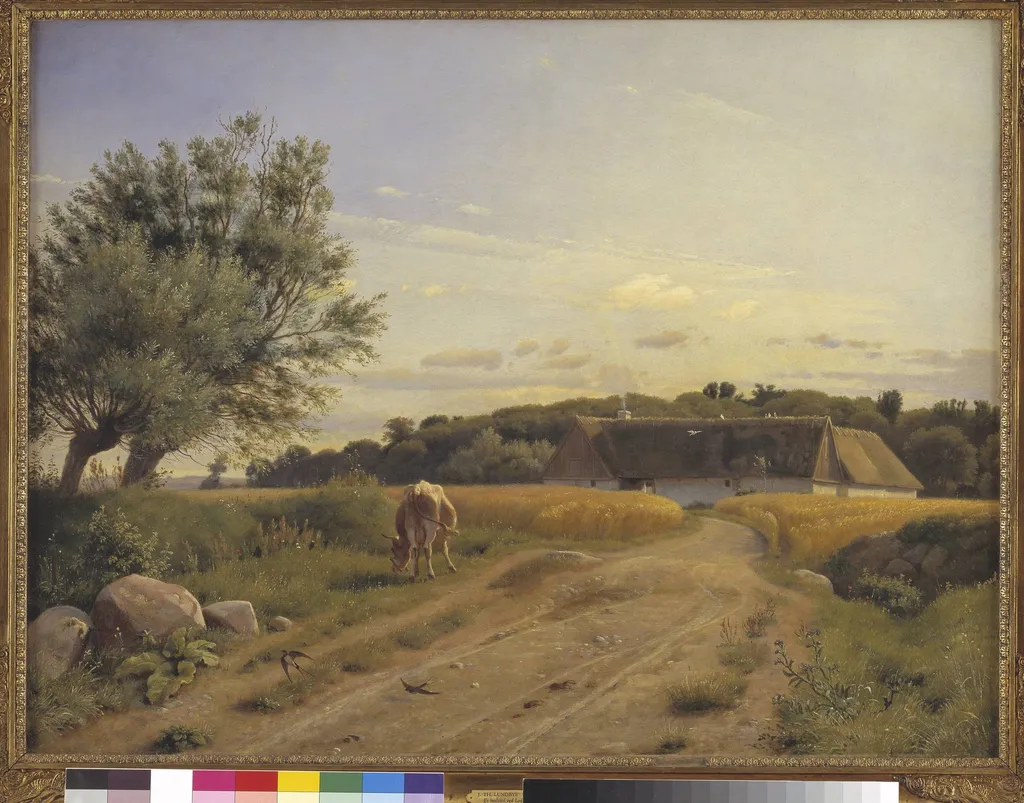
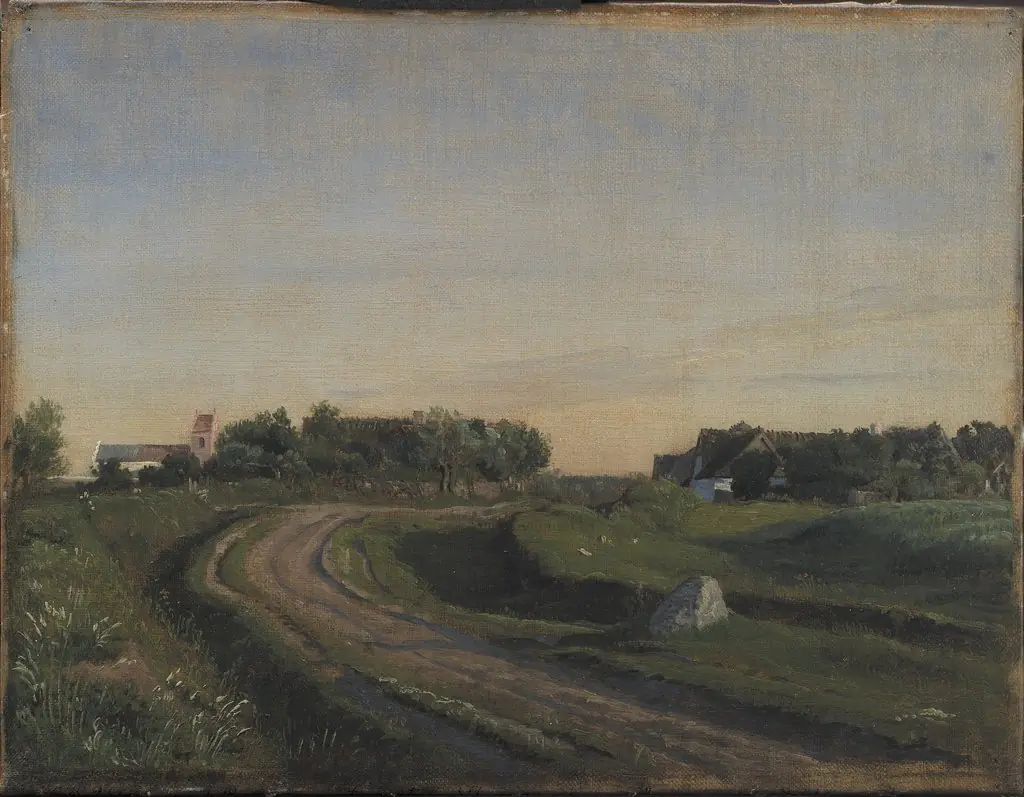
A Croft at Lodskov near Vognserup Manor, Zealand is a photography by the Romanticist artist Unknown. It dates from 1847 and is held in the collection of the Statens Museum for Kunst. Painted in 1847, this landscape depicts a rural croft near Vognserup Manor on the Danish island of Zealand.
About this work
Overview
Painted in 1847, this landscape depicts a rural croft near Vognserup Manor on the Danish island of Zealand. The scene captures a quiet moment at dusk, with a winding dirt path, grazing cattle, and a modest thatched dwelling. The work is held in the collection of the Museum of Ethnography, though its subject is secular and rooted in local agrarian life rather than ethnographic documentation.
Subject & Meaning
There is no human figure, yet the presence of habitation and livestock implies quiet human stewardship of the landscape.
The painting presents an unidealized view of rural Denmark, emphasizing solitude and the rhythm of daily life. The cows, one turned toward the viewer, introduce a subtle sense of quiet observation. The path suggests movement without arrival, reinforcing themes of transience and harmony with the land. There is no human figure, yet the presence of habitation and livestock implies quiet human stewardship of the landscape.
Technique & Style
The artist rendered light with careful attention to atmospheric effects, using soft gradations to convey the fading daylight. Foreground elements—tall grass, rocks, and wildflowers—are painted with textured brushwork, while distant trees and sky dissolve into muted yellows and pinks. The color palette shifts from rich earth tones to pale horizons, enhancing depth and the illusion of evening stillness.
History & Provenance
Created in 1847, the painting entered the Museum of Ethnography’s collection shortly after its completion. Its inclusion there reflects 19th-century institutional practices that sometimes grouped regional landscapes with ethnographic materials, despite the absence of cultural artifacts or non-Danish subjects. Its provenance remains tied to Danish artistic circles of the period.
Context
This work emerged during a period when Danish painters were turning away from grand historical themes toward intimate depictions of rural life. Influenced by Romantic ideals, the artist focused on mood and natural detail rather than narrative. Similar scenes by contemporaries sought to affirm national identity through the quiet dignity of the countryside, especially in regions like Zealand.
Legacy
Though not widely exhibited outside Denmark, the painting exemplifies a regional strain of 19th-century Nordic landscape painting that valued observation over drama. Its quiet realism and sensitivity to light distinguish it from more theatrical Romantic works. It remains a modest but enduring record of rural Zealand’s visual character in the mid-1800s.
Artist & collection

 Domestic Scene
 Giacomo and Cardinal Marco, investing Andrea, Abbot of San Zeno, with his Benefice
 The Nymph of Fontainebleau
 Portrait of a Woman
 Madonna and Child with Saints in the Enclosed Garden
 Venus and Minerva
 Family Group of Four on Sofa
 Wall painting from Room H of the Villa of P. Fannius Synistor at Boscoreale
 View of the District near Segeberg, Germany
 View of the District near Segeberg, Germany
 Landscape With Figure Near Pond and Cottages
 Vejby with the Church seen from the North. Evening Light. Zealand
 Parti af Færgelunden ved Jægerspris
 Gamle udbygninger ved en herregård
 Landscape near Hammermøllen, North Zealand