Artwork
Self-Portrait
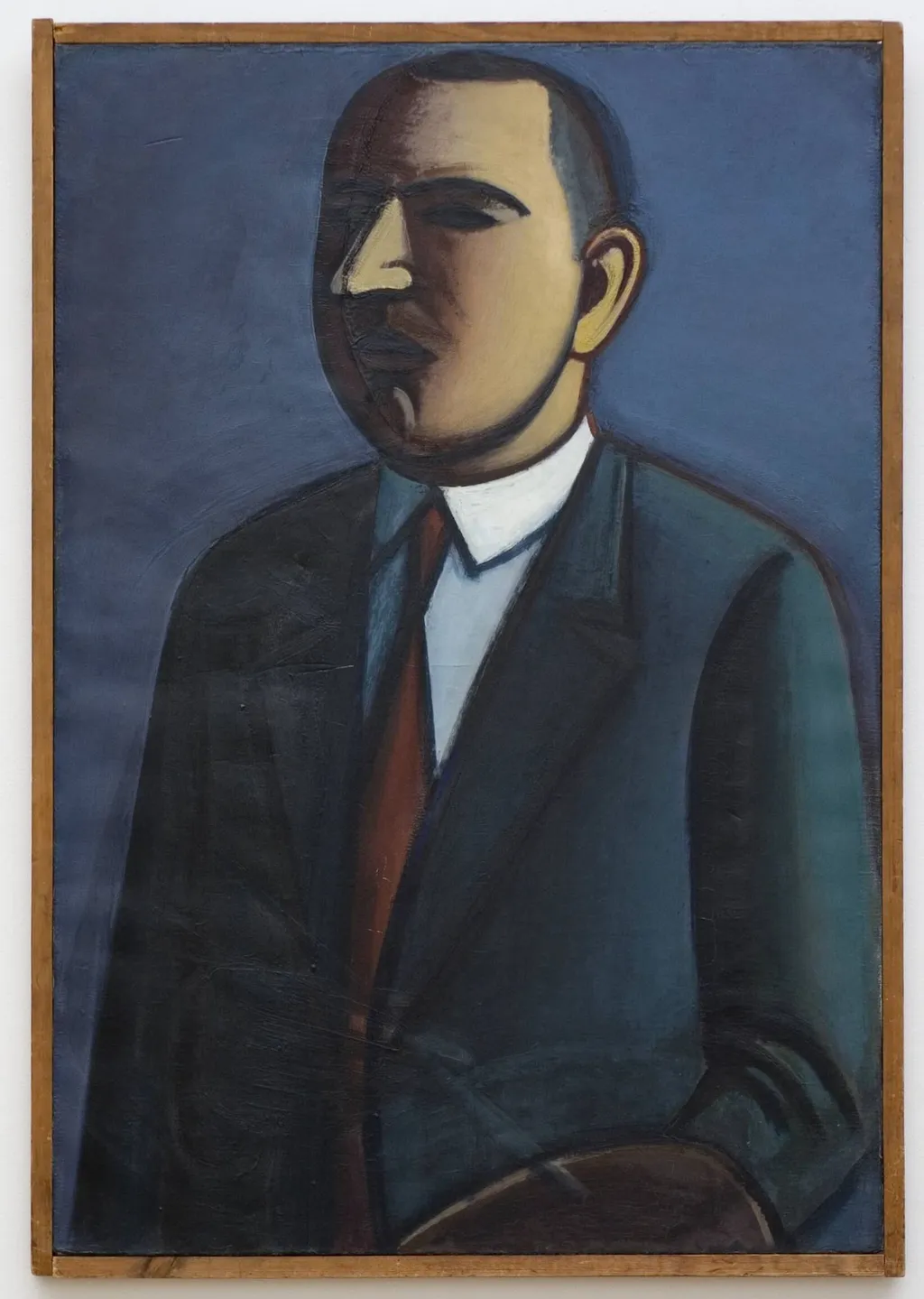
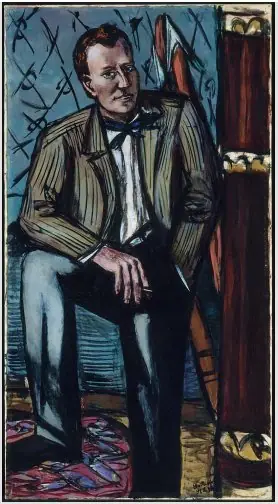
Self-Portrait is an unspecified painting by Unknown. It dates from 1927 and is held in the collection of the Statens Museum for Kunst.
About this work
Overview
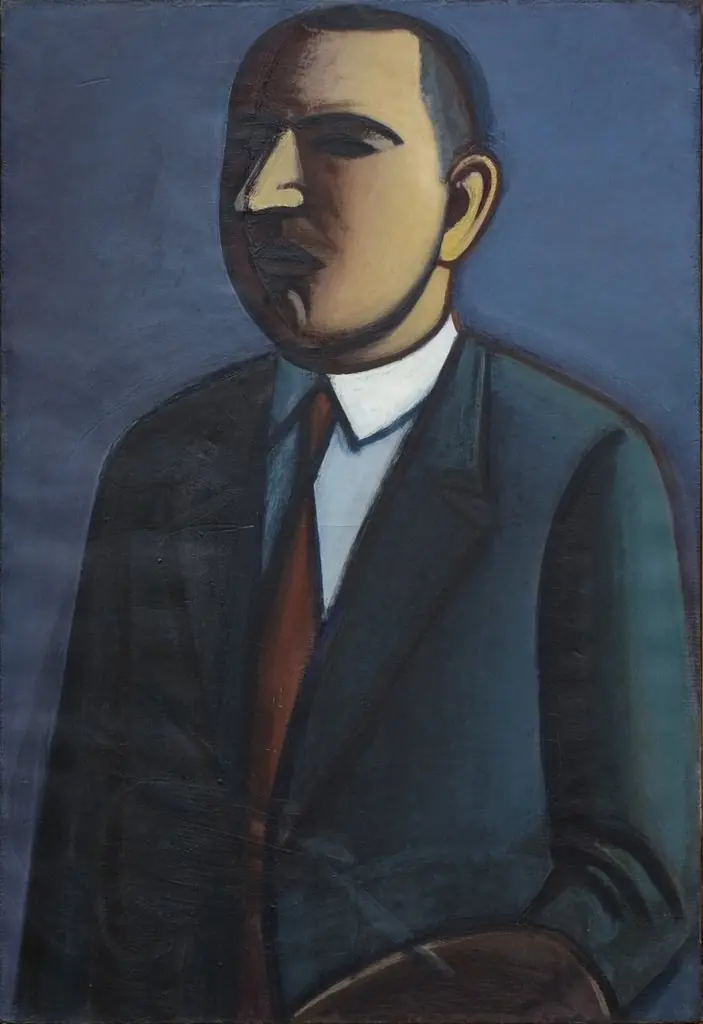
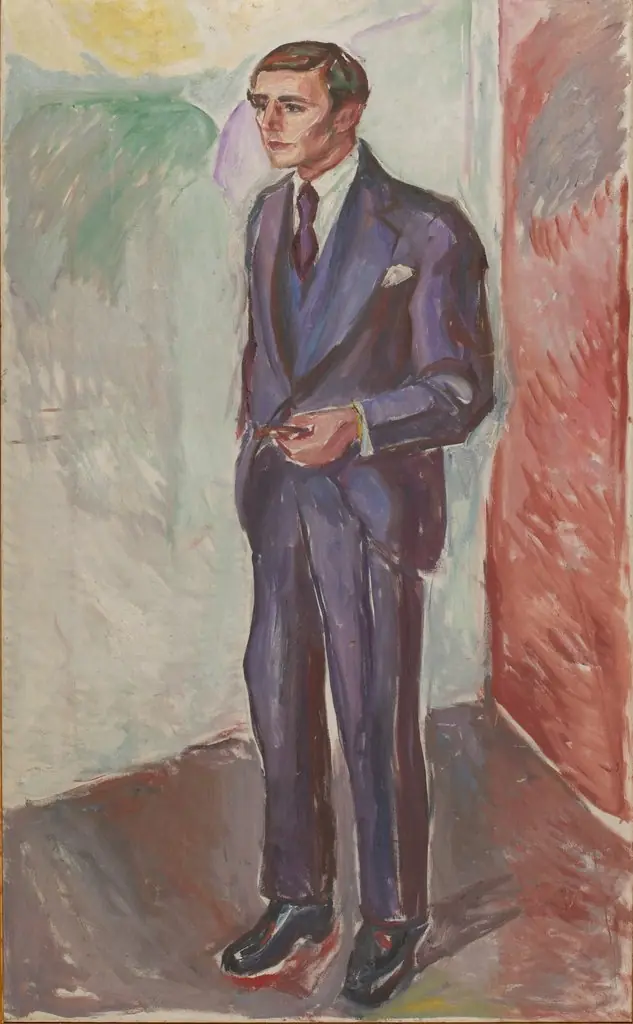
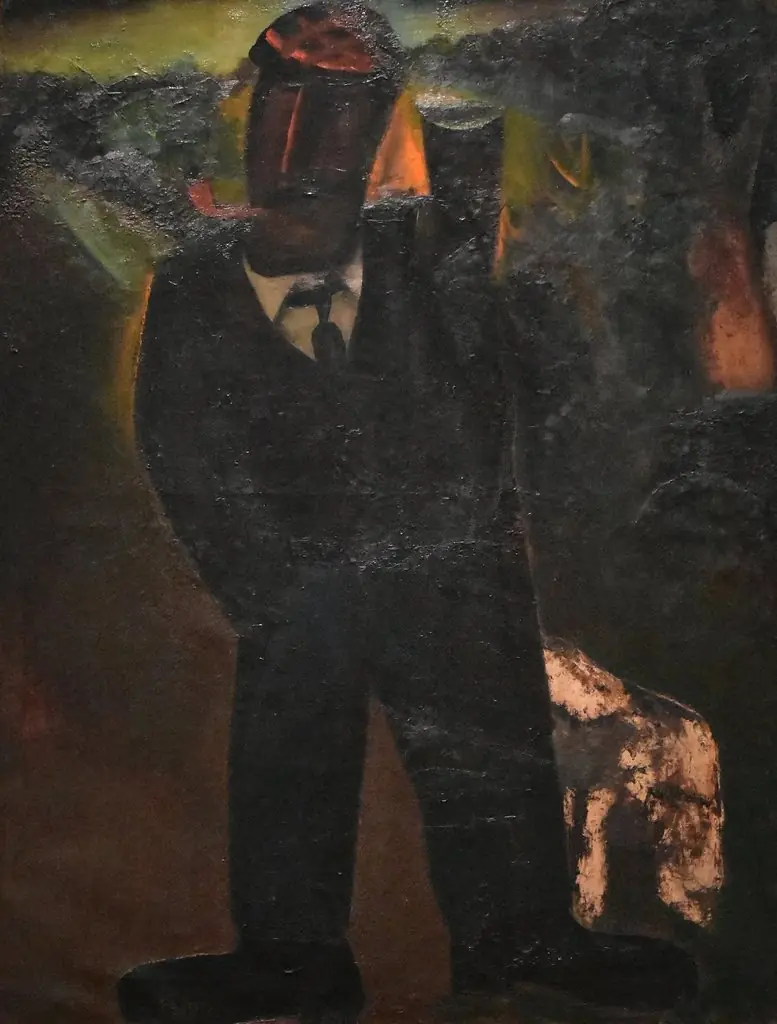
Created in 1927, this self-portrait depicts the artist in formal attire, rendered with deliberate physicality through thickly applied paint. The work resides in the Museum of Ethnography and reflects a personal study in presence and materiality. Its uncomplicated composition and tactile surface distinguish it from more refined portraiture of the period, emphasizing gesture over detail.
Subject & Meaning
The artist presents himself in a dark suit, white shirt, and red tie—clothing suggesting professional or civic identity. The calm, direct gaze and minimal facial features convey introspection rather than narrative. The absence of context or symbolism shifts focus to the act of self-representation itself, inviting consideration of identity as constructed through appearance and brushwork.
Technique & Style
Thick layers of paint, applied with visible, energetic strokes, create a sculptural effect on the figure’s face and jacket. This impasto technique emphasizes texture over smoothness, giving the surface a tactile quality. The dark blue background, flat and unmodulated, enhances the figure’s physical presence, reinforcing the materiality of the paint as a central element of expression.
History & Provenance
The painting entered the Museum of Ethnography’s collection after its creation in 1927. Its placement within an ethnographic institution, rather than a fine arts museum, suggests an interest in the artist’s cultural or personal expression as a form of human documentation. No public record of prior ownership or exhibition history is widely documented.
Context
In the late 1920s, many European artists were exploring expressive distortion and material emphasis in response to wartime trauma and shifting social norms. While this portrait lacks overt political or avant-garde symbolism, its raw handling aligns with broader trends favoring emotional authenticity over idealized representation, particularly in self-portraiture.
Legacy
The work contributes to a quiet but persistent tradition of self-portraiture that values physical presence and material honesty over psychological depth or narrative. Its inclusion in an ethnographic collection underscores its role as a record of individual identity, resonating with later movements that treated the self as a cultural artifact rather than a subject of idealization.
Artist & collection

 Domestic Scene
 Giacomo and Cardinal Marco, investing Andrea, Abbot of San Zeno, with his Benefice
 The Nymph of Fontainebleau
 Portrait of a Woman
 Madonna and Child with Saints in the Enclosed Garden
 Venus and Minerva
 Family Group of Four on Sofa
 Wall painting from Room H of the Villa of P. Fannius Synistor at Boscoreale