Artwork
A Moss Rose Tree Sourrounded by Summer Flowers
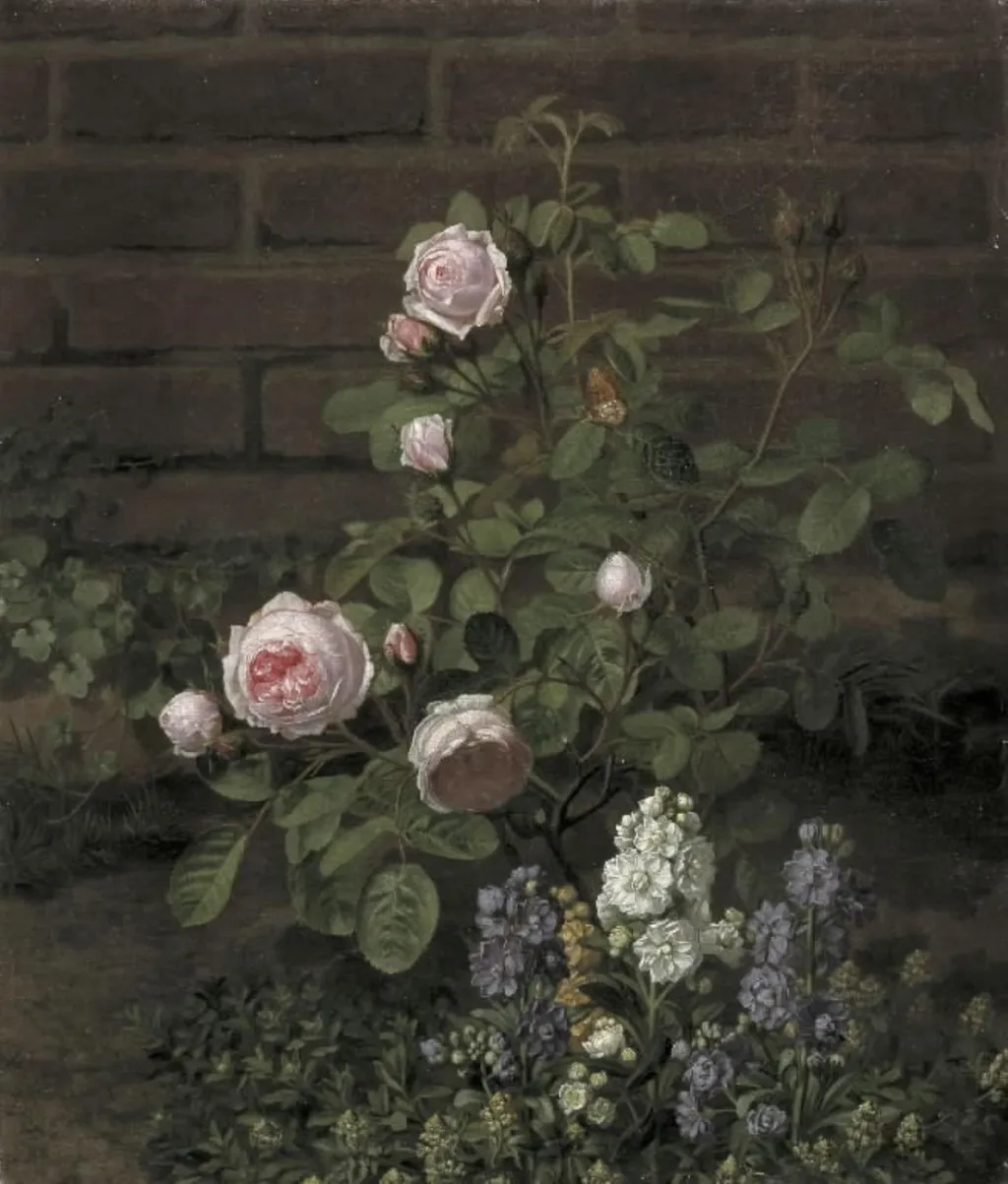
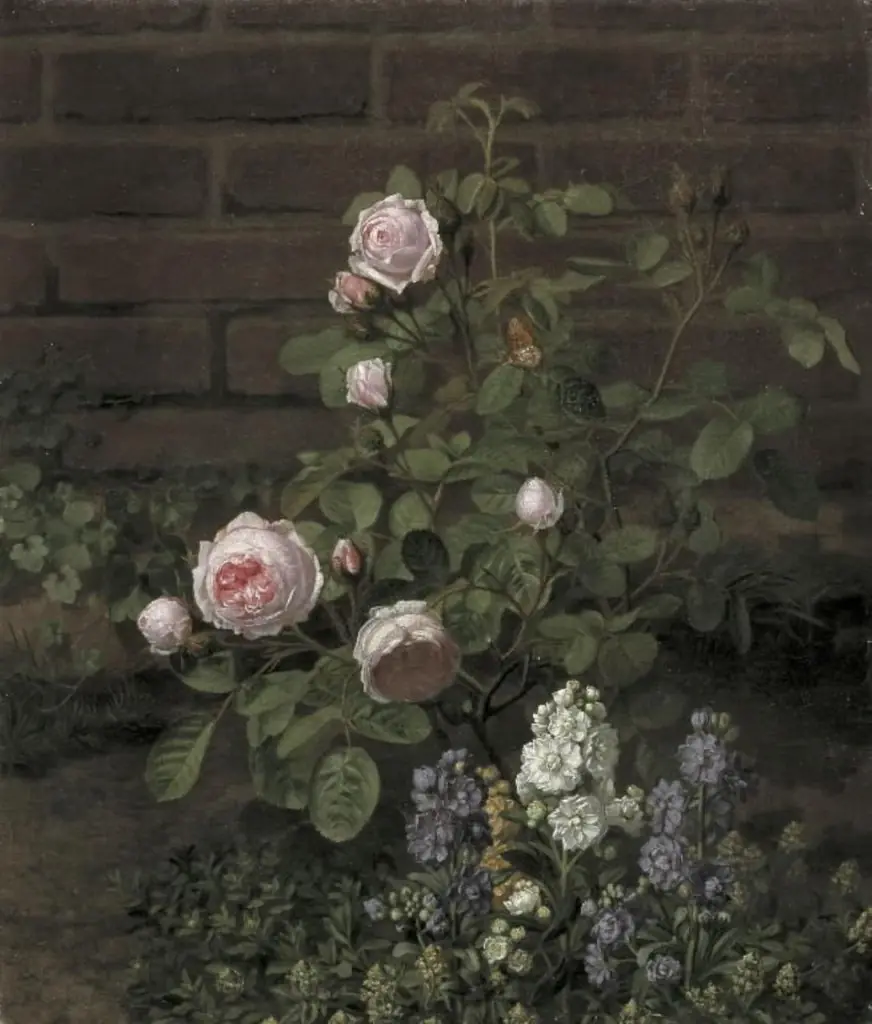
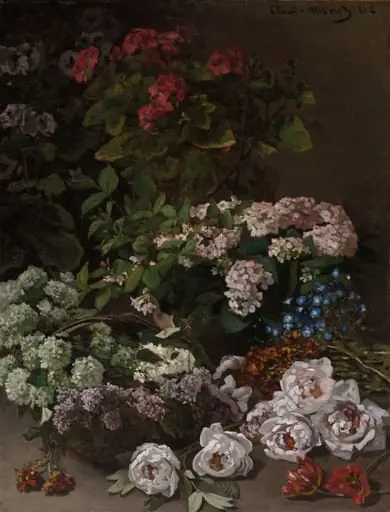
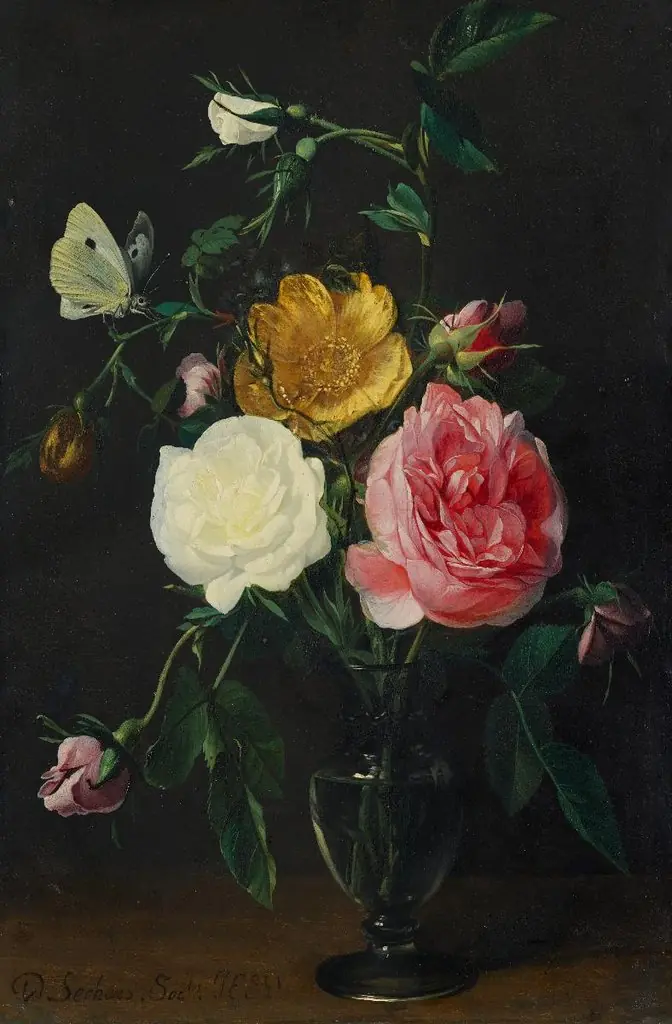
A Moss Rose Tree Sourrounded by Summer Flowers is a photography by the Impressionist artist Unknown. It dates from 1864 and is held in the collection of the Statens Museum for Kunst. Created in 1864, this photograph depicts a wild rose bush entwined with seasonal blooms, growing against a weathered brick wall.
About this work
Overview
Created in 1864, this photograph depicts a wild rose bush entwined with seasonal blooms, growing against a weathered brick wall.
Created in 1864, this photograph depicts a wild rose bush entwined with seasonal blooms, growing against a weathered brick wall. The image captures a quiet, unposed moment in a natural setting, emphasizing organic growth over formal composition. It is part of the collection at the Museum of Ethnography, reflecting a shift in visual culture toward direct observation of the natural world during the mid-to-late 19th century.
Subject & Meaning
The subject is a modest garden scene: pale pink moss roses in various stages of bloom, accompanied by wildflowers and scattered petals. There is no symbolic narrative or human presence—only the quiet lifecycle of plants. The work suggests an appreciation for transient beauty and the dignity of ordinary nature, aligning with broader cultural interests in authenticity and the overlooked details of daily life.
Technique & Style
The photograph employs natural light and a close-up perspective to highlight texture—the roughness of brick, the softness of petals, the delicate veins of leaves. Shadows and subtle tonal variations convey depth without theatrical contrast. The composition avoids idealization, favoring spontaneity and detail, characteristic of early photographic realism that sought to document rather than embellish.
History & Provenance
The photograph was made in 1864 by an artist whose name is recorded as 1153_person, though little else is known about their life or practice. It entered the Museum of Ethnography’s collection in the 20th century, likely as part of a broader effort to preserve vernacular visual records. Its survival reflects early recognition of photography’s role in documenting everyday environments.
Context
In the 1860s, advances in photographic technology enabled greater access to naturalistic imagery. Artists and amateurs increasingly turned to landscapes and flora as subjects, rejecting staged portraiture in favor of candid observation. This work aligns with the rise of Realism in visual arts, where truth to appearance replaced romanticized or idealized forms.
Legacy
Though not widely exhibited, the photograph contributes to a growing archive of 19th-century nature studies that helped redefine photography as a medium for scientific and aesthetic inquiry. Its quiet precision influenced later documentary traditions, affirming the value of unadorned natural scenes in visual culture.
Artist & collection

 Domestic Scene
 Giacomo and Cardinal Marco, investing Andrea, Abbot of San Zeno, with his Benefice
 The Nymph of Fontainebleau
 Portrait of a Woman
 Madonna and Child with Saints in the Enclosed Garden
 Venus and Minerva
 Family Group of Four on Sofa
 Wall painting from Room H of the Villa of P. Fannius Synistor at Boscoreale