Artwork
Christian II og Dyveke
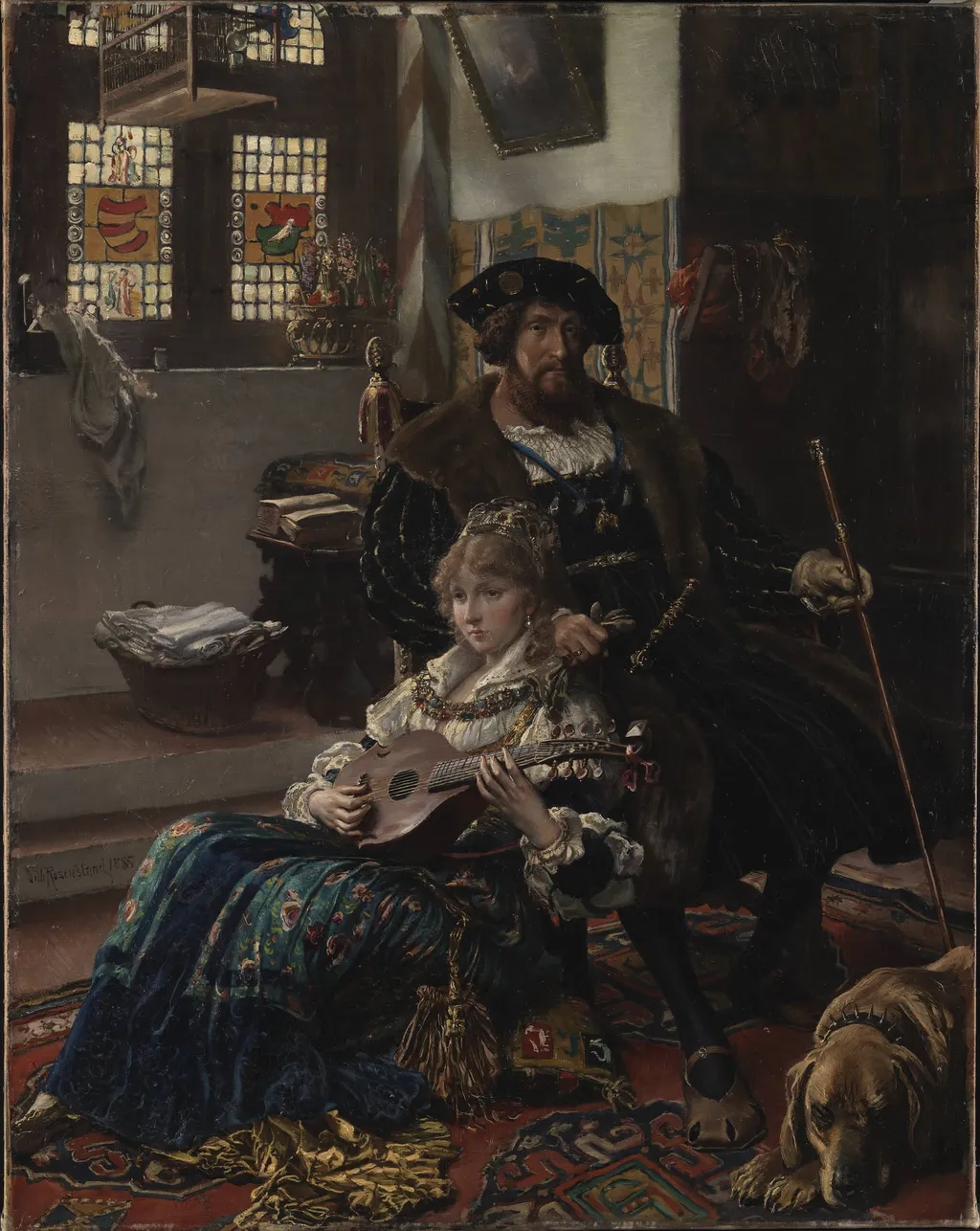
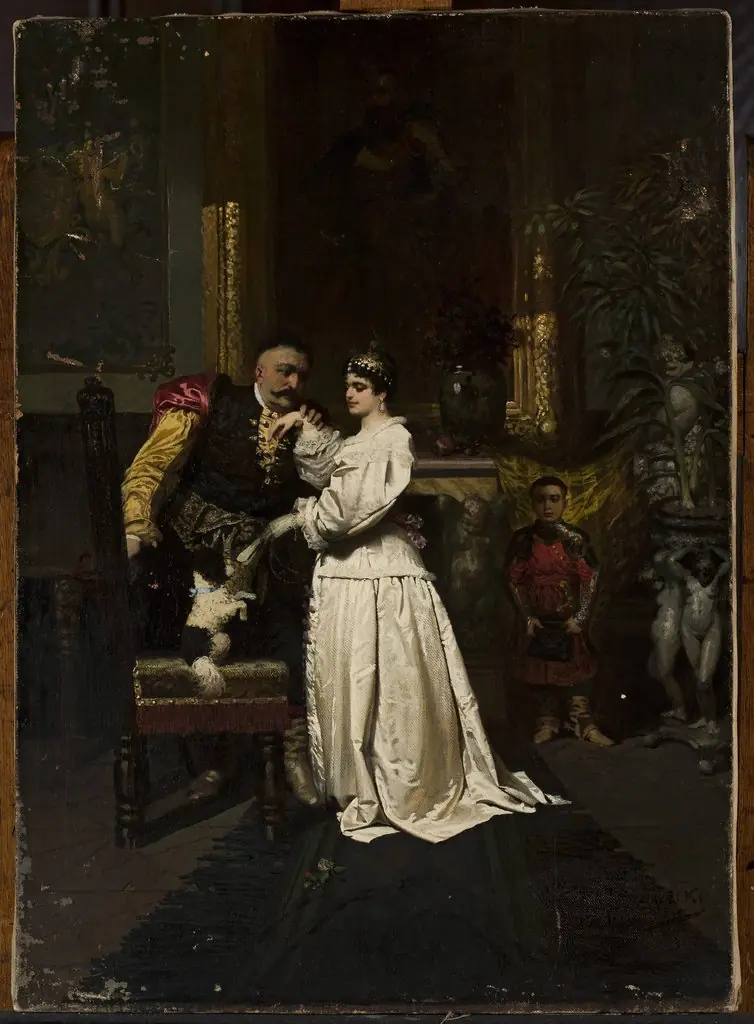
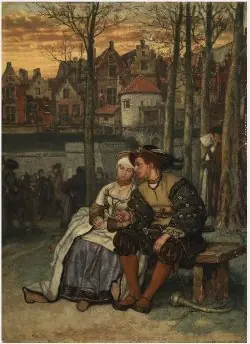
Christian II og Dyveke is a photography by the Impressionist artist Unknown. It dates from 1885 and is held in the collection of the Statens Museum for Kunst. Painted in 1885, this work portrays Christian II of Denmark and his mistress Dyveke Sigbritsdatter in an intimate domestic setting.
About this work
Overview
Painted in 1885, this work portrays Christian II of Denmark and his mistress Dyveke Sigbritsdatter in an intimate domestic setting.
Painted in 1885, this work portrays Christian II of Denmark and his mistress Dyveke Sigbritsdatter in an intimate domestic setting. The artist, whose name is not specified in the provided details, rendered the scene with attention to quiet realism. The painting resides in the Museum of Ethnography, where it is contextualized within broader narratives of Nordic historical figures and domestic life in the late 19th century.
Subject & Meaning
The figures depicted are Christian II, seated with a somber posture, and Dyveke, seated on the floor while playing a stringed instrument. Their contrasting postures and expressions suggest a complex personal relationship—authority versus tenderness, public duty versus private affection. The inclusion of a dog and domestic objects like a book and woven basket reinforces the intimacy of the moment, framing history through the lens of personal life rather than grandeur.
Technique & Style
The painting employs muted tones and careful modeling to convey texture and spatial depth. Light falls gently across the figures, highlighting the fabric of Dyveke’s blouse and the wood of the instrument. The background details—colorful window panes, a woven basket—are rendered with subtle precision, suggesting influence from Northern European realism. The composition avoids theatricality, favoring quiet observation over dramatic gesture.
History & Provenance
Created in 1885, the painting entered the collection of the Museum of Ethnography shortly after its completion. Its acquisition reflects late 19th-century interest in reconstructing historical narratives through domestic scenes. While the artist remains unnamed in available records, the work’s preservation indicates its perceived value in illustrating personal dimensions of Danish royal history, distinct from official portraiture.
Context
In the 1880s, Scandinavian artists increasingly turned to historical subjects not for glorification, but to explore psychological and social nuance. This painting aligns with that trend, portraying a royal couple not in ceremony but in repose. Dyveke, historically known for her influence over Christian II, is depicted with agency and grace, reflecting contemporary shifts in how women’s roles in history were being reconsidered.
Legacy
Though not widely reproduced, the painting contributes to a quieter strand of Nordic historical art that prioritizes emotional authenticity over spectacle. Its presence in an ethnographic museum underscores its role as a cultural artifact—offering insight into how 19th-century viewers imagined the private lives of historical figures, blending fact with empathetic reconstruction.
Artist & collection

 Domestic Scene
 Giacomo and Cardinal Marco, investing Andrea, Abbot of San Zeno, with his Benefice
 The Nymph of Fontainebleau
 Portrait of a Woman
 Madonna and Child with Saints in the Enclosed Garden
 Venus and Minerva
 Family Group of Four on Sofa
 Wall painting from Room H of the Villa of P. Fannius Synistor at Boscoreale