Artwork
Bemalet skab, dateret 1727, i en stue fra Læsø
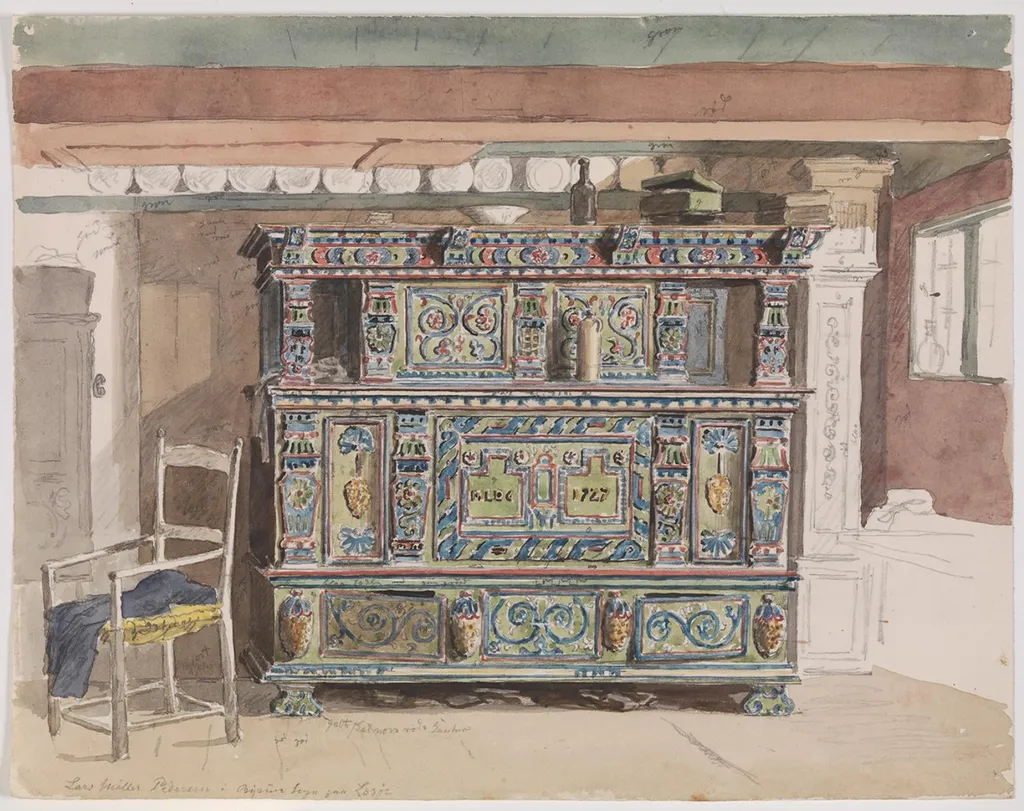
Bemalet skab, dateret 1727, i en stue fra Læsø is an unspecified painting by the Romanticist artist Unknown. It dates from 1847 and is held in the collection of the Statens Museum for Kunst.
About this work
The cabinet has three shelves, each decorated with painted patterns—swirls, faces, and tiny buildings.
This painting shows a bright, colorful wooden cabinet in a simple room. The cabinet has three shelves, each decorated with painted patterns—swirls, faces, and tiny buildings. A wooden chair with a blue cushion sits nearby, and the walls look plain and slightly worn.
The cabinet’s front panels have the year 1727 painted on them, suggesting it’s old. The artist focused on the craftsmanship and details of everyday objects, not grand scenes.
Next, look up Romanticism to see how this style valued ordinary life and tradition.
Overview
The piece depicts a vividly painted wooden cabinet dated 1727, positioned within a modest interior that appears to belong to the Danish island of Læsø. The cabinet, with three shelves adorned by decorative motifs, is accompanied by a simple wooden chair with a blue cushion, all set against plain, slightly weathered walls. The work was executed in 1847 and is part of the Museum of Ethnography’s collection.
Subject & Meaning
The focus rests on an everyday object—a domestic storage cabinet—highlighting the material culture of early eighteenth‑century Danish life. By rendering the painted panels, ornamental swirls, faces and miniature building forms, the artist draws attention to the craftsmanship and aesthetic preferences of the period, offering a quiet celebration of ordinary household furnishings.
Technique & Style
Rendered in a realistic yet restrained manner, the painting employs careful brushwork to capture the texture of wood and the sheen of painted surfaces. The colour palette is bright, emphasizing the cabinet’s decorative schemes while maintaining a subdued background, reflecting a nineteenth‑century interest in documenting folk art and vernacular design with fidelity.
History & Provenance
Although the cabinet itself originates from 1727, the artwork was produced in 1847 by the artist identified as 1166_person. It entered the Museum of Ethnography’s holdings at an unspecified date, where it serves as a visual record of Danish folk furniture and interior decoration from the early modern era.
Context
Created during a period when Romanticism encouraged the appreciation of rural traditions and everyday life, the painting aligns with contemporary efforts to preserve and valorise regional cultural artifacts. The depiction of a Læsø interior underscores the broader nineteenth‑century fascination with local heritage and the material expressions of community identity.
Artist & collection

 Domestic Scene
 Giacomo and Cardinal Marco, investing Andrea, Abbot of San Zeno, with his Benefice
 The Nymph of Fontainebleau
 Portrait of a Woman
 Madonna and Child with Saints in the Enclosed Garden
 Venus and Minerva
 Family Group of Four on Sofa
 Wall painting from Room H of the Villa of P. Fannius Synistor at Boscoreale
 Design for Breakfront
 Two Studies of an Interior with Furniture
 Interior of an Exotic Palace
 The Court of the Mosque, Alhambra
 Part of the Russian Court
 Study of a fireplace, a writing desk and a rush-seated ladderback chair
 Celda prioral del Monasterio de El Escorial
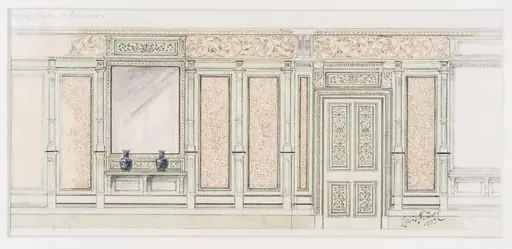 Untitled
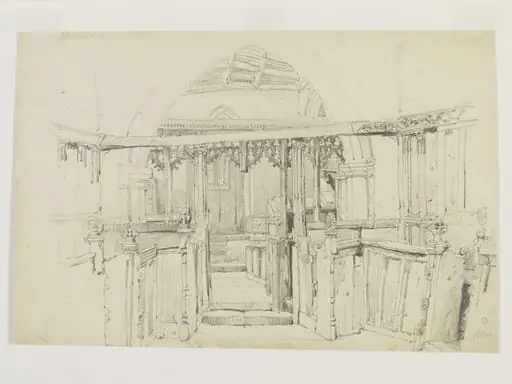 Blore-Ray Church in Staffordshire
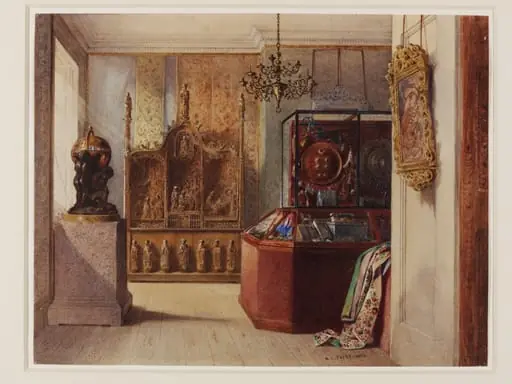 Marlborough House: First Room
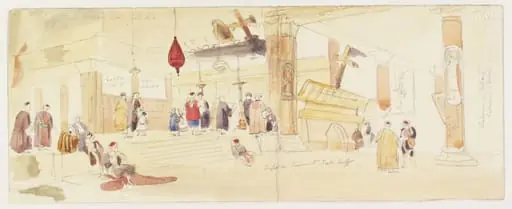 Chancel of the Church of the Nativity, Bethlehem.
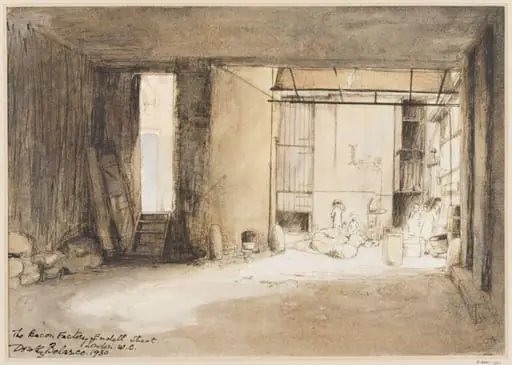 The Bacon Factory, Endell Street, London