Artwork
Udkast til freskerne i Viborg Domkirke. Sejrsbuen
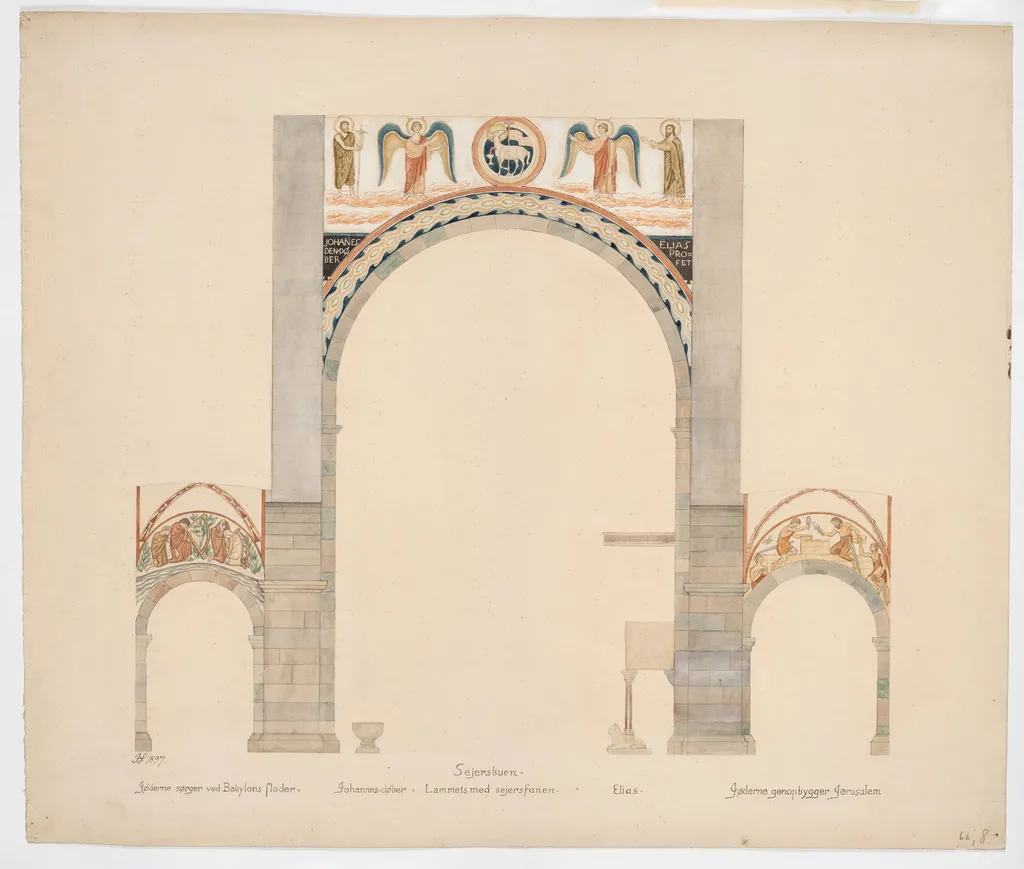
Udkast til freskerne i Viborg Domkirke. Sejrsbuen is an unspecified painting by the Impressionist artist Unknown. It dates from 1897 and is held in the collection of the Statens Museum for Kunst. This 1897 drawing by 1231_person serves as a preparatory study for frescoes intended for Viborg Cathedral.
About this work
Overview
Rendered in flat, restrained hues with selective use of red, blue, and gold, the work emphasizes structural clarity over naturalism.
This 1897 drawing by 1231_person serves as a preparatory study for frescoes intended for Viborg Cathedral. It presents a compositional layout of three stone arches, each framing symbolic scenes. The central arch contains celestial imagery, while the flanking ones depict biblical narratives. Rendered in flat, restrained hues with selective use of red, blue, and gold, the work emphasizes structural clarity over naturalism. It is held in the collection of the Museum of Ethnography.
Subject & Meaning
The drawing illustrates episodes from Christian tradition, identified by inscriptions beneath the side arches: 'Elias' and 'Johannes-døber' reference the prophets Elijah and John the Baptist. The central arch features a lamb within a radiant circle, symbolizing Christ, flanked by angels. These motifs reflect liturgical themes meant to instruct worshippers, though the drawing’s purpose was not devotional but architectural—mapping iconographic placement within the cathedral’s vaulted space.
Technique & Style
The artist employed bold, clean outlines and simplified forms to define architectural and figural elements. Color is used symbolically rather than descriptively: muted tones ground the composition, while the lamb’s halo and angelic robes stand out in vivid red, blue, and gold. There is no attempt at modeling or depth; instead, the emphasis lies in graphic clarity, suggesting a deliberate alignment with medieval mural traditions rather than Renaissance naturalism.
History & Provenance
Created in 1897 as part of a proposed fresco cycle for Viborg Cathedral, the drawing was never executed in its original context. It entered the Museum of Ethnography’s collection, likely due to its ethnographic interest in Nordic religious art revival movements. The work remained a study, unused in the cathedral, and its survival reflects scholarly interest in 19th-century ecclesiastical design processes.
Context
This drawing emerged during a period of renewed interest in medieval church decoration across Scandinavia. Artists and architects sought to revive pre-Reformation visual languages, often drawing from Danish and European Romanesque sources. While contemporaries like Poul Henningsen explored modernist forms, this study adheres to symbolic, flattened aesthetics, aligning with broader nationalist efforts to reconnect with Denmark’s religious heritage.
Legacy
Though the frescoes were never painted, this study influenced later Danish ecclesiastical art by demonstrating how simplified forms could convey sacred narratives. It remains a key document in understanding how 19th-century designers interpreted medieval models without direct replication. Its preservation offers insight into the transition from historical revival to modern religious art in Nordic contexts.
Artist & collection

 Domestic Scene
 Giacomo and Cardinal Marco, investing Andrea, Abbot of San Zeno, with his Benefice
 The Nymph of Fontainebleau
 Portrait of a Woman
 Madonna and Child with Saints in the Enclosed Garden
 Venus and Minerva
 Family Group of Four on Sofa
 Wall painting from Room H of the Villa of P. Fannius Synistor at Boscoreale
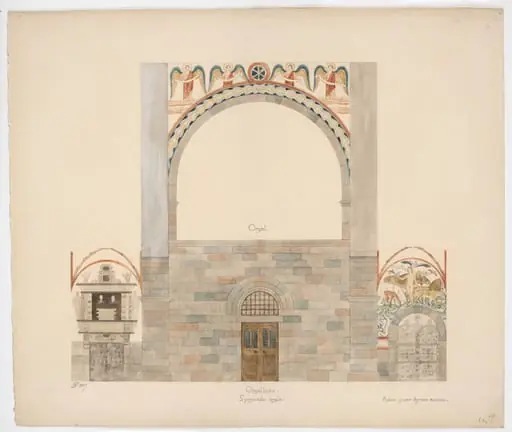 Udkast til freskerne i Viborg Domkirke. Orgelbuen
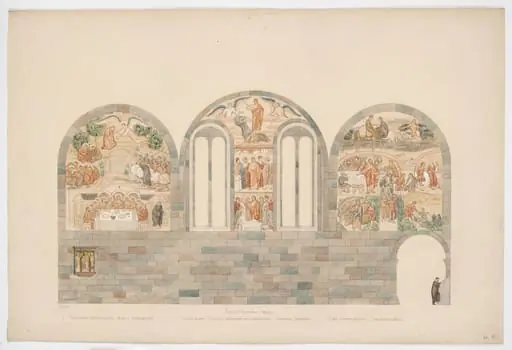 Udkast til freskerne i Viborg Domkirke. Søndre korsarms vægge
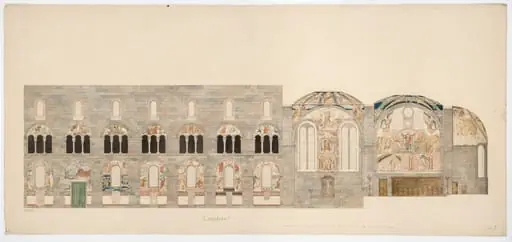 Udkast til freskerne i Viborg Domkirke. Længdesnit, med målestok
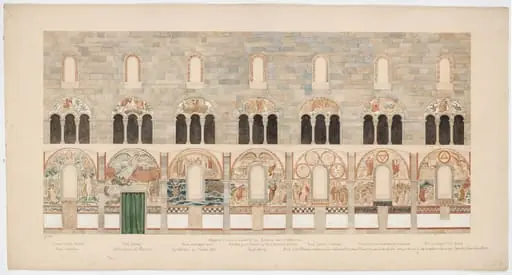 Udkast til freskerne i Viborg Domkirke. Væggene. Nordre sideskib og felterne over Triforierne
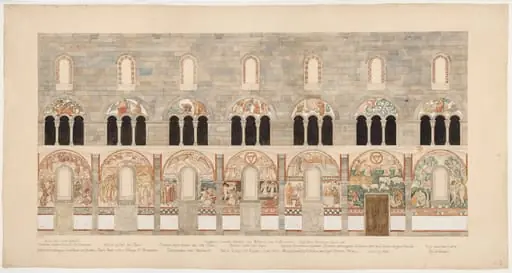 Udkast til freskerne i Viborg Domkirke. Væggene. Søndre sideskib og felterne over Triforierne
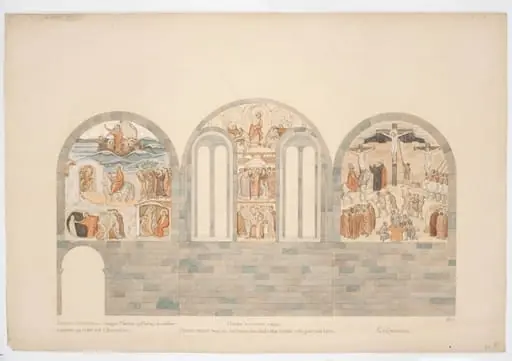 Udkast til freskerne i Viborg Domkirke. Nordre korsarms vægge
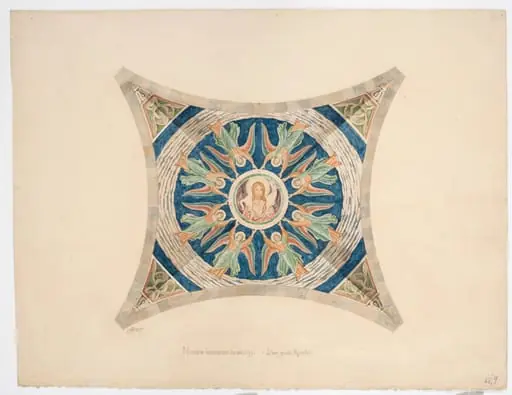 Udkast til freskerne i Viborg Domkirke. Nordre korsarms-hvælvning
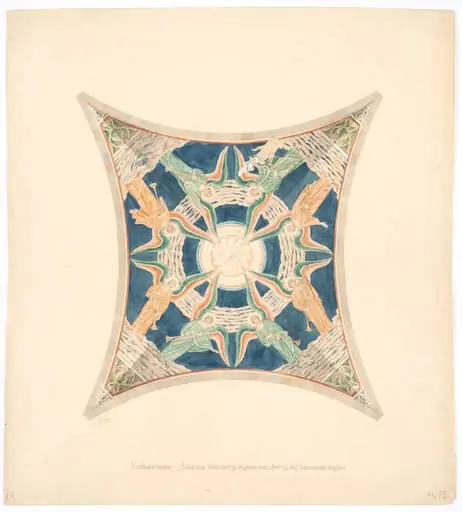 Udkast til freskerne i Viborg Domkirke. Korhvælvingen
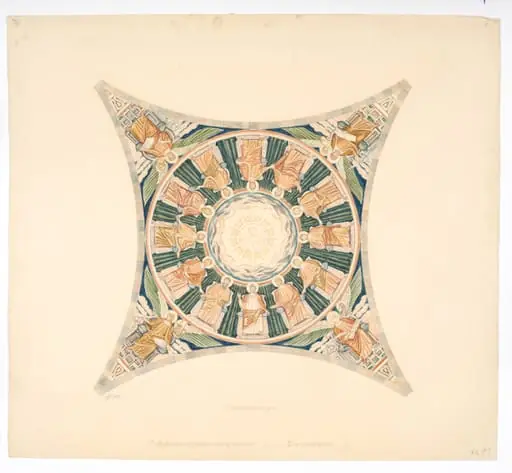 Udkast til freskerne i Viborg Domkirke. Midterhvælvingen