Artwork
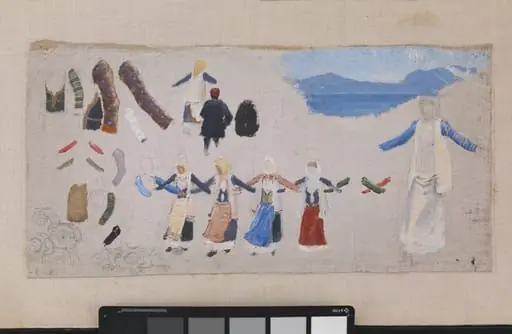
Kvindedansen i Megara
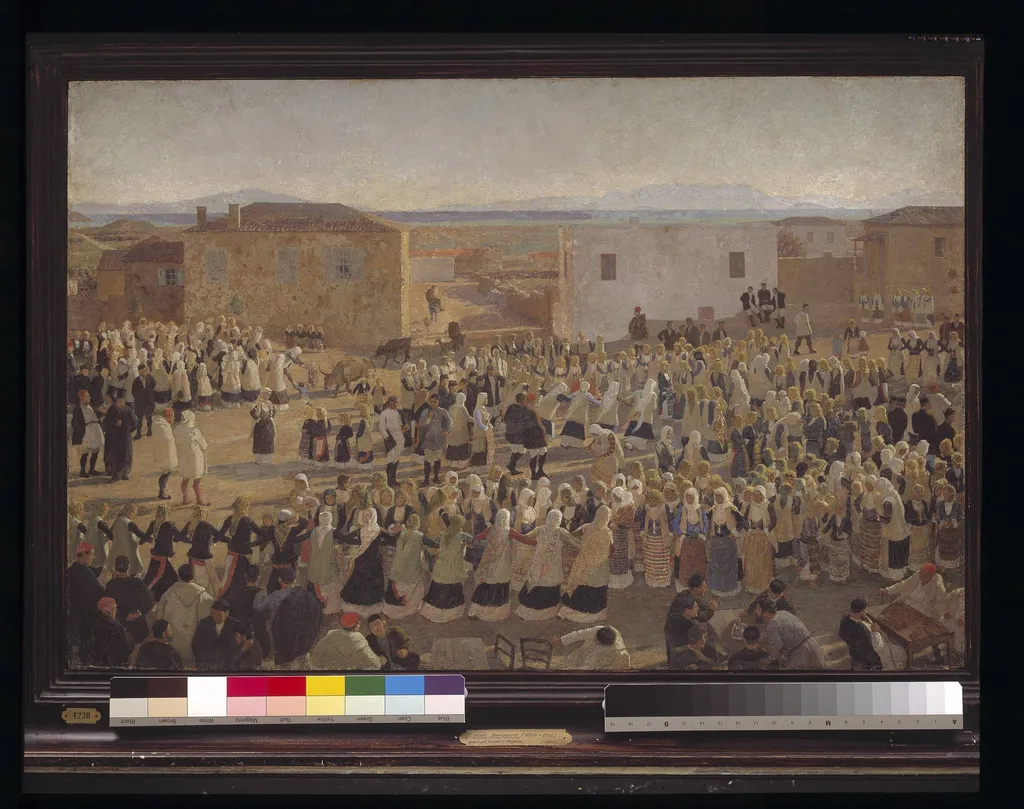
Kvindedansen i Megara is a photography by the Impressionist artist Unknown. It dates from 1897 and is held in the collection of the Statens Museum for Kunst.
About this work
Overview
Painted in 1897 by 1232_person, Kvindedansen i Megara captures a communal gathering in a Scandinavian town square. The work is part of the Museum of Ethnography’s collection and reflects the artist’s interest in documenting regional customs. Its composition centers on a group of dancers, surrounded by spectators, set against a muted landscape that suggests a late autumn or early spring day.
Subject & Meaning
The scene avoids theatricality, instead presenting the dance as an organic, everyday expression of shared heritage.
The painting portrays a traditional women’s dance, likely tied to a seasonal or ritual celebration. Participants wear regional attire—long skirts and headscarves—emphasizing cultural identity. The presence of musicians and onlookers indicates a collective event, reinforcing themes of community continuity. The scene avoids theatricality, instead presenting the dance as an organic, everyday expression of shared heritage.
Technique & Style
The artist employs loose, energetic brushwork to convey motion and atmosphere. Warm ochres and earth tones define the buildings and garments, contrasting with the cool grays of the overcast sky. Light is diffused, enhancing the sense of an overcast day. The brushstrokes are deliberate yet unrefined, avoiding idealization in favor of a direct, observational approach that grounds the scene in realism.
History & Provenance
Created in 1897, the painting entered the Museum of Ethnography’s collection shortly after its completion. It was likely acquired as part of a broader effort to document Nordic folk traditions during a period of rising national cultural interest. No significant changes in ownership are recorded, and the work has remained in public institutional care since its acquisition.
Context
In the late 19th century, Scandinavian artists increasingly turned to rural life and folk customs as subjects, responding to industrialization and urbanization. This painting aligns with that movement, offering a quiet record of local practice rather than a romanticized myth. It reflects a scholarly, ethnographic impulse common among artists and institutions seeking to preserve cultural memory.
Legacy
Kvindedansen i Megara remains a quiet but significant document of regional tradition. While not widely exhibited beyond its home institution, it contributes to the historical record of Nordic folk practices. Its unembellished style and focus on ordinary ritual distinguish it from more dramatic depictions of peasant life, offering instead a restrained, authentic glimpse into communal life.
Artist & collection

 Domestic Scene
 Giacomo and Cardinal Marco, investing Andrea, Abbot of San Zeno, with his Benefice
 The Nymph of Fontainebleau
 Portrait of a Woman
 Madonna and Child with Saints in the Enclosed Garden
 Venus and Minerva
 Family Group of Four on Sofa
 Wall painting from Room H of the Villa of P. Fannius Synistor at Boscoreale