Artwork
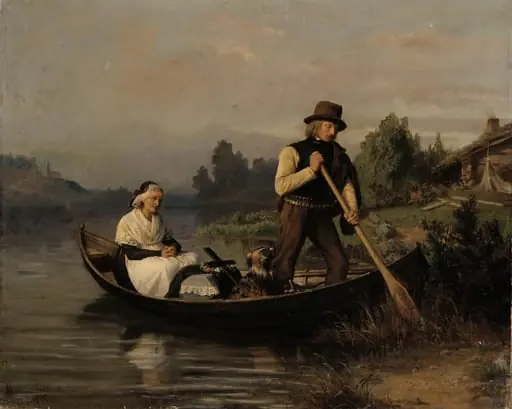
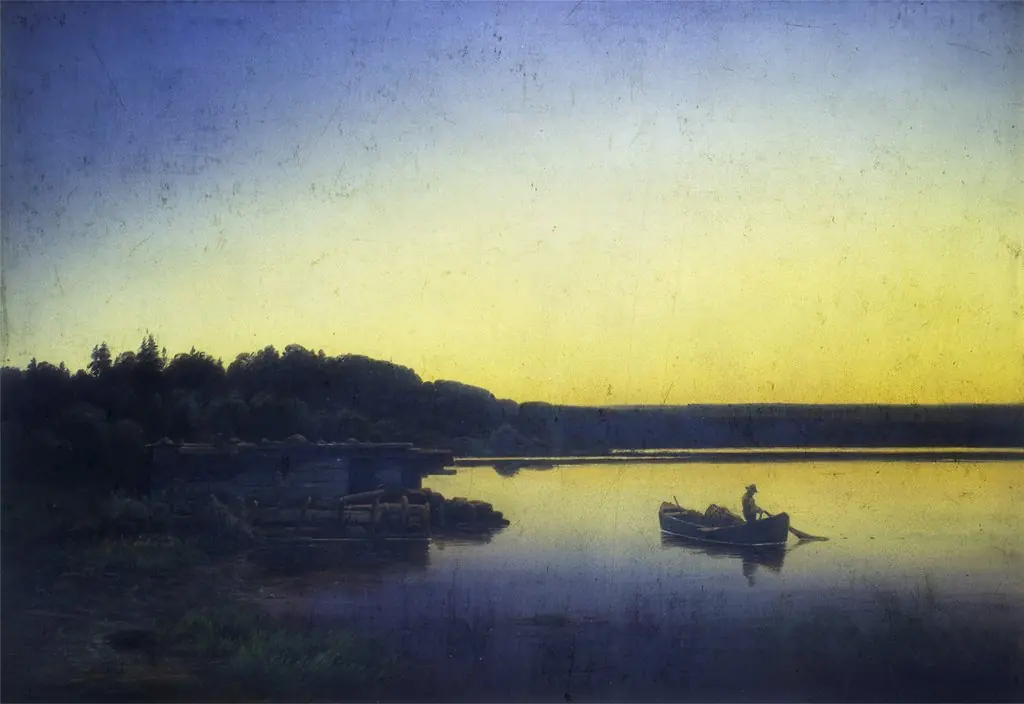
En gammel fisker der om aftenen sætter sine garn ud
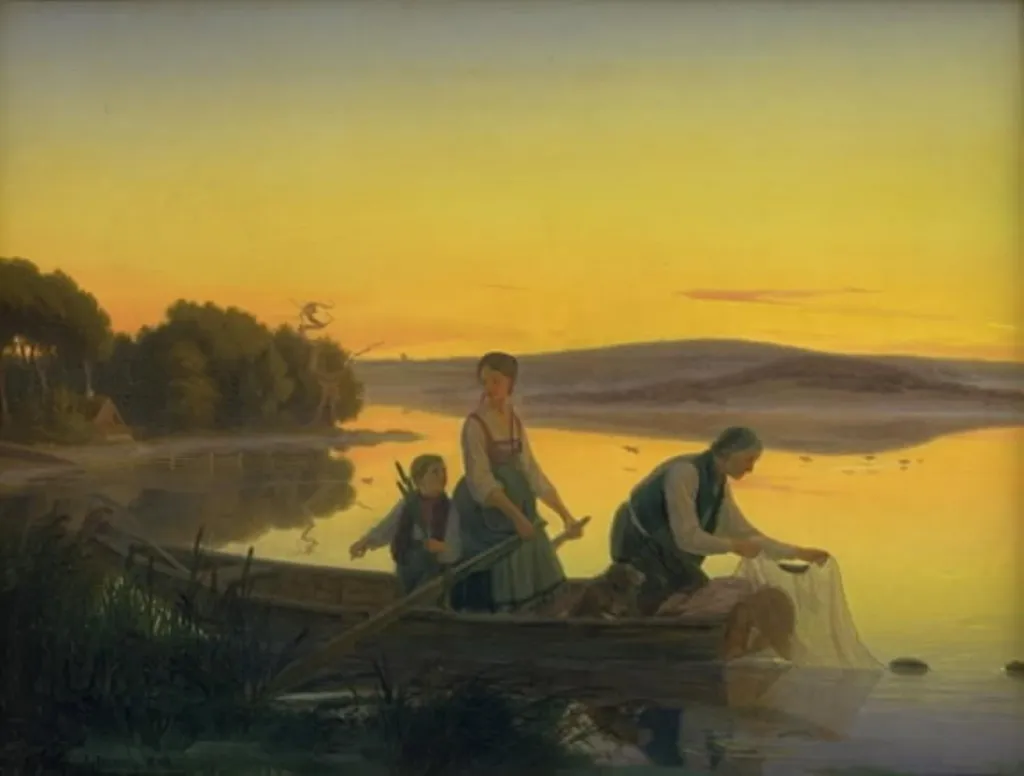
En gammel fisker der om aftenen sætter sine garn ud is a photography by the Romanticist artist Unknown. It dates from 1844 and is held in the collection of the Statens Museum for Kunst. This 1844 work by an unidentified artist depicts a tranquil evening scene along a coastal inlet.
About this work
Overview
This 1844 work by an unidentified artist depicts a tranquil evening scene along a coastal inlet. Three figures occupy a modest wooden vessel as dusk approaches, their activities suggesting the methodical routines of subsistence fishing. The composition balances human presence with the subdued grandeur of the natural environment, evoking a moment of quiet labor at day’s end.
Subject & Meaning
The figures’ gestures—one standing, another seated, the third bent over equipment—imply collaboration and endurance.
The painting centers on the daily life of rural fishermen, capturing a fleeting interval between effort and rest. The figures’ gestures—one standing, another seated, the third bent over equipment—imply collaboration and endurance. The muted light and serene waters amplify the scene’s meditative quality, framing labor not as struggle but as an unremarkable, almost timeless act within the rhythms of nature.
Technique & Style
Rendered with delicate tonal gradations, the work employs soft contrasts to convey the fading light of sunset. Brushwork remains restrained, prioritizing atmospheric effect over fine detail. The artist’s handling of light and shadow lends warmth to the scene, while the composition’s horizontality reinforces the sense of calm. Such techniques align with Romantic-era tendencies to idealize rural life and natural landscapes.
History & Provenance
Created in 1844, the painting has been part of the Museum of Ethnography’s collection since an unspecified date. Little is documented about its early ownership or the circumstances of its creation. Its preservation within an ethnographic institution suggests a focus on cultural practices rather than purely aesthetic considerations, though its stylistic traits remain consistent with mid-19th-century European landscape traditions.
Context
The mid-1800s marked a period of heightened interest in rural and maritime subjects among European artists, reflecting broader cultural shifts toward nationalism and the valorization of traditional lifeways. Works like this one often served as visual records of occupations perceived as vanishing or threatened by industrialization. The painting’s emphasis on light and mood also reflects Romanticism’s preoccupation with nature’s emotional resonance.
Artist & collection

 Domestic Scene
 Giacomo and Cardinal Marco, investing Andrea, Abbot of San Zeno, with his Benefice
 The Nymph of Fontainebleau
 Portrait of a Woman
 Madonna and Child with Saints in the Enclosed Garden
 Venus and Minerva
 Family Group of Four on Sofa
 Wall painting from Room H of the Villa of P. Fannius Synistor at Boscoreale