Artwork
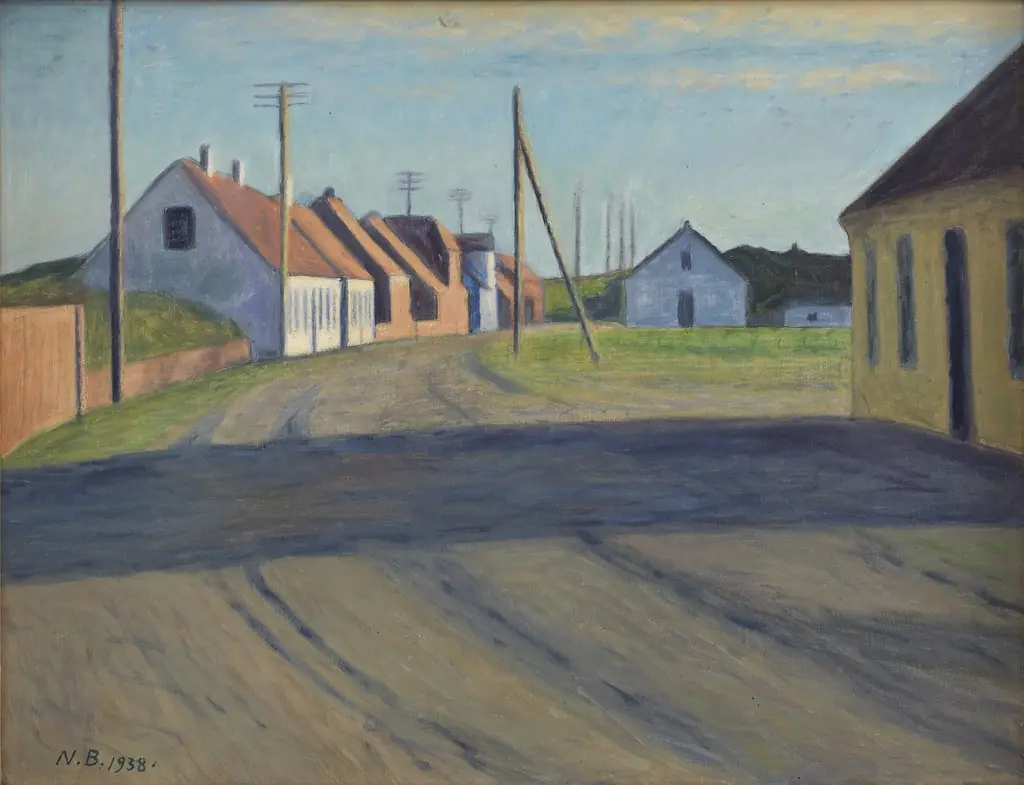
Road in a small town. Strande
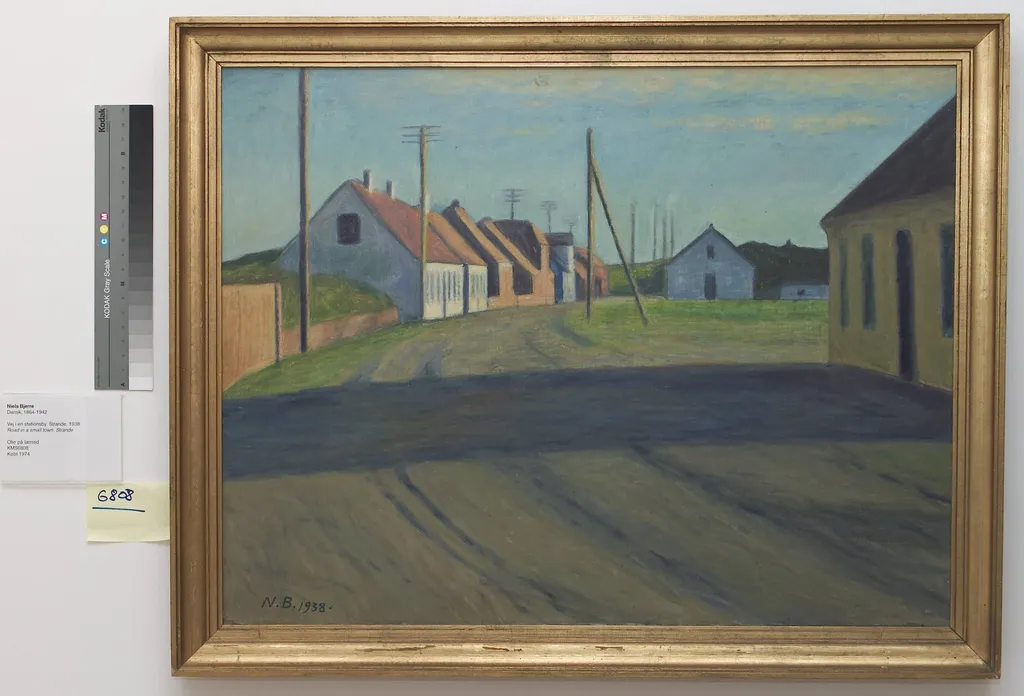
Road in a small town. Strande is a photography by Unknown. It dates from 1938 and is held in the collection of the Statens Museum for Kunst. Created in 1938 by the artist 132_person, this image captures a quiet road in the Danish town of Strande.
About this work
Overview
Its modest scale and unadorned subject reflect a deliberate focus on the ordinary, avoiding dramatic narrative in favor of atmospheric stillness.
Created in 1938 by the artist 132_person, this image captures a quiet road in the Danish town of Strande. Rendered in oil on canvas, the work is part of the Museum of Ethnography’s collection. Its modest scale and unadorned subject reflect a deliberate focus on the ordinary, avoiding dramatic narrative in favor of atmospheric stillness. The painting’s quietude aligns with broader interwar tendencies to find meaning in everyday landscapes.
Subject & Meaning
The scene portrays a narrow road flanked by modest dwellings and utility poles, leading the eye toward a distant horizon. No figures are present, enhancing the sense of solitude. The absence of activity invites contemplation rather than storytelling. The work suggests a meditation on rural tranquility during a period of rapid modernization, valuing the quiet persistence of small-town life over spectacle.
Technique & Style
The artist employs a restrained palette of soft grays, muted greens, and pale blues, with minimal contrast. Brushwork is gentle and blended, avoiding sharp edges or texture. Light is diffused, suggesting overcast conditions, and perspective is subtly receding to emphasize depth without theatricality. These choices reinforce the painting’s subdued mood, prioritizing emotional resonance over technical display.
History & Provenance
The painting entered the Museum of Ethnography’s holdings shortly after its creation, likely through direct acquisition or donation by the artist. Its inclusion in a museum focused on cultural artifacts, rather than fine art, signals an interest in documenting vernacular life. No significant exhibitions or ownership changes are documented, suggesting it has remained in institutional care since the late 1930s.
Context
Made during the late 1930s, the work emerges amid rising political tensions in Europe, yet avoids any overt reference to contemporary events. It aligns with Scandinavian regionalist trends that valued local identity and quiet realism. Unlike urban modernist movements, this piece reflects a deliberate retreat from industrialization, offering a visual anchor to pre-modern rhythms of rural Denmark.
Legacy
Though not widely reproduced or studied outside Denmark, the painting remains a quiet example of mid-century Nordic realism. Its preservation in an ethnographic context underscores its role as a cultural document rather than a celebrated artwork. It continues to serve as a reference for studies on everyday visual culture in interwar Denmark, valued for its sincerity over its novelty.
Artist & collection

 Domestic Scene
 Giacomo and Cardinal Marco, investing Andrea, Abbot of San Zeno, with his Benefice
 The Nymph of Fontainebleau
 Portrait of a Woman
 Madonna and Child with Saints in the Enclosed Garden
 Venus and Minerva
 Family Group of Four on Sofa
 Wall painting from Room H of the Villa of P. Fannius Synistor at Boscoreale
 A Landscape with Farm Houses in the West of Jutland
 Street with Figure
 Untitled
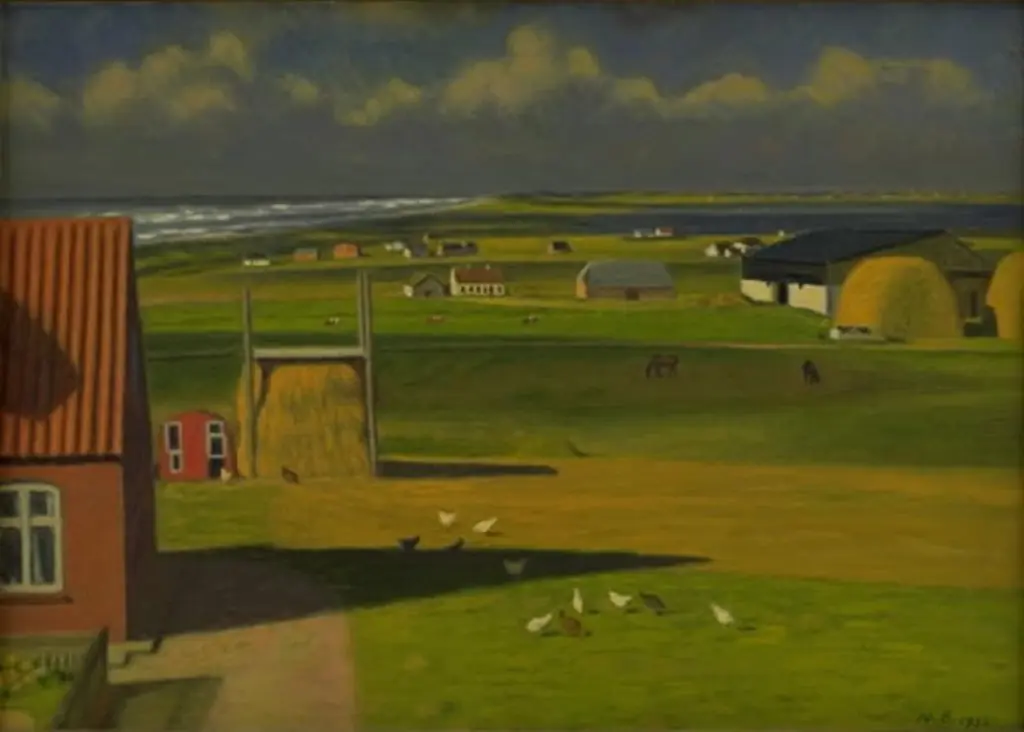 A Landscape with Farm Houses in the West of Jutland
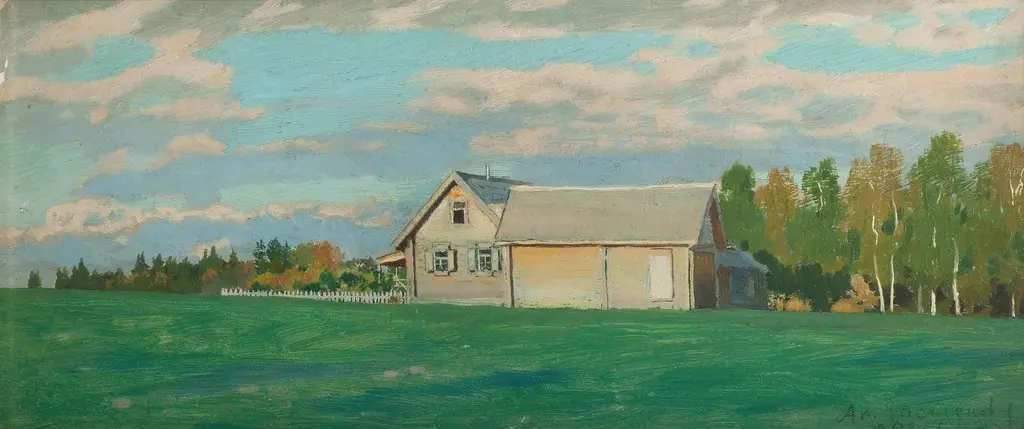 Abramtsevo. Yashka's house
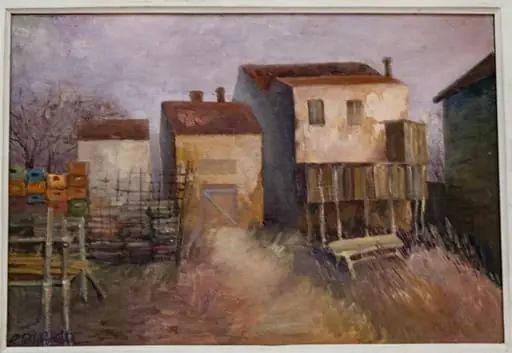 Amurg de toamnă
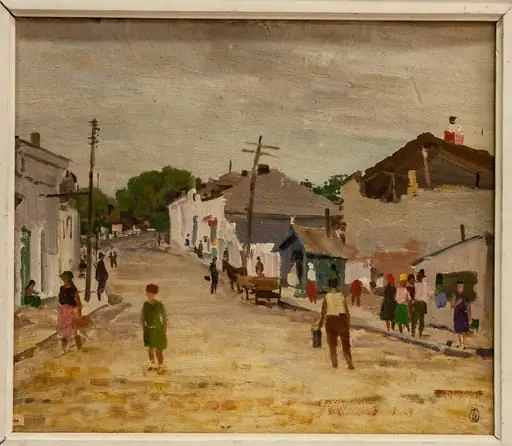 Peisaj din Tulcea
 Autumn Landscape
 Düblin, Jacques - Malerei, Strasse in Oberwil
 Early Sunday Morning
 Scene from Lommaryd, Småland
 Road in a small town. Strande