Artwork
Portrait of a Young Lady
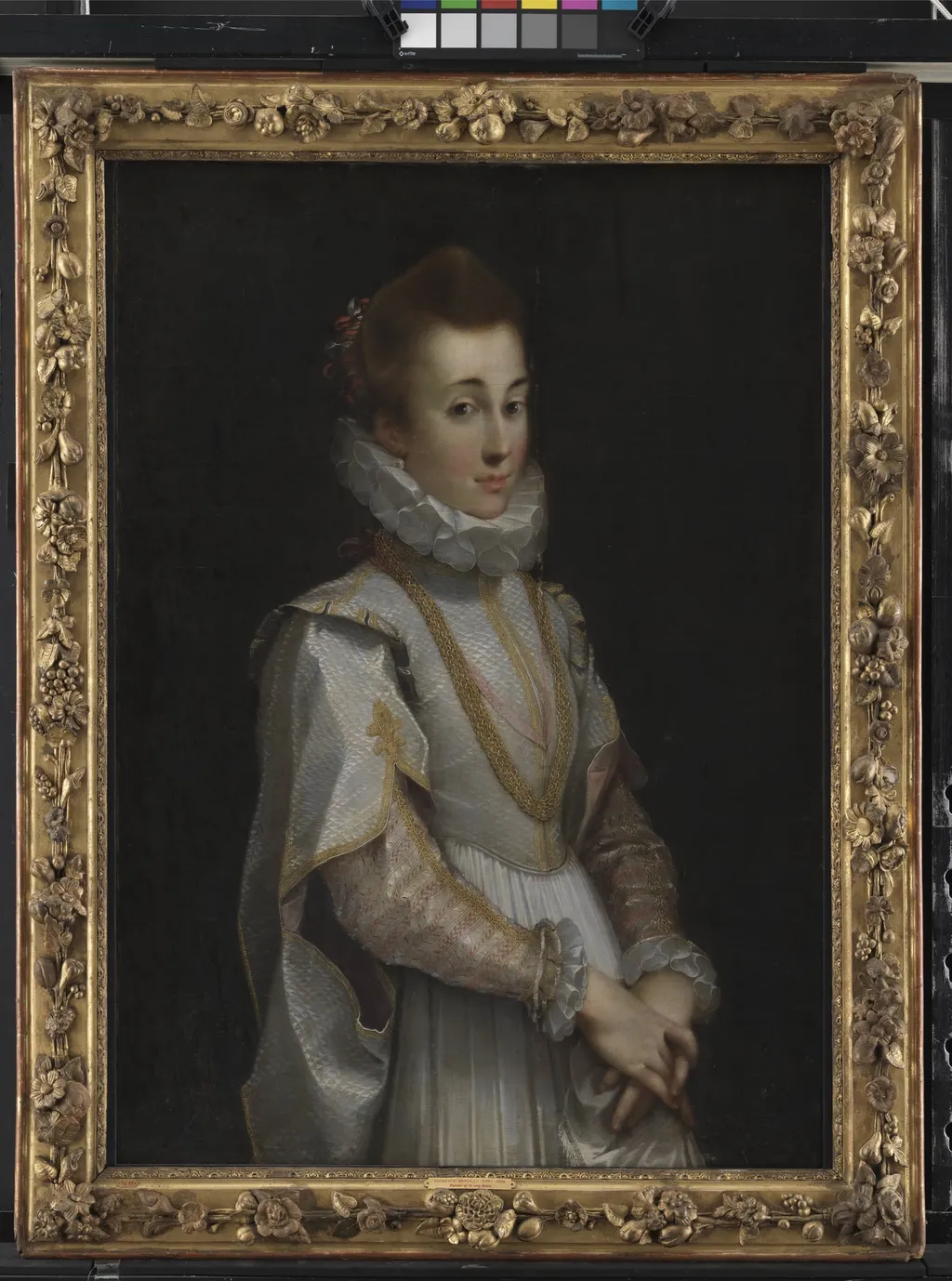
Portrait of a Young Lady is an unspecified painting by Unknown. It dates from 1599 and is held in the collection of the Statens Museum for Kunst. This portrait, dated around 1599, depicts an unidentified young woman in a formal setting.
About this work
Overview
Executed in oil on panel, it presents her in a three-quarter view against a deep, neutral background.
This portrait, dated around 1599, depicts an unidentified young woman in a formal setting. Executed in oil on panel, it presents her in a three-quarter view against a deep, neutral background. Her posture is composed, hands gently clasped, gaze directed slightly to the right. The work is part of the collection at the Museum of Ethnography, where it is preserved as an example of late 16th-century portraiture from a region with strong Flemish artistic traditions.
Subject & Meaning
The sitter is dressed in attire suggesting upper-class status, with a white gown adorned in gold embroidery and a stiff, ruffled collar typical of the period. The inclusion of a small floral ornament in her hair may indicate modest personal adornment or seasonal symbolism. Her direct yet reserved expression conveys dignity rather than emotion, reflecting societal norms for female representation in elite portraiture of the time.
Technique & Style
The artist employs a precise, observational style with careful rendering of textures: the sheen of silk, the crispness of lace, and the softness of skin are rendered with subtle gradations. Light falls gently across the figure, creating soft contrasts that define form without dramatic shadows. The background remains unmodeled, focusing attention entirely on the subject and her attire, characteristic of northern European portraiture of the late Renaissance.
History & Provenance
The painting entered the Museum of Ethnography’s collection in the early 20th century, though its earlier ownership remains undocumented. It was likely commissioned by a wealthy family in the Low Countries or adjacent regions. No records of its original commission or the sitter’s identity have survived, and the artist’s name, though associated with the work, is not definitively linked to other known works from the period.
Context
Created during a period of flourishing portraiture in the northern Netherlands and Flanders, this work aligns with trends favoring individualized representation over idealization. While religious and mythological themes dominated large-scale commissions, secular portraits of women became increasingly common among the merchant and noble classes, serving as markers of status, virtue, and familial continuity.
Legacy
Though not widely exhibited outside its home institution, the portrait contributes to scholarly understanding of regional portraiture practices in the late 1500s. Its preservation offers insight into textile design, social customs, and the role of women in visual culture. It remains a quiet but valuable reference for studies of material culture and identity in early modern Europe.
Artist & collection

 Domestic Scene
 Giacomo and Cardinal Marco, investing Andrea, Abbot of San Zeno, with his Benefice
 The Nymph of Fontainebleau
 Portrait of a Woman
 Madonna and Child with Saints in the Enclosed Garden
 Venus and Minerva
 Family Group of Four on Sofa
 Wall painting from Room H of the Villa of P. Fannius Synistor at Boscoreale
 Portrait of a Young Woman
 Portrait of Lucretia del Prado, Wife of Jeremias Boudinois
 Portrait of a lady
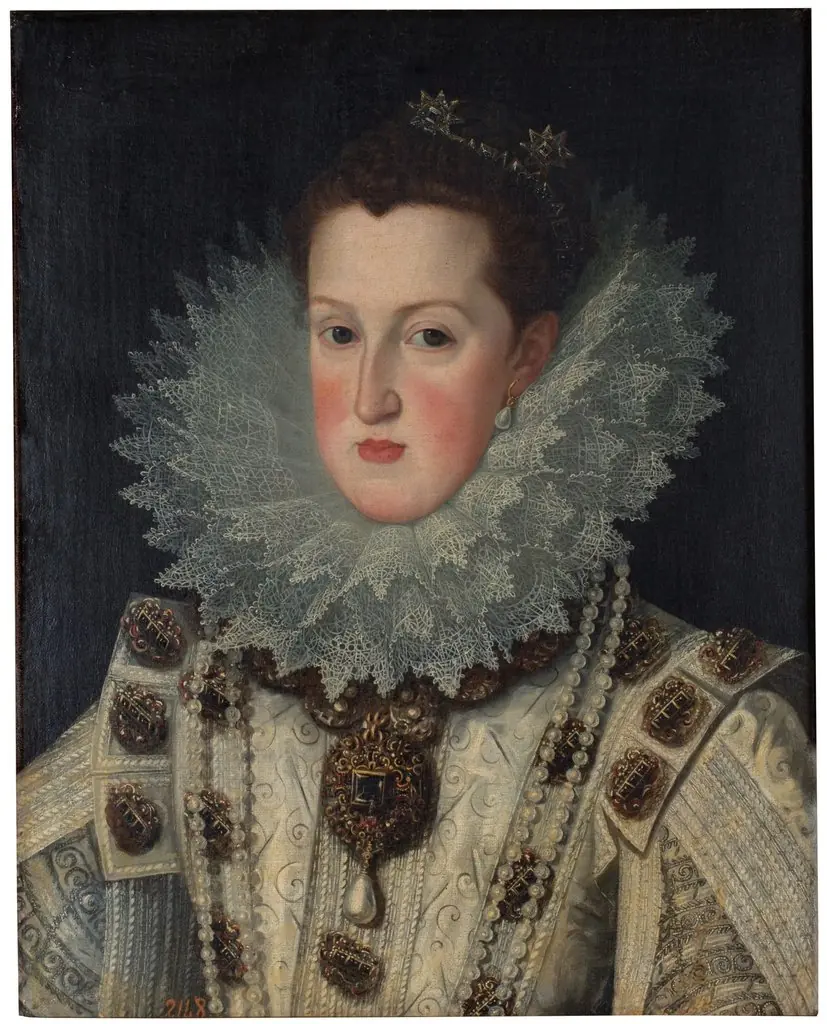 Margarita de Austria, reina de España
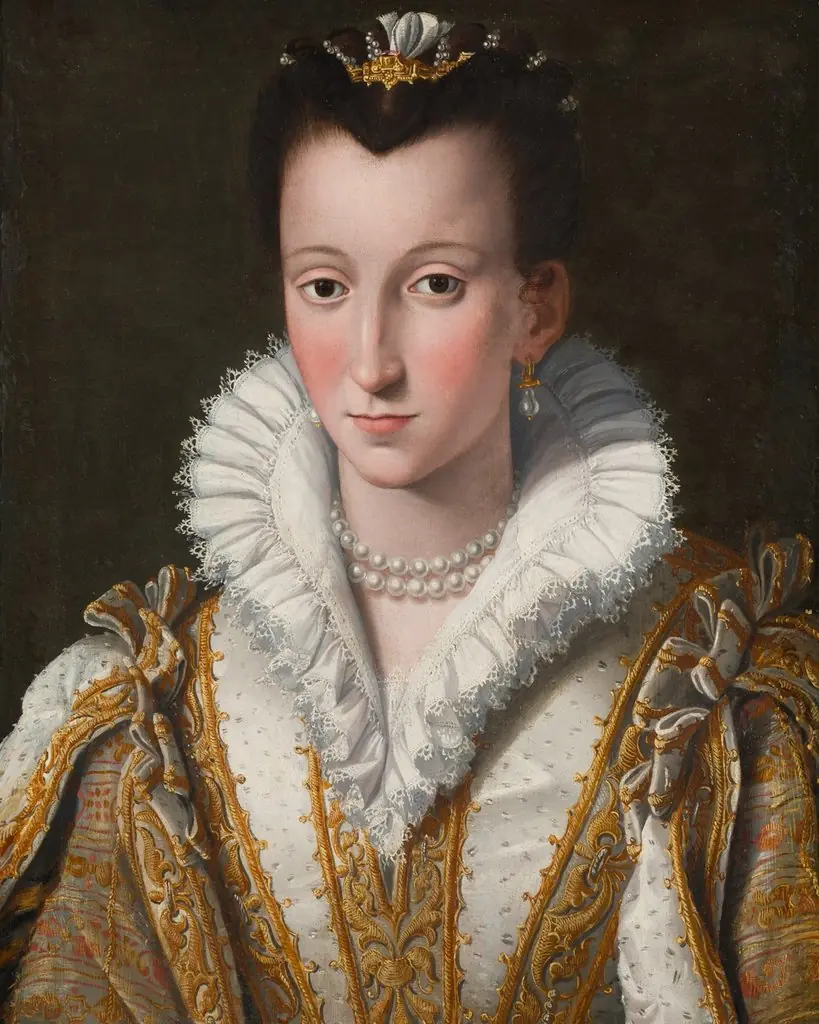 Portrait of Eleonora di Garzia di Toledo, called Dianora (?)
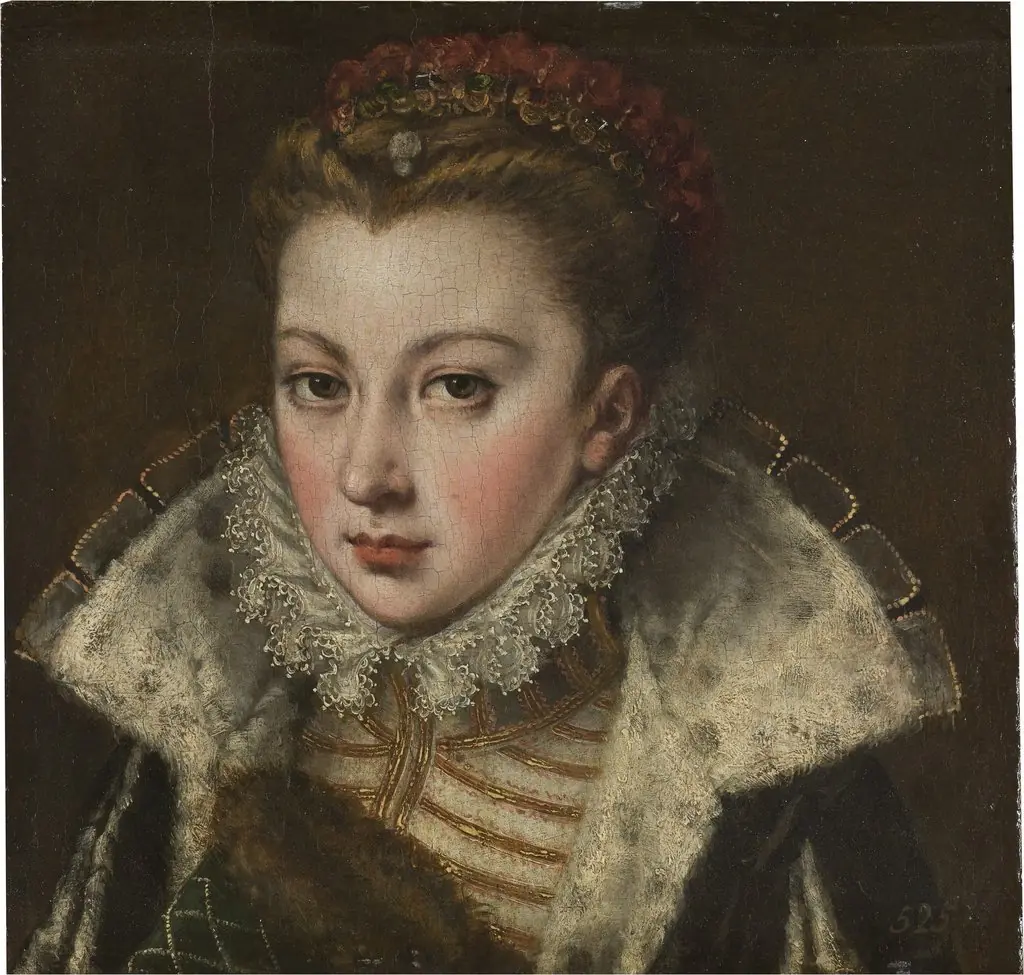 An Unknown Young Woman
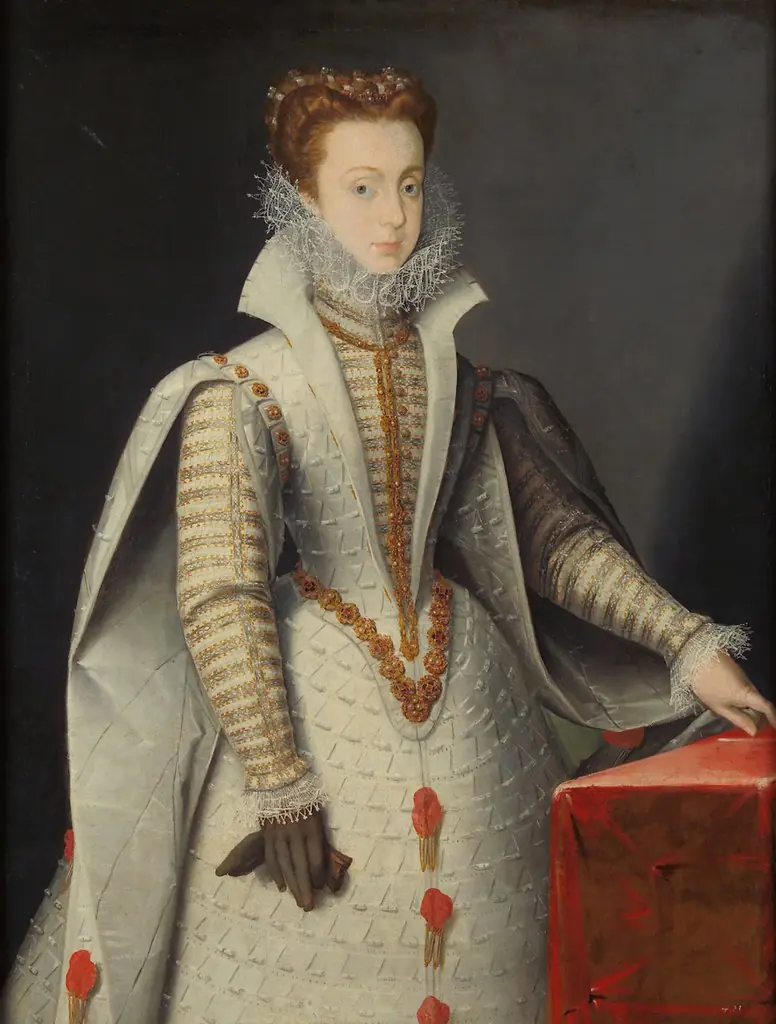 Herzogin Margarete von Joyeuse (1564-1625), Dreiviertelbildnis
 Portrait of a Lady
 Untitled
 Portrait of Margarita Gonzaga