Artwork
English Warships in a Roadstead in Calm Weather
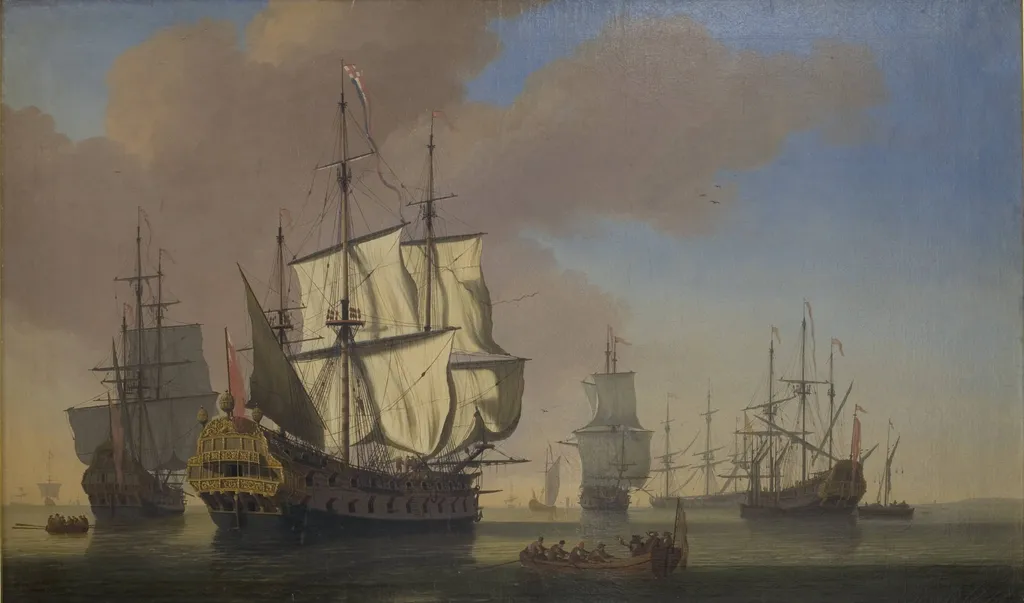
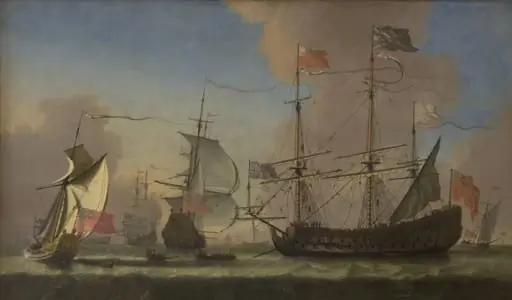
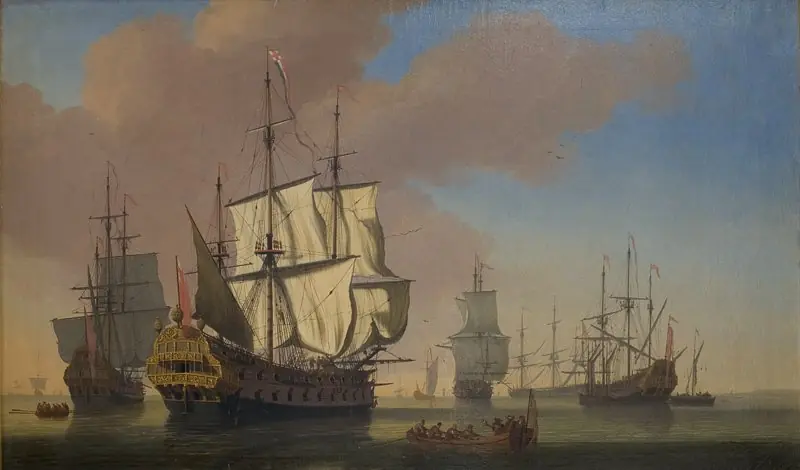
English Warships in a Roadstead in Calm Weather is a photography by the Baroque artist Unknown. It dates from 1677 and is held in the collection of the Statens Museum for Kunst. Painted in 1677, this work depicts a group of English warships anchored in a sheltered bay under calm skies.
About this work
Overview
The scene captures a quiet moment of naval readiness, with vessels of varying sizes arranged in a loose formation.
Painted in 1677, this work depicts a group of English warships anchored in a sheltered bay under calm skies. The scene captures a quiet moment of naval readiness, with vessels of varying sizes arranged in a loose formation. The artist emphasizes the physical presence of the ships through precise rendering of their rigging and hulls, while the surrounding water and sky remain softly modeled, reinforcing a sense of stillness.
Subject & Meaning
The painting presents a naval assembly in peacetime, likely representing a fleet at anchor awaiting orders or resupply. The central vessel, distinguished by its ornate stern and towering masts, suggests command status. The small rowboat approaching from the foreground implies communication or supply activity, hinting at the logistical rhythm of naval life. No battle or drama is shown—instead, the focus is on order, presence, and quiet preparedness.
Technique & Style
The artist employs fine brushwork to render the ships’ wooden structures, ropes, and sails with tactile precision, reflecting a tradition of maritime realism. The sky and water are blended with subtle gradations of tone, avoiding sharp contrasts to maintain a serene atmosphere. Light falls gently across the hulls, enhancing volume without dramatic shadows. The composition is balanced, with the largest vessel anchoring the center and smaller forms receding naturally toward the edges.
History & Provenance
The painting was created in 1677 and entered the collection of the Museum of Ethnography, though its original commission or owner remains undocumented. Its presence in an ethnographic institution, rather than a naval or fine arts museum, suggests a later reclassification, possibly due to its anthropological value as a record of 17th-century shipbuilding and maritime culture. No significant alterations or restorations are recorded.
Context
Produced during the later years of the Anglo-Dutch Wars, the painting reflects a period when England maintained a large standing navy despite intermittent conflict. Naval power was central to national identity and imperial ambition. While the scene is peaceful, the presence of armed warships underscores the constant readiness required of the Royal Navy. Similar works by Dutch and English artists of the era often documented fleet movements or harbor activities with comparable attention to detail.
Legacy
The painting contributes to a broader corpus of 17th-century maritime art that prioritized accuracy over spectacle. Though not widely exhibited, it remains a valuable reference for historians studying ship design, naval organization, and coastal activity in Restoration England. Its quiet realism distinguishes it from more theatrical naval scenes, offering a grounded view of naval life that influenced later documentary approaches to maritime subjects.
Artist & collection

 Domestic Scene
 Giacomo and Cardinal Marco, investing Andrea, Abbot of San Zeno, with his Benefice
 The Nymph of Fontainebleau
 Portrait of a Woman
 Madonna and Child with Saints in the Enclosed Garden
 Venus and Minerva
 Family Group of Four on Sofa
 Wall painting from Room H of the Villa of P. Fannius Synistor at Boscoreale