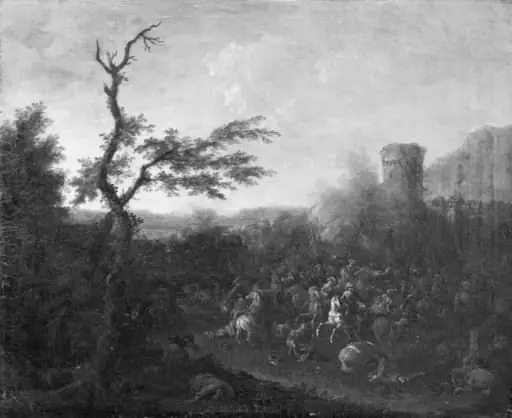
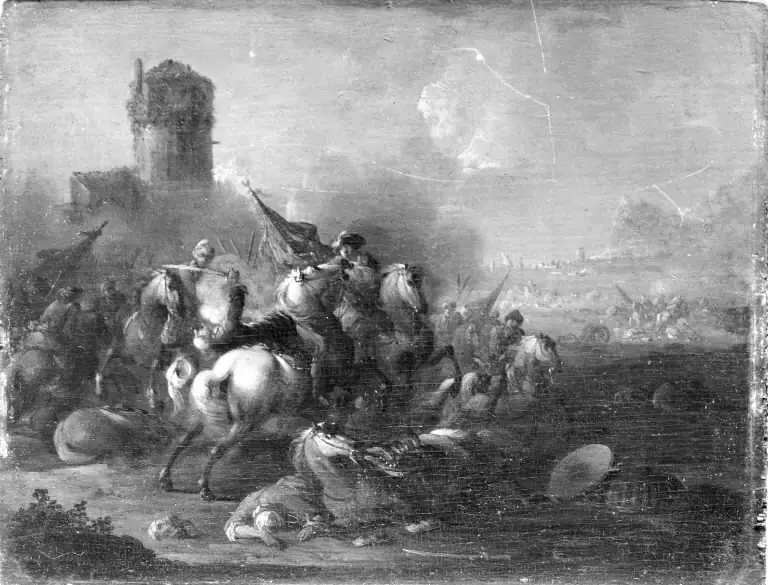
Artwork
Cavalry Skirmish
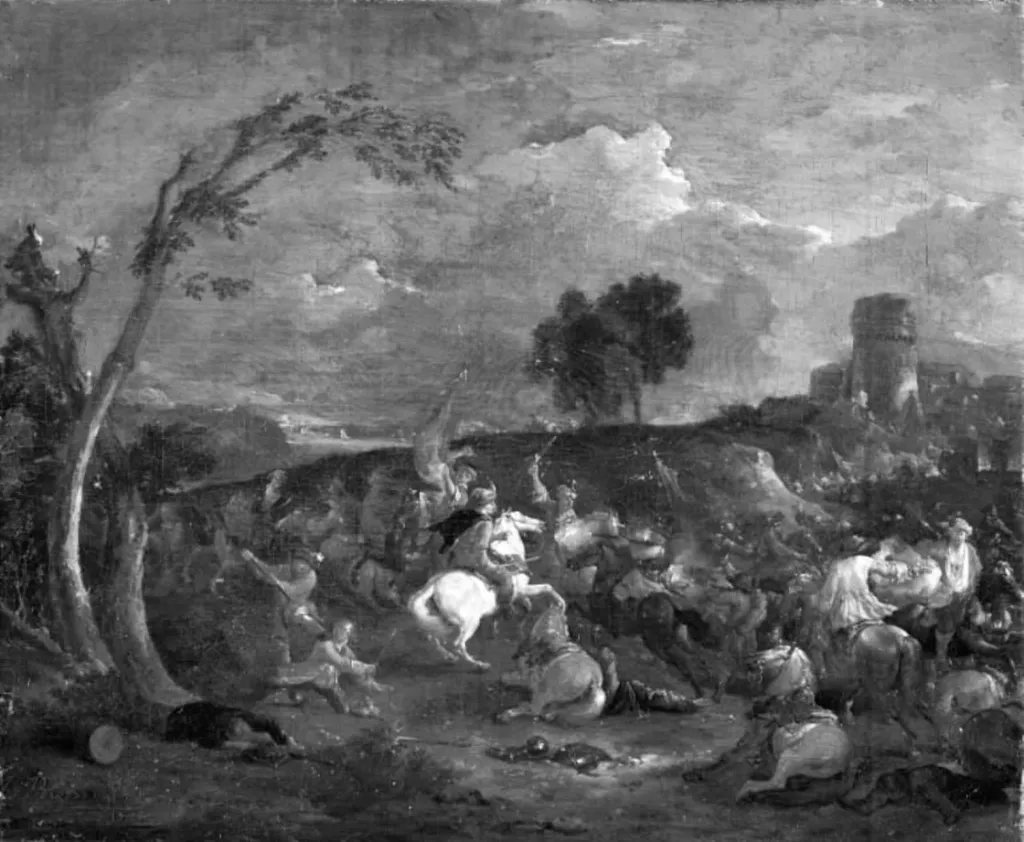
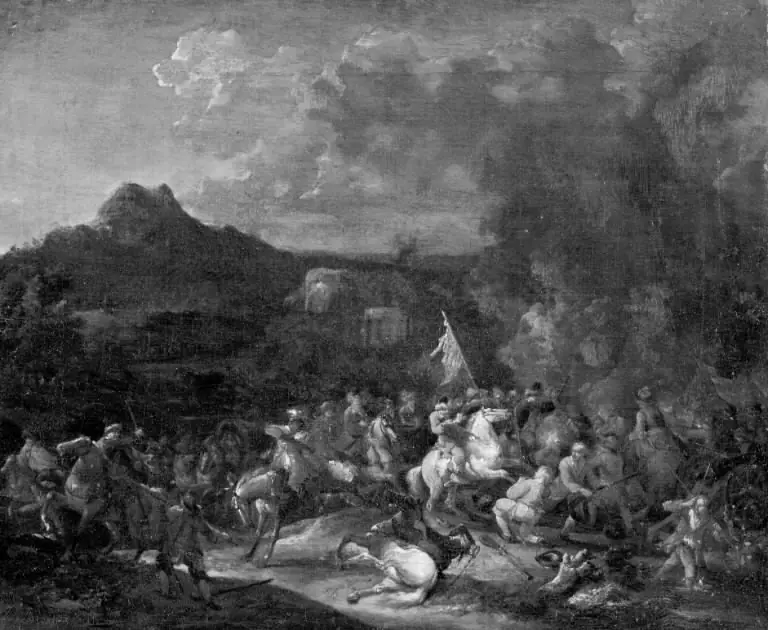
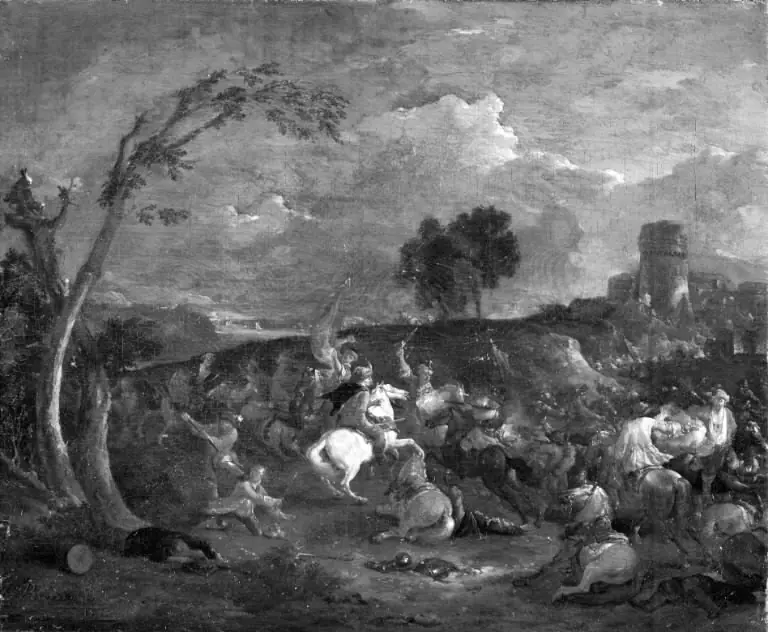
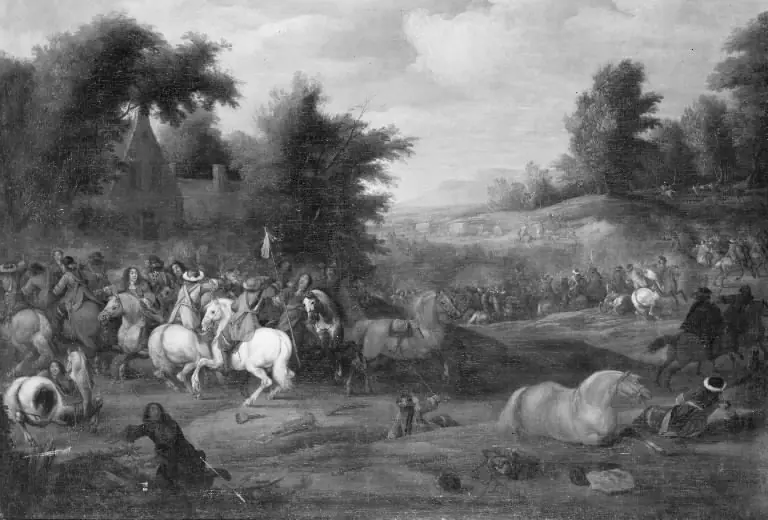
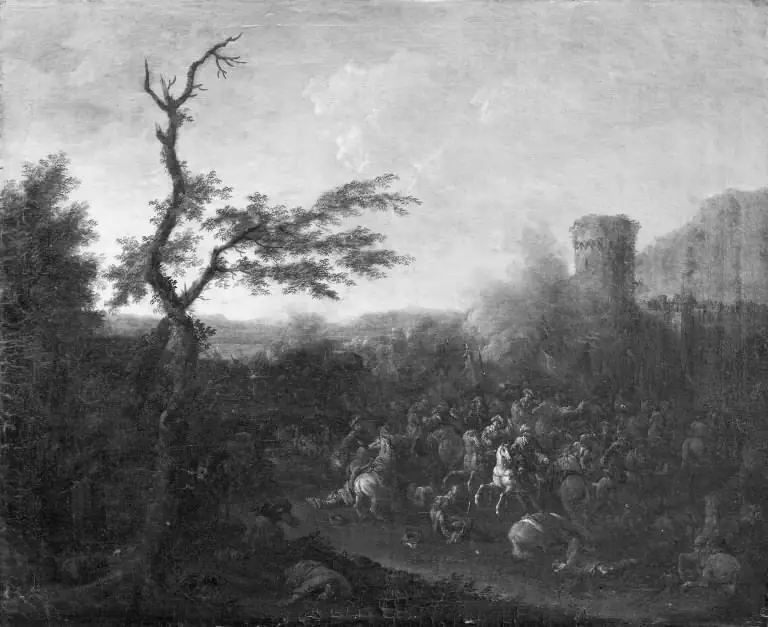
Cavalry Skirmish is a photography by the Baroque artist Unknown. It dates from 1714 and is held in the collection of the Statens Museum for Kunst. Created in 1714, this oil painting depicts a violent encounter between mounted warriors in a rugged terrain.
About this work
Overview
Attributed to an artist active in the early 18th century, the work is part of the Museum of Ethnography’s collection.
Created in 1714, this oil painting depicts a violent encounter between mounted warriors in a rugged terrain. Attributed to an artist active in the early 18th century, the work is part of the Museum of Ethnography’s collection. Its composition captures motion and conflict through dynamic figures and a heightened sense of tension, characteristic of the period’s evolving narrative painting traditions.
Subject & Meaning
The scene portrays a moment of intense combat among cavalry units, with riders brandishing swords and shields amid rearing horses. The presence of a distant castle suggests a strategic or territorial conflict, though no specific historical event is identified. The painting conveys the chaos and brutality of mounted warfare, emphasizing human and animal struggle over narrative clarity.
Technique & Style
The artist employs strong chiaroscuro to heighten the drama, contrasting deep shadows with sharply lit areas to define forms and movement. Visible brushwork adds texture and urgency to the scene, particularly in the rendering of fabric, horseflesh, and terrain. The style leans toward expressive realism, prioritizing emotional impact over precise detail, aligning with broader trends in Baroque-influenced military imagery.
History & Provenance
The painting entered the Museum of Ethnography’s holdings in the late 19th century, likely acquired as part of a broader collection of European military art. Its origins before that are undocumented, and no records of its commission or early ownership survive. It has been consistently cataloged as a depiction of generic cavalry conflict, without ties to a named battle or patron.
Context
Produced during a time when European courts maintained large cavalry units, the work reflects enduring fascination with mounted combat, even as firearms began to reshape warfare. Though not tied to a specific conflict, its imagery echoes contemporary prints and tapestries that idealized martial valor. The landscape setting, with its distant castle, aligns with romanticized notions of medieval and early modern battlefields.
Legacy
The painting remains a representative example of 18th-century military genre painting, valued for its energetic composition and emotional intensity. It contributes to scholarly understanding of how warfare was visually interpreted outside formal portraiture or historical documentation. While not widely reproduced, it continues to inform exhibitions on the visual culture of conflict in early modern Europe.
Artist & collection

 Domestic Scene
 Giacomo and Cardinal Marco, investing Andrea, Abbot of San Zeno, with his Benefice
 The Nymph of Fontainebleau
 Portrait of a Woman
 Madonna and Child with Saints in the Enclosed Garden
 Venus and Minerva
 Family Group of Four on Sofa
 Wall painting from Room H of the Villa of P. Fannius Synistor at Boscoreale