Artwork
St Matthew the Evangelist
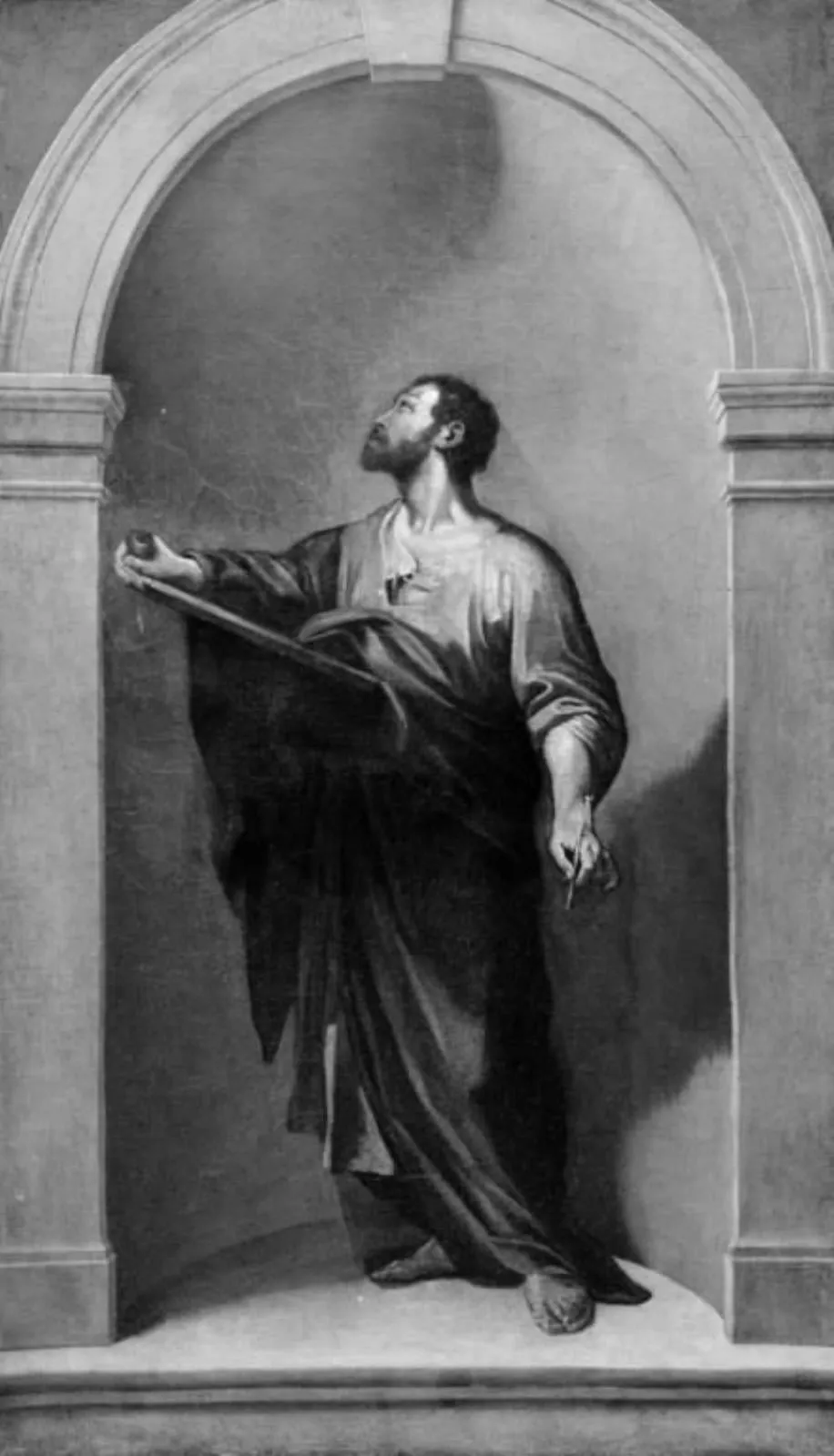
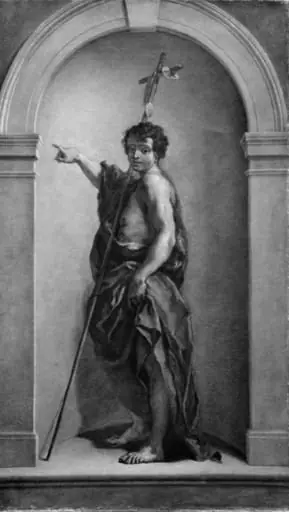
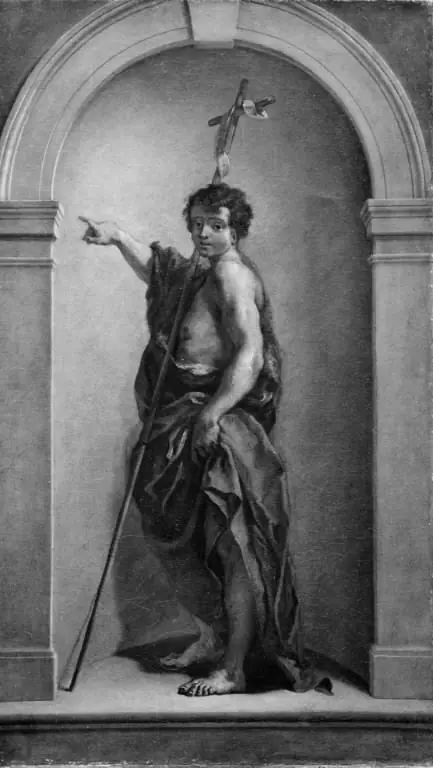
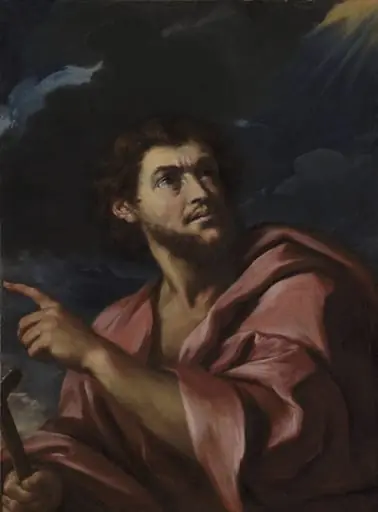
St Matthew the Evangelist is a photography by Unknown. It dates from 1750 and is held in the collection of the Statens Museum for Kunst. This painting portrays St.
About this work
Overview
This painting portrays St. Matthew the Evangelist as a solitary figure within a stone archway, rendered around 1750. Though attributed to an artist active in the early 18th century, the work’s precise origin remains undocumented. It resides in the Museum of Ethnography, where it is displayed as part of a collection focused on religious iconography and cultural representation in visual art.
Subject & Meaning
His outstretched arm and staff suggest authority and divine commission, aligning with traditional iconography of the evangelists as messengers of the Gospel.
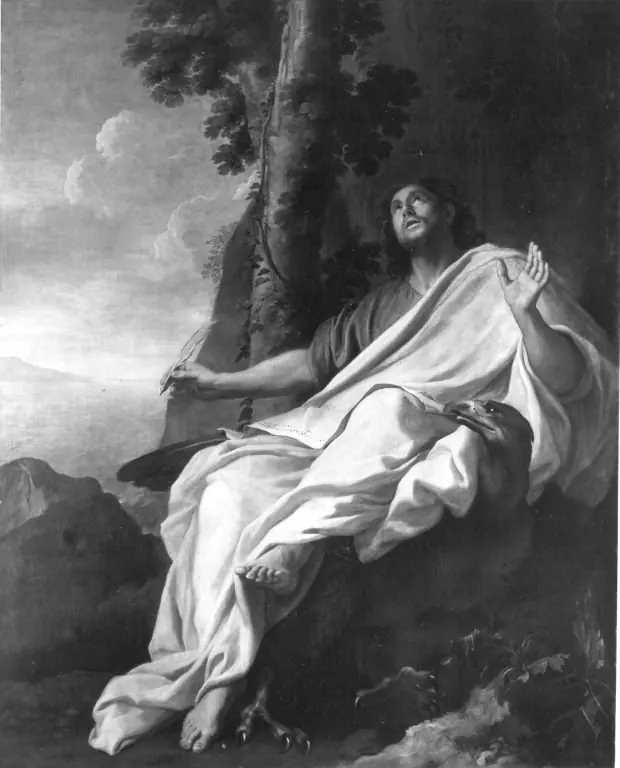
The figure of St. Matthew is depicted in a moment of divine inspiration, his gaze lifted toward the heavens as if receiving sacred text. His outstretched arm and staff suggest authority and divine commission, aligning with traditional iconography of the evangelists as messengers of the Gospel. The absence of textual elements or symbolic animals emphasizes introspection over narrative, inviting contemplation rather than storytelling.
Technique & Style
The artist employs chiaroscuro to model the figure with subtle gradations of light and shadow, enhancing the three-dimensionality of the robe and face. The stone archway is rendered with restrained detail, its pale surface contrasting with the darker tones of the figure’s garments. The plain background eliminates distraction, focusing attention on the interplay of form and illumination, characteristic of late Baroque devotional painting.
History & Provenance
The painting’s early history is unrecorded; it entered the Museum of Ethnography’s collection in the late 19th century, likely acquired through ecclesiastical or private donations. No documentation links it to a specific commission or region of origin. Its preservation suggests it was valued as a devotional object before becoming part of a broader ethnographic survey of religious imagery.
Context
Created during a period when Catholic institutions continued to commission religious imagery, this work reflects enduring traditions of saintly representation despite shifting artistic trends. While contemporaneous movements embraced more dynamic compositions, this painting retains a quiet solemnity, aligning with monastic and counter-Reformation ideals that favored introspective, dignified portrayals of sacred figures.
Legacy
Though not widely reproduced or studied, the painting contributes to understanding how devotional imagery persisted in regional contexts beyond major artistic centers. Its presence in an ethnographic museum underscores its role as a cultural artifact, illustrating how religious identity was visually sustained in communities through standardized yet quietly individualized iconography.
Artist & collection

 Domestic Scene
 Giacomo and Cardinal Marco, investing Andrea, Abbot of San Zeno, with his Benefice
 The Nymph of Fontainebleau
 Portrait of a Woman
 Madonna and Child with Saints in the Enclosed Garden
 Venus and Minerva
 Family Group of Four on Sofa
 Wall painting from Room H of the Villa of P. Fannius Synistor at Boscoreale