Artwork
The Temple of Concordia by Girgenti
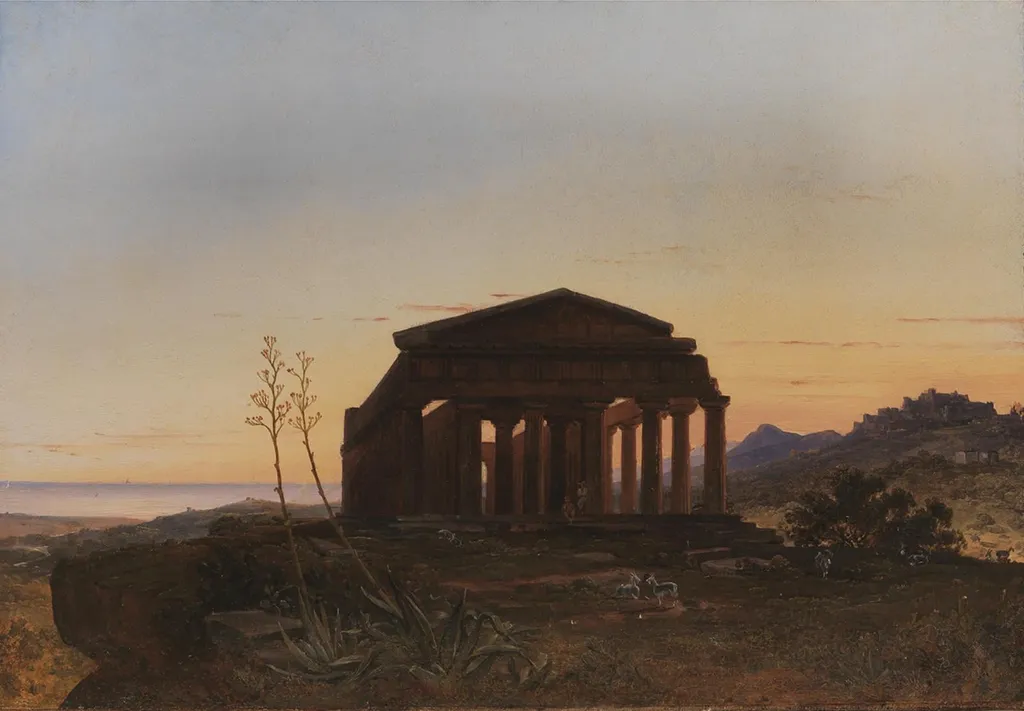
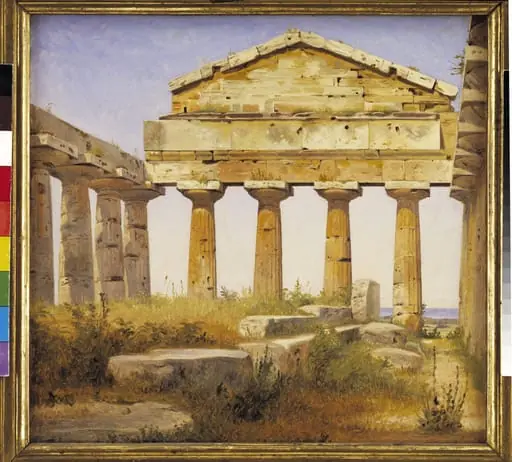
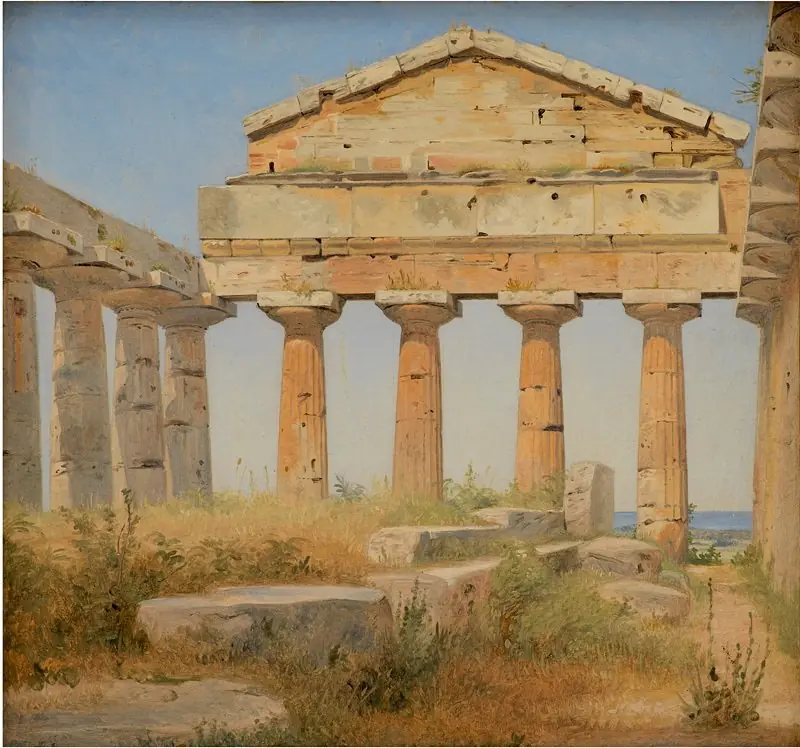
The Temple of Concordia by Girgenti is a photography by Unknown. It dates from 1850 and is held in the collection of the Statens Museum for Kunst. This 19th-century image depicts the Temple of Concordia in Agrigento, Sicily, rendered around 1850.
About this work
Overview
The work captures the ancient structure in its natural setting, emphasizing its enduring presence against the landscape.
This 19th-century image depicts the Temple of Concordia in Agrigento, Sicily, rendered around 1850. The work captures the ancient structure in its natural setting, emphasizing its enduring presence against the landscape. Though attributed to an artist identified only as 1539_person, the piece belongs to the collection of the Museum of Ethnography, where it serves as a visual record of classical architecture in its rural context.
Subject & Meaning
The Temple of Concordia, one of the best-preserved Doric temples from ancient Greece, is shown in quiet solitude. Its monumental columns and clean lines suggest permanence, while the grazing animals and sparse vegetation evoke a sense of time’s quiet passage. The scene avoids human presence, focusing instead on the temple’s harmony with nature — a reflection of classical ideals enduring beyond their original cultural context.
Technique & Style
The artist employs soft, diffused lighting to model the temple’s stone surfaces, creating gentle transitions between shadow and sunlit areas. The warm hues of the sunset sky contrast with the temple’s darker, muted tones, enhancing its solidity. The composition is deliberately restrained, with minimal detail in the foreground, allowing the architecture to dominate the visual field through balance and scale.
History & Provenance
Created circa 1850, the image emerged during a period of renewed European interest in classical antiquity. It was likely produced as part of a broader documentation effort, possibly by a traveler or artist documenting Mediterranean ruins. The work entered the Museum of Ethnography’s collection, where it is preserved not as fine art alone, but as a cultural artifact reflecting 19th-century perceptions of ancient civilizations.
Context
In the mid-19th century, European scholars and artists increasingly traveled to southern Italy to study Greek ruins. The Temple of Concordia, already famous for its preservation, became a frequent subject in sketches and paintings. This image aligns with that trend, offering a contemplative view that prioritizes atmosphere over archaeological precision, reflecting Romantic-era sensibilities toward the past.
Legacy
The image contributes to the visual archive of classical architecture as interpreted through 19th-century eyes. It does not seek to reconstruct the temple’s original use but rather to convey its emotional resonance in the landscape. As such, it remains a quiet testament to how ancient structures continued to shape artistic and cultural imagination long after their original societies had faded.
Artist & collection

 Domestic Scene
 Giacomo and Cardinal Marco, investing Andrea, Abbot of San Zeno, with his Benefice
 The Nymph of Fontainebleau
 Portrait of a Woman
 Madonna and Child with Saints in the Enclosed Garden
 Venus and Minerva
 Family Group of Four on Sofa
 Wall painting from Room H of the Villa of P. Fannius Synistor at Boscoreale
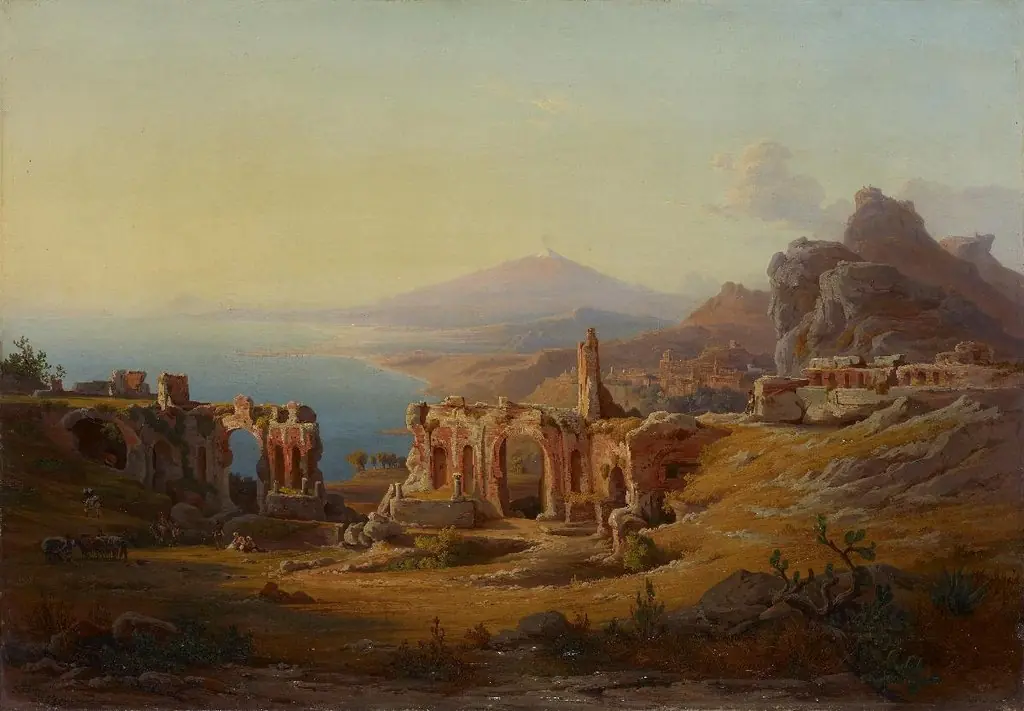 Taormina. Das Theater mit dem Aetna
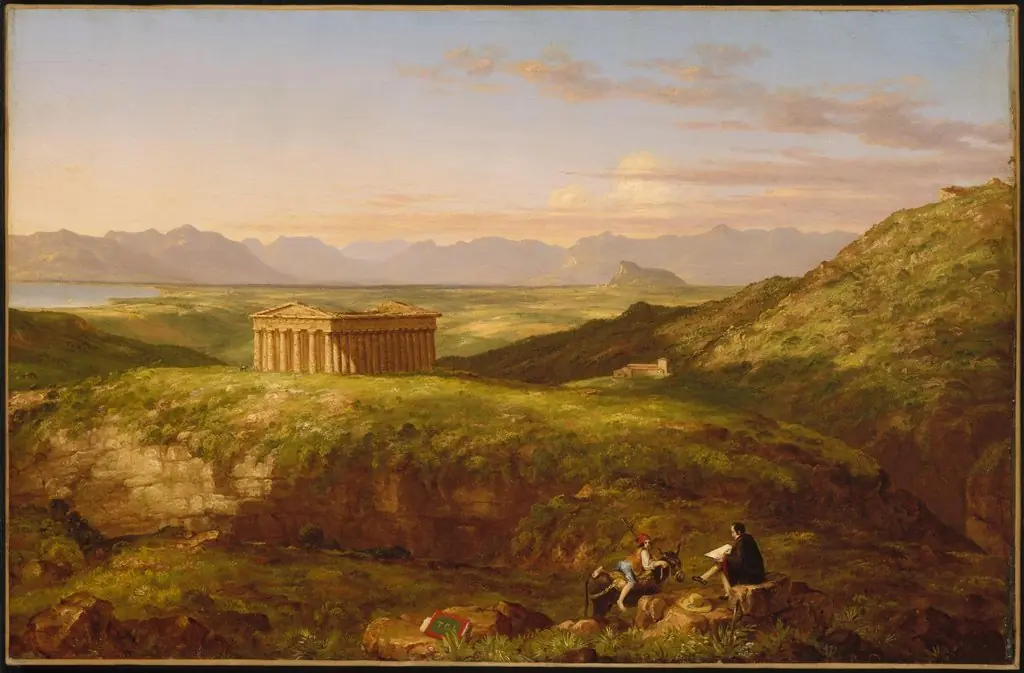 The Temple of Segesta with the Artist Sketching
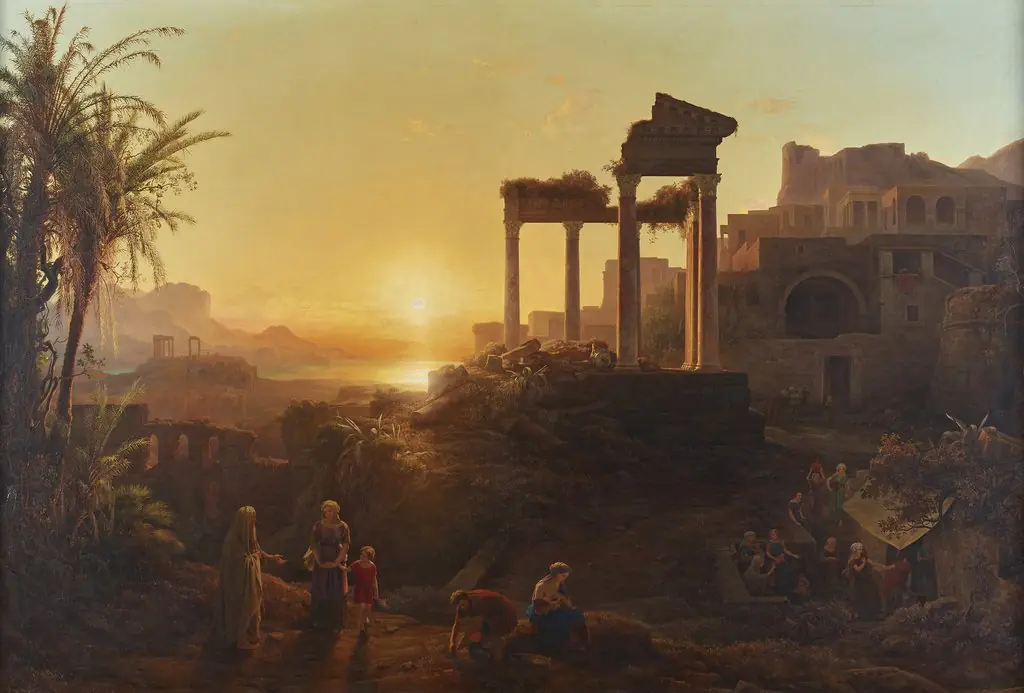 Landschaft mit Sonnenuntergang
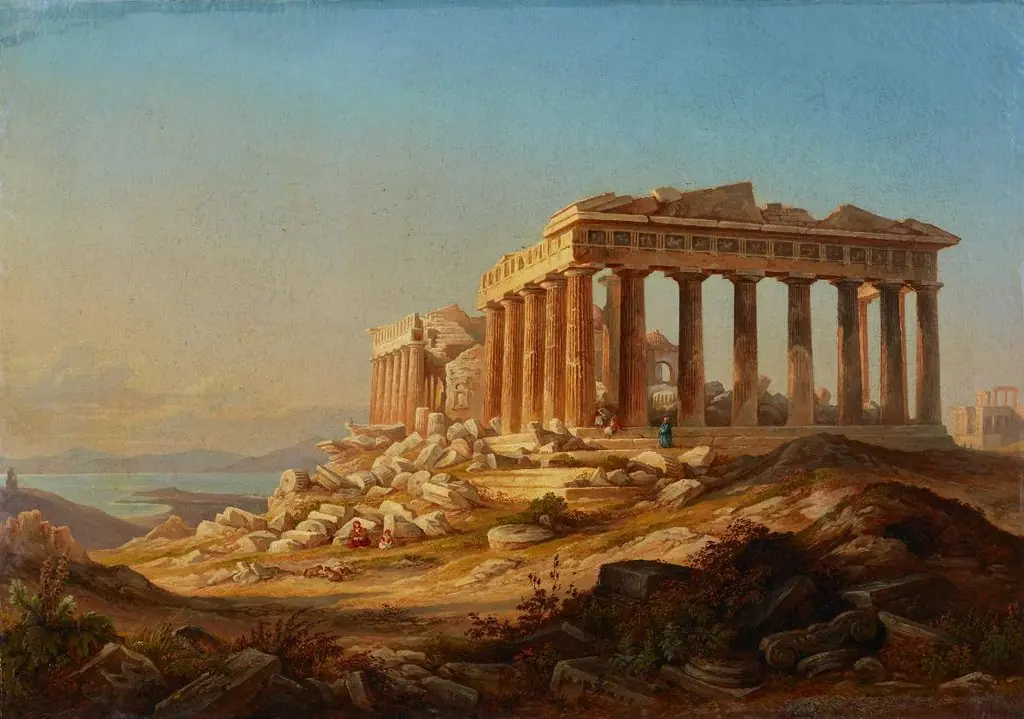 Der Parthenon auf der Akropolis zu Athen
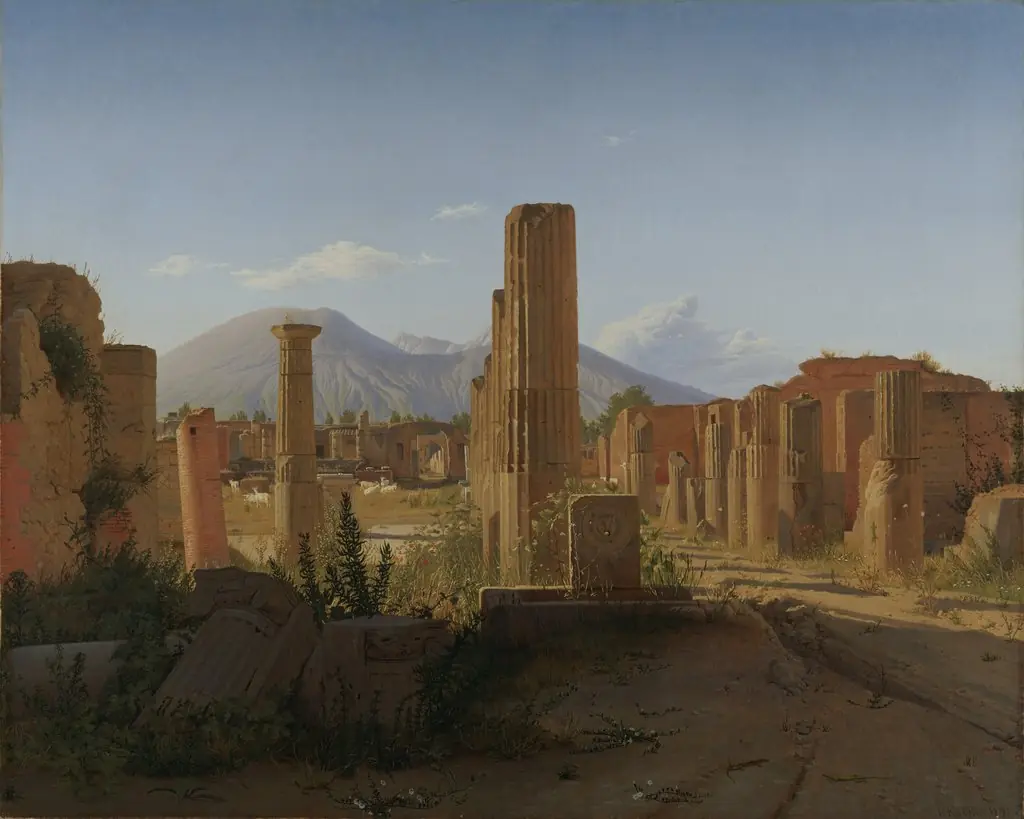 The Forum at Pompeii with Vesuvius in the Background
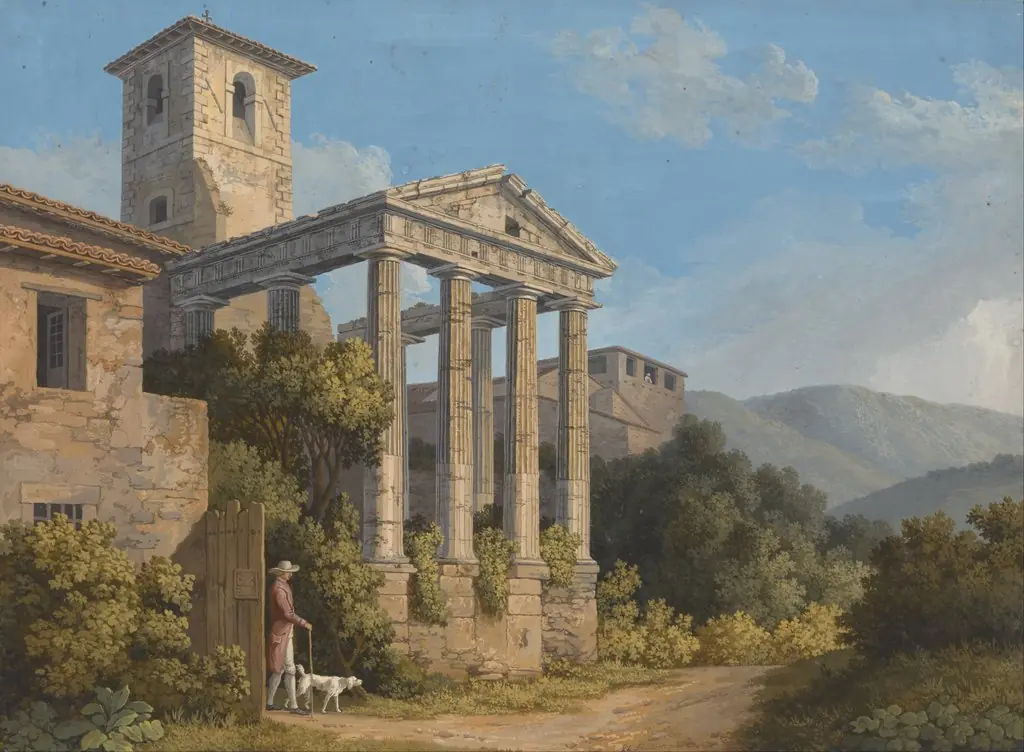 The Temple of Hercules in Cori near Velletri
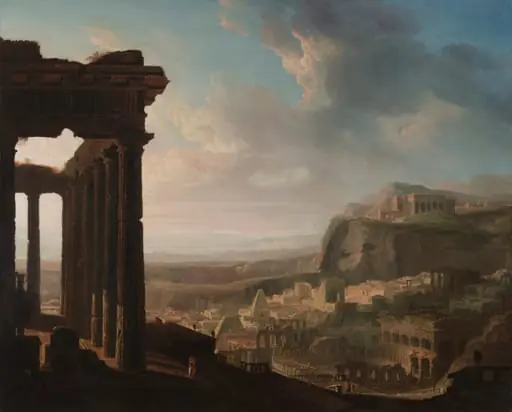 Ruins of an Ancient City
 The Temple of Athena in Paestum
 The Temple of Athena in Paestum