Artwork
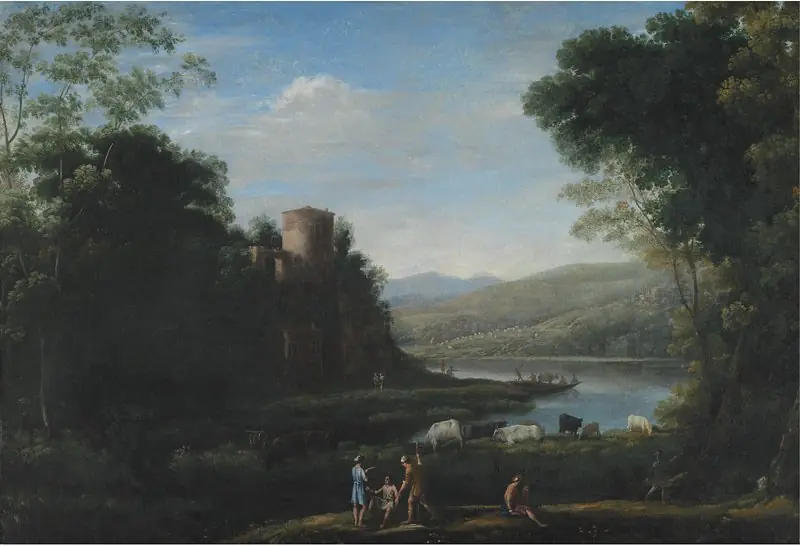
River Landscape with Herdsmen
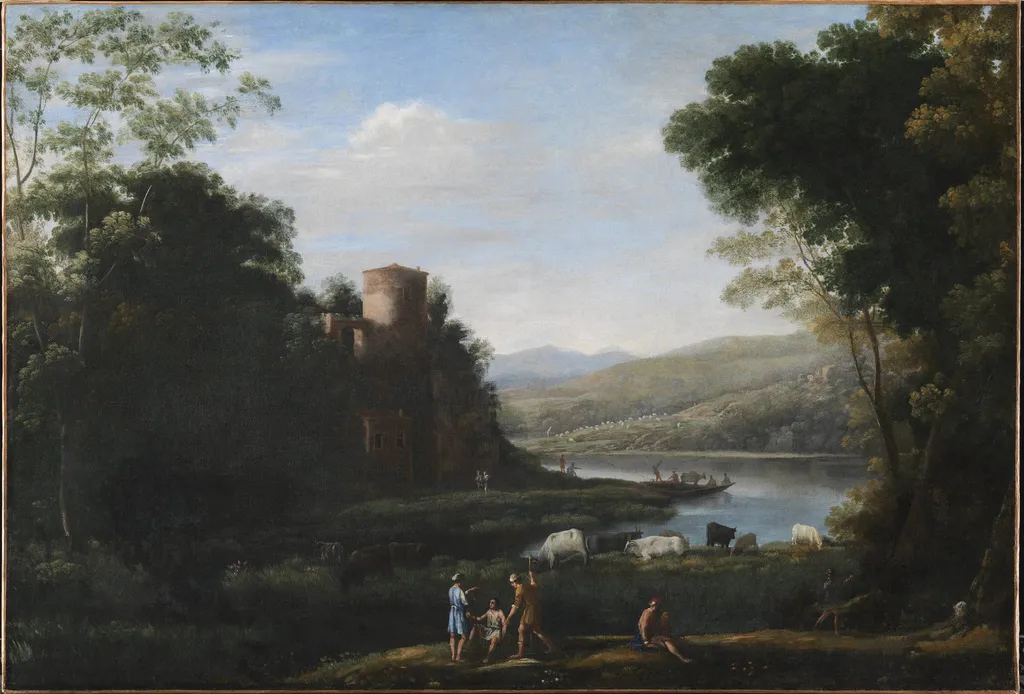
River Landscape with Herdsmen is an unspecified painting by Unknown. It dates from 1650 and is held in the collection of the Statens Museum for Kunst.
About this work
Overview
It is part of the collection at the Museum of Ethnography, where it is preserved as an example of early modern European landscape representation.
Created around 1650, River Landscape with Herdsmen is a landscape painting attributed to an artist active in the mid-16th century. The work depicts a quiet rural scene along a winding river, featuring herdsmen tending livestock and a small boat carrying figures. It is part of the collection at the Museum of Ethnography, where it is preserved as an example of early modern European landscape representation.
Subject & Meaning
The painting portrays everyday rural life along a river, emphasizing harmony between humans and nature. Herdsmen in modest attire care for cattle, while travelers in a boat suggest local movement and trade. The absence of dramatic events or symbolic elements points to a focus on quiet observation, reflecting a cultural interest in the rhythms of agricultural life rather than idealized or mythological themes.
Technique & Style
The artist employs subtle gradations of light and shadow to suggest spatial depth, guiding the viewer’s eye from the foreground figures to the distant hills. Brushwork is restrained yet deliberate, with soft transitions between tones to render foliage, water, and terrain. The palette favors muted greens and earth tones, reinforcing the painting’s calm, unembellished atmosphere without theatrical contrast.
History & Provenance
The painting’s early history is undocumented, but it entered the Museum of Ethnography’s collection in the late 19th or early 20th century. Its attribution to a 1550s artist likely stems from stylistic comparisons with regional traditions rather than signed documentation. The work was probably acquired as part of a broader effort to preserve vernacular visual culture from pre-industrial Europe.
Context
Produced during a period when landscape painting was gaining autonomy from religious or historical narratives, this work aligns with northern European traditions that valued observation of the natural world. Unlike grand Italianate vistas, it reflects a more localized, intimate approach to scenery, consistent with regional Dutch and Flemish practices that emphasized daily life over grandeur.
Legacy
Though not widely reproduced or studied, the painting contributes to understanding how rural scenes were visually recorded before the rise of Romanticism. Its presence in an ethnographic museum underscores its role as a cultural document, offering insight into pre-modern land use, attire, and social routines rather than artistic innovation alone.
Artist & collection

 Domestic Scene
 Giacomo and Cardinal Marco, investing Andrea, Abbot of San Zeno, with his Benefice
 The Nymph of Fontainebleau
 Portrait of a Woman
 Madonna and Child with Saints in the Enclosed Garden
 Venus and Minerva
 Family Group of Four on Sofa
 Wall painting from Room H of the Villa of P. Fannius Synistor at Boscoreale
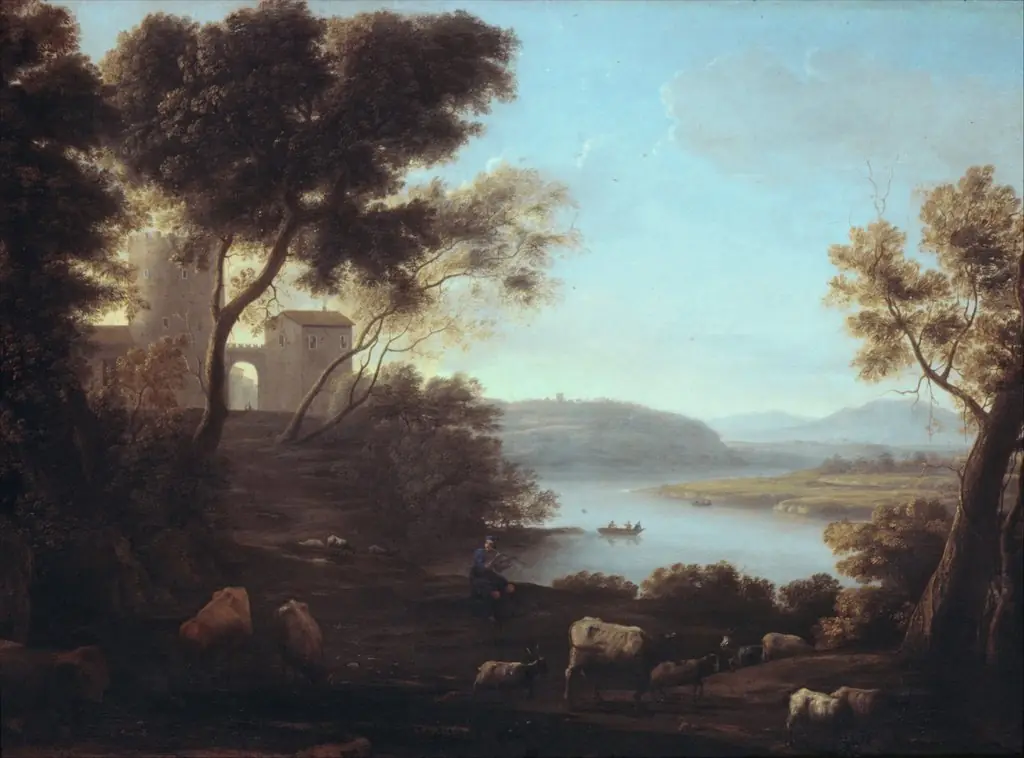 Pastoral Landscape: The Roman Campagna
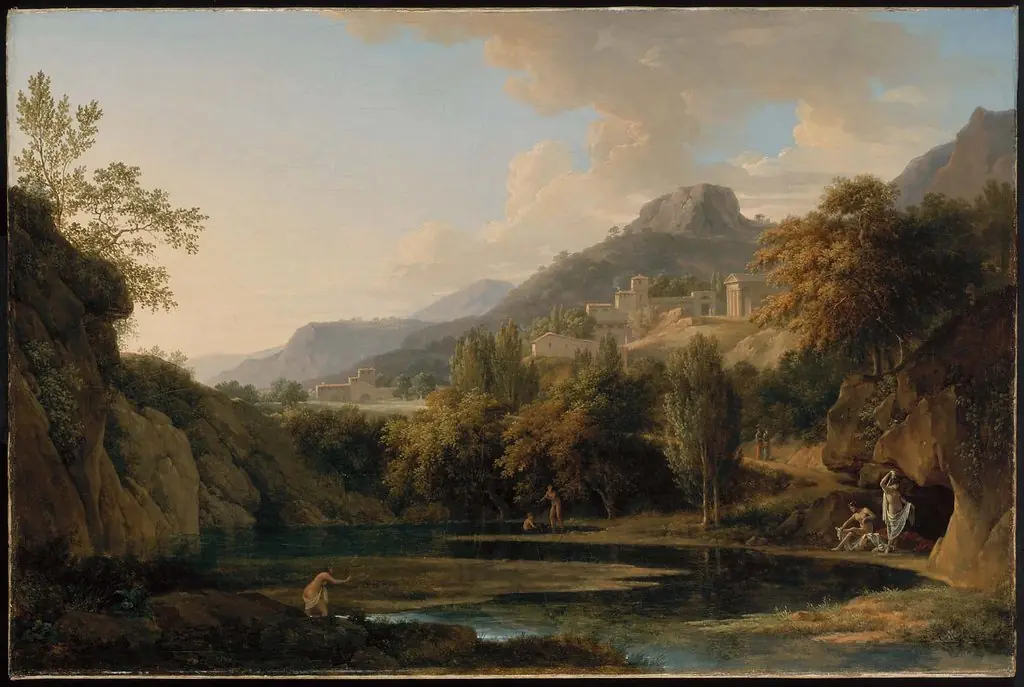 Italian Landscape with Bathers
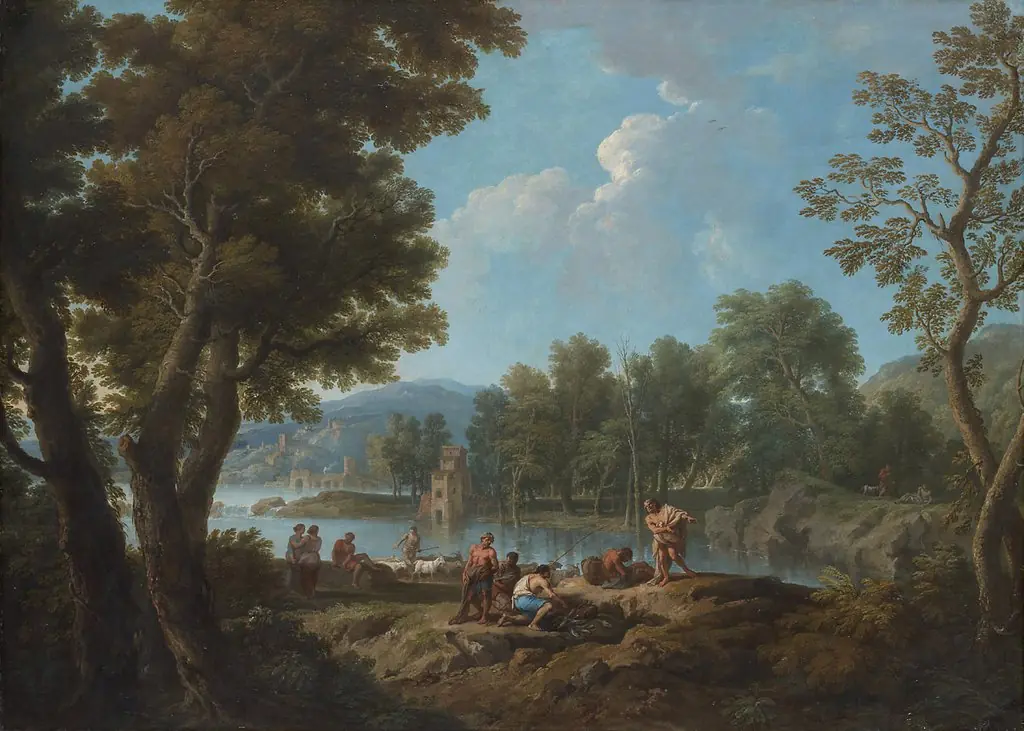 Landschaft mit Fischern
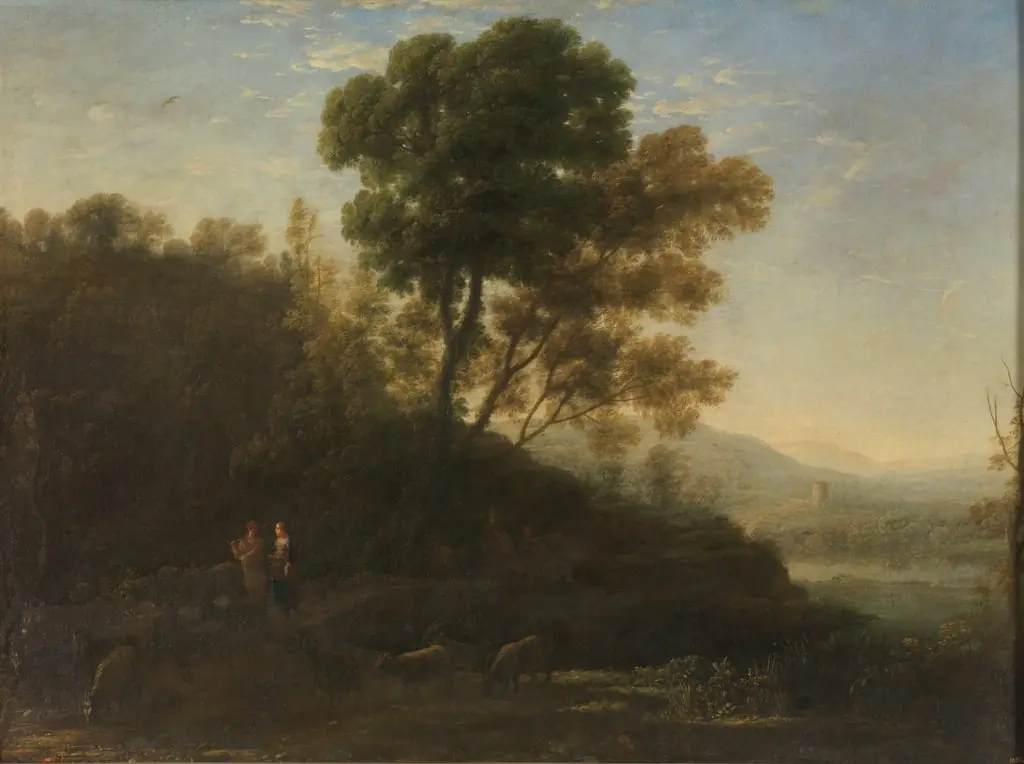 Setting out with the Herd
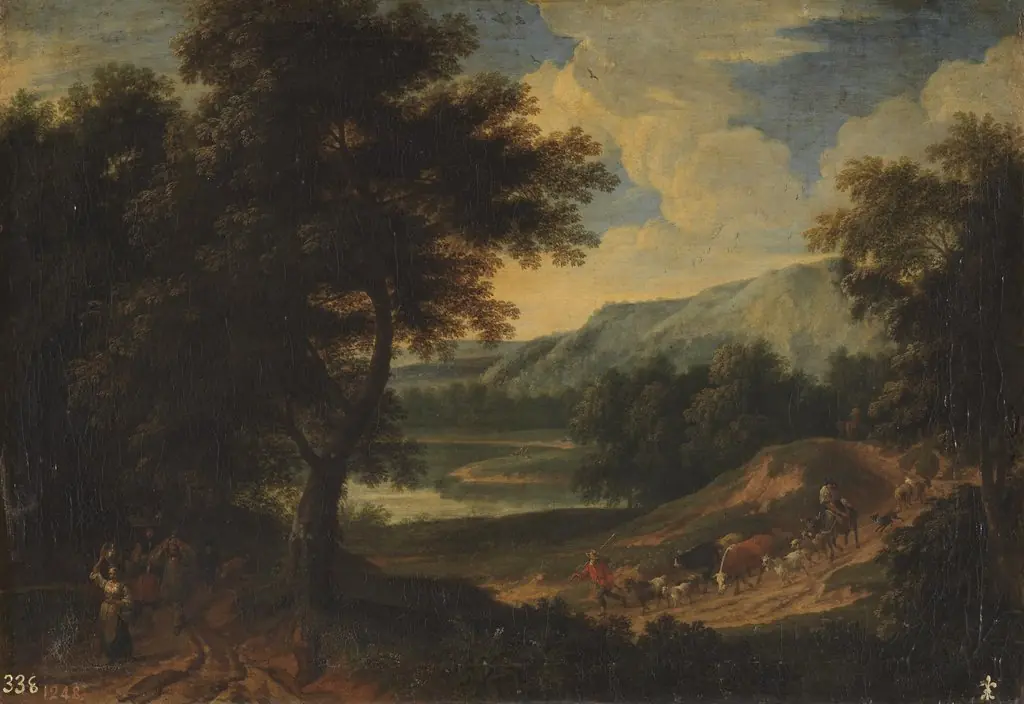 Paisaje con pastores y ganado
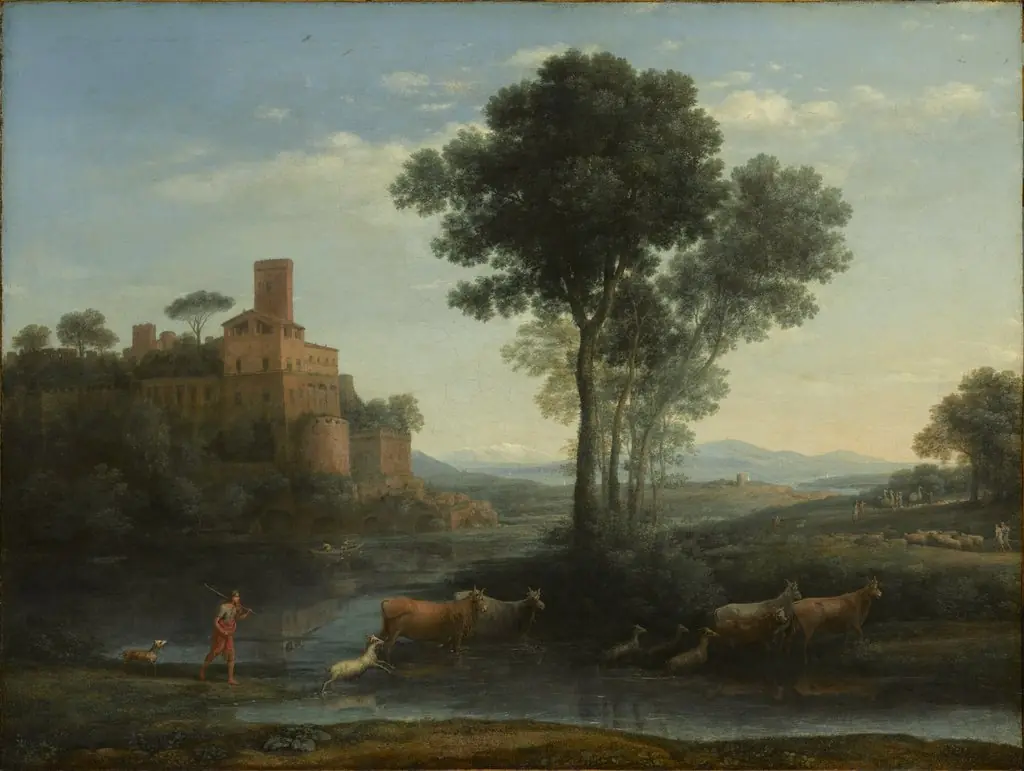 Landscape with the Voyage of Jacob
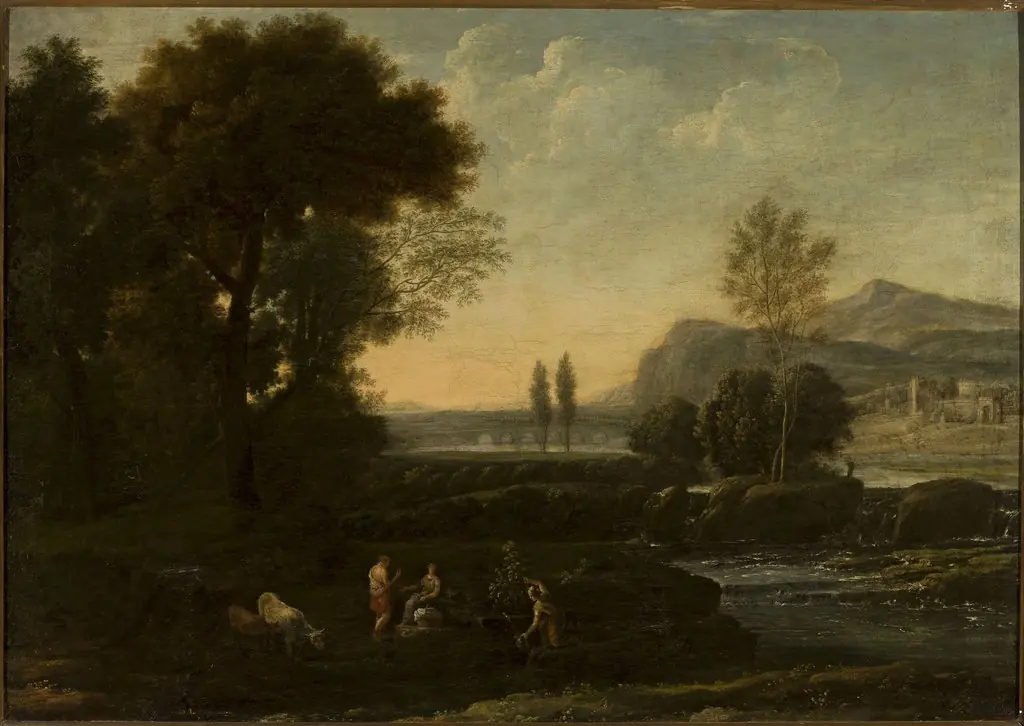 Landscape with shepherds
 Landscape with Merchants
 Ihanteellinen maisema
 River Landscape with a Boy Fishing (On the Arno)
 Italienische Abendlandschaft
 River Landscape with Herdsmen