Artwork
Thistle, Pumpkin and a Goat
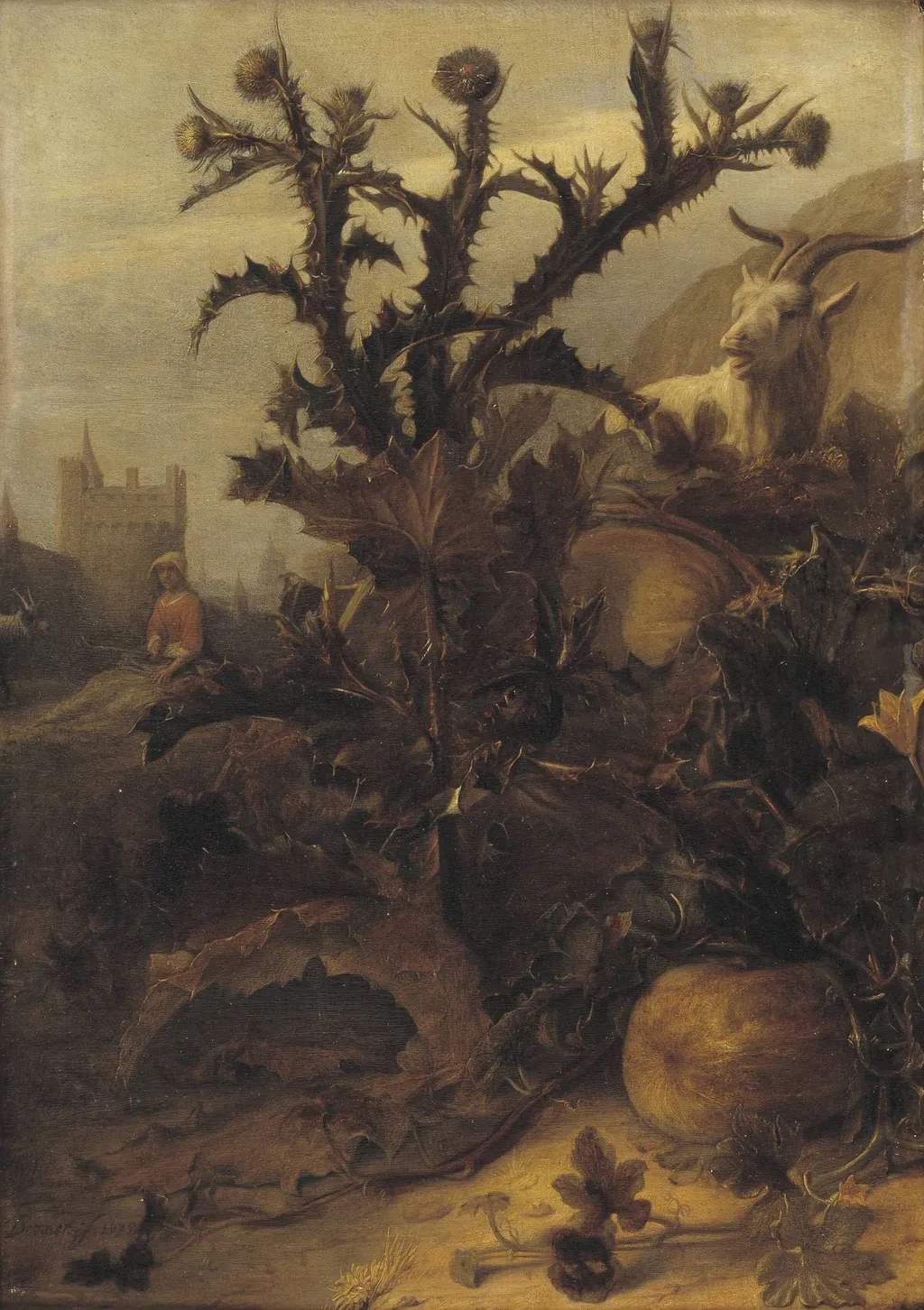
Thistle, Pumpkin and a Goat is a photography by the Baroque artist Unknown. It dates from 1675 and is held in the collection of the Statens Museum for Kunst.
About this work
Overview
Painted in 1675, this work depicts a rural scene centered on a thistle plant, a goat, and a pumpkin, rendered with meticulous attention to natural detail. Though dated to the mid-17th century, the artist remains unidentified. The piece is held in the collection of the Museum of Ethnography, where its small scale and intricate execution invite close observation rather than grand display.
Subject & Meaning
The thistle, often associated with resilience, contrasts with the pumpkin’s abundance and the goat’s presence as a pastoral symbol.
The composition juxtaposes wild vegetation, domesticated animals, and cultivated fruit against a distant landscape featuring a human figure and architectural structure. The thistle, often associated with resilience, contrasts with the pumpkin’s abundance and the goat’s presence as a pastoral symbol. The distant figure and building suggest human habitation, yet remain detached, emphasizing nature’s quiet dominance over the scene.
Technique & Style
The artist employs fine brushwork to render textures with precision—individual spines on the thistle, coarse goat fur, and rough stone surfaces are all distinctly articulated. Lighting is sharply contrasted, using chiaroscuro to model forms and direct attention. The background recedes subtly, with muted tones and reduced detail, enhancing the foreground’s tactile intensity without overwhelming it.
History & Provenance
The painting’s early history is undocumented, and its path to the Museum of Ethnography remains unclear. It was likely collected in the 19th or early 20th century as part of a broader interest in folk or rural imagery. No signatures or inscriptions are recorded, and its attribution to a specific artist or school has not been established through archival evidence.
Context
Created during a period when Dutch and Flemish painters often explored still life and landscape with heightened realism, this work diverges from conventional genres by blending elements of each. Its focus on humble, everyday objects and animals reflects a broader European trend of valuing the natural world as worthy of careful study, even outside religious or aristocratic frameworks.
Legacy
Though not widely exhibited or reproduced, the painting contributes to understanding how rural life was observed and recorded in the 17th century beyond major artistic centers. Its preservation in an ethnographic context signals its value as a cultural artifact, offering insight into visual habits and symbolic associations of its time, rather than as a product of elite artistic tradition.
Artist & collection

 Domestic Scene
 Giacomo and Cardinal Marco, investing Andrea, Abbot of San Zeno, with his Benefice
 The Nymph of Fontainebleau
 Portrait of a Woman
 Madonna and Child with Saints in the Enclosed Garden
 Venus and Minerva
 Family Group of Four on Sofa
 Wall painting from Room H of the Villa of P. Fannius Synistor at Boscoreale
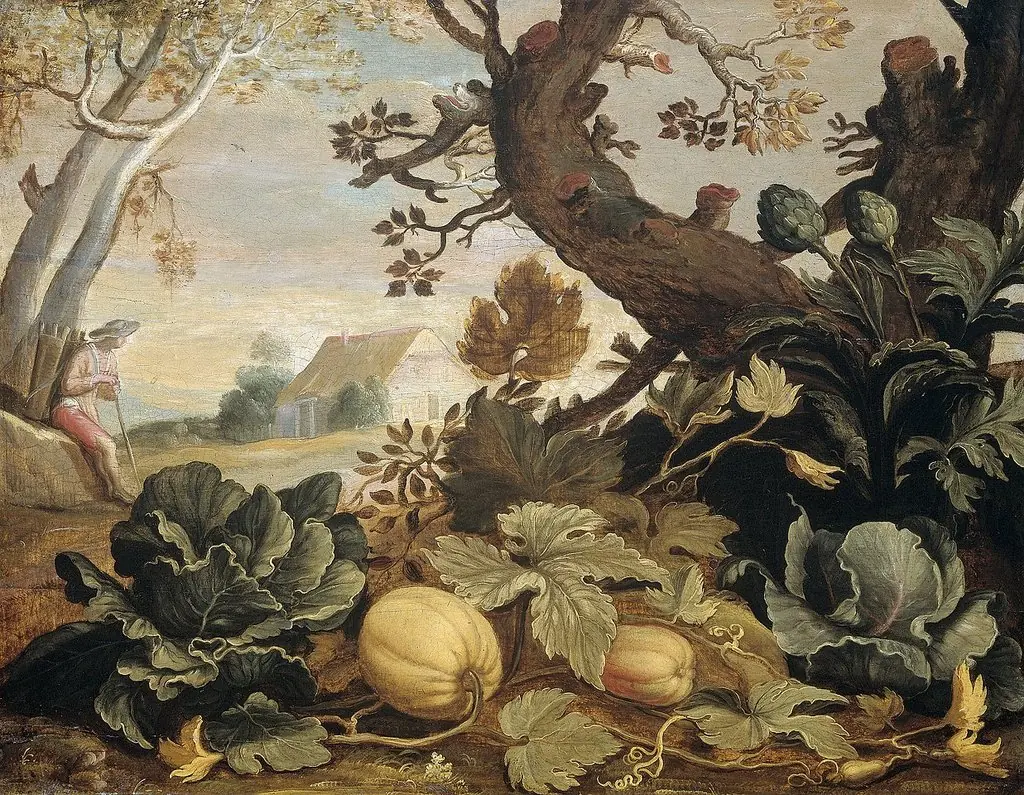 Landscape with Fruits and Vegetables in the foreground
 Blumen- und Distelstück in einer Landschaft
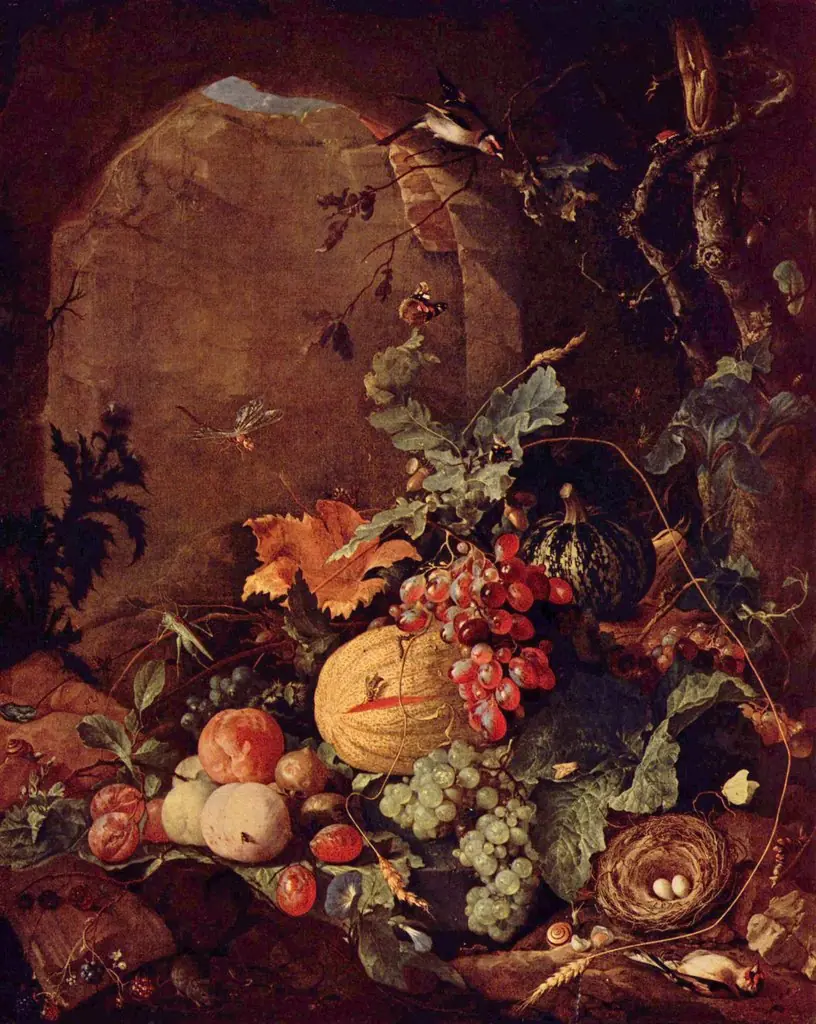 Still Life with Bird's Nest
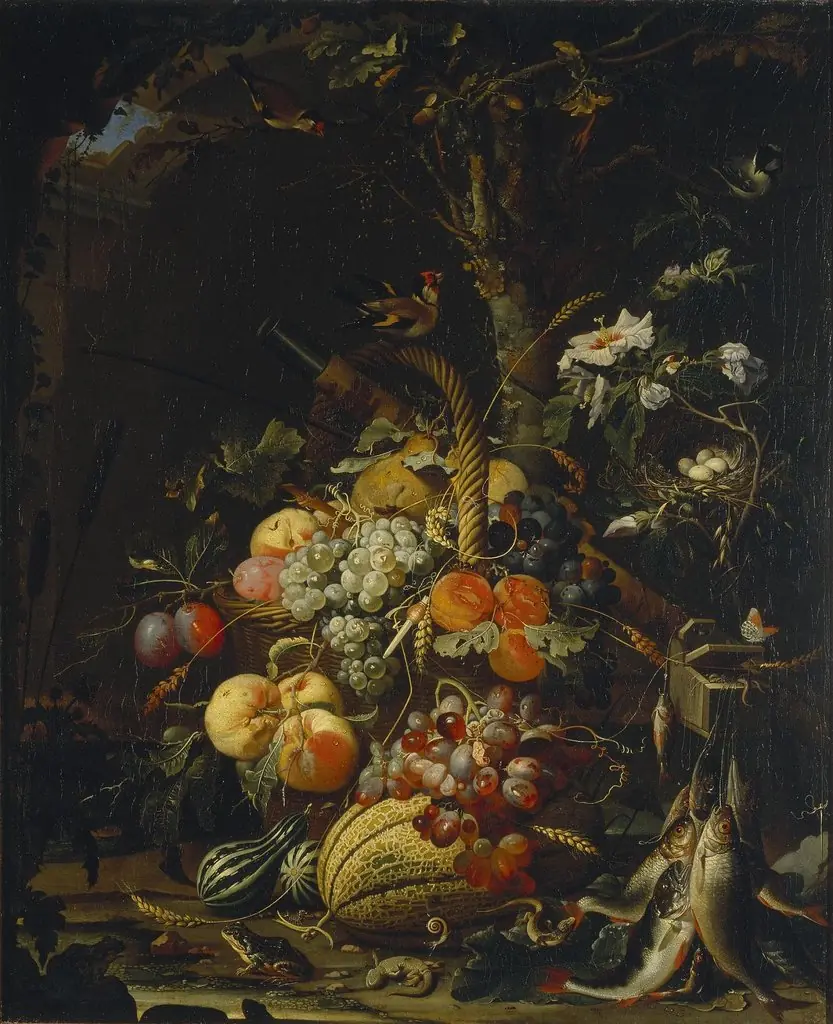 Forest floor still life with fruit, fish and a bird's nest
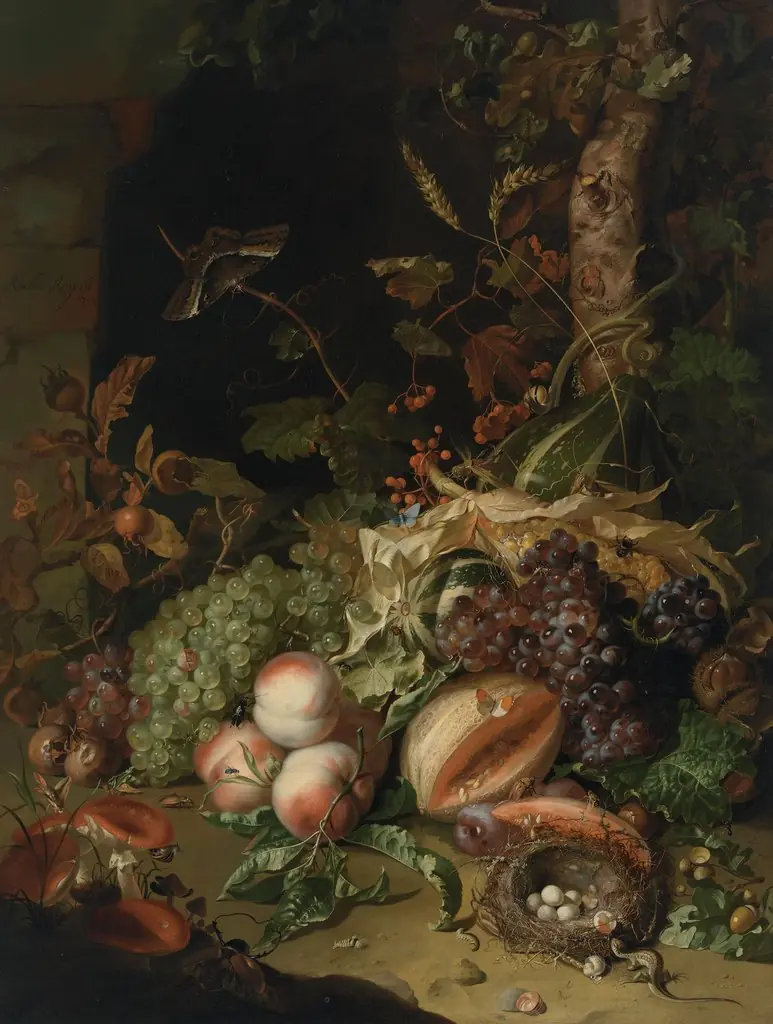 Fruit on a Forest Floor
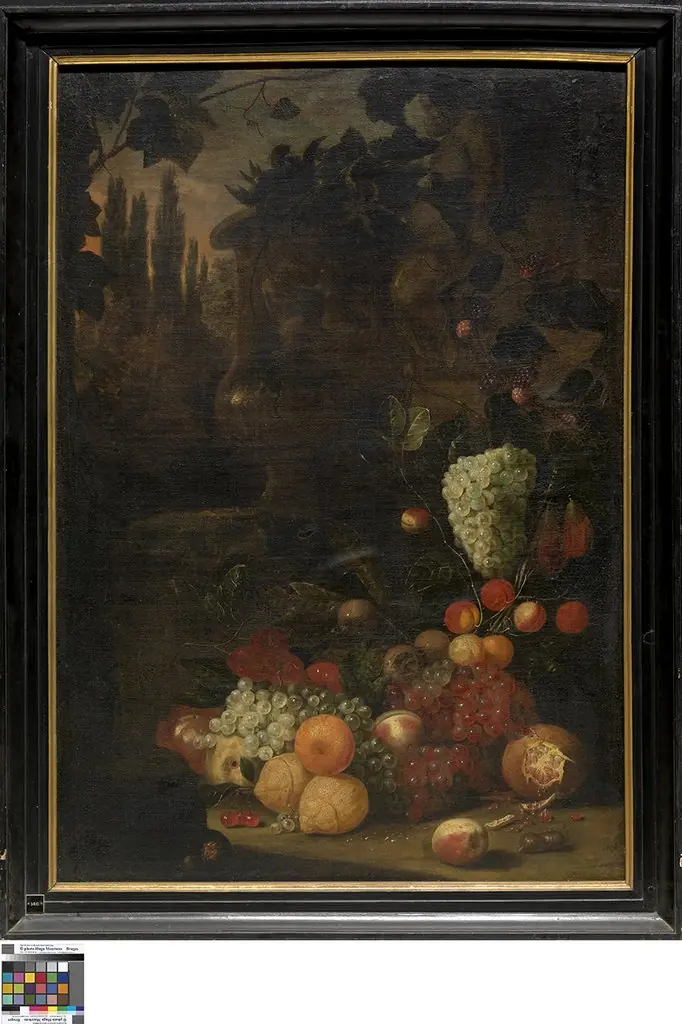 Stilleven met fruit
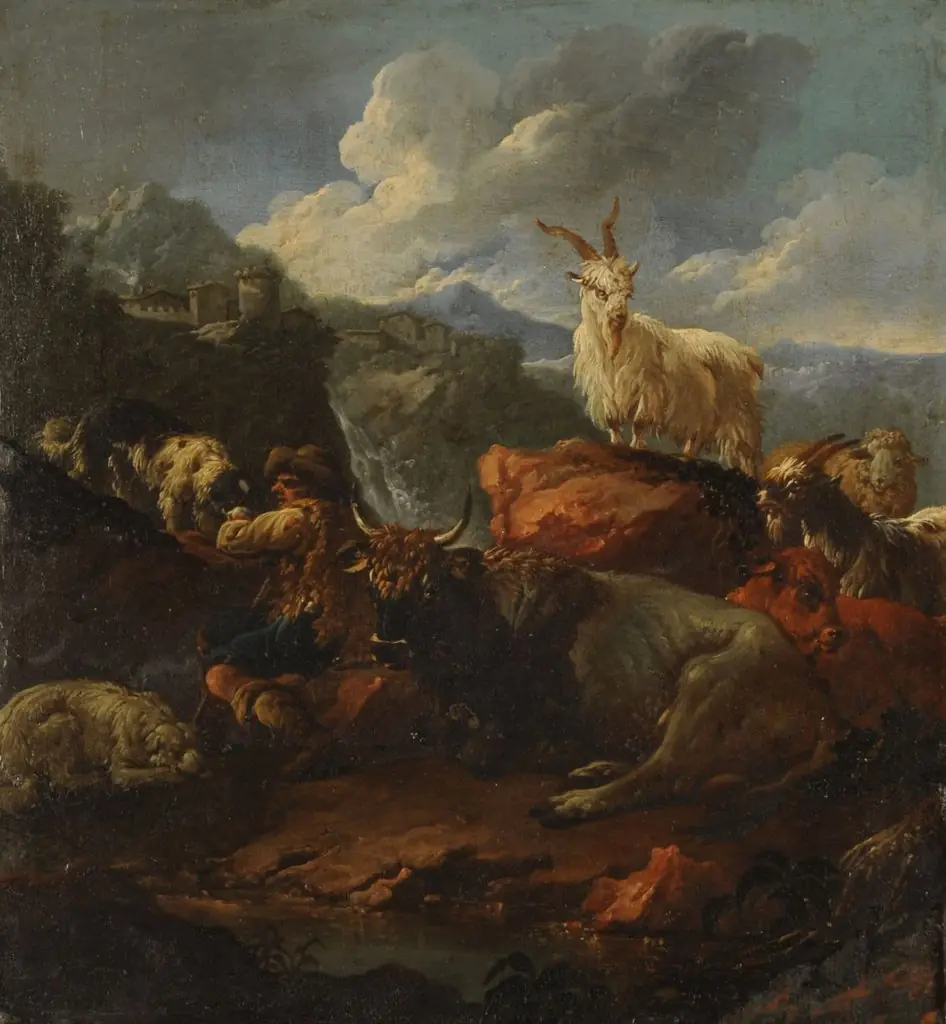 Shepherd and animals in a landscape
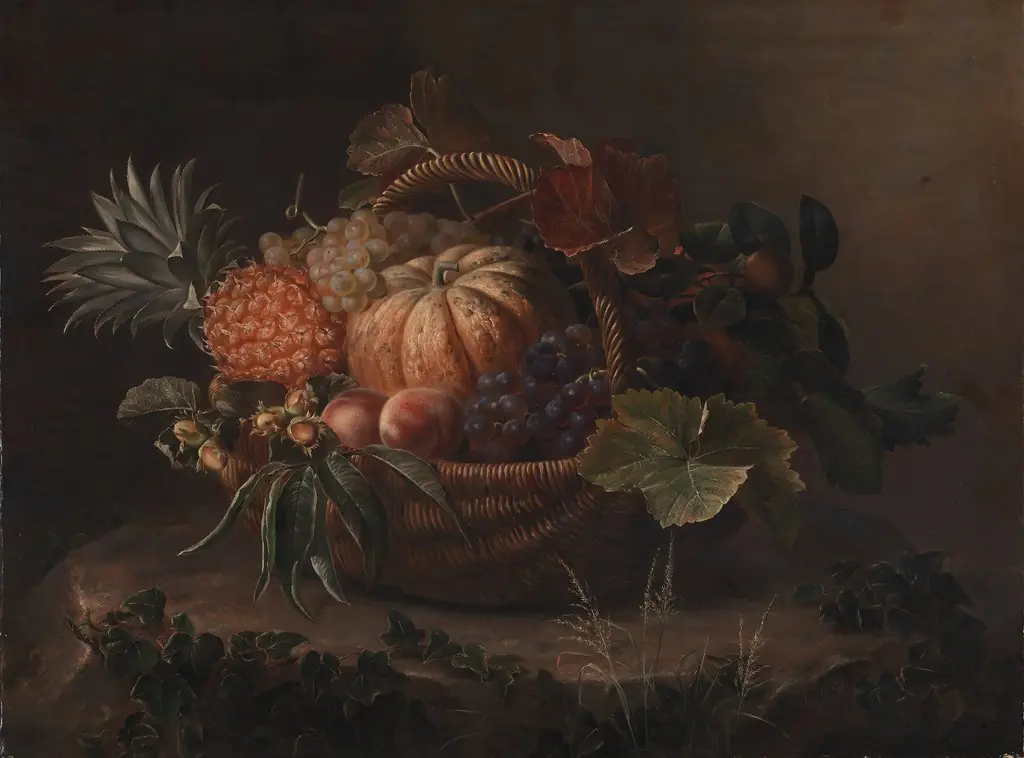 En kurv med frugter på en træstub
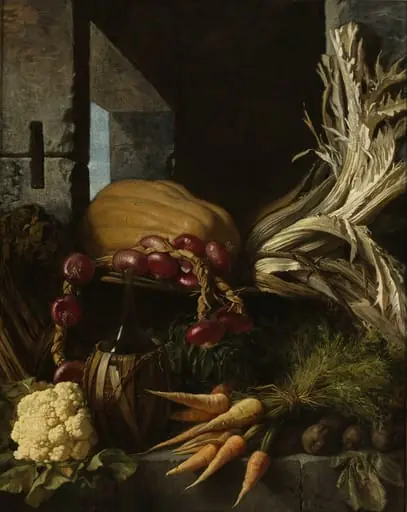 Juureksia ja vihanneksia kellarissa