Artwork
A Visit to the Doctor
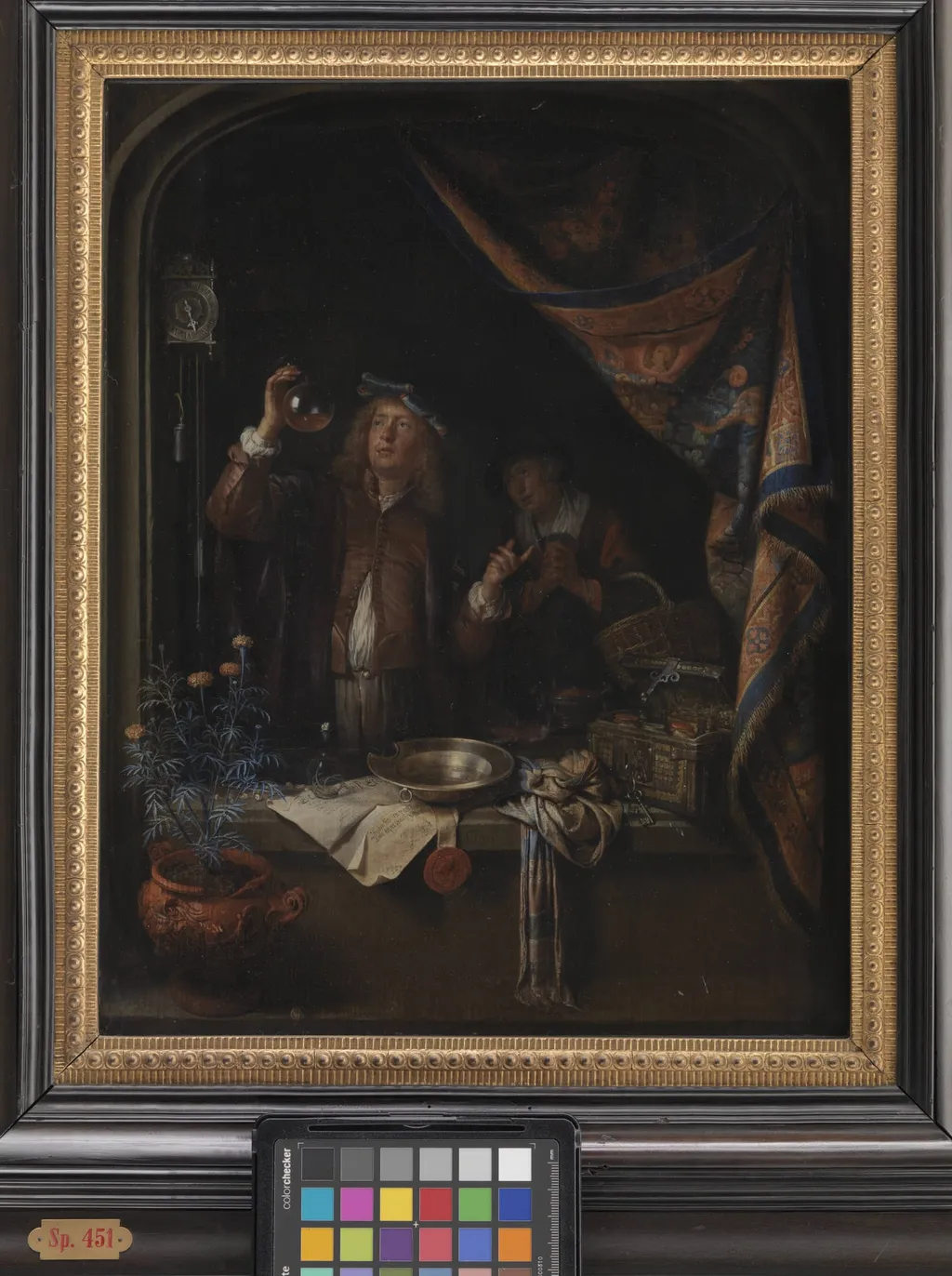
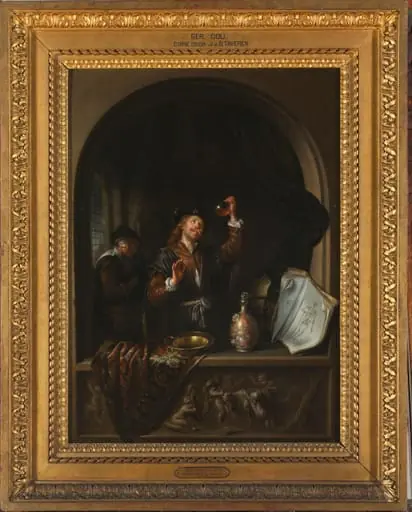
A Visit to the Doctor is a photography by Unknown. It dates from 1662 and is held in the collection of the Statens Museum for Kunst. Painted around 1662, this work depicts a man in early modern attire examining a glass vessel containing a plant specimen.
About this work
Overview
Painted around 1662, this work depicts a man in early modern attire examining a glass vessel containing a plant specimen. The scene is set against a dark background, with a richly colored tapestry visible behind him. The composition emphasizes quiet observation, suggesting a moment of scholarly or medical inquiry. The painting is held in the collection of the Museum of Ethnography.
Subject & Meaning
The figure, likely a physician or naturalist, holds a transparent container with a plant, indicating an interest in botany or early pharmacology.
The figure, likely a physician or naturalist, holds a transparent container with a plant, indicating an interest in botany or early pharmacology. A cloth-draped table and metal bowl suggest tools of preparation or analysis. The presence of the plant and the focused posture imply a connection between natural observation and medical practice, reflecting the period’s blending of empirical study and healing traditions.
Technique & Style
The artist employs chiaroscuro to define form through sharp contrasts between light and shadow, drawing attention to the glass vessel and the man’s hands. The dark background isolates the subject, enhancing the sense of intimacy and concentration. Textures of fabric, metal, and glass are rendered with careful attention, typical of Northern European genre painting of the mid-seventeenth century.
History & Provenance
The painting’s origin is tied to a Dutch or Flemish artistic context, though the artist’s identity remains unconfirmed. It entered the Museum of Ethnography’s collection through documented acquisition, likely as part of a broader effort to preserve visual records of early scientific practice. Its preservation suggests recognition of its value as a cultural artifact rather than a purely aesthetic object.
Context
In the mid-1600s, the study of plants was increasingly linked to medical science, with collectors and practitioners documenting flora for therapeutic use. This image aligns with a broader trend of domestic and studio-based observation, where natural specimens became subjects of quiet study. The tapestry hints at wealth or status, indicating the subject’s position within a learned or affluent class.
Legacy
Though not widely reproduced, the painting contributes to understanding how early modern medicine intersected with natural history. Its restrained composition and focus on material detail reflect a shift away from theatricality toward empirical representation. It stands as a quiet testament to the rise of observation-based knowledge in pre-Enlightenment Europe.
Artist & collection

 Domestic Scene
 Giacomo and Cardinal Marco, investing Andrea, Abbot of San Zeno, with his Benefice
 The Nymph of Fontainebleau
 Portrait of a Woman
 Madonna and Child with Saints in the Enclosed Garden
 Venus and Minerva
 Family Group of Four on Sofa
 Wall painting from Room H of the Villa of P. Fannius Synistor at Boscoreale