Artwork
A Hawk Puncing on a Pair of Ducks
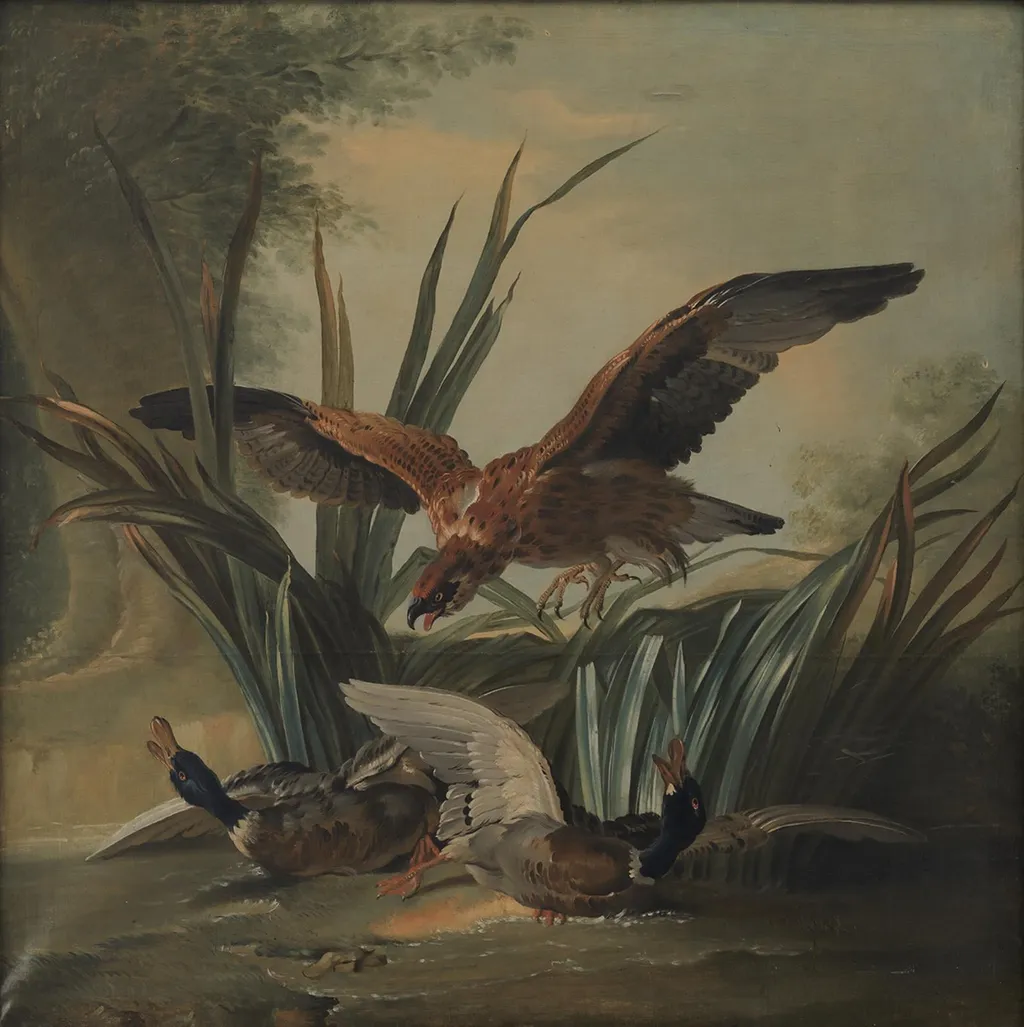
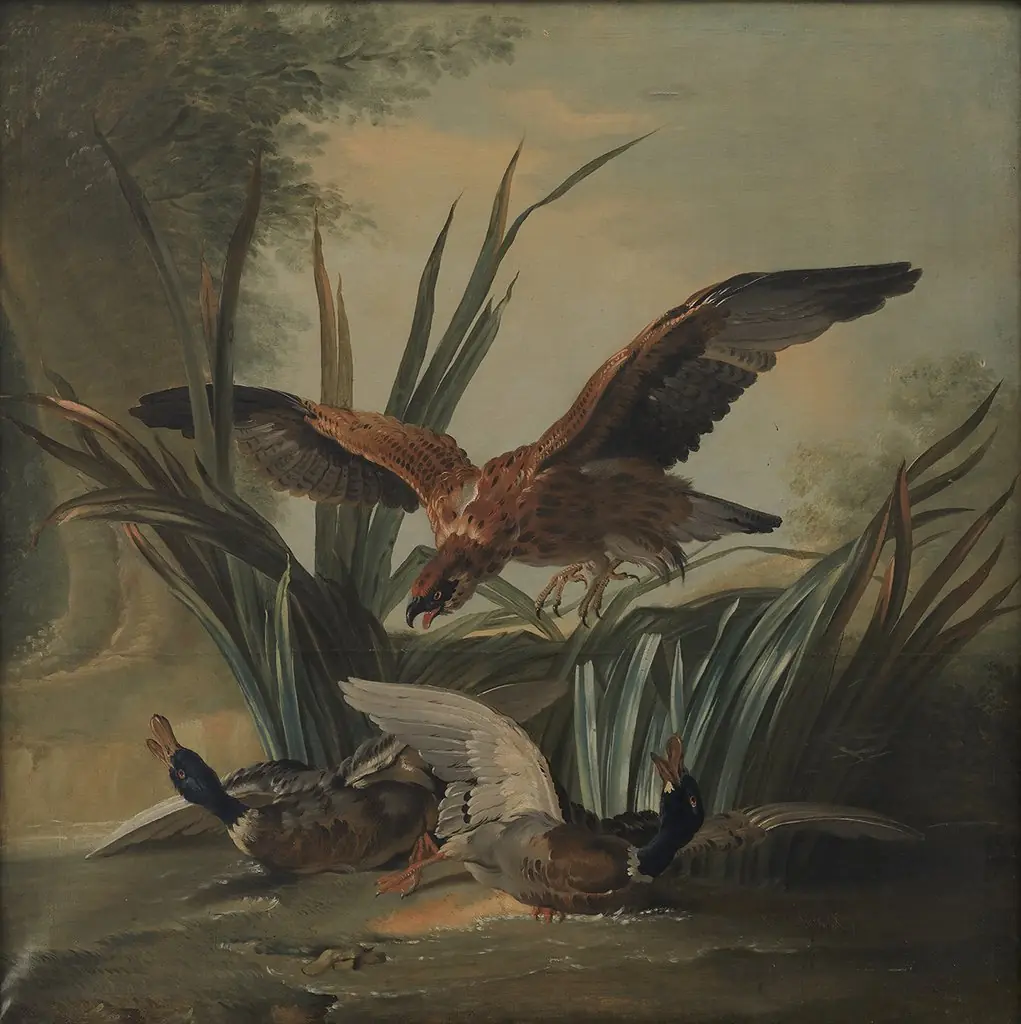
A Hawk Puncing on a Pair of Ducks is a photography by Unknown. It dates from 1750 and is held in the collection of the Statens Museum for Kunst. This painting, dated around 1750, depicts a hawk in violent motion as it strikes two ducks in a wetland setting.
About this work
Overview
This painting, dated around 1750, depicts a hawk in violent motion as it strikes two ducks in a wetland setting. Executed in oil or tempera, it belongs to the collection of the Museum of Ethnography. The composition centers on a moment of natural predation, rendered with careful attention to the birds' anatomy and the environmental texture of reeds and marshland.
Subject & Meaning
The scene captures a moment of survival in the wild, with no human figures present. The hawk’s aggression and the ducks’ vulnerability reflect a natural hierarchy, common in early naturalist imagery. The absence of narrative context suggests an observational approach, possibly intended to document wildlife behavior rather than convey allegory or symbolism.
Technique & Style
The artist rendered feather textures with fine brushwork, emphasizing how light interacts with different plumage tones—dark browns, pale whites, and muted greens. The contrast in color and movement draws attention to the hawk’s outstretched wings and the ducks’ stillness. The wetland background, suggested by tall reeds and damp ground, adds depth without detailed landscape rendering.
History & Provenance
The work is attributed to an artist active in the mid-18th century, though little is documented about their identity. It entered the Museum of Ethnography’s collection in the late 19th or early 20th century, likely as part of a broader acquisition of natural history-themed artworks. Its origin remains unverified beyond stylistic analysis and material evidence.
Context
Created during a period when European interest in natural observation was growing, the painting aligns with emerging scientific illustration practices. While not part of formal zoological study, its attention to detail reflects a cultural shift toward documenting the natural world with accuracy, even in artistic contexts outside academic circles.
Legacy
The painting contributes to a tradition of wildlife depictions in art that prioritize realism over symbolism. Though not widely exhibited, it remains a quiet example of how non-academic artists engaged with nature’s dynamics. Its preservation in an ethnographic museum underscores its role as a cultural artifact of natural observation rather than fine art.
Artist & collection

 Domestic Scene
 Giacomo and Cardinal Marco, investing Andrea, Abbot of San Zeno, with his Benefice
 The Nymph of Fontainebleau
 Portrait of a Woman
 Madonna and Child with Saints in the Enclosed Garden
 Venus and Minerva
 Family Group of Four on Sofa
 Wall painting from Room H of the Villa of P. Fannius Synistor at Boscoreale