Artwork
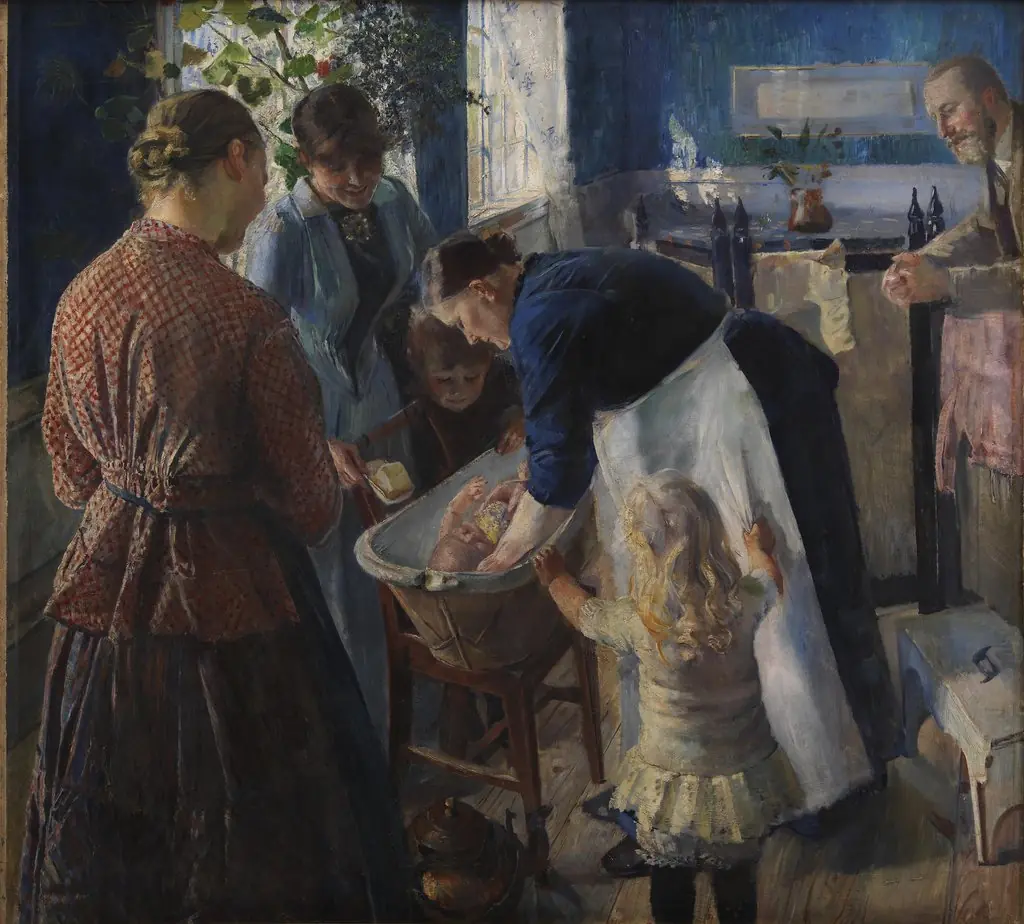
In the Tub
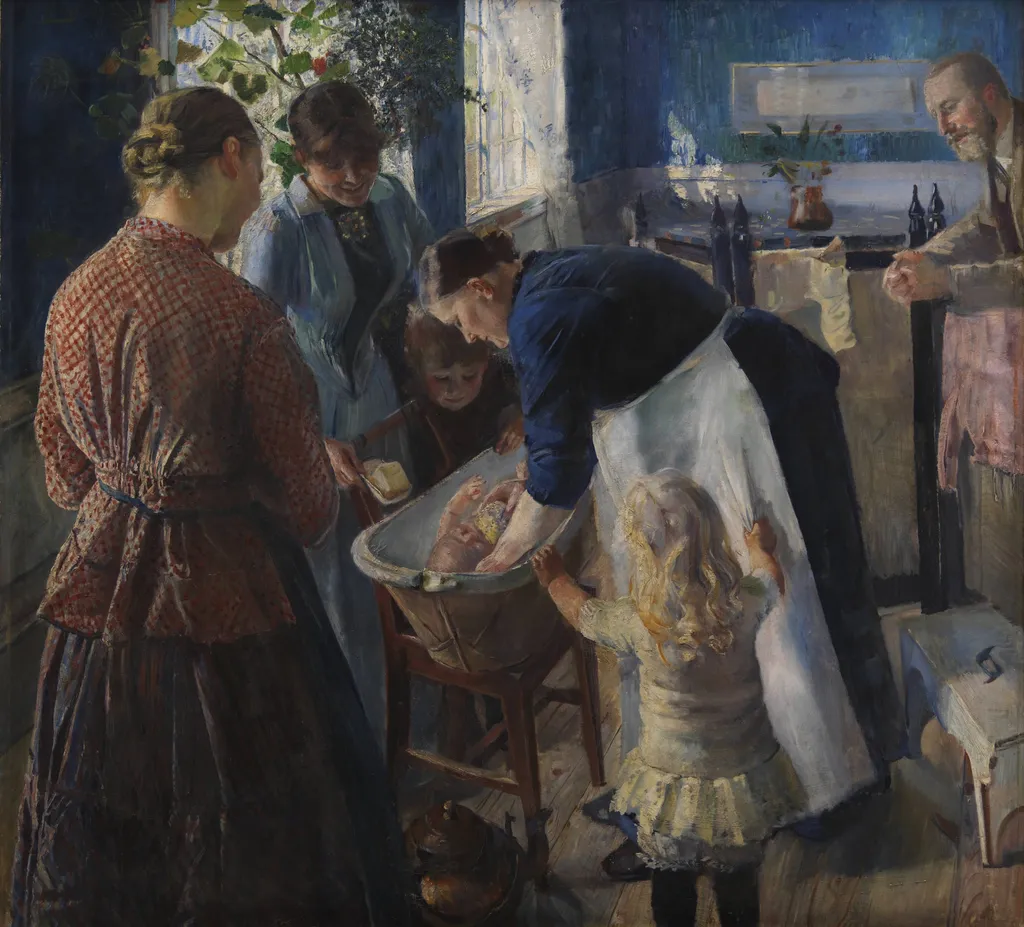
In the Tub is a photography by the Impressionist artist Unknown. It dates from 1889 and is held in the collection of the Statens Museum for Kunst.
About this work
Overview
The painting is part of the collection at the Museum of Ethnography, where it is valued for its unidealized portrayal of daily labor.
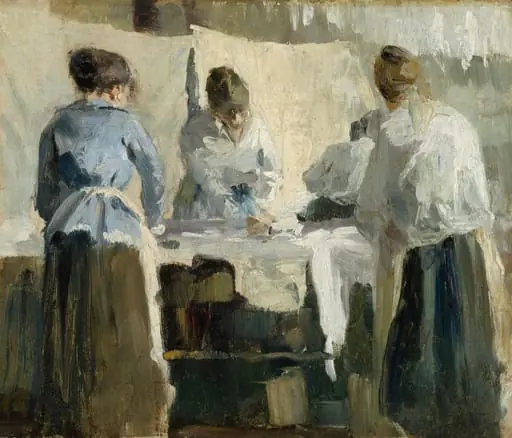
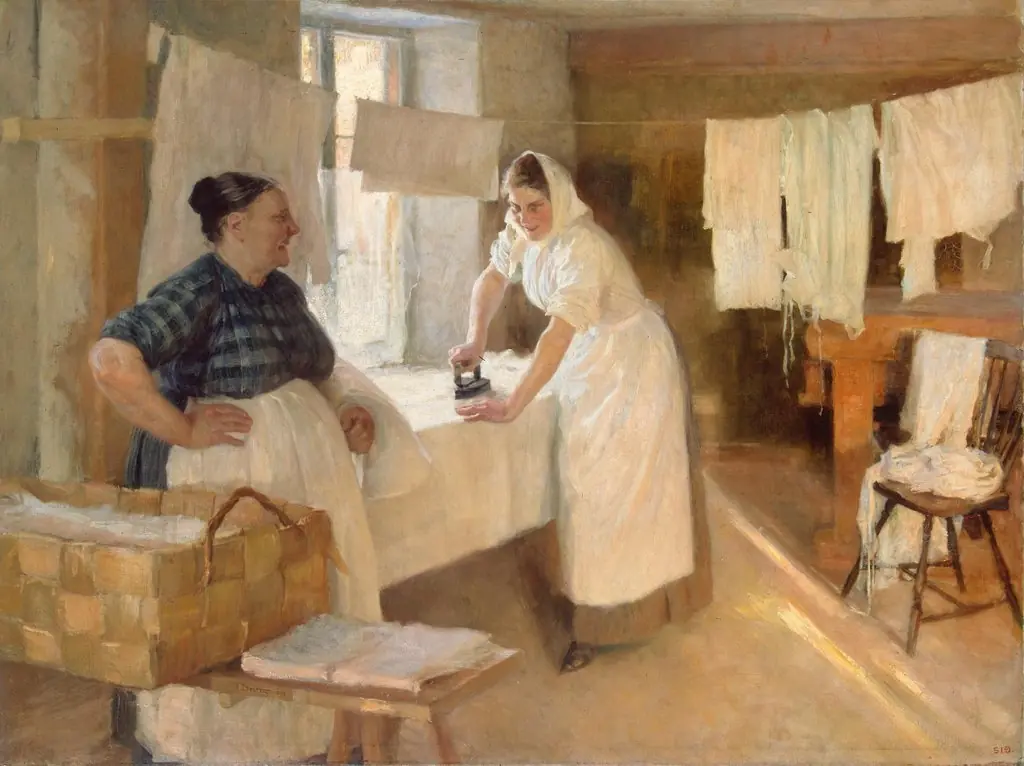
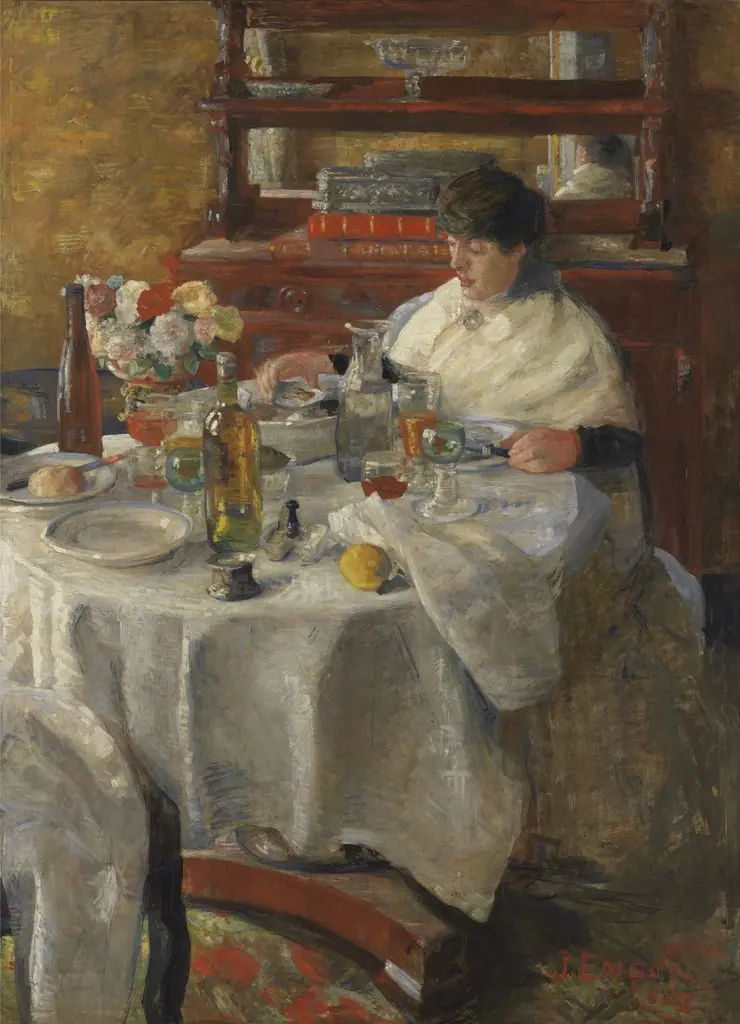
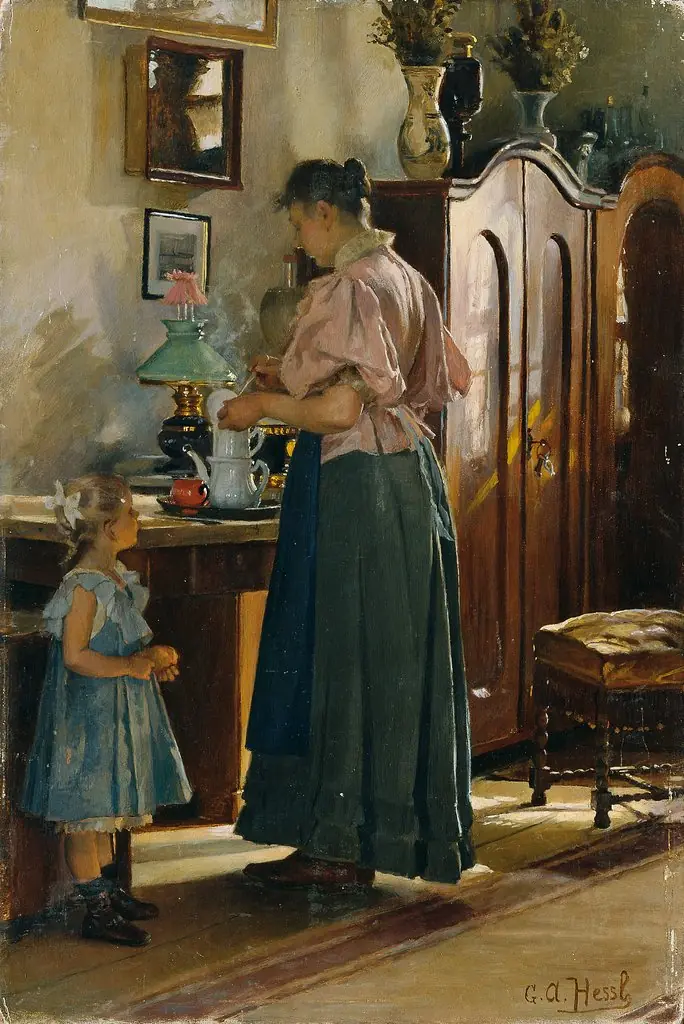
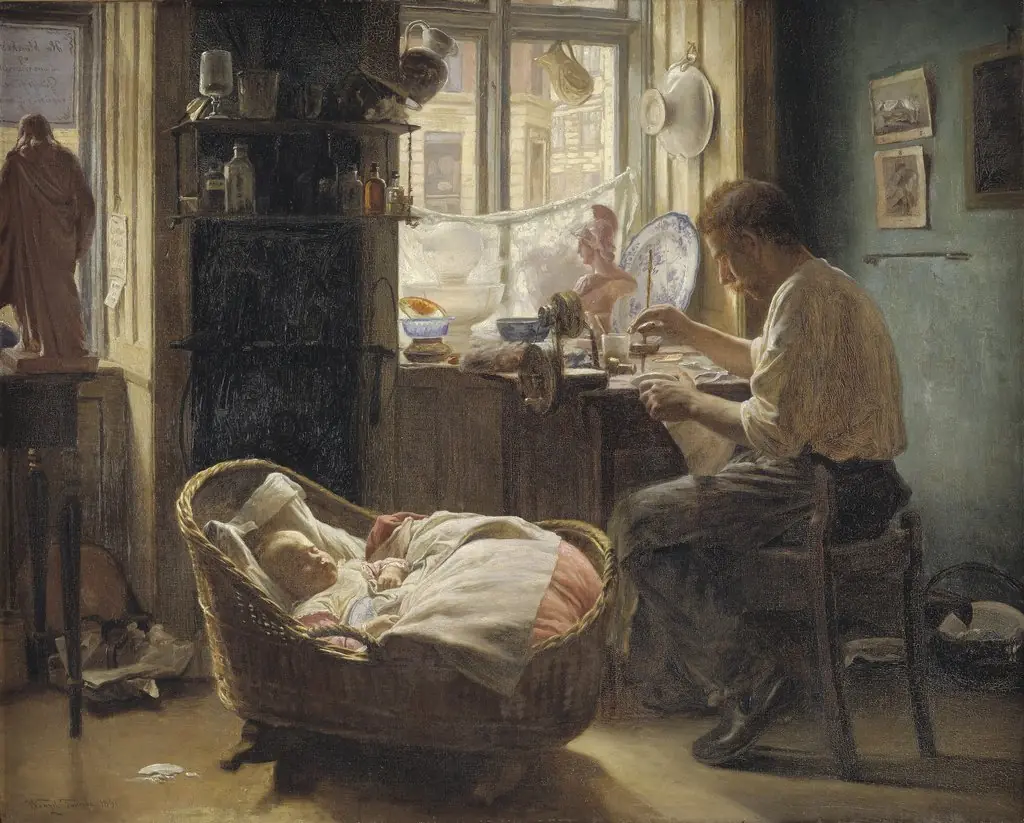
Painted in 1889, In the Tub depicts a quiet domestic scene of laundry being washed in a wooden tub. The artist, active in the late 19th century, rendered the moment with loose brushwork and muted tones. The painting is part of the collection at the Museum of Ethnography, where it is valued for its unidealized portrayal of daily labor. Its composition centers on ordinary figures engaged in routine tasks, avoiding theatricality or narrative climax.
Subject & Meaning
The scene captures women and a child engaged in the physical labor of washing clothes, a common household chore in the 19th century. The figures are arranged around the tub, their postures suggesting fatigue and routine. The presence of a boat beyond the window hints at a nearby waterway, possibly linking domestic work to broader economic activity. The painting avoids sentimentality, instead presenting work as an unremarkable, persistent part of life.
Technique & Style
The artist employed loose, visible brushstrokes to convey texture and atmosphere rather than precise detail. Light filters through the window, casting soft shadows that blur edges and unify the interior space. Colors are subdued—deep reds, muted blues, and earthy grays—reinforcing the dim, enclosed environment. This approach aligns with Impressionist concerns for light and transient moments, though the subject remains grounded in realism.
History & Provenance
The painting was completed in 1889 and entered the Museum of Ethnography’s collection in the early 20th century. Its acquisition reflects a growing institutional interest in documenting everyday life across social classes. Unlike many works of the period that focused on elite subjects, this piece was preserved for its ethnographic value—offering insight into domestic routines of non-urban communities during industrialization.
Context
In the late 1880s, urbanization and industrialization were reshaping labor patterns, yet many households still relied on manual washing. Artists increasingly turned to domestic scenes as subjects worthy of serious attention. This painting reflects a broader cultural shift toward observing the lives of working women, often overlooked in academic art. The inclusion of a boat suggests proximity to trade routes, subtly connecting home labor to wider economic networks.
Legacy
The work remains a quiet example of how everyday labor was rendered with dignity in late 19th-century art. While not widely exhibited outside its home institution, it contributes to scholarly understanding of gender, class, and domestic space in the period. Its preservation underscores the value placed on vernacular life, distinguishing it from more celebrated works of the same era that prioritized spectacle over stillness.
Artist & collection

 Domestic Scene
 Giacomo and Cardinal Marco, investing Andrea, Abbot of San Zeno, with his Benefice
 The Nymph of Fontainebleau
 Portrait of a Woman
 Madonna and Child with Saints in the Enclosed Garden
 Venus and Minerva
 Family Group of Four on Sofa
 Wall painting from Room H of the Villa of P. Fannius Synistor at Boscoreale