Artwork
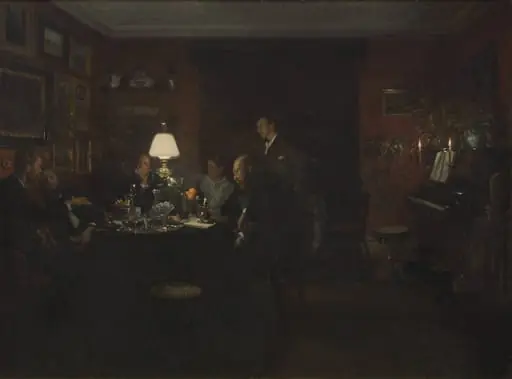
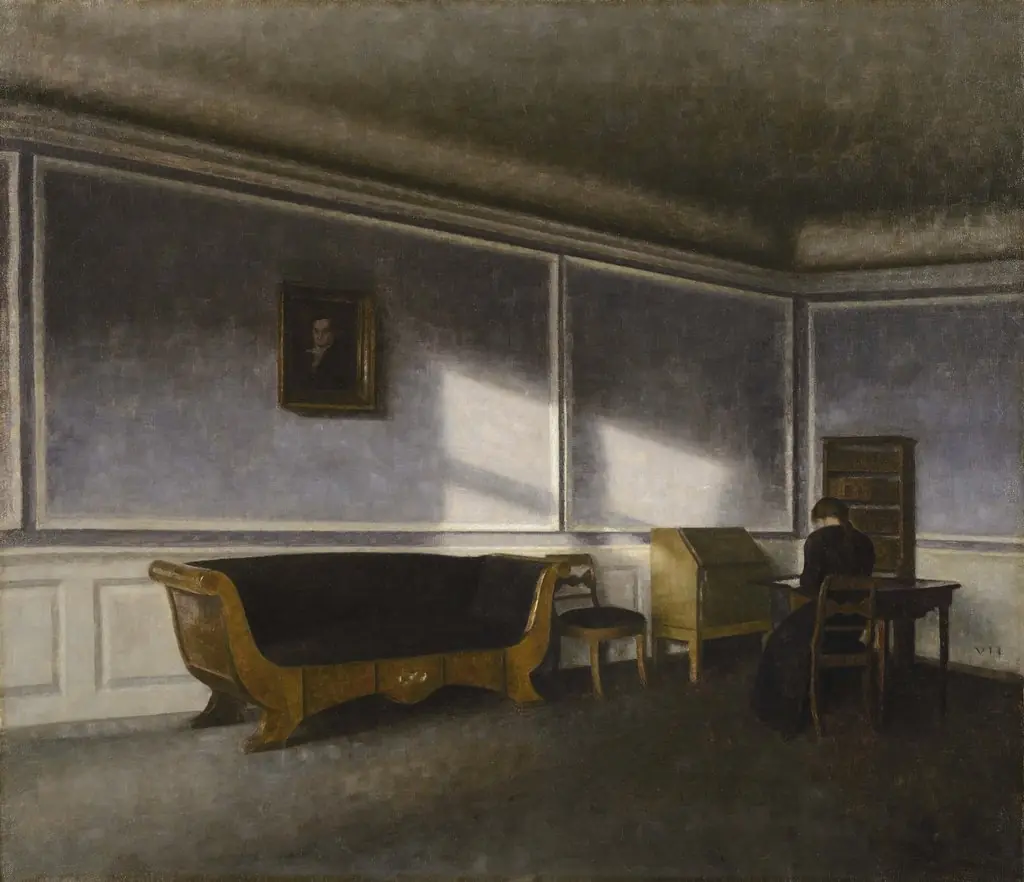
Evening in the Drawing Room
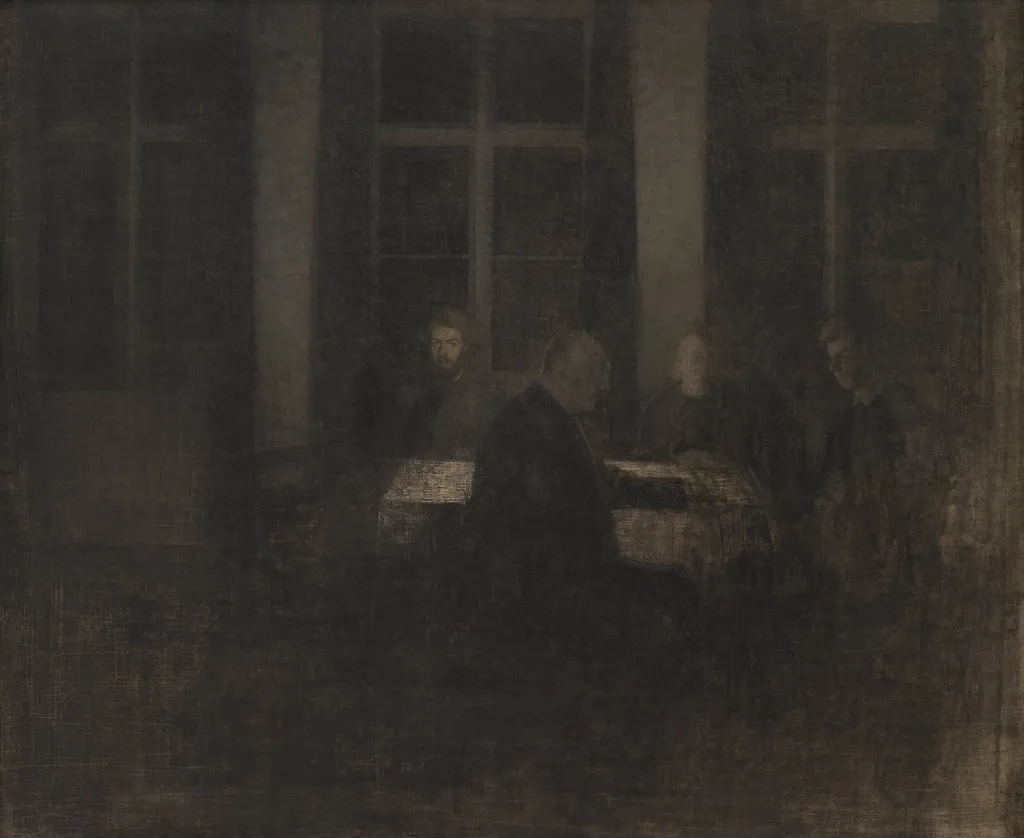
Evening in the Drawing Room is a drawing by Unknown. It dates from 1904 and is held in the collection of the Statens Museum for Kunst.
About this work
Overview
The work is held in the collection of the Museum of Ethnography, where it is studied for its atmospheric depiction of private life.
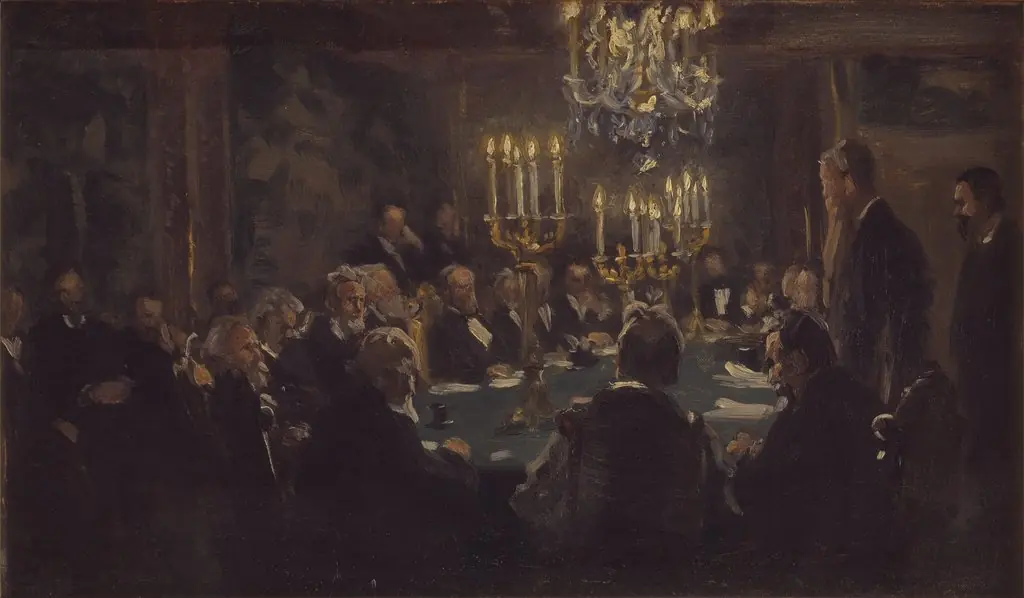
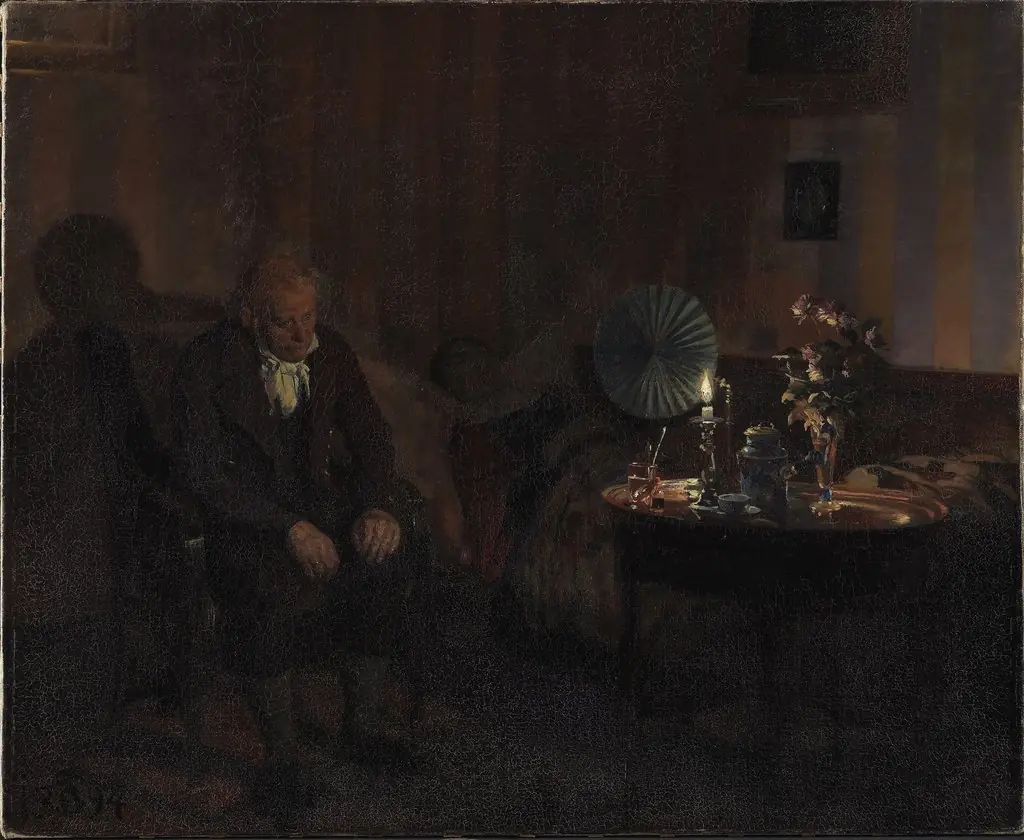
Painted in 1904, Evening in the Drawing Room depicts an interior space at night, rendered with restrained realism. The scene captures a quiet moment in a domestic setting, illuminated by minimal light sources. The composition emphasizes shadow and subdued tones, with figures and objects rendered in indistinct forms. The work is held in the collection of the Museum of Ethnography, where it is studied for its atmospheric depiction of private life.
Subject & Meaning
The painting portrays a group of individuals seated around a table in a dimly lit room, their identities obscured by darkness and clothing. No clear narrative or interaction is evident, suggesting introspection rather than social engagement. The absence of facial detail and the muted palette evoke a sense of solitude within proximity, hinting at the quiet rituals of evening domesticity without overt symbolism.
Technique & Style
The artist employs a muted, low-contrast palette to enhance the nocturnal mood, using layered shadows and faint highlights to suggest volume and texture. Brushwork is precise but unobtrusive, favoring tonal transitions over sharp outlines. Light sources are implied rather than depicted, casting soft gradients across surfaces and clothing, reinforcing the painting’s hushed, contemplative tone.
History & Provenance
Created in 1904, the work entered the Museum of Ethnography’s collection shortly after its completion. Its acquisition reflects early 20th-century interest in documenting everyday domestic scenes as cultural artifacts. While the artist’s full biography remains limited, the painting’s preservation suggests recognition of its quiet observational value within ethnographic contexts.
Context
At the turn of the century, many artists turned to interior scenes to explore psychological and social quietude, moving away from grand narratives. This work aligns with broader trends in Northern European art that valued subtle lighting and unembellished realism. Its placement in an ethnographic museum underscores its role as a record of ordinary life, not merely aesthetic expression.
Legacy
Evening in the Drawing Room continues to be referenced in studies of early modern interior painting and the representation of domestic silence. Its restrained approach has influenced later artists interested in mood over narrative. Though not widely exhibited, it remains a significant example of how light and shadow can convey emotional weight without explicit detail.
Artist & collection

 Domestic Scene
 Giacomo and Cardinal Marco, investing Andrea, Abbot of San Zeno, with his Benefice
 The Nymph of Fontainebleau
 Portrait of a Woman
 Madonna and Child with Saints in the Enclosed Garden
 Venus and Minerva
 Family Group of Four on Sofa
 Wall painting from Room H of the Villa of P. Fannius Synistor at Boscoreale
 Aften i stuen
 Strandgade, Sunshine
 Evening talk
 Evening Talk
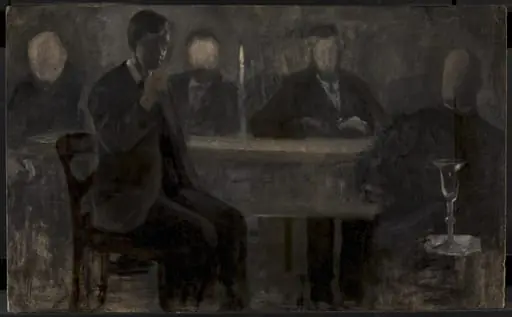 Five Portraits. Study for painting in Thielska Galleriet, Stockholm
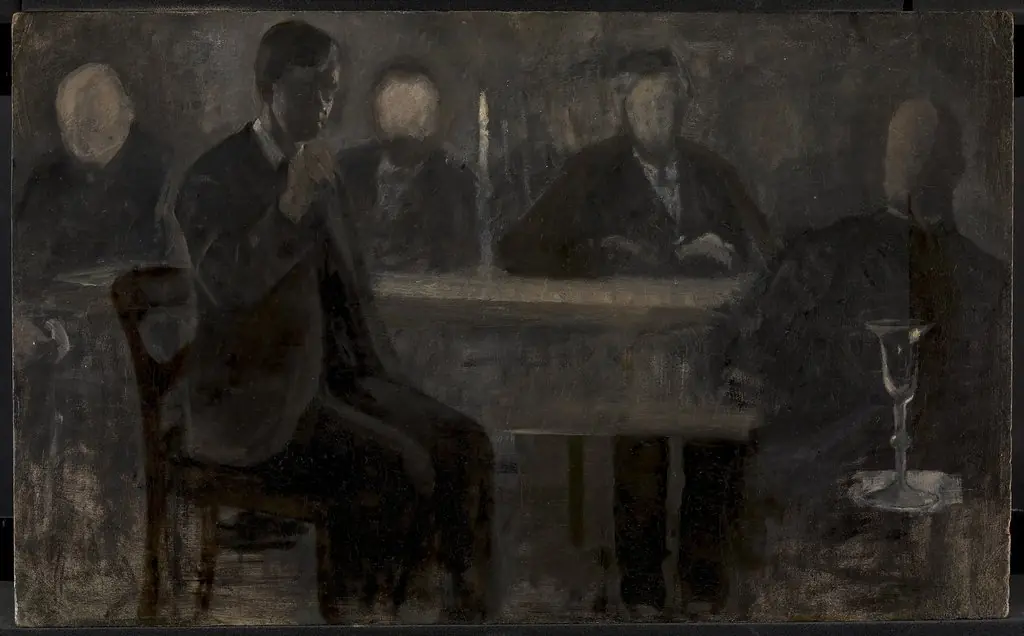 Five Portraits. Study for painting in Thielska Galleriet, Stockholm
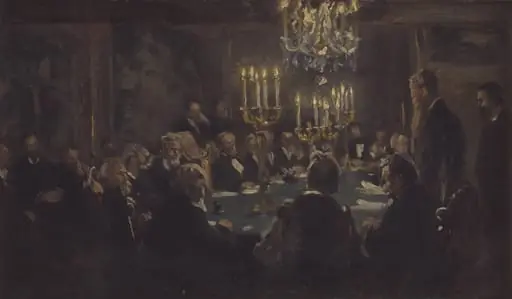 Kompositionsskitse til "Et Møde i Videnskabernes Selskab" i Videnskabernes Selskab
 Kompositionsskitse til "Et Møde i Videnskabernes Selskab" i Videnskabernes Selskab
 Rahbek ved sin hustrus dødsleje
 Interior with the Artist's Easel
 Dinnertime
 Sunshine in the Drawing Room