Artwork
A Sheperd Boy. Pompeii
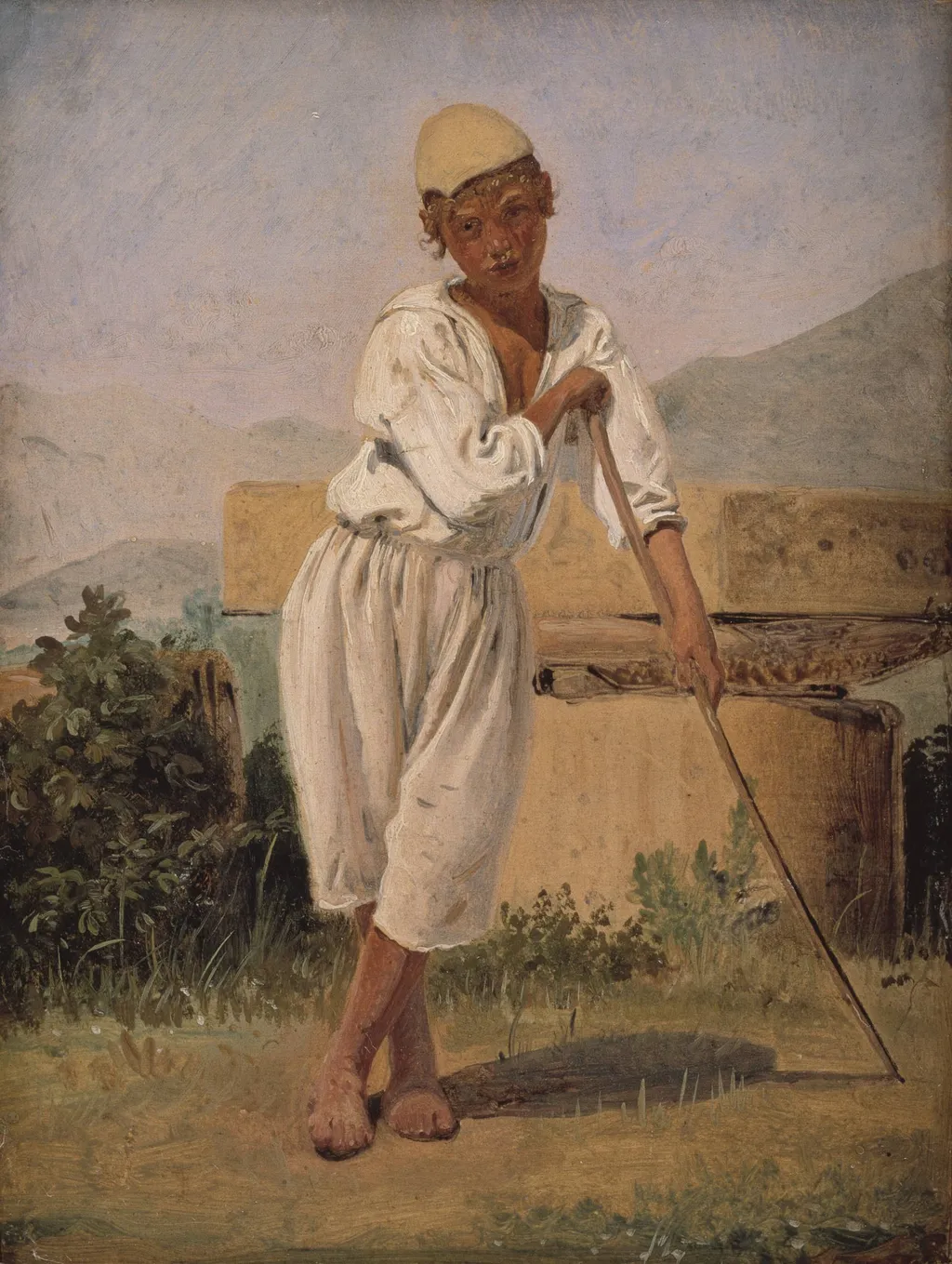
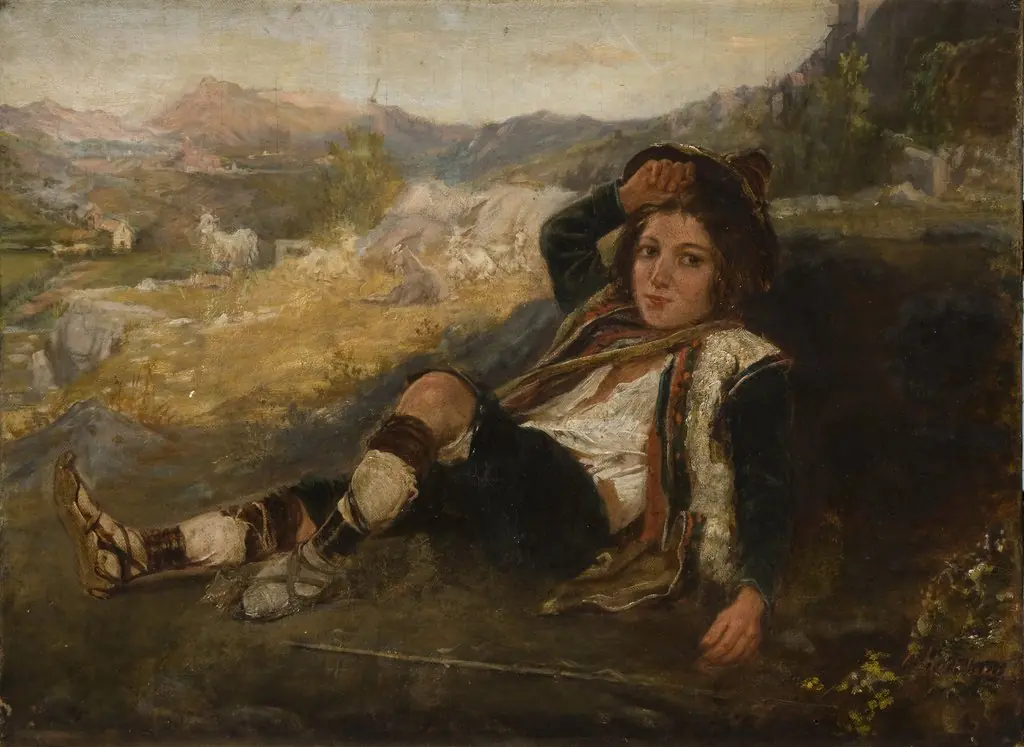
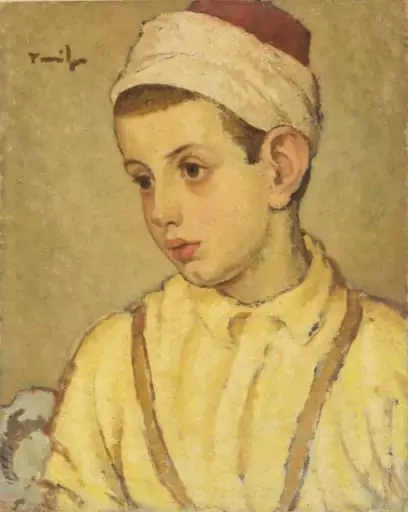
A Sheperd Boy. Pompeii is a photography by the Romanticist artist Unknown. It dates from 1838 and is held in the collection of the Statens Museum for Kunst. Painted in 1838, this work depicts a young shepherd boy at rest in a rural landscape.
About this work
Overview
It is currently held in the collection of the Museum of Ethnography, where it reflects 19th-century European interest in rural labor and simplicity.
Painted in 1838, this work depicts a young shepherd boy at rest in a rural landscape. Though associated with Pompeii in title, the scene is not an archaeological reconstruction but a genre scene inspired by pastoral life. The artist rendered the figure and setting with spontaneous brushwork, emphasizing atmosphere over detail. It is currently held in the collection of the Museum of Ethnography, where it reflects 19th-century European interest in rural labor and simplicity.
Subject & Meaning
The boy, barefoot and dressed in simple linen, leans against a low stone wall, suggesting a pause in his duties. His flat cap and loose garments indicate modest means and outdoor labor. The quiet solitude of the figure, framed by distant hills and scattered vegetation, evokes a sense of quiet endurance rather than idealized innocence. The scene avoids sentimentality, instead presenting rural life with unembellished realism.
Technique & Style
The painting employs loose, rapid brushstrokes that convey movement and light without fine detail. The sky and hills are rendered in soft washes, while the boy’s clothing and the stone wall show textured, almost sketch-like handling. This approach aligns with emerging Romantic tendencies to prioritize emotional tone and naturalism over academic precision. The composition’s asymmetry and open space enhance the feeling of an unposed, fleeting moment.
History & Provenance
The painting was completed in 1838 by an artist whose name is recorded as 181_person, though little else is known about their career. It entered the Museum of Ethnography’s collection in the late 19th century, likely as part of a broader effort to document everyday life across social classes. Its title references Pompeii, possibly to evoke antiquity’s pastoral ideals, though the setting is not archaeologically accurate.
Context
Created during the height of Romanticism, the work reflects a wider European fascination with rural labor as a counterpoint to industrialization. Artists often turned to shepherds, farmers, and laborers to express themes of authenticity and harmony with nature. Though not a grand historical scene, this quiet portrait aligns with contemporaneous efforts to elevate ordinary life through art, particularly in regions like Italy and the Low Countries.
Legacy
The painting contributes to a body of 19th-century genre works that documented rural existence without overt moralizing. Its preservation in an ethnographic museum underscores its role as a record of dress, posture, and environment rather than a celebrated artistic achievement. It remains a modest but telling example of how Romantic ideals were adapted to depict the quiet dignity of laboring subjects.
Artist & collection

 Domestic Scene
 Giacomo and Cardinal Marco, investing Andrea, Abbot of San Zeno, with his Benefice
 The Nymph of Fontainebleau
 Portrait of a Woman
 Madonna and Child with Saints in the Enclosed Garden
 Venus and Minerva
 Family Group of Four on Sofa
 Wall painting from Room H of the Villa of P. Fannius Synistor at Boscoreale