Artwork
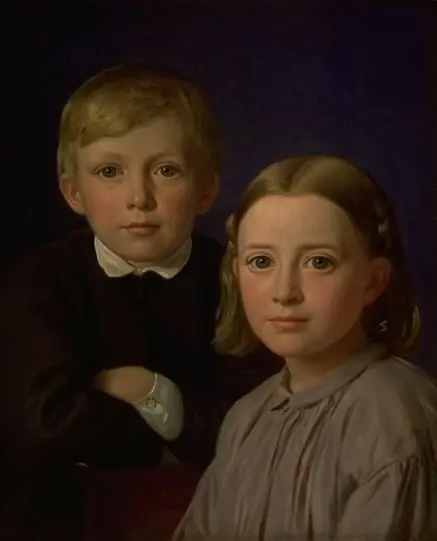
Jens Simmelkær Asmussen og Katrine Asmussen som børn
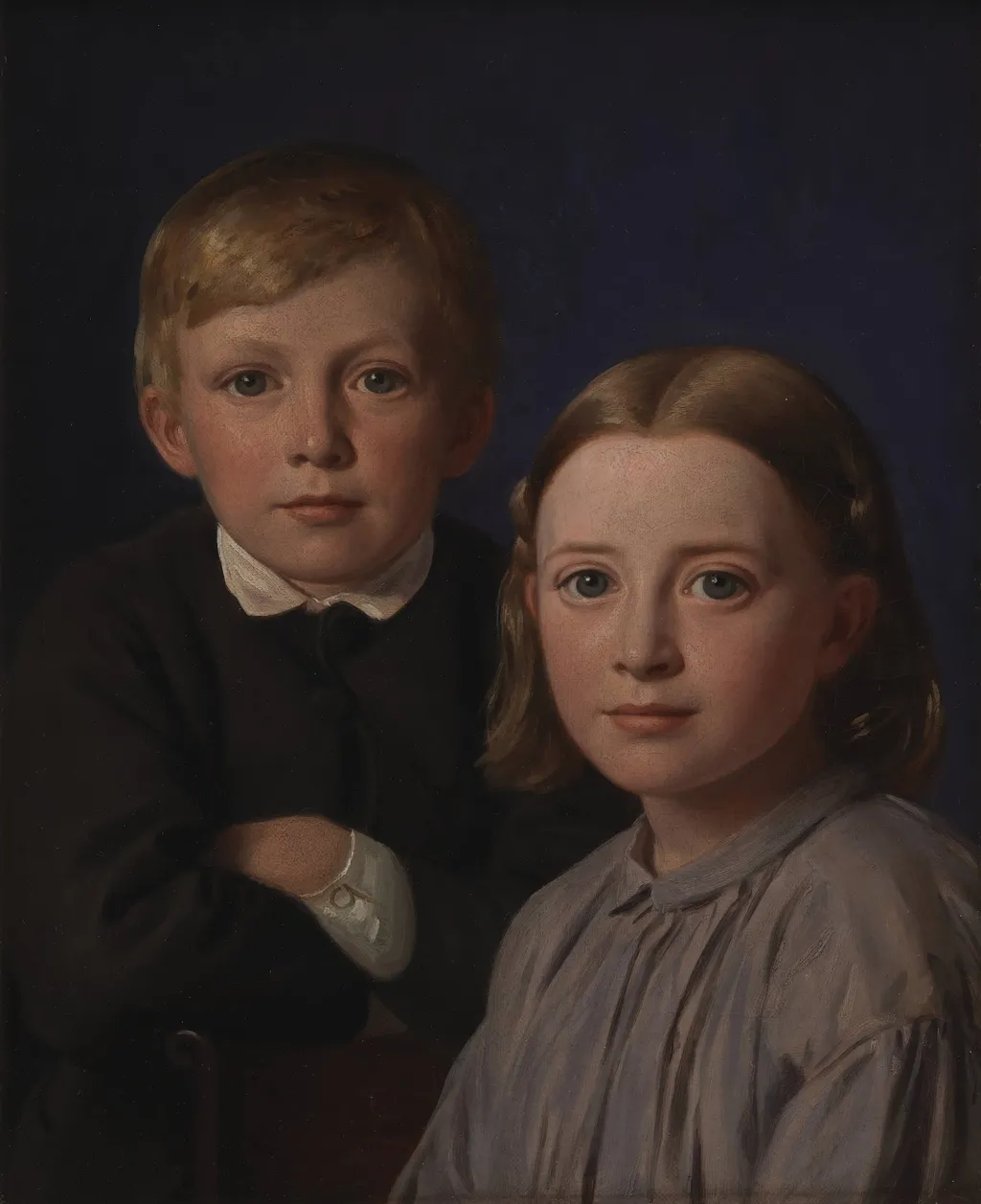
Jens Simmelkær Asmussen og Katrine Asmussen som børn is a photography by the Impressionist artist Unknown. It dates from 1867 and is held in the collection of the Statens Museum for Kunst. Painted in 1867, this portrait captures two siblings, Jens and Katrine Asmussen, as children.
About this work
Overview
Its quiet composition and restrained palette distinguish it from more ornate portraiture of the period, emphasizing stillness over theatricality.
Painted in 1867, this portrait captures two siblings, Jens and Katrine Asmussen, as children. Executed in oil on canvas, the work is part of the collection at the Museum of Ethnography. Its quiet composition and restrained palette distinguish it from more ornate portraiture of the period, emphasizing stillness over theatricality. The artist, though not widely documented, demonstrates a sensitivity to psychological presence in young subjects.
Subject & Meaning
The two children stand formally, their postures conveying solemnity rather than playfulness. The boy’s hand resting on his chest and the girl’s clasped hands suggest inward reflection, perhaps shaped by cultural norms of childhood decorum. Their downward gazes and neutral expressions avoid direct engagement with the viewer, reinforcing a mood of quiet dignity. The painting may reflect contemporary ideals of childhood innocence tempered by restraint.
Technique & Style
The artist employs chiaroscuro to model the children’s forms against a deep blue background, enhancing volume and focus. Light falls subtly on their faces and clothing, defining texture without embellishment. The boy’s dark garments contrast with the girl’s pale dress, creating visual balance. Brushwork is precise but unobtrusive, prioritizing clarity of form over decorative flourish. The background’s uniformity isolates the figures, deepening their psychological presence.
History & Provenance
The painting entered the Museum of Ethnography’s collection in the late 19th or early 20th century, likely through donation or acquisition from the Asmussen family. Its presence in an ethnographic institution, rather than a fine arts museum, suggests it was valued for its documentation of domestic life or regional costume. Little is known about the artist’s identity or the circumstances of its commission.
Context
In mid-19th century Denmark, portraiture of children often reflected middle-class values of propriety and moral seriousness. This work aligns with a trend toward intimate, unidealized depictions of youth, distinct from aristocratic grandeur. The somber tone and minimal setting echo broader cultural shifts toward emotional restraint and domestic realism in visual culture during this period.
Legacy
Though not widely exhibited or reproduced, the painting remains a quiet example of Nordic domestic portraiture. Its preservation in an ethnographic context underscores its role as a record of everyday life rather than artistic innovation. It continues to invite contemplation of childhood identity and the visual language of stillness in 19th-century Scandinavian society.
Artist & collection

 Domestic Scene
 Giacomo and Cardinal Marco, investing Andrea, Abbot of San Zeno, with his Benefice
 The Nymph of Fontainebleau
 Portrait of a Woman
 Madonna and Child with Saints in the Enclosed Garden
 Venus and Minerva
 Family Group of Four on Sofa
 Wall painting from Room H of the Villa of P. Fannius Synistor at Boscoreale
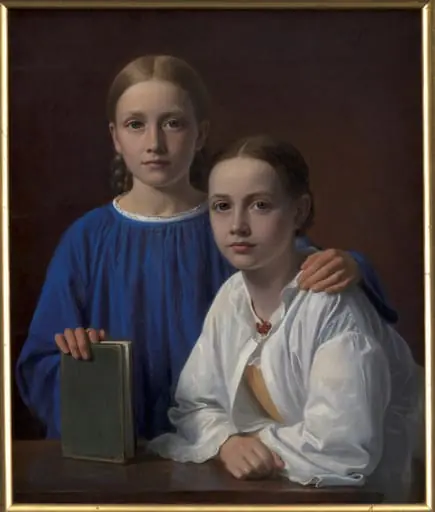 Meta Magdalene Hammerich and the Artist's Daughter Kristiane Konstantin Hansen
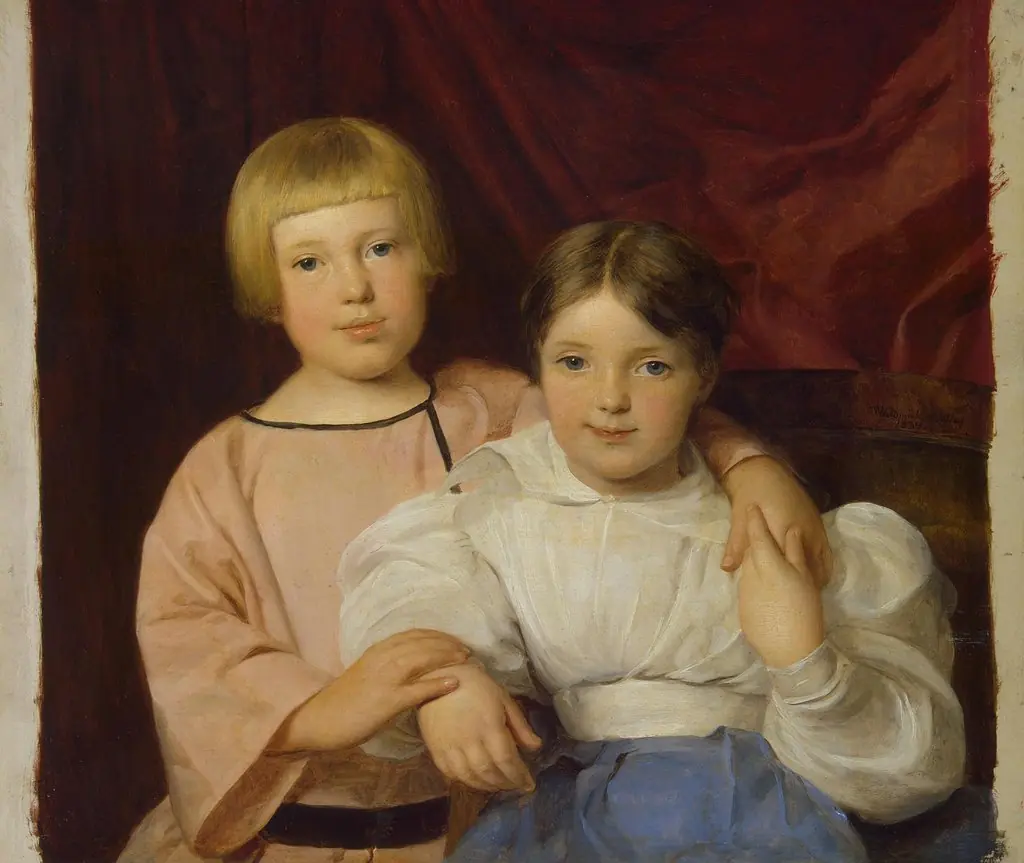 Children
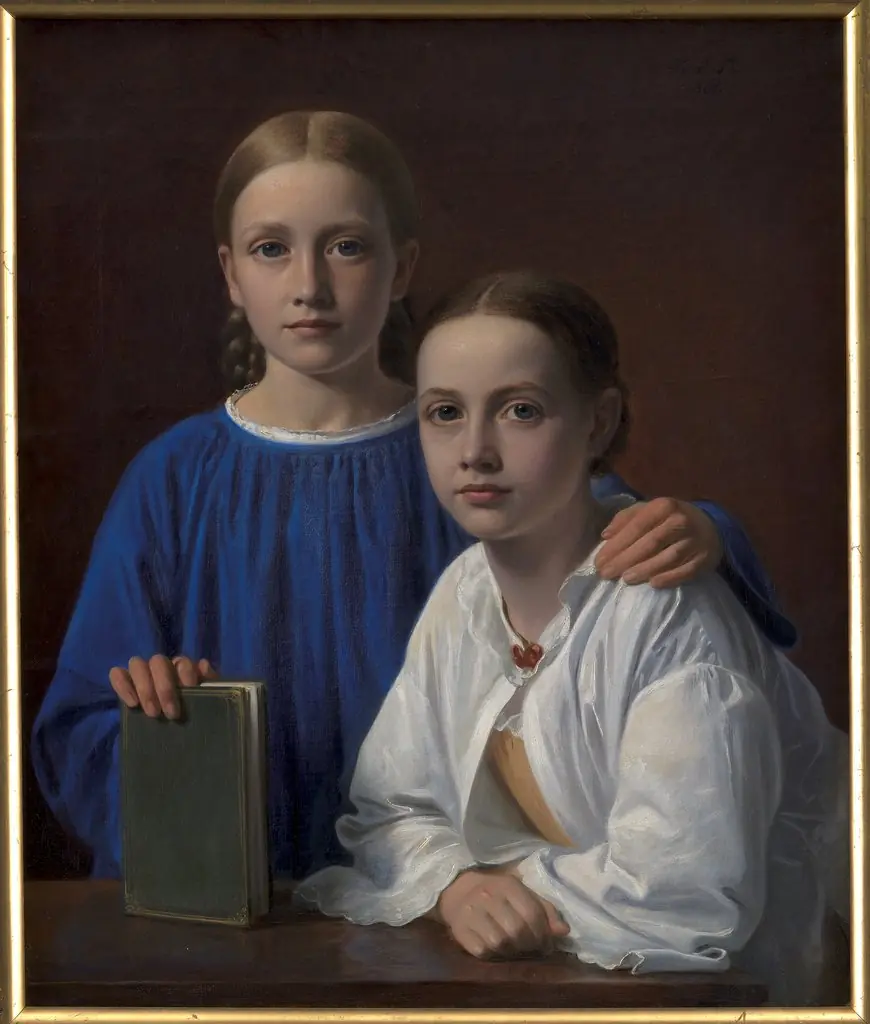 Meta Magdalene Hammerich and the Artist's Daughter Kristiane Konstantin Hansen
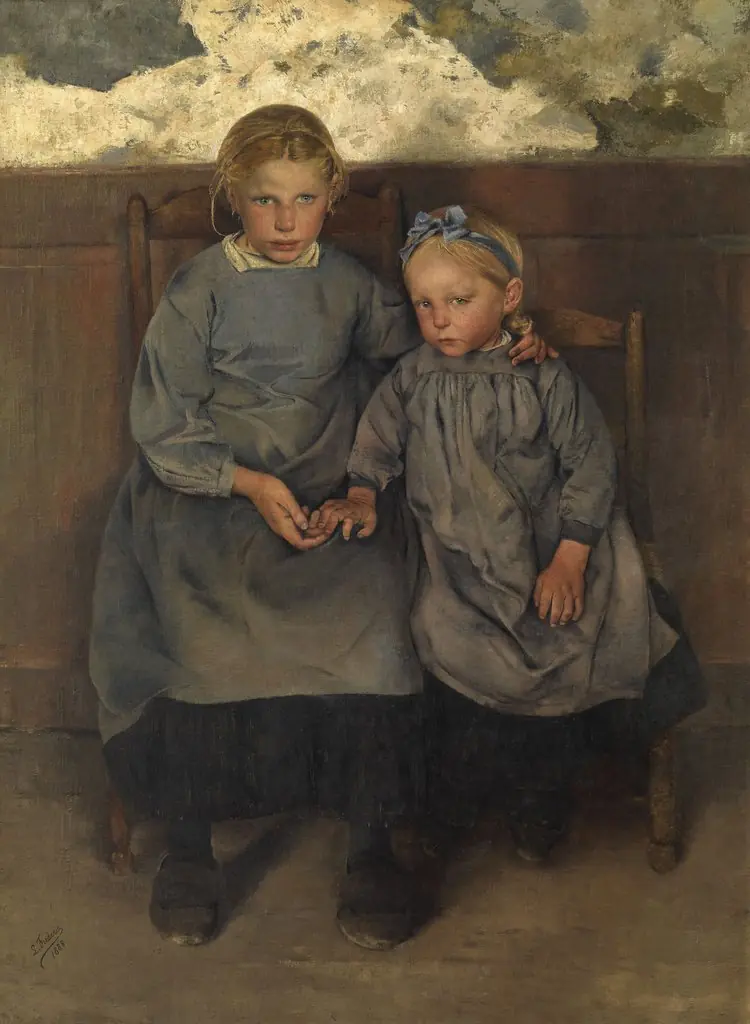 Les Boëchelles. Two Walloon Peasant Children
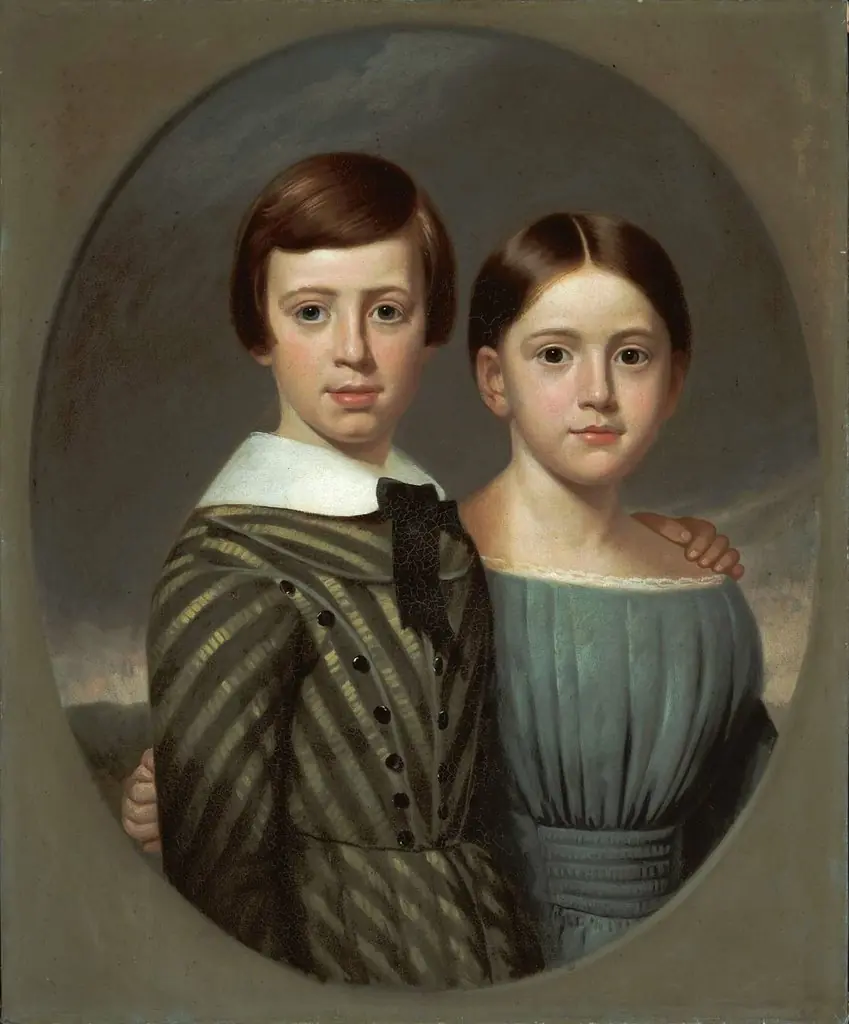 John Oscar Kent and His Sister, Sarah Eliza Kent
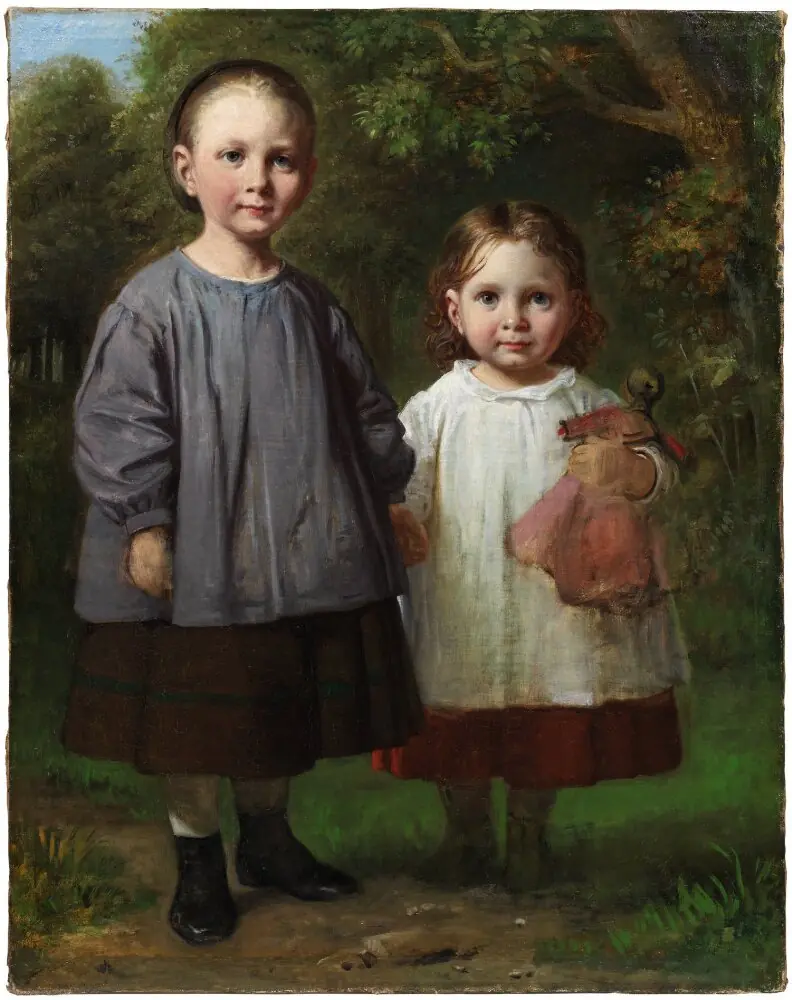 Ottilia and Christy Marstrand, the Artist’s daughters
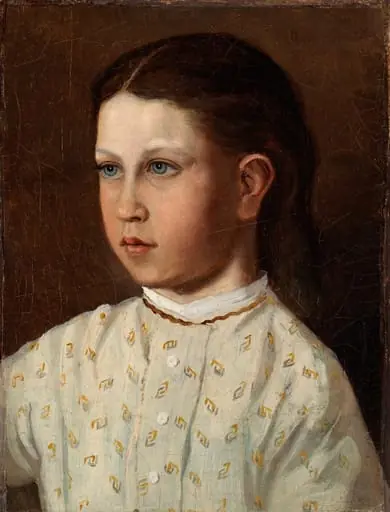 Ellen Edelfelt
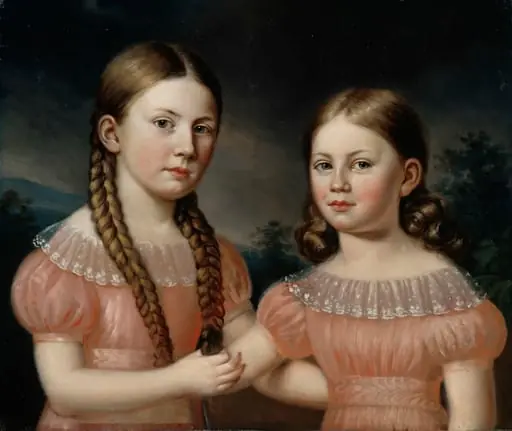 Jacobina ja Helena Simelius
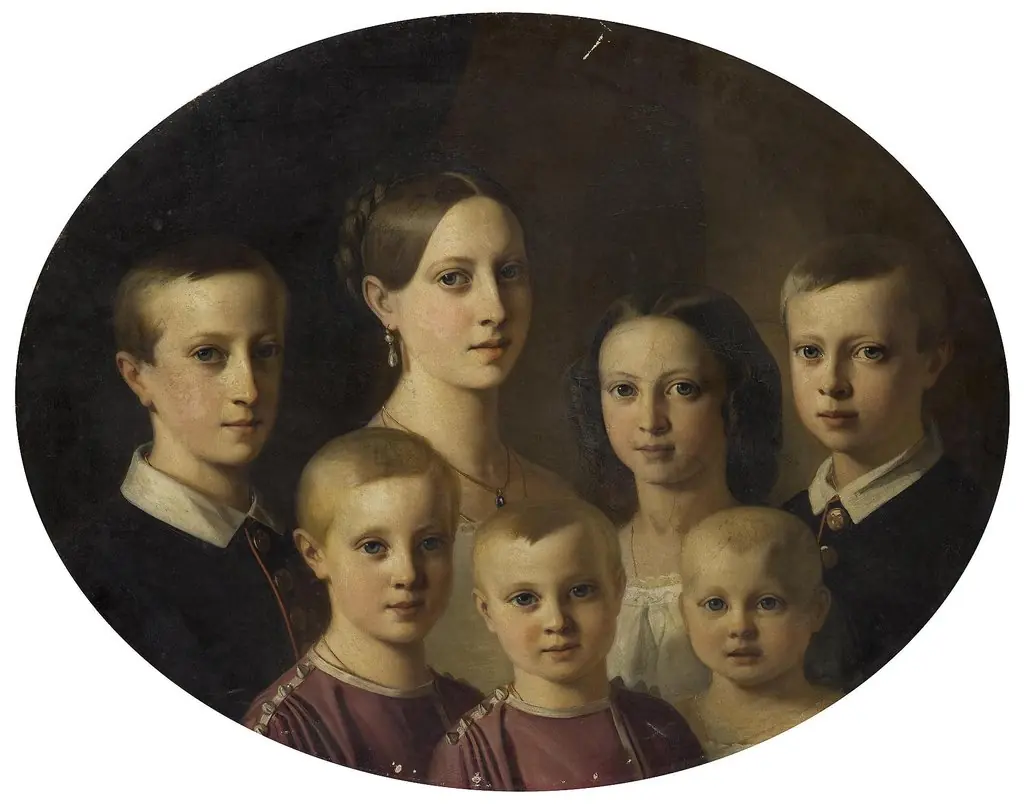 Portrait of the Oldenburg Children
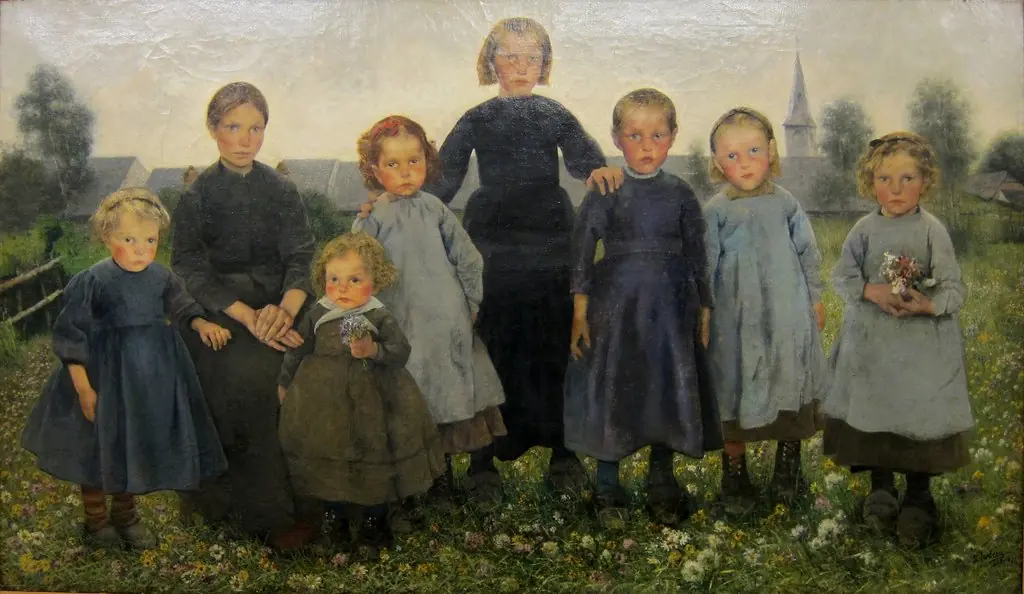 The Girls
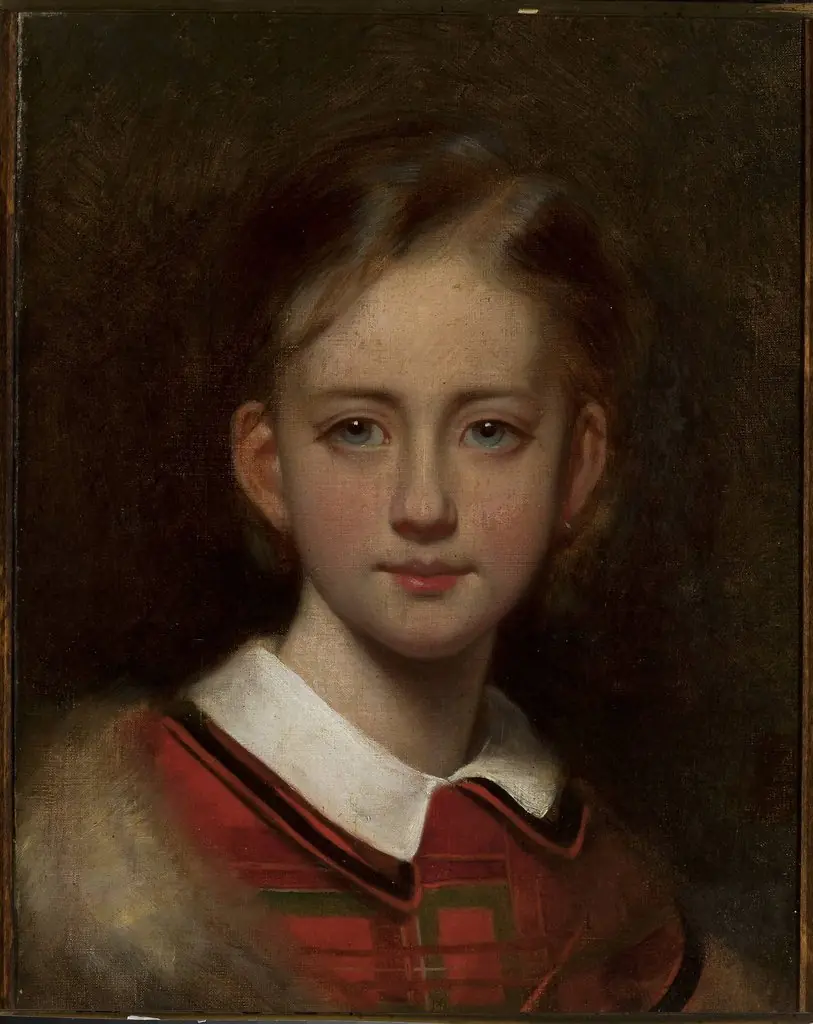 Portrait of a girl
 Jens Simmelkær Asmussen og Katrine Asmussen som børn