Artwork
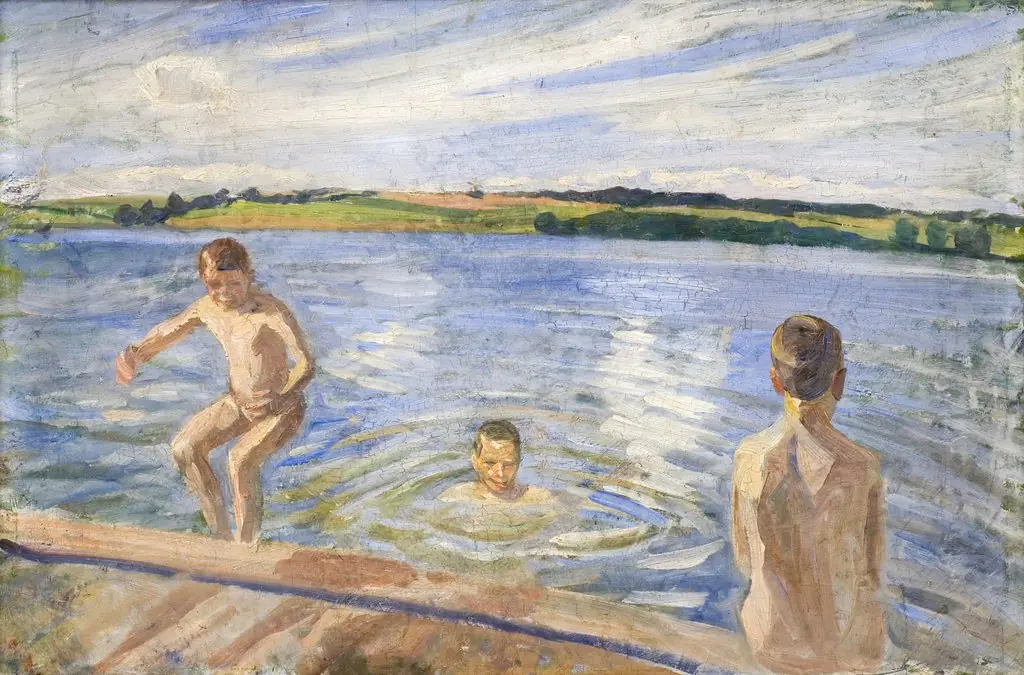
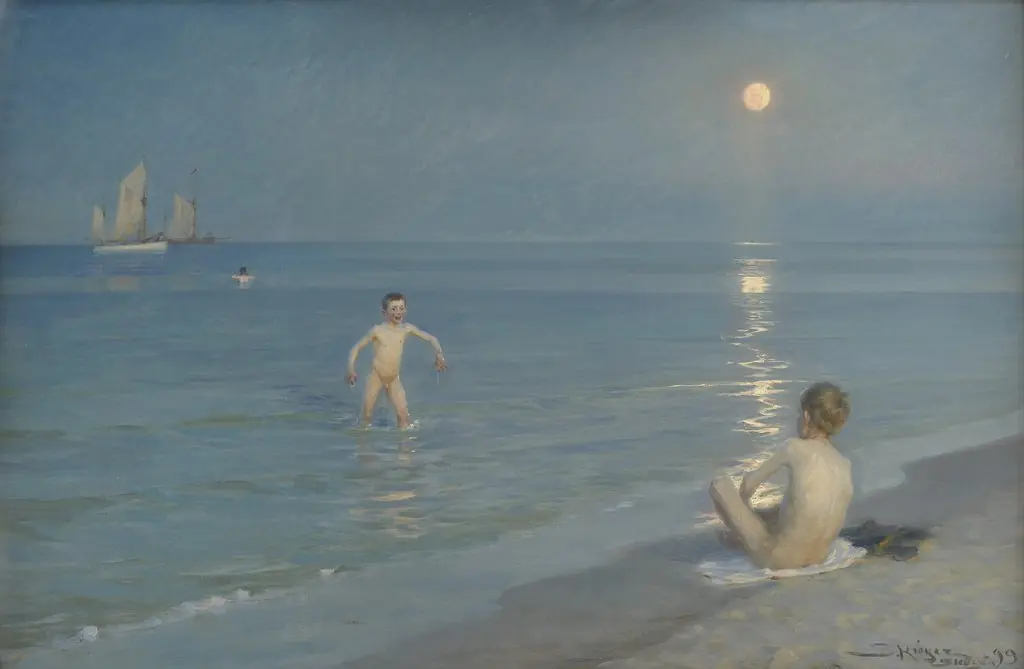
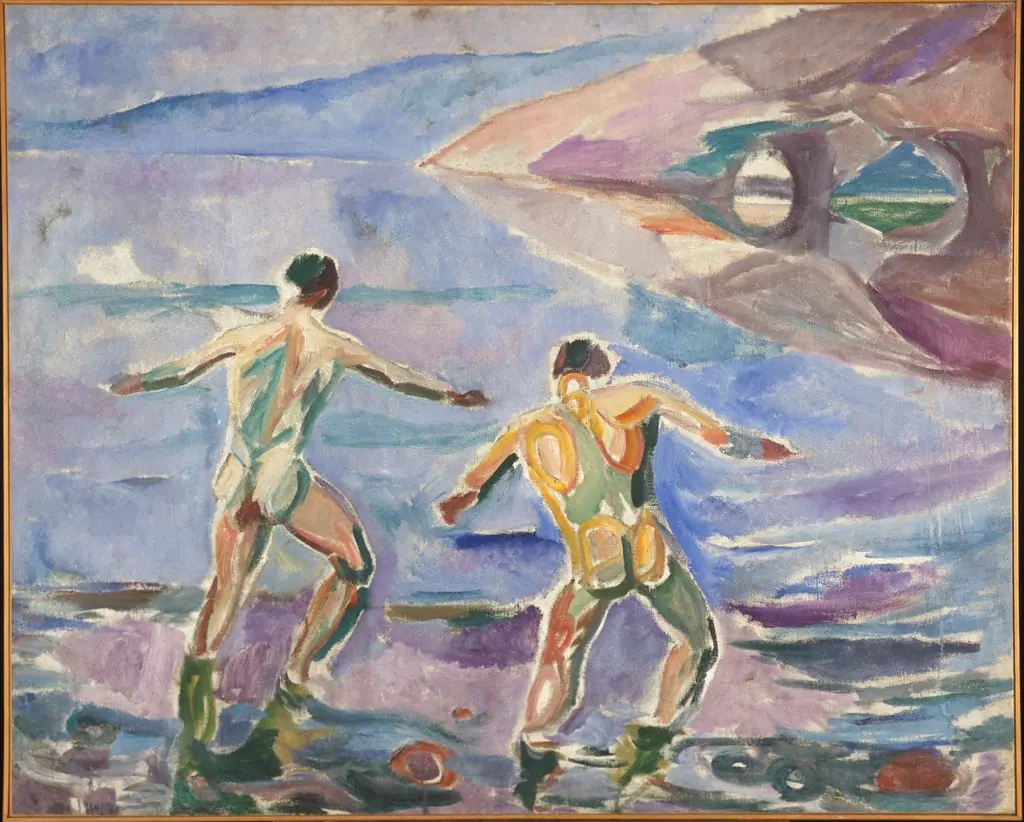
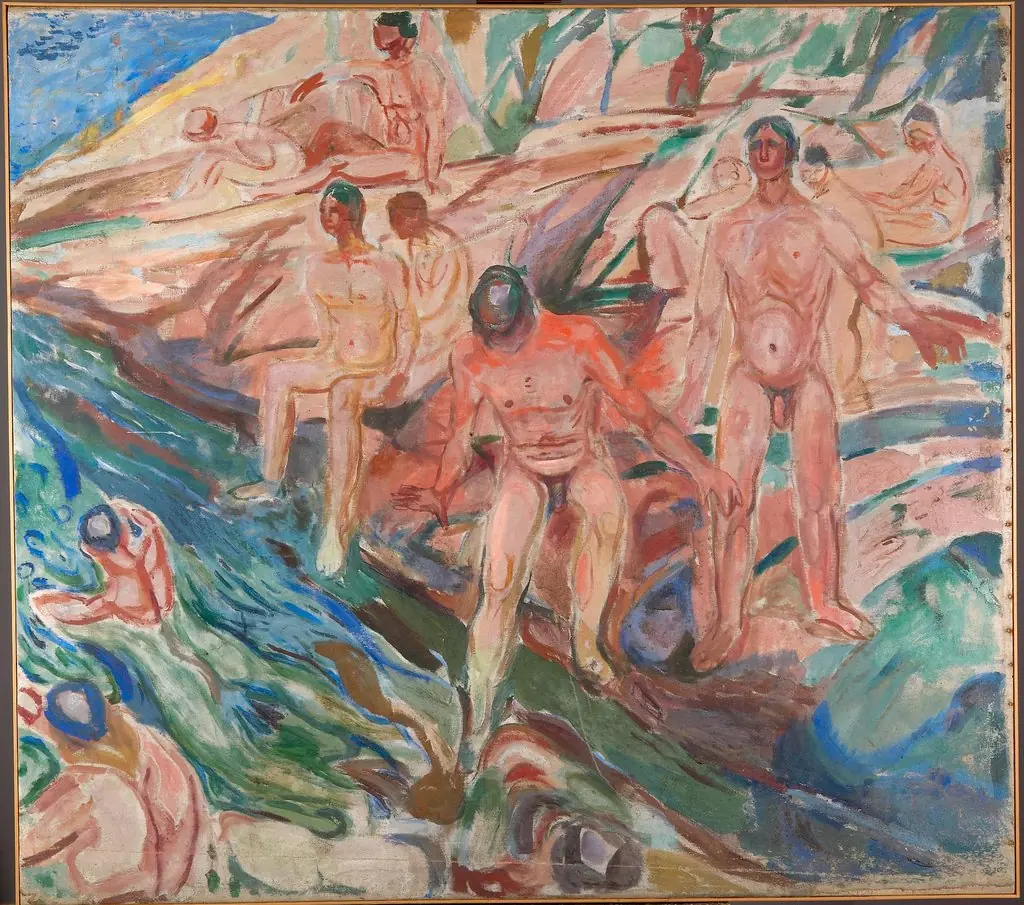
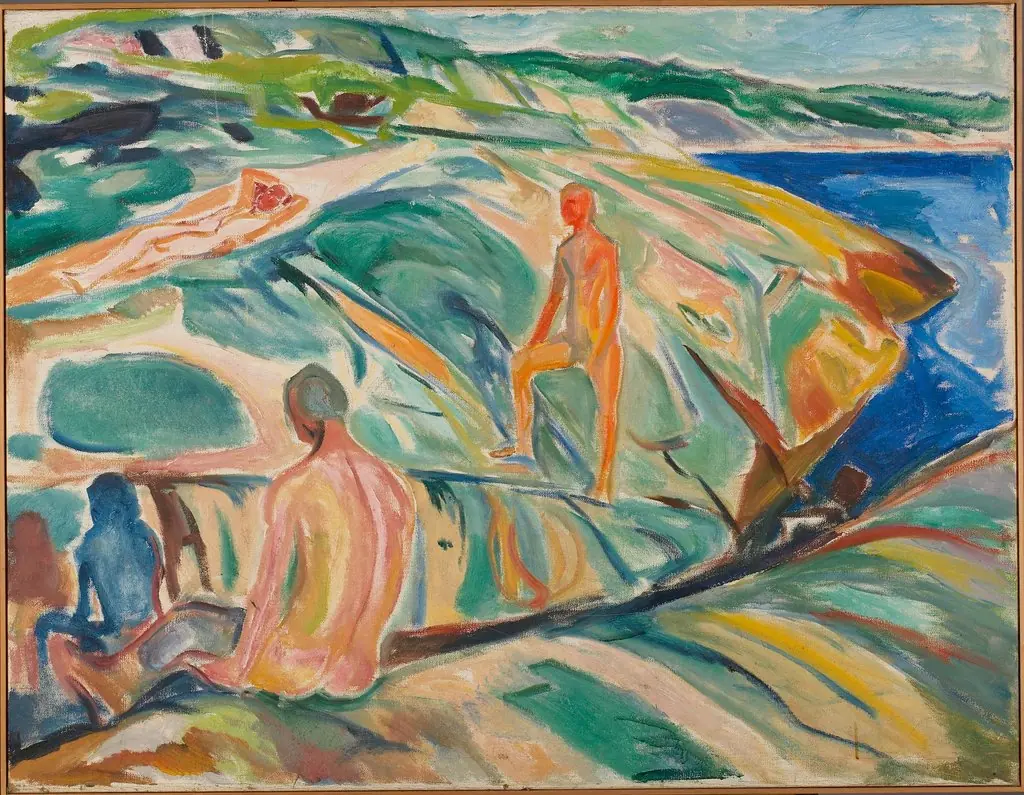
Boys Bathing
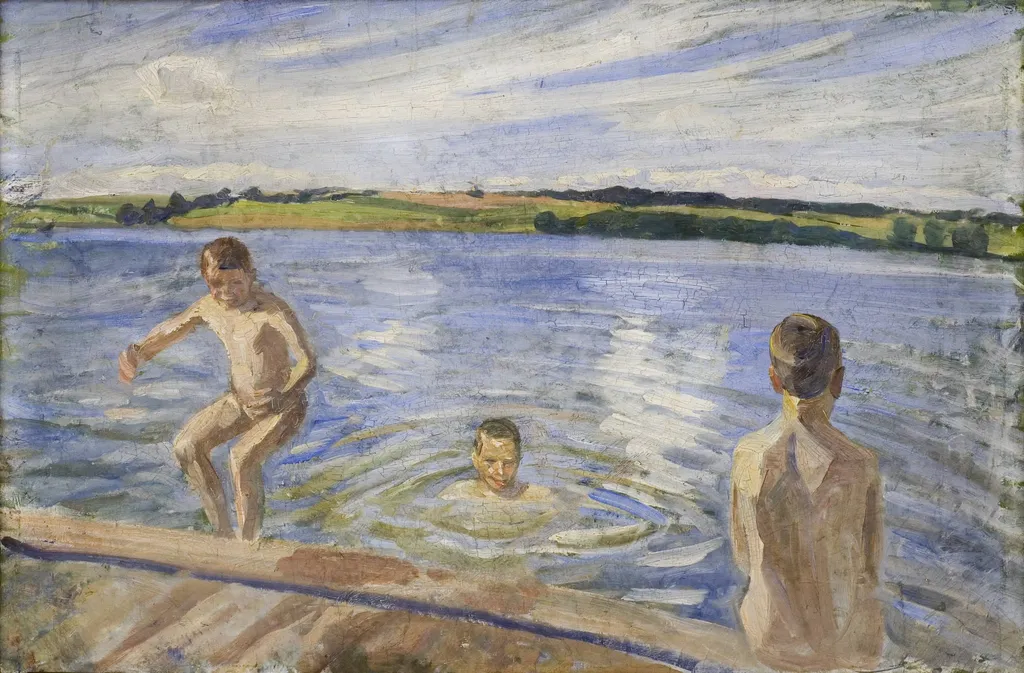
Boys Bathing is a photography by Unknown. It dates from 1902 and is held in the collection of the Statens Museum for Kunst.
About this work
Overview
The artist employed thick, expressive brushwork to capture fleeting light and movement, distinguishing it from idealized academic nudes of the period.
Created in 1902, Boys Bathing is a painted depiction of three nude boys near a body of water. The work is held in the collection of the Museum of Ethnography. Its informal composition and unpolished surface suggest an intimate, candid moment rather than a formal portrait. The artist employed thick, expressive brushwork to capture fleeting light and movement, distinguishing it from idealized academic nudes of the period.
Subject & Meaning
The scene portrays three boys in a natural setting—one standing on shore, another floating in the water, and a third turned away, gazing toward the water. Their nudity is unembellished, avoiding classical or mythological associations. The quiet, unposed demeanor suggests an emphasis on everyday childhood experience, grounding the image in realism rather than symbolism or allegory.
Technique & Style
The painting uses impasto to build texture across skin and water, creating a tactile, almost tactile surface. Loose brushstrokes and uneven edges give the impression of spontaneity, as if capturing a moment mid-motion. Light is rendered softly, diffusing across bodies and ripples, enhancing the sense of naturalism. The technique rejects smooth finish in favor of immediacy and physical presence.
History & Provenance
The work was completed in 1902 and entered the Museum of Ethnography’s collection shortly thereafter. Its acquisition reflects early 20th-century interest in vernacular subjects and non-traditional representations of the human form. Unlike many contemporary nudes, it was not exhibited in major salons but preserved in an ethnographic context, suggesting its perceived cultural rather than artistic significance at the time.
Context
In the early 1900s, depictions of nude children were uncommon in fine art outside academic or mythological frameworks. This work diverges from those traditions by presenting boys in an ordinary, unidealized setting. Its placement in an ethnographic museum hints at broader societal views that categorized such imagery as anthropological observation rather than fine art.
Legacy
Boys Bathing remains a quiet anomaly in early 20th-century painting, valued for its unvarnished portrayal of childhood and its rejection of artistic convention. It has not entered mainstream art historical discourse but continues to be studied for its departure from normative representations of the nude. Its preservation in an ethnographic context underscores shifting perceptions of what constitutes art versus documentation.
Artist & collection

 Domestic Scene
 Giacomo and Cardinal Marco, investing Andrea, Abbot of San Zeno, with his Benefice
 The Nymph of Fontainebleau
 Portrait of a Woman
 Madonna and Child with Saints in the Enclosed Garden
 Venus and Minerva
 Family Group of Four on Sofa
 Wall painting from Room H of the Villa of P. Fannius Synistor at Boscoreale