Artwork
Breaking Camp
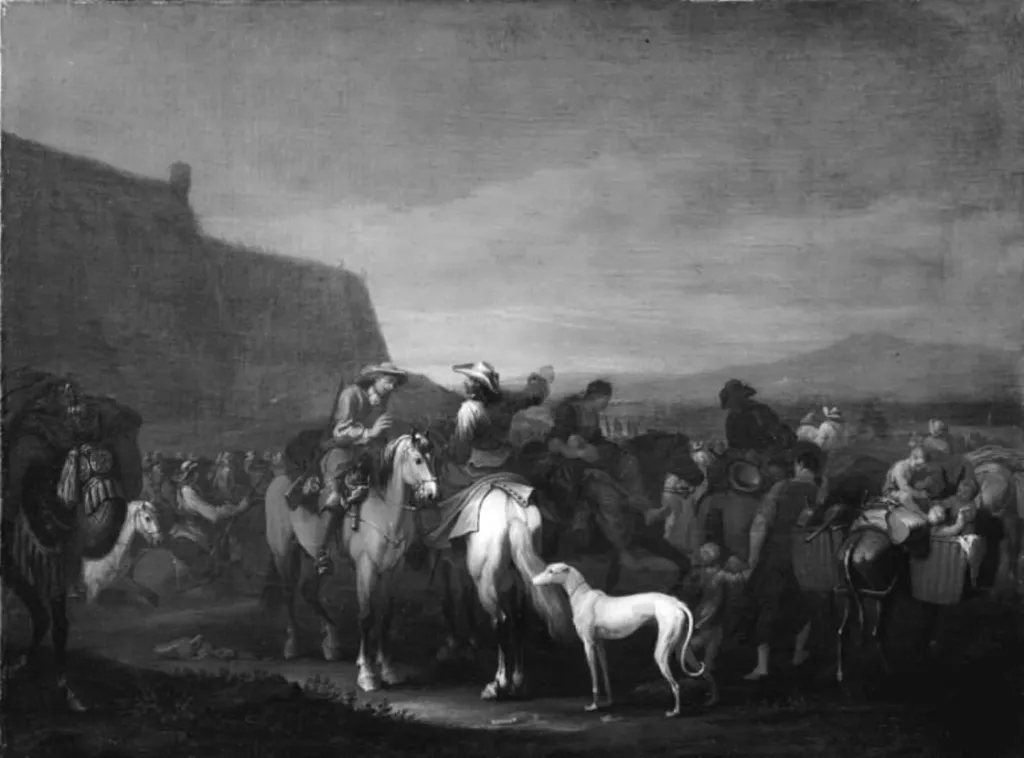
Breaking Camp is a photography by Unknown. It dates from 1750 and is held in the collection of the Statens Museum for Kunst.
About this work
Overview
Unlike painted scenes of similar subjects, the photograph’s sharp detail reveals individual garments, tools, and postures with unusual clarity for its time.
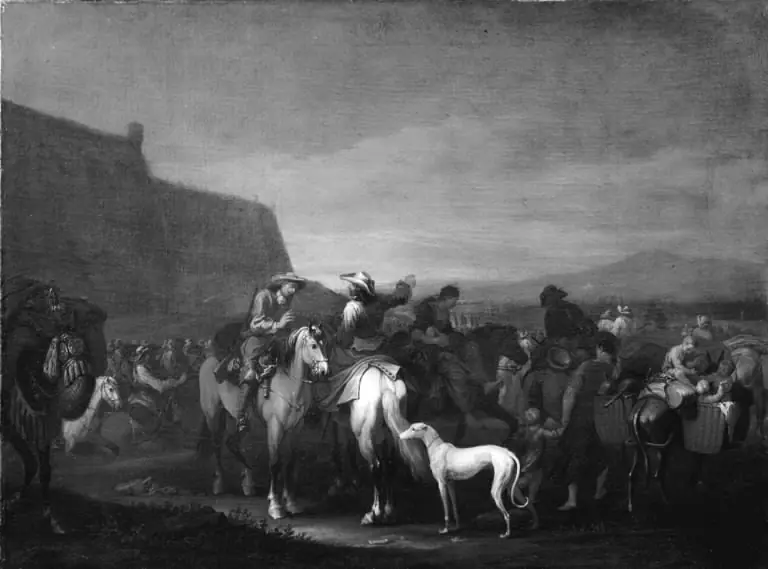
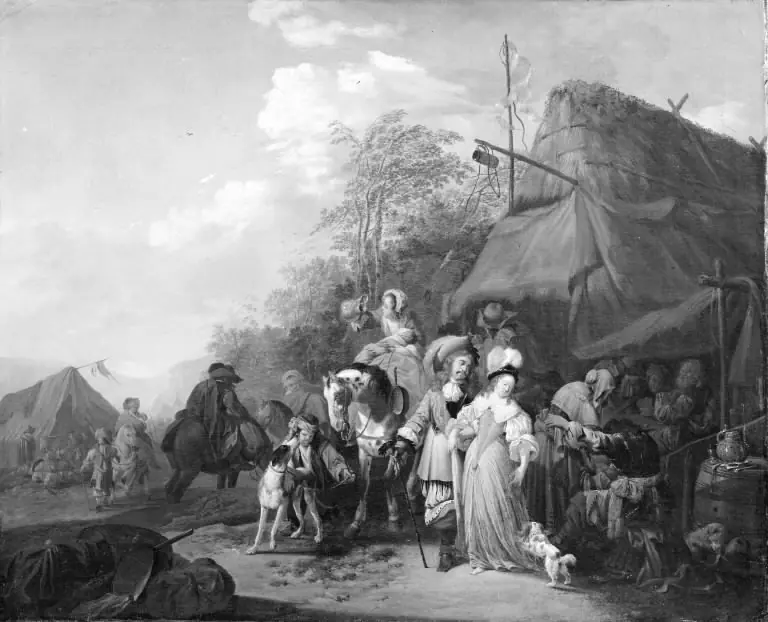
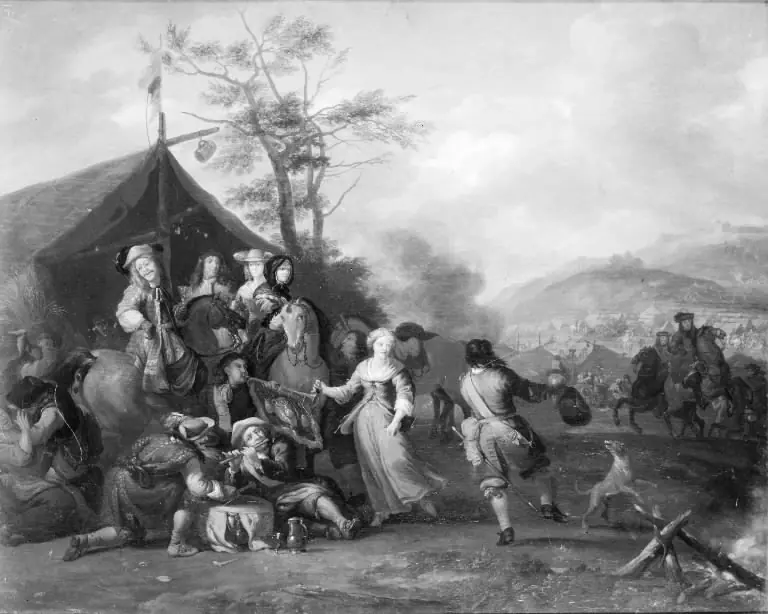
Breaking Camp is a photographic image dated around 1750, attributed to an unknown artist identified only as 1901_person. It captures a moment of transition in a rugged, elevated landscape, where a group of travelers prepares to depart. The composition is rendered in monochrome, emphasizing texture and movement. Unlike painted scenes of similar subjects, the photograph’s sharp detail reveals individual garments, tools, and postures with unusual clarity for its time.
Subject & Meaning
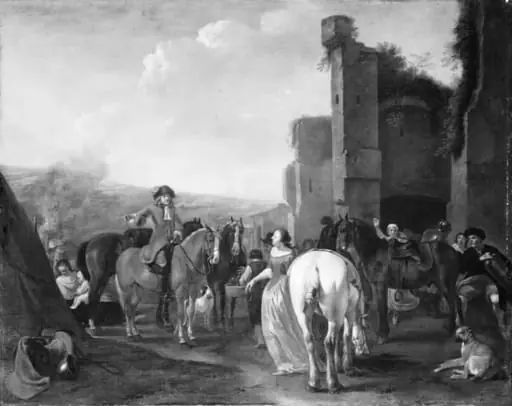
The image depicts a nomadic or transient community in the act of dismantling temporary shelter. Figures are engaged in varied tasks—packing, leading animals, conversing—suggesting a coordinated, routine departure rather than a hurried escape. The calm presence of a dog near the horses implies familiarity and domestication within the group. The scene conveys quiet order amid motion, reflecting the rhythms of mobile life in pre-industrial societies.
Technique & Style
The photograph employs strong contrasts of light and shadow to define forms and separate figures from the terrain. This chiaroscuro effect, more commonly associated with painting, lends the image a theatrical gravity. The sharp focus on clothing, harnesses, and tools underscores the medium’s capacity for documentary precision. The composition avoids central symmetry, instead distributing visual weight across the frame to mirror the dispersed activity of the group.
History & Provenance
The photograph is held in the collection of the Museum of Ethnography, though its origin and the identity of the photographer remain undocumented. The date of c. 1750 is likely an estimate, as practical photographic processes did not emerge until the 1830s. This discrepancy suggests the attribution may be symbolic or misdated, possibly reflecting a later reproduction or mislabeled print of an earlier image.
Context
While the image purports to show a scene from the mid-18th century, its photographic nature places it firmly in the 19th century or later. It may represent a staged reconstruction or a photograph of a reenactment, common in ethnographic studies of the time. Such images were often used to document perceived 'traditional' lifestyles, even when they no longer reflected contemporary realities.
Legacy
Breaking Camp exemplifies early attempts to use photography as a tool for ethnographic record-keeping. Its dramatic lighting and compositional balance reveal an awareness of visual storytelling beyond mere documentation. Though its historical accuracy is questionable, the image remains a valuable artifact of how 19th-century institutions visualized mobility, labor, and cultural difference through the lens of the camera.
Artist & collection

 Domestic Scene
 Giacomo and Cardinal Marco, investing Andrea, Abbot of San Zeno, with his Benefice
 The Nymph of Fontainebleau
 Portrait of a Woman
 Madonna and Child with Saints in the Enclosed Garden
 Venus and Minerva
 Family Group of Four on Sofa
 Wall painting from Room H of the Villa of P. Fannius Synistor at Boscoreale