Artwork
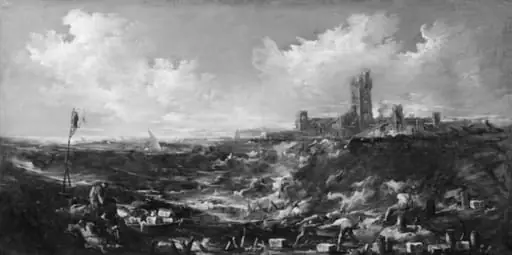
Mountainous Coast with Fishing Boats and Fishermen on the Beach
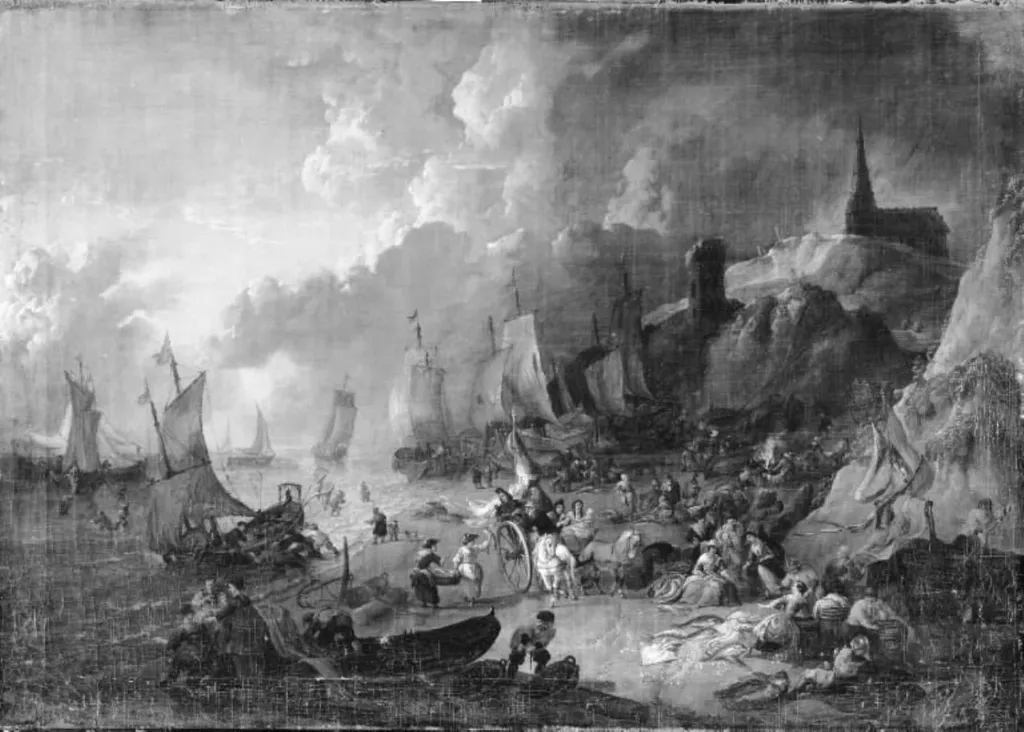
Mountainous Coast with Fishing Boats and Fishermen on the Beach is a photography by Unknown. It dates from 1750 and is held in the collection of the Statens Museum for Kunst.
About this work
Overview
It is held in the collection of the Museum of Ethnography, where it serves as a visual record of coastal labor and environment in the 18th century.
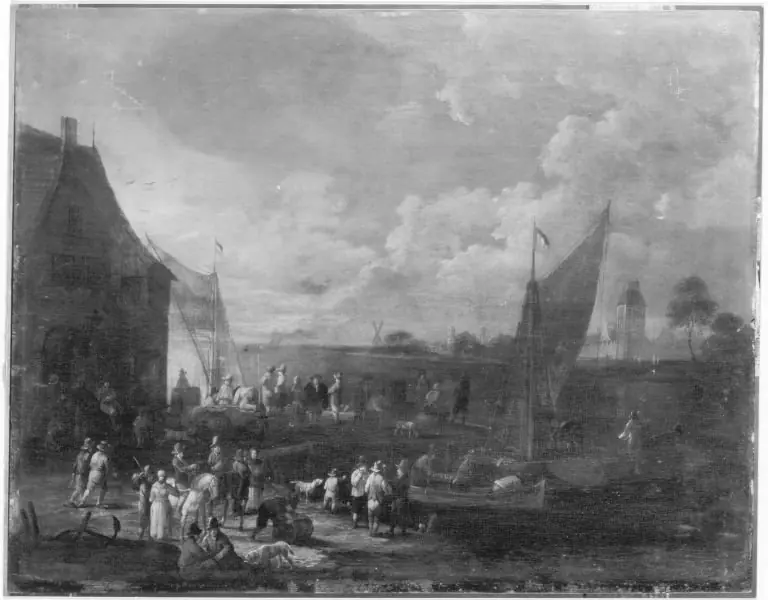
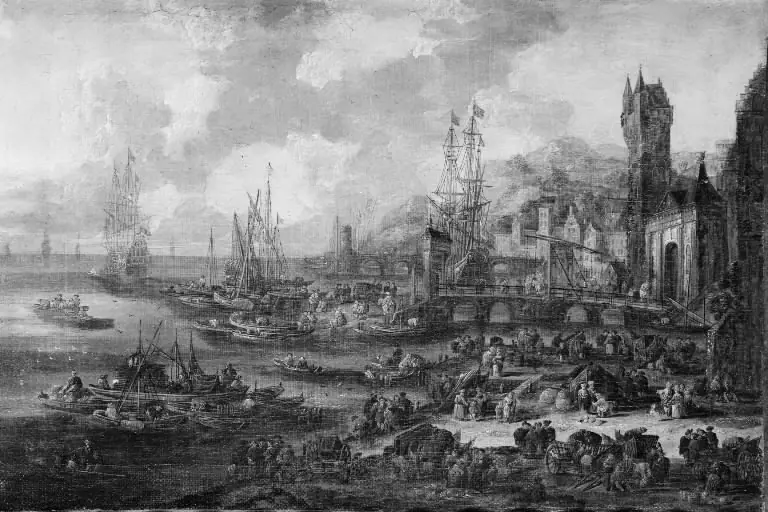
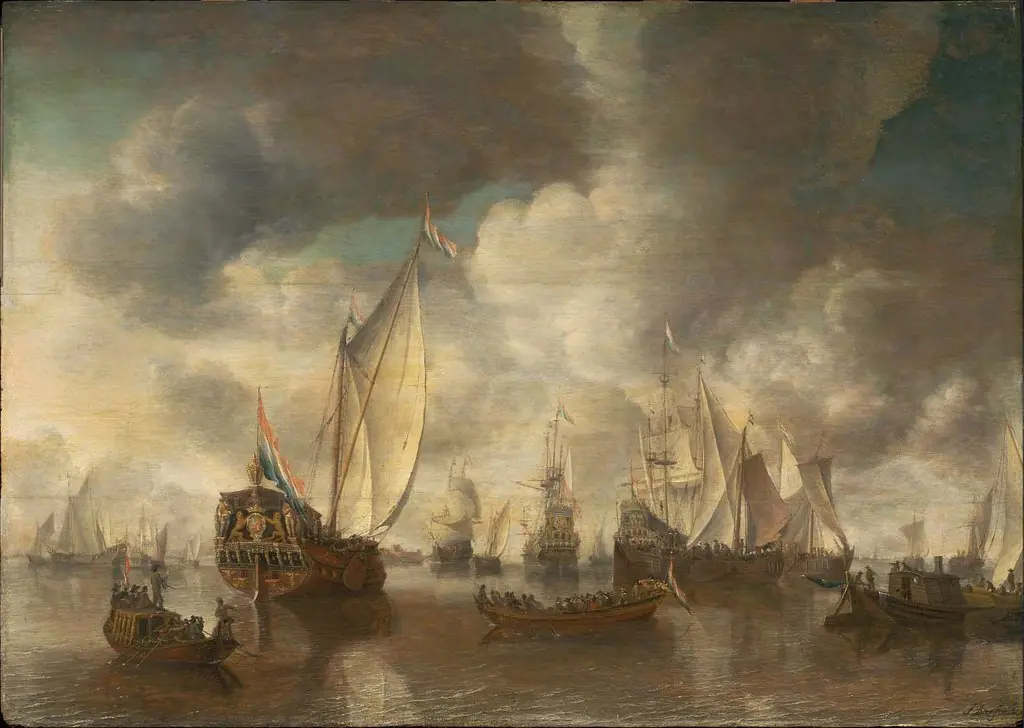
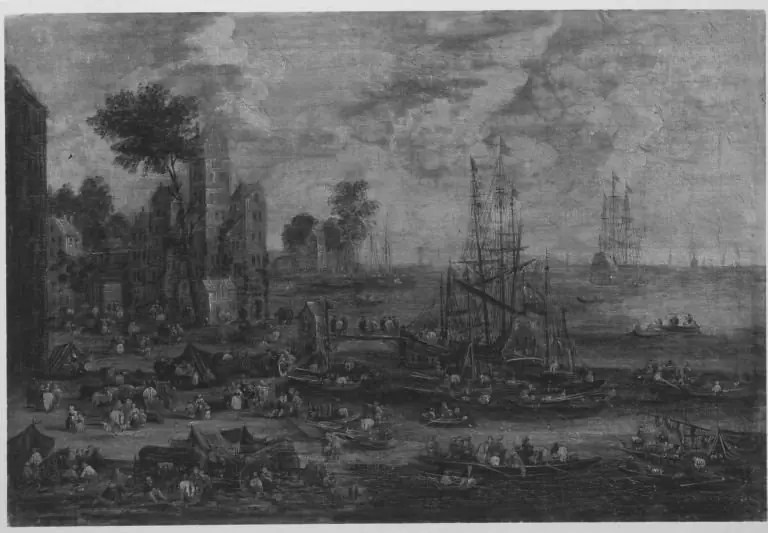
This black-and-white photograph, dated around 1750, depicts a rugged coastal landscape with fishing vessels anchored offshore and figures scattered along the shore. Though attributed to a photographer active in 1945, the image captures a scene likely composed or staged to reflect earlier maritime life. It is held in the collection of the Museum of Ethnography, where it serves as a visual record of coastal labor and environment in the 18th century.
Subject & Meaning
The scene centers on the daily rhythms of a fishing community: figures rest, stand, or move near the water’s edge, while boats remain moored, suggesting a pause between labor and return. A church spire in the distance hints at the spiritual or communal framework of the settlement. The presence of a horse-drawn carriage implies limited but existing infrastructure, grounding the image in a specific, inhabited landscape rather than a purely natural one.
Technique & Style
The photograph employs strong contrasts of light and shadow to emphasize the texture of rocks, waves, and clouds. The dramatic sky, rendered with dense, swirling cloud formations, enhances the sense of atmosphere without the interpretive brushwork of painting. Sharp detail and tonal gradation reflect early photographic processes, capturing the physicality of the environment with documentary precision rather than artistic stylization.
History & Provenance
Though the photograph is dated to circa 1750, its attribution to a 1945 photographer suggests it may be a later reproduction, rephotograph, or reconstruction of an earlier scene. Its presence in the Museum of Ethnography indicates its use as an ethnographic document, possibly collected to illustrate historical coastal livelihoods. The original context of its creation remains unclear, but its curation prioritizes cultural record over artistic authorship.
Context
In the mid-18th century, coastal communities across Europe relied on small-scale fishing and seasonal labor. This image, whether contemporary or reconstructed, reflects the physical and social conditions of such settlements—where land, sea, and weather dictated daily life. The inclusion of a carriage and church points to a modest but organized society, distinct from the romanticized wilderness often depicted in contemporary landscape art.
Legacy
As a photographic artifact, this image contributes to the historical documentation of maritime culture before widespread industrialization. Its preservation in an ethnographic museum underscores its value as evidence of lived experience rather than aesthetic achievement. It invites comparison with later photographic studies of coastal life, offering a quiet, unembellished glimpse into pre-modern routines along the shore.
Artist & collection

 Domestic Scene
 Giacomo and Cardinal Marco, investing Andrea, Abbot of San Zeno, with his Benefice
 The Nymph of Fontainebleau
 Portrait of a Woman
 Madonna and Child with Saints in the Enclosed Garden
 Venus and Minerva
 Family Group of Four on Sofa
 Wall painting from Room H of the Villa of P. Fannius Synistor at Boscoreale