Artwork
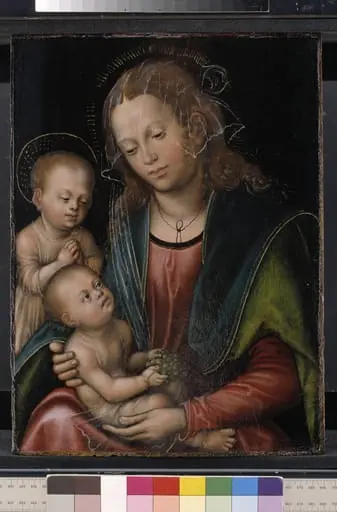
The Christ Child Worshipped by Mary
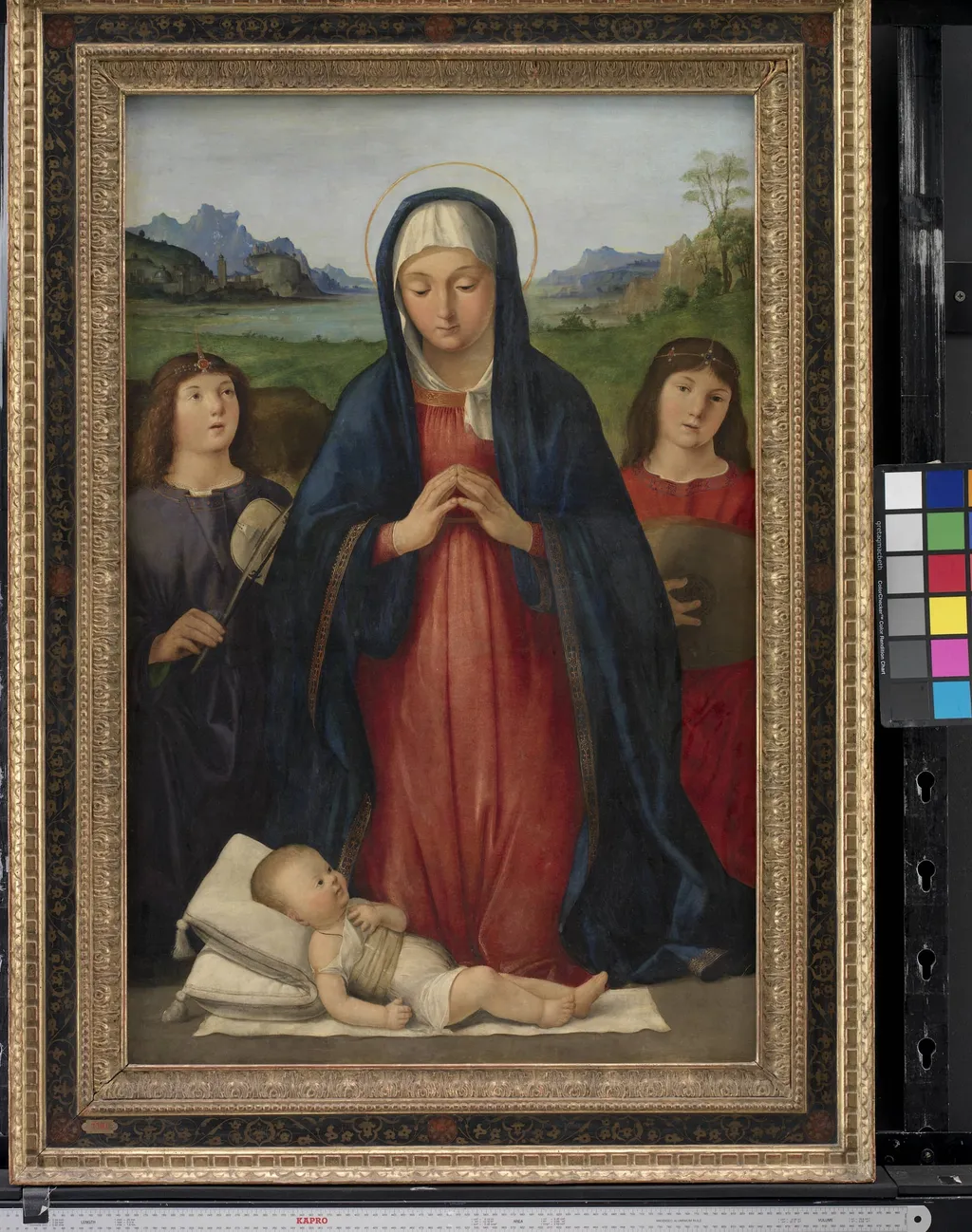
The Christ Child Worshipped by Mary is a photography by Unknown. It dates from 1450 and is held in the collection of the Statens Museum for Kunst. This devotional image, dated around 1450, depicts the Virgin Mary in quiet reverence before the infant Christ.
About this work
Overview
The composition centers on Mary’s gesture of prayer, with the Christ Child lying at her feet, wrapped in cloth.
This devotional image, dated around 1450, depicts the Virgin Mary in quiet reverence before the infant Christ. Painted in tempera on panel, it reflects the intimate devotional practices of the late medieval period. The composition centers on Mary’s gesture of prayer, with the Christ Child lying at her feet, wrapped in cloth. Two attendants flank the scene, enhancing its ceremonial tone. The work is currently held in the collection of the Museum of Ethnography.
Subject & Meaning
The scene portrays Mary’s contemplation of her son’s divine role, a common theme in late medieval piety. The Christ Child, though infantile, is presented as an object of worship rather than mere infancy. The presence of the two girls—holding a mirror and a small object—may symbolize reflection and earthly offerings, reinforcing the spiritual significance of the moment. The golden halo around Mary’s head signals her sanctity within the Christian tradition.
Technique & Style
The painting employs tempera on wood panel, typical of 15th-century devotional art. Colors are restrained but deliberate: deep blue and crimson robes draw attention to Mary, while the background fades into a soft, hazy landscape. Light falls gently on the central figures, creating a sense of sacred presence. Facial features are stylized, not naturalistic, emphasizing spiritual rather than physical realism. The flatness of the space enhances the image’s meditative quality.
History & Provenance
The painting’s origin is tied to a devotional context in southern Europe, likely created for private or monastic use. Its movement to the Museum of Ethnography suggests it was collected as part of a broader ethnographic or religious artifact survey, possibly during the 19th or early 20th century. Its attribution to a specific artist remains uncertain, and its early history before museum acquisition is not fully documented.
Context
Created during a period when personal devotion to the Virgin and Child was widespread, this image aligns with devotional practices that emphasized emotional connection over theological complexity. Similar compositions appear in illuminated manuscripts and small panel paintings across Italy and the Low Countries. The inclusion of attendants reflects a tradition of sacred courtly imagery, where angels or disciples serve as witnesses to divine moments.
Legacy
Though not attributed to a major named artist, the work exemplifies the quiet intensity of late medieval religious imagery. Its preservation in an ethnographic museum highlights its value as a cultural artifact rather than a fine art object. It continues to serve as a reference for understanding how ordinary believers engaged with sacred imagery in daily spiritual life during the 15th century.
Artist & collection

 Domestic Scene
 Giacomo and Cardinal Marco, investing Andrea, Abbot of San Zeno, with his Benefice
 The Nymph of Fontainebleau
 Portrait of a Woman
 Madonna and Child with Saints in the Enclosed Garden
 Venus and Minerva
 Family Group of Four on Sofa
 Wall painting from Room H of the Villa of P. Fannius Synistor at Boscoreale
 Madonna and Child Giving a Blessing
 Madonna with Child
 Madonna and Child (Obverse) and Tobias with Archangel Raphael (Reverse)
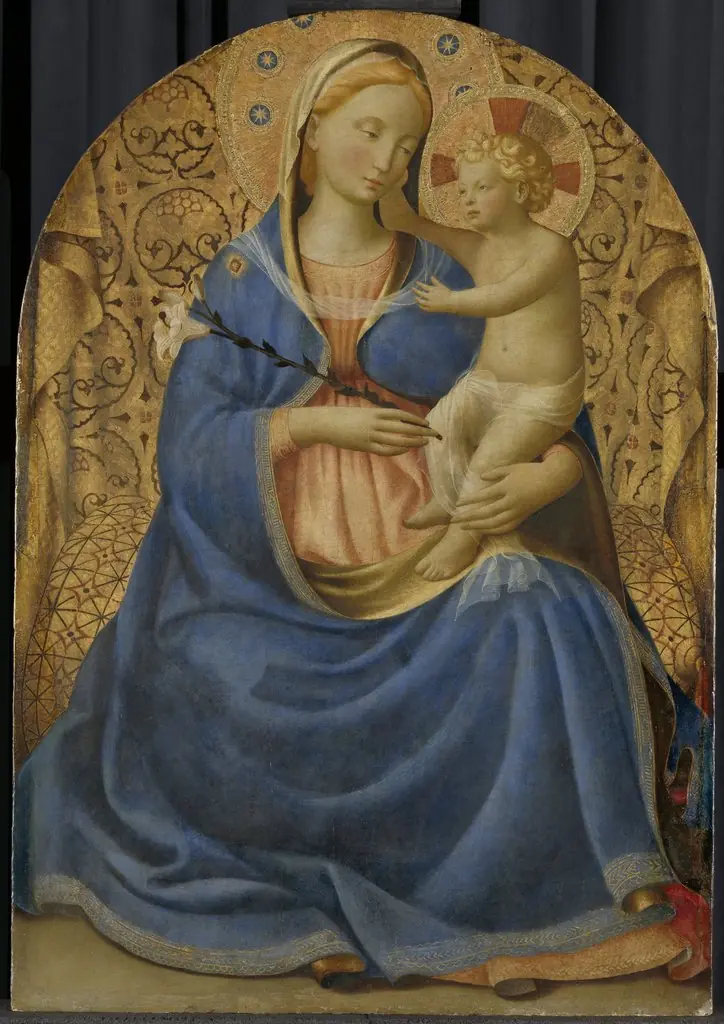 Madonna of Humility
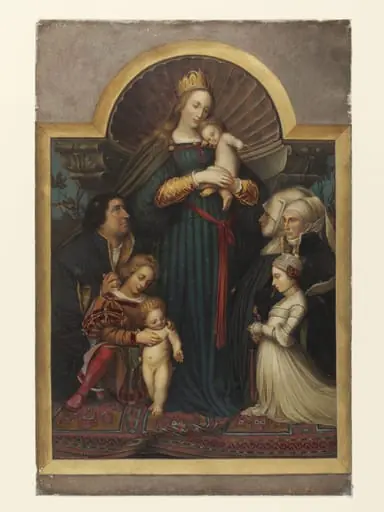 Copy after the painting Virgin and Child and Meyer Family by Hans Holbein in Darmstadt
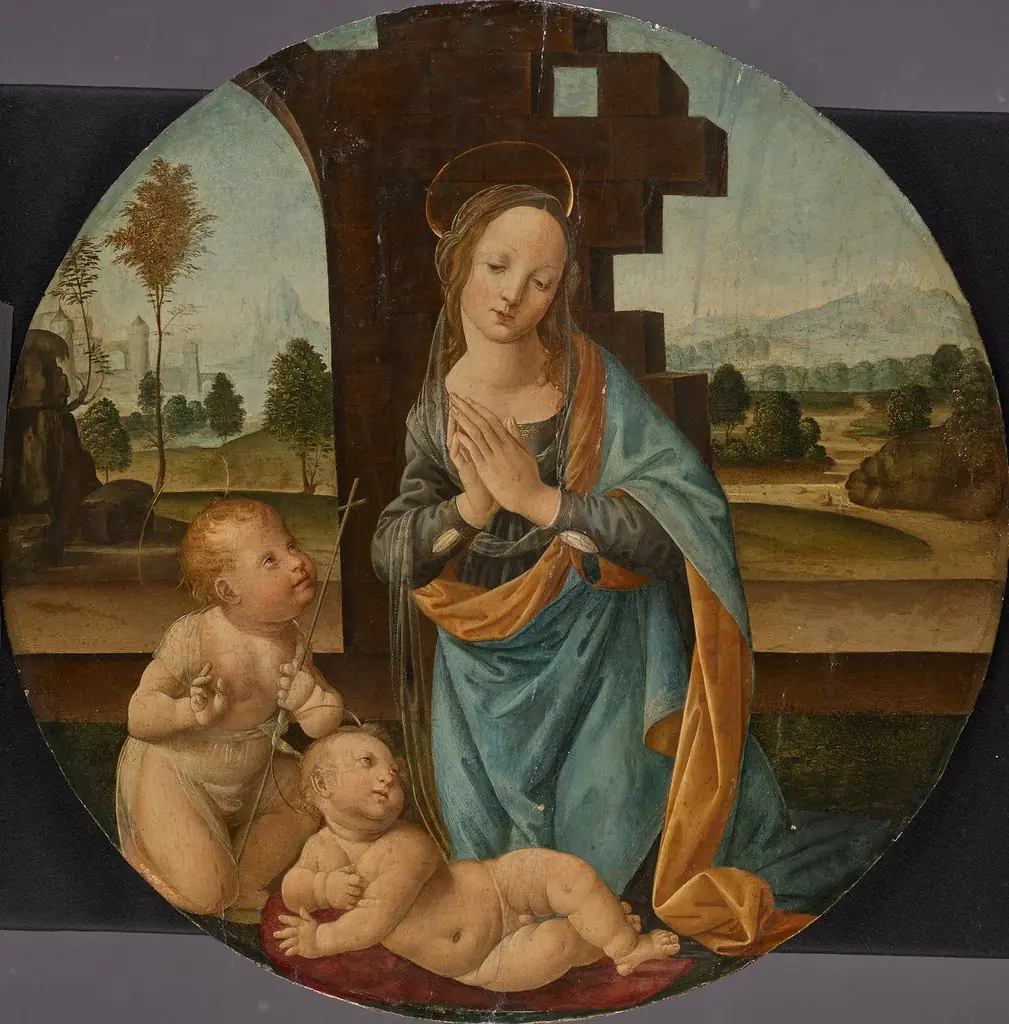 The Virgin and Child with the Young St. John
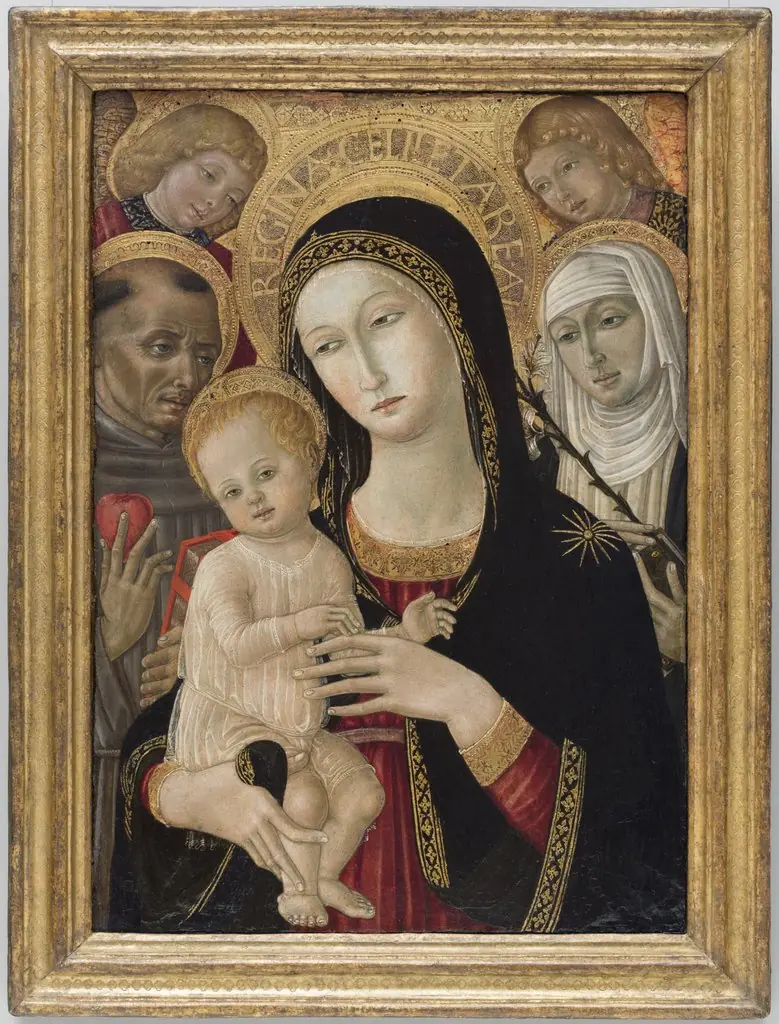 Madonna and Child with St. Catherine of Siena, Saint Anthony of Padua and Angels
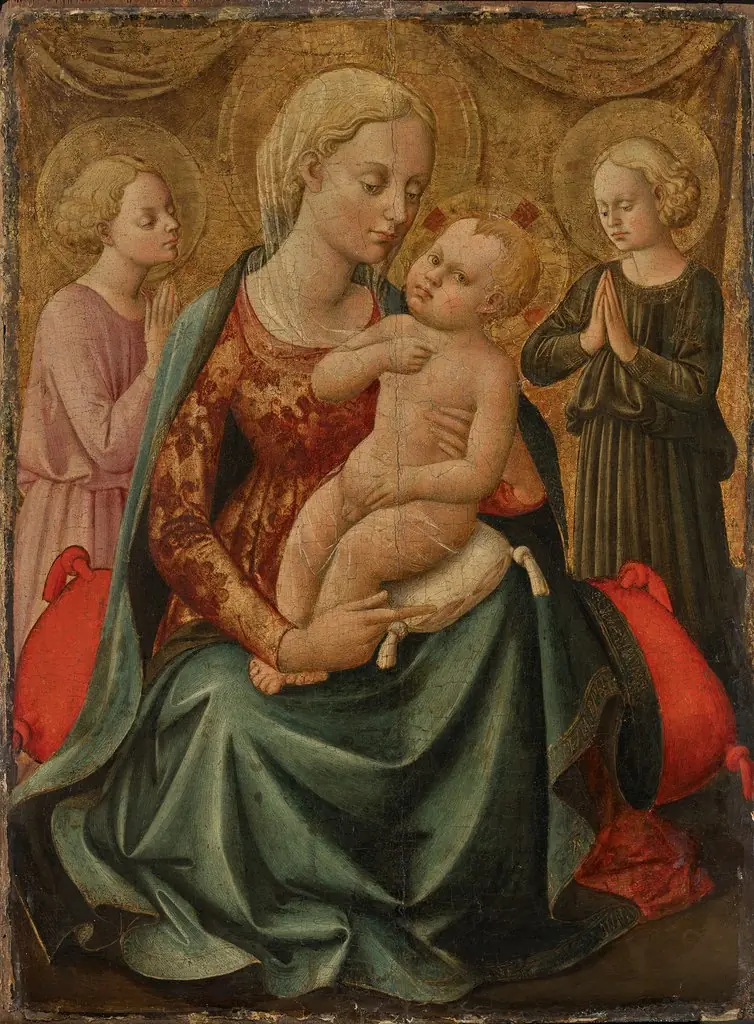 Madonna and Child
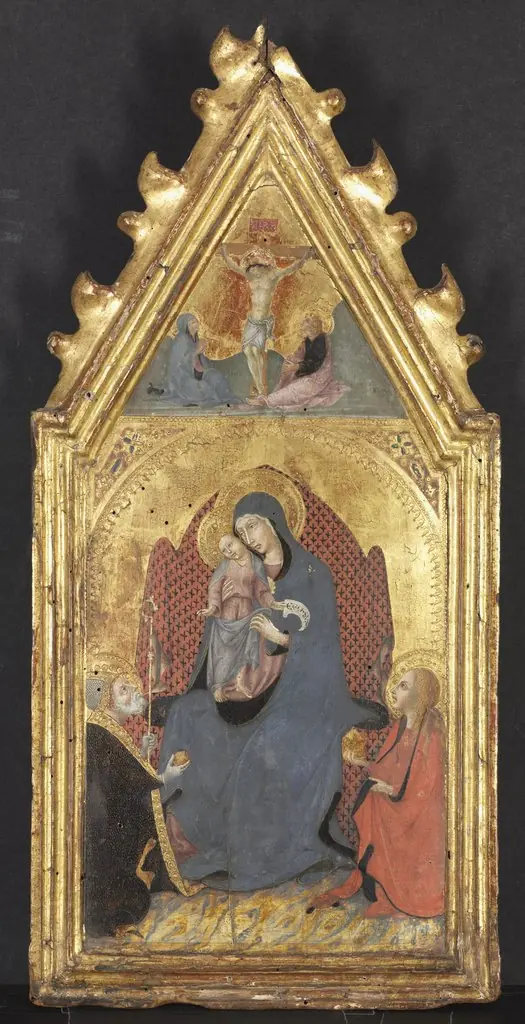 Virgin and Child Adored by Saints Mary Magdalene and Nicolas of Bari; Christ Crucified with the Virgin and Saint John the Evangelist
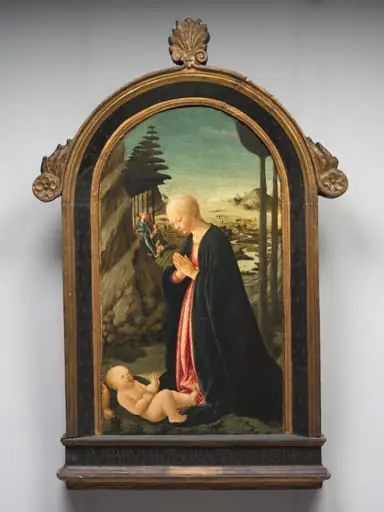 Madonna and Child with Tobias and the Angel Raphael
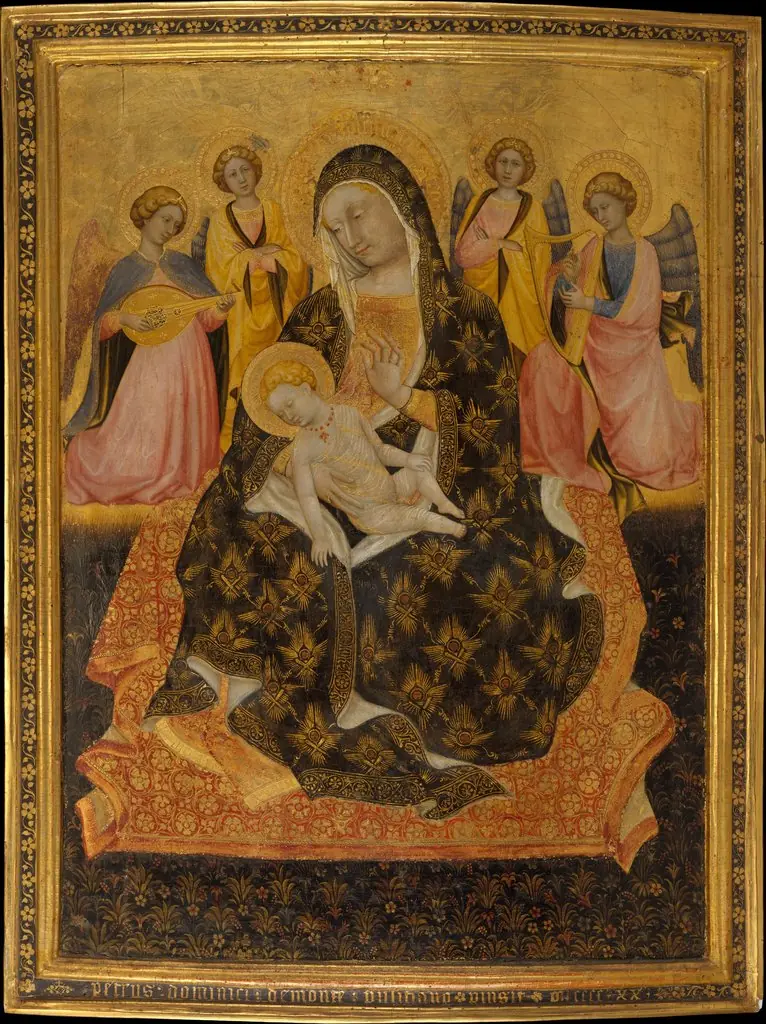 Madonna and Child with Angels
 Virgin and Child Adored by the Infant St John