Artwork
Aftenlandskab
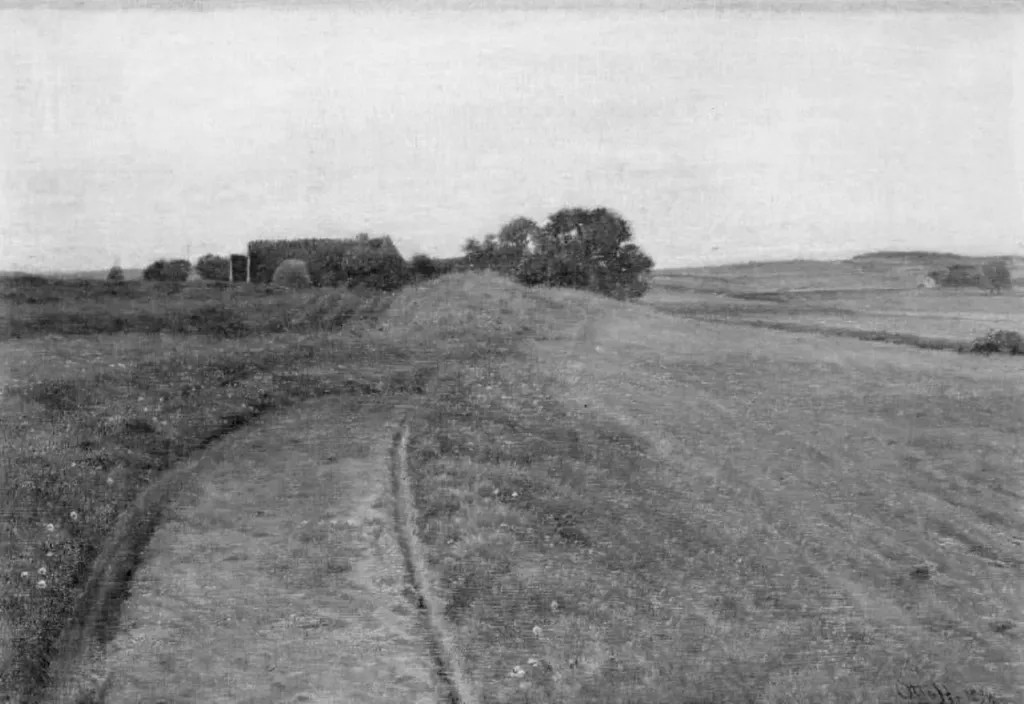
Aftenlandskab is a photography by the Impressionist artist Unknown. It dates from 1894 and is held in the collection of the Statens Museum for Kunst.
About this work
Overview
The work is held in the collection of the Museum of Ethnography, where it is preserved as an example of late 19th-century observational photography.
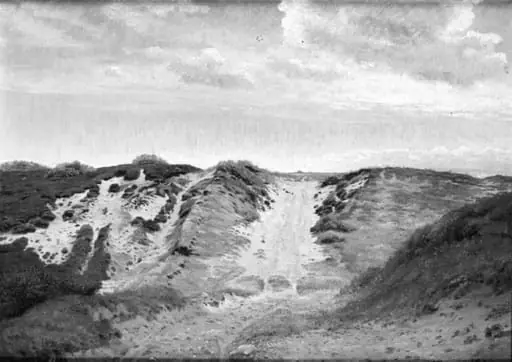
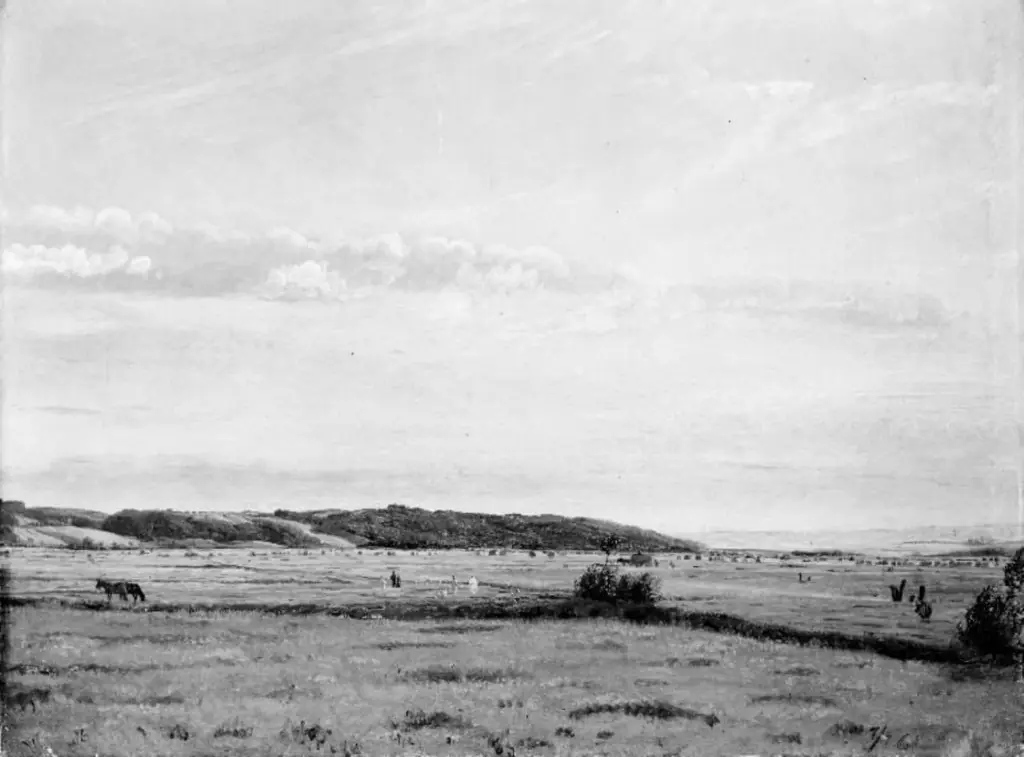
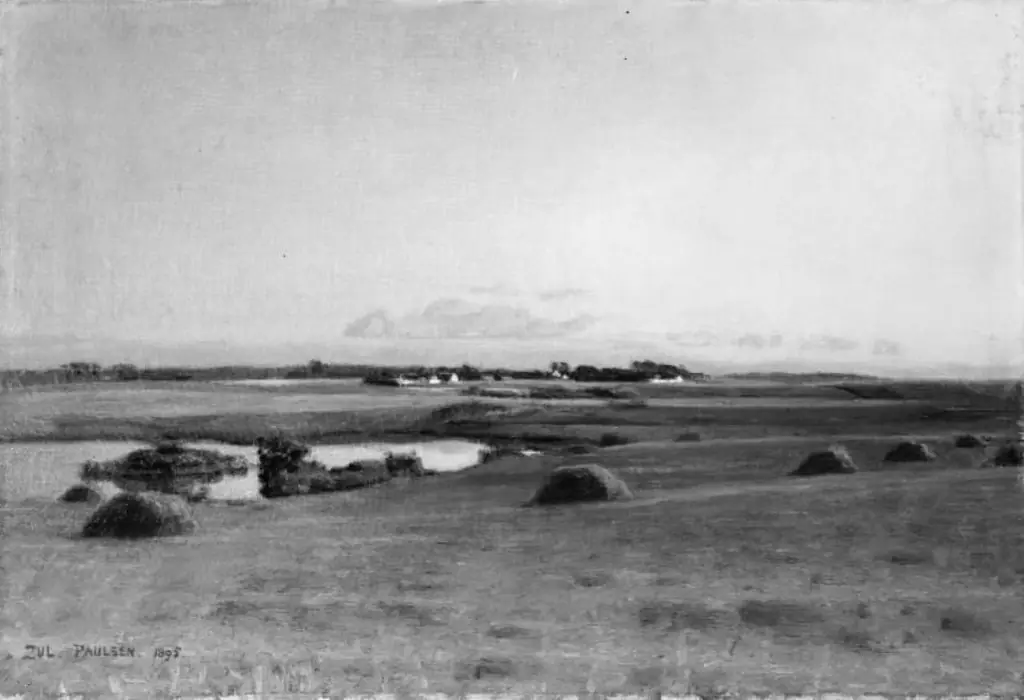
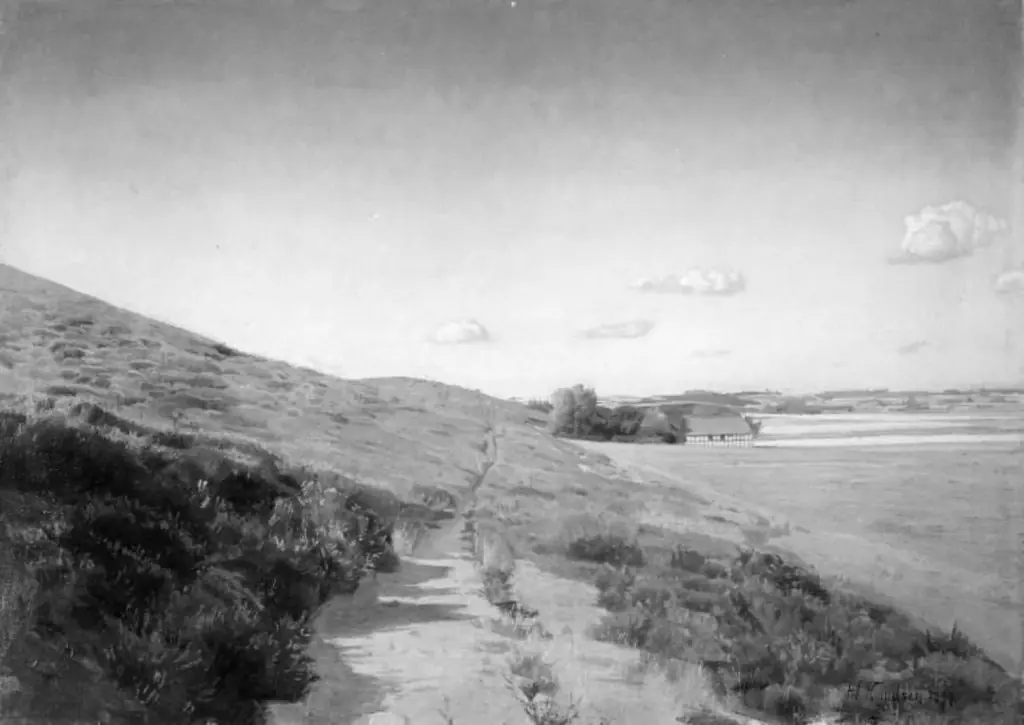
Aftenlandskab, created in 1894, is a black-and-white photographic image depicting a rural Danish landscape. It captures a quiet, unpaved road winding through open fields under a muted sky. The composition emphasizes stillness and subtlety, avoiding dramatic elements. The work is held in the collection of the Museum of Ethnography, where it is preserved as an example of late 19th-century observational photography.
Subject & Meaning
The scene portrays an unremarkable stretch of countryside—narrow paths, sparse vegetation, and distant, modest structures. There is no human presence, and the absence of strong light or shadow enhances the sense of quiet solitude. The image suggests a meditation on rural life’s quiet endurance, valuing the ordinary over the picturesque, aligning with a broader cultural interest in documenting everyday environments.
Technique & Style
The photograph employs natural, diffused lighting consistent with overcast conditions, minimizing contrast and softening textures. The lens captures fine details in the road’s surface and the irregularity of the terrain without stylization. Its approach reflects Realist principles: unembellished representation, attention to material truth, and a rejection of idealized composition in favor of observed reality.
History & Provenance
Created in 1894, the image was likely made by a photographer engaged in systematic documentation of rural Denmark. It entered the Museum of Ethnography’s collection in the early 20th century, where it was valued for its ethnographic record rather than artistic merit. Its preservation reflects institutional interest in capturing vernacular landscapes before industrialization transformed them.
Context
In the late 1800s, photography became a tool for anthropological and geographic surveying across Europe. Denmark, like other nations, saw increased efforts to visually catalog its countryside. Aftenlandskab fits within this movement, contributing to a growing archive of regional life that prioritized accuracy over sentiment, serving scholarly rather than aesthetic ends.
Legacy
Though not widely exhibited outside institutional settings, Aftenlandskab remains a quiet testament to the period’s documentary impulse. It influenced later generations of photographers interested in unadorned landscapes and the cultural value of mundane places. Its endurance lies in its restraint—offering no narrative, only presence.
Artist & collection

 Domestic Scene
 Giacomo and Cardinal Marco, investing Andrea, Abbot of San Zeno, with his Benefice
 The Nymph of Fontainebleau
 Portrait of a Woman
 Madonna and Child with Saints in the Enclosed Garden
 Venus and Minerva
 Family Group of Four on Sofa
 Wall painting from Room H of the Villa of P. Fannius Synistor at Boscoreale