Artwork
Cows in a Field
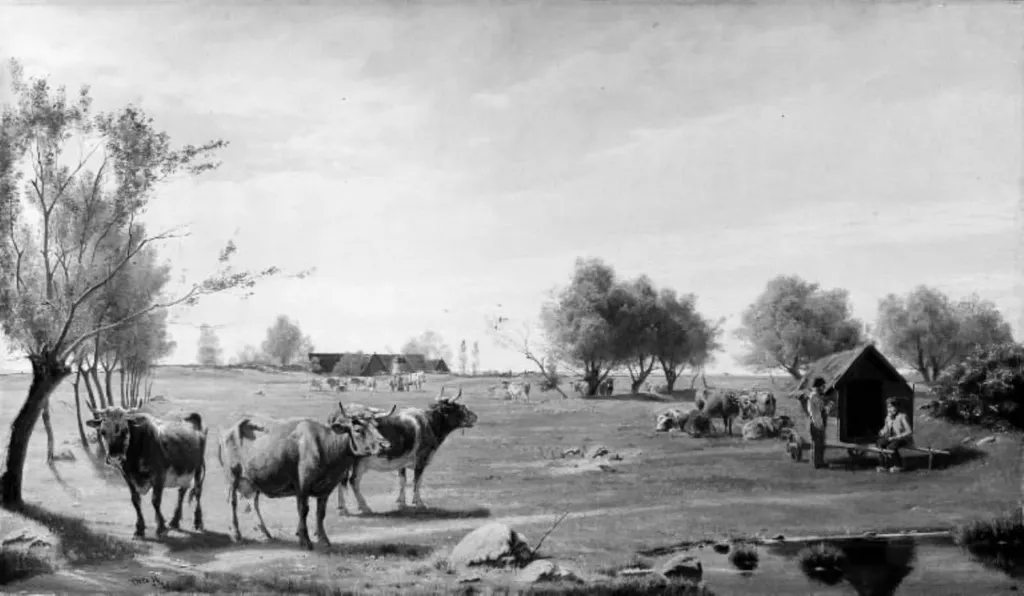
Cows in a Field is a photography by the Impressionist artist Unknown. It dates from 1872 and is held in the collection of the Statens Museum for Kunst.
About this work
The photo was taken in 1872, which is unusual for this kind of subject—most early photos focused on people or cities, not rural life.
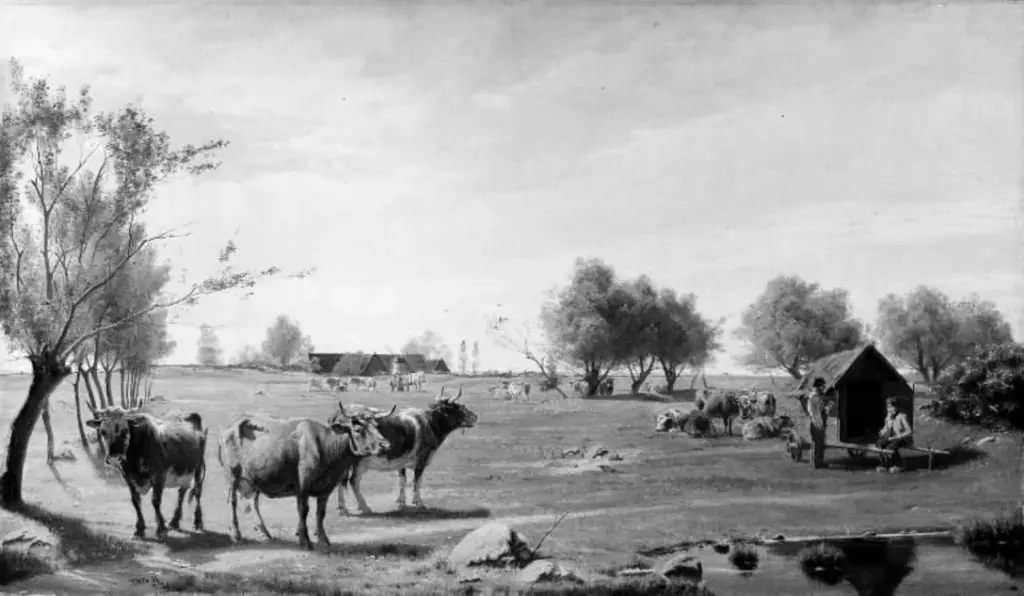
This photo shows a quiet farm scene with cows grazing in a grassy field. A small group of cows stands near the foreground, while others rest or wander in the distance. A few trees line the left side, and a tiny wooden hut sits near the right, where a person appears to be working. The sky is pale, and the whole scene feels calm and everyday.
The photo was taken in 1872, which is unusual for this kind of subject—most early photos focused on people or cities, not rural life. The soft lighting and simple details match the styles of Impressionism or Realism, where artists aimed to show life as it truly was.
If you like this, check out Realism to see more works that focus on ordinary moments.
Overview
Cows in a Field is a photographic image from 1872, attributed to an artist identified as 196_person. It depicts a tranquil rural scene in which cattle graze across an open pasture. The composition includes scattered trees on the left and a modest wooden structure on the right, with a faint human figure engaged in labor. Its focus on everyday agricultural life distinguishes it from the more common photographic subjects of the era, which tended toward urban or portraiture themes.
Subject & Meaning
The image captures the quiet rhythm of farm life, emphasizing routine rather than drama. The cows, grouped loosely across the field, suggest natural behavior without theatricality. The presence of a solitary worker near the hut implies human labor as an unremarkable part of the landscape. The scene resists idealization, presenting rural existence as unadorned and continuous, aligning with broader 19th-century interests in documenting ordinary life.
Technique & Style
The photograph employs soft, diffused lighting that flattens contrast and enhances the muted tones of the landscape. Details are rendered with clarity but without sharpness, avoiding the rigid formality of earlier photographic styles. The composition’s balance and attention to atmospheric conditions reflect an aesthetic sensibility akin to Realism and early Impressionism, prioritizing naturalism over staged composition.
History & Provenance
Created in 1872, the image entered the collection of the Museum of Ethnography, where it remains today. Its preservation in an ethnographic context suggests it was valued for its documentation of rural labor and land use rather than as fine art. The photograph’s survival is notable, as few images of this subject from the period were systematically collected or archived at the time.
Context
In the 1870s, photography was still emerging as a medium for non-urban subjects. Most early photographs documented architecture, portraits, or events of public significance. This image stands out for its quiet, uneventful depiction of agricultural life, reflecting a growing interest among some photographers and thinkers in recording the rhythms of rural existence as culturally significant.
Legacy
Cows in a Field contributes to a lesser-known strand of 19th-century visual culture that valued the mundane over the monumental. While not widely exhibited in art historical narratives, it remains a quiet testament to the shift in photographic priorities during the period—toward observation, authenticity, and the everyday. Its presence in an ethnographic museum underscores its role as a record of social practice.
Artist & collection

 Domestic Scene
 Giacomo and Cardinal Marco, investing Andrea, Abbot of San Zeno, with his Benefice
 The Nymph of Fontainebleau
 Portrait of a Woman
 Madonna and Child with Saints in the Enclosed Garden
 Venus and Minerva
 Family Group of Four on Sofa
 Wall painting from Room H of the Villa of P. Fannius Synistor at Boscoreale