Artwork
Peasants' Wedding
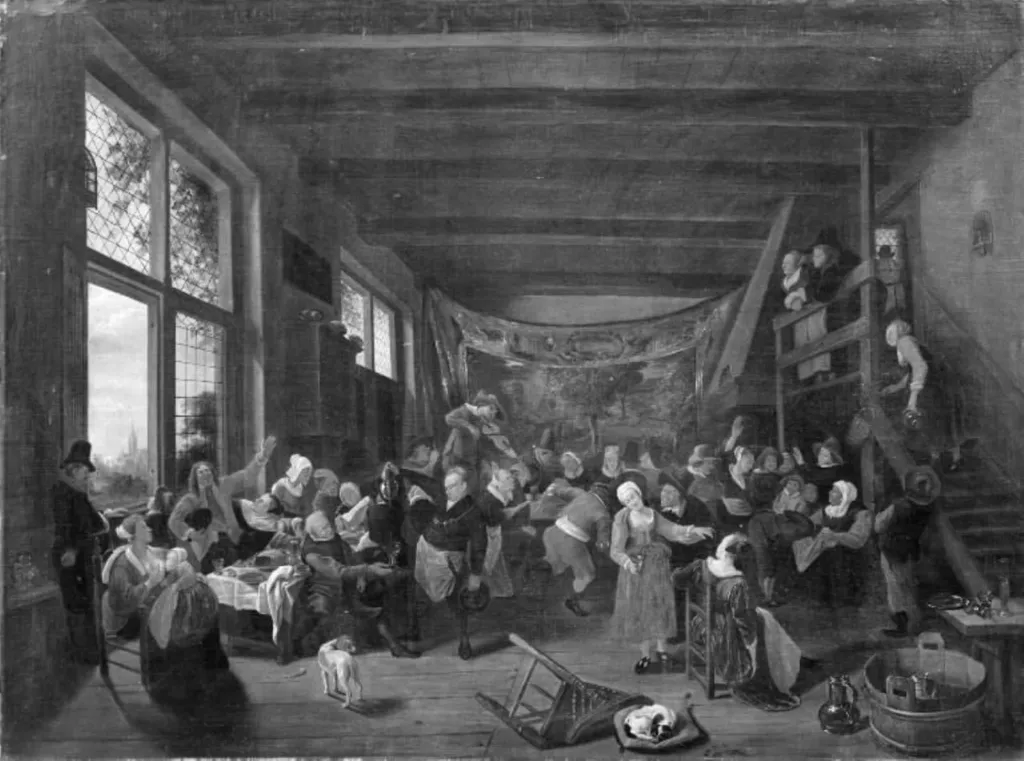
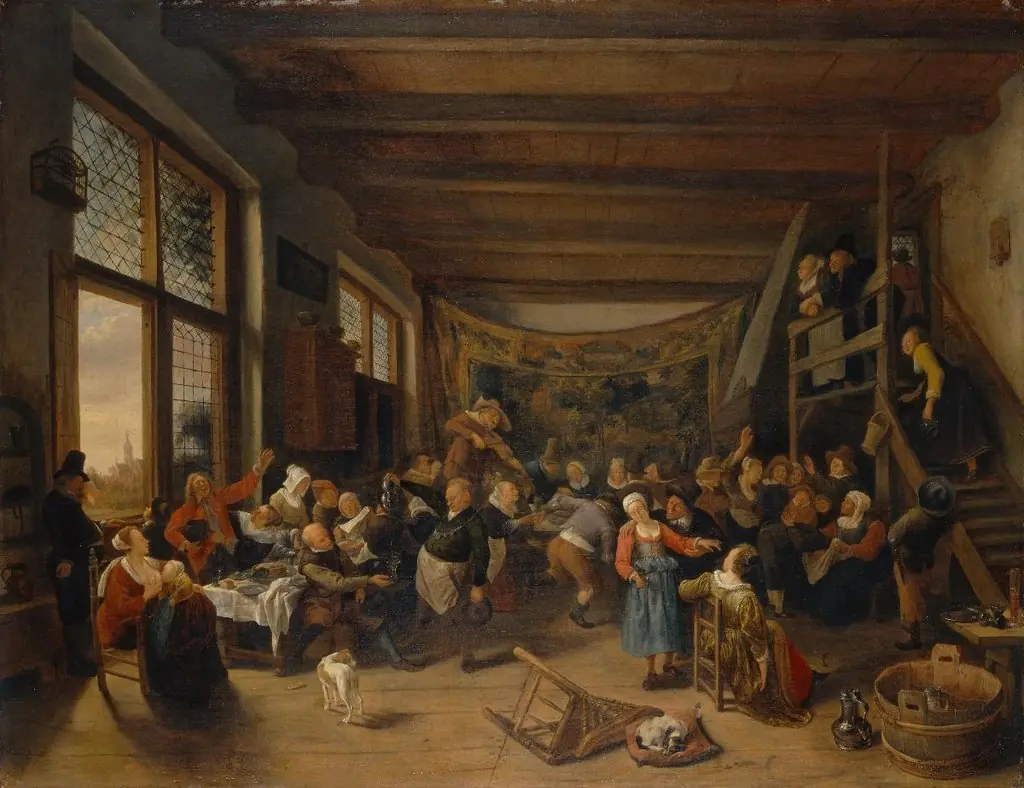
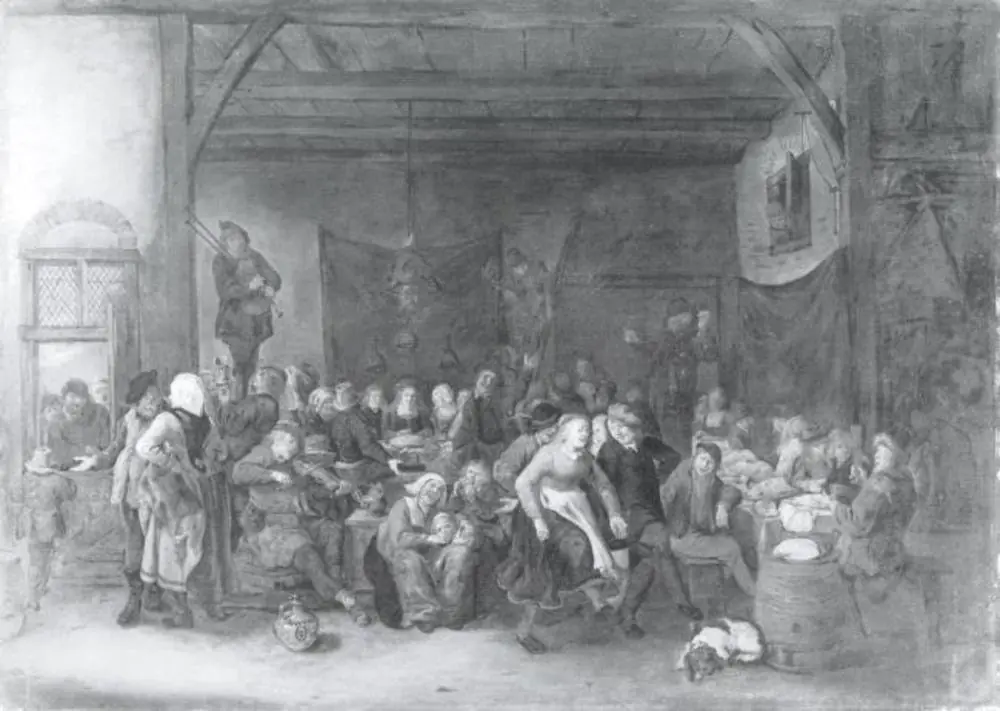
Peasants' Wedding is a photography by Unknown. It dates from 1650 and is held in the collection of the Statens Museum for Kunst. Created around 1650, this image depicts a rural wedding celebration in a dimly lit interior.
About this work
Overview
Though attributed to an artist active in 1964, the work’s style and subject align with 17th-century Northern European genre painting.
Created around 1650, this image depicts a rural wedding celebration in a dimly lit interior. Though attributed to an artist active in 1964, the work’s style and subject align with 17th-century Northern European genre painting. The image is preserved in the Museum of Ethnography as a black-and-white photograph, likely a reproduction of a painted original. Its composition captures a moment of communal festivity with attention to ordinary details.
Subject & Meaning
The scene portrays a peasant wedding, a common theme in early modern Dutch and Flemish art. Guests dance, musicians play, and diners gather at tables, reflecting the social rituals of rural life. The tipped chair and resting dog suggest spontaneity and informality. The woman with the fan may signal modesty or status. The image conveys no overt symbolism, instead emphasizing the dignity and vitality of everyday human connection.
Technique & Style
The photograph reproduces a painting characterized by restrained tonality and careful arrangement of figures. Light enters through tall, diamond-paned windows, casting soft contrasts across wooden walls and clothing. Figures are rendered with loose, expressive brushwork, avoiding idealization. The composition balances movement and stillness, guiding the viewer’s eye through the crowded space without clutter. The monochrome format enhances the focus on form and gesture.
History & Provenance
The original painting likely originated in the Low Countries during the mid-17th century, a period when genre scenes of peasant life gained popularity among urban patrons. The current image is a photographic reproduction, acquired by the Museum of Ethnography as part of a collection documenting folk traditions. Its transition from canvas to photograph reflects 20th-century efforts to preserve and categorize cultural heritage.
Context
This image emerges from a broader tradition of Northern European art that elevated ordinary life as worthy of depiction. Unlike religious or aristocratic subjects, peasant weddings were celebrated for their authenticity and emotional immediacy. The setting—wood-paneled halls, simple furnishings, and natural light—mirrors actual rural interiors of the time, offering insight into domestic architecture and social customs beyond elite circles.
Legacy
Though not widely known as a standalone work, the image contributes to scholarly understanding of how 17th-century artists observed and recorded non-elite life. Its preservation in an ethnographic museum underscores its value as a cultural document rather than a fine art object. The photograph continues to serve as a reference for studies in social history, material culture, and the evolution of genre painting.
Artist & collection

 Domestic Scene
 Giacomo and Cardinal Marco, investing Andrea, Abbot of San Zeno, with his Benefice
 The Nymph of Fontainebleau
 Portrait of a Woman
 Madonna and Child with Saints in the Enclosed Garden
 Venus and Minerva
 Family Group of Four on Sofa
 Wall painting from Room H of the Villa of P. Fannius Synistor at Boscoreale