Artwork
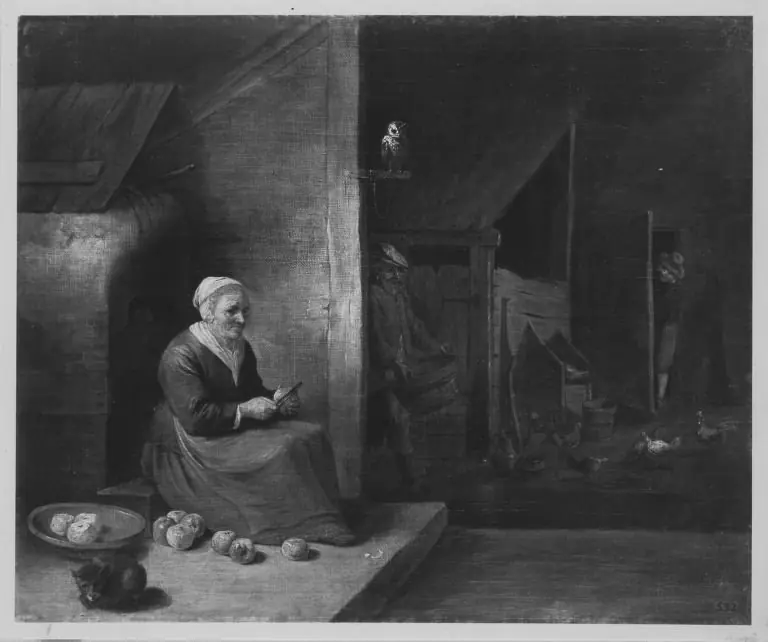
Interior of a Peasant's Cottage with an Old Woman Peeling Apples
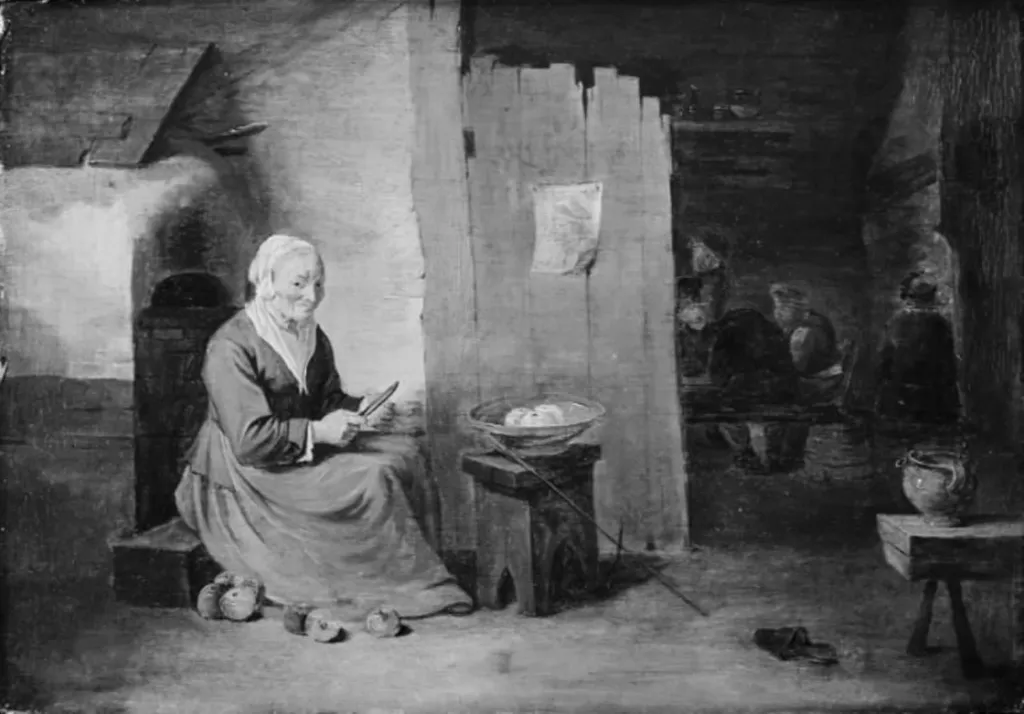
Interior of a Peasant's Cottage with an Old Woman Peeling Apples is a photography by the Baroque artist Unknown. It dates from 1648 and is held in the collection of the Statens Museum for Kunst.
About this work
Overview
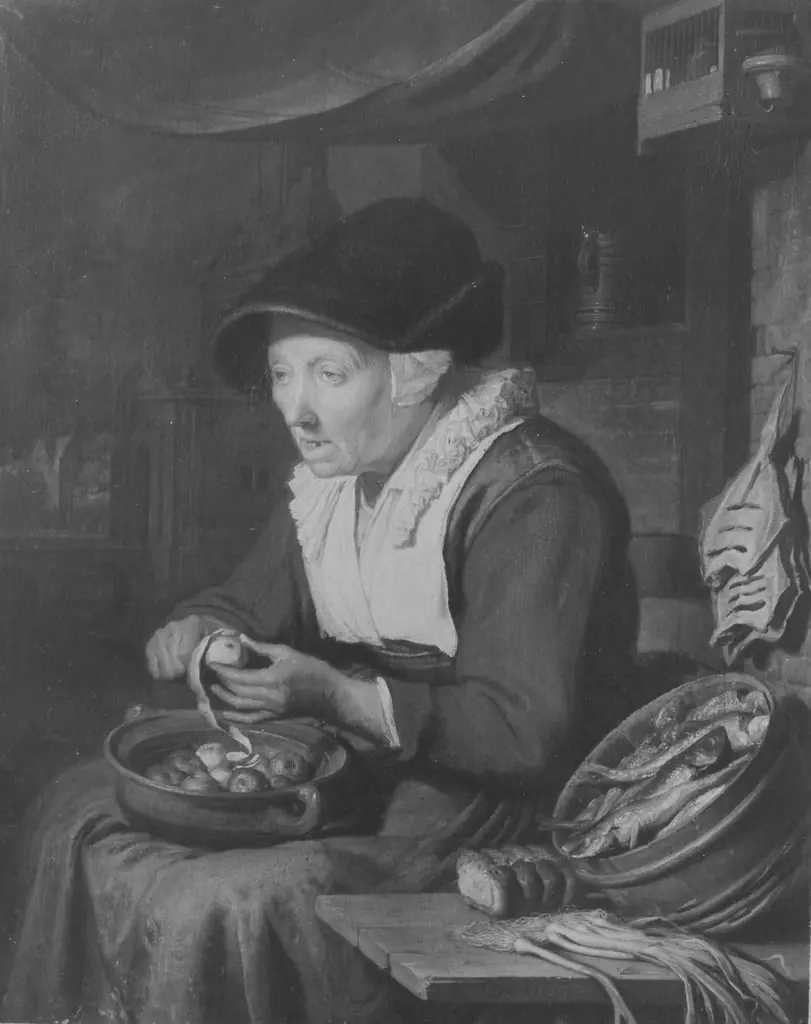
Painted in 1648, this work depicts a quiet interior of a rural dwelling, centered on an elderly woman engaged in the daily act of peeling apples. Executed in oil on panel, it captures a moment of stillness within a modest home. The painting is part of the collection at the Museum of Ethnography, where it is valued for its unembellished portrayal of peasant life in the Dutch Golden Age.
Subject & Meaning
The scattered apples on the floor imply a routine, unremarkable task, yet the composition elevates it into a meditation on time, labor, and quiet dignity.
The scene focuses on an aging woman, her concentration evident as she carefully removes the peel from apples with a small knife. Her attire—a long dress and headscarf—suggests rural modesty. The scattered apples on the floor imply a routine, unremarkable task, yet the composition elevates it into a meditation on time, labor, and quiet dignity. The absence of narrative drama underscores the dignity of ordinary existence.
Technique & Style
The artist employs a restrained palette of earth tones, with warm glows from the fireplace contrasting the cool shadows of the room. Light falls subtly across the woman’s hands and the apples, drawing attention to her precise movements. Brushwork is precise but unobtrusive, avoiding theatricality. The composition is tightly framed, emphasizing intimacy and the physicality of the act, characteristic of Dutch genre painting of the period.
History & Provenance
The painting entered the Museum of Ethnography’s collection in the late 19th century, likely acquired during a period of growing interest in vernacular culture. Its attribution to a specific artist remains uncertain, though stylistic elements align with regional Dutch painters of the mid-17th century. It has been exhibited intermittently, primarily in thematic displays on rural life and domestic labor.
Context
Created during the Dutch Golden Age, this work reflects a broader cultural fascination with the everyday lives of common people. While elite patrons often commissioned portraits or biblical scenes, a growing middle class appreciated depictions of domestic routines. This painting belongs to a tradition that found beauty in simplicity, avoiding idealization in favor of observed truth.
Legacy
Though not widely known outside specialized circles, the painting contributes to an understanding of how 17th-century artists rendered the lives of the rural poor without sentimentality. Its quiet realism influenced later 19th-century social realists who sought to document labor and domesticity with similar restraint. It remains a quiet testament to the endurance of humble routines.
Artist & collection

 Domestic Scene
 Giacomo and Cardinal Marco, investing Andrea, Abbot of San Zeno, with his Benefice
 The Nymph of Fontainebleau
 Portrait of a Woman
 Madonna and Child with Saints in the Enclosed Garden
 Venus and Minerva
 Family Group of Four on Sofa
 Wall painting from Room H of the Villa of P. Fannius Synistor at Boscoreale