Artwork
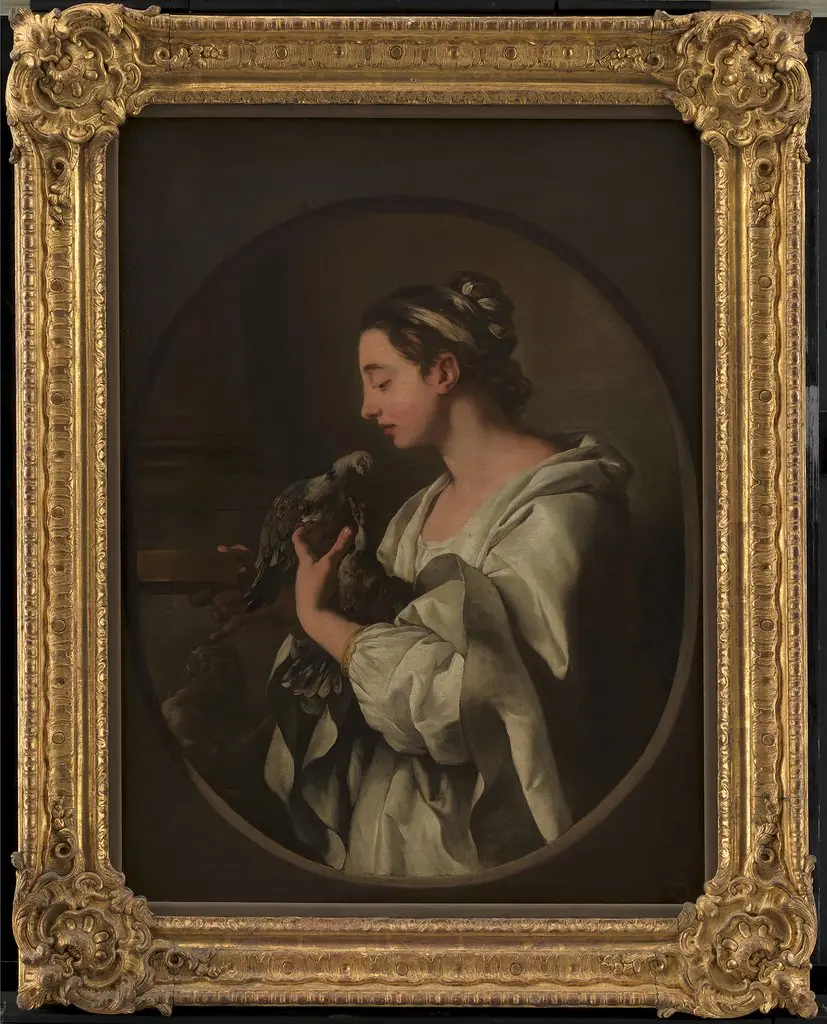
"L'Amour conjugal". A Young Woman with two Doves. An Allegory of Conjugal Love
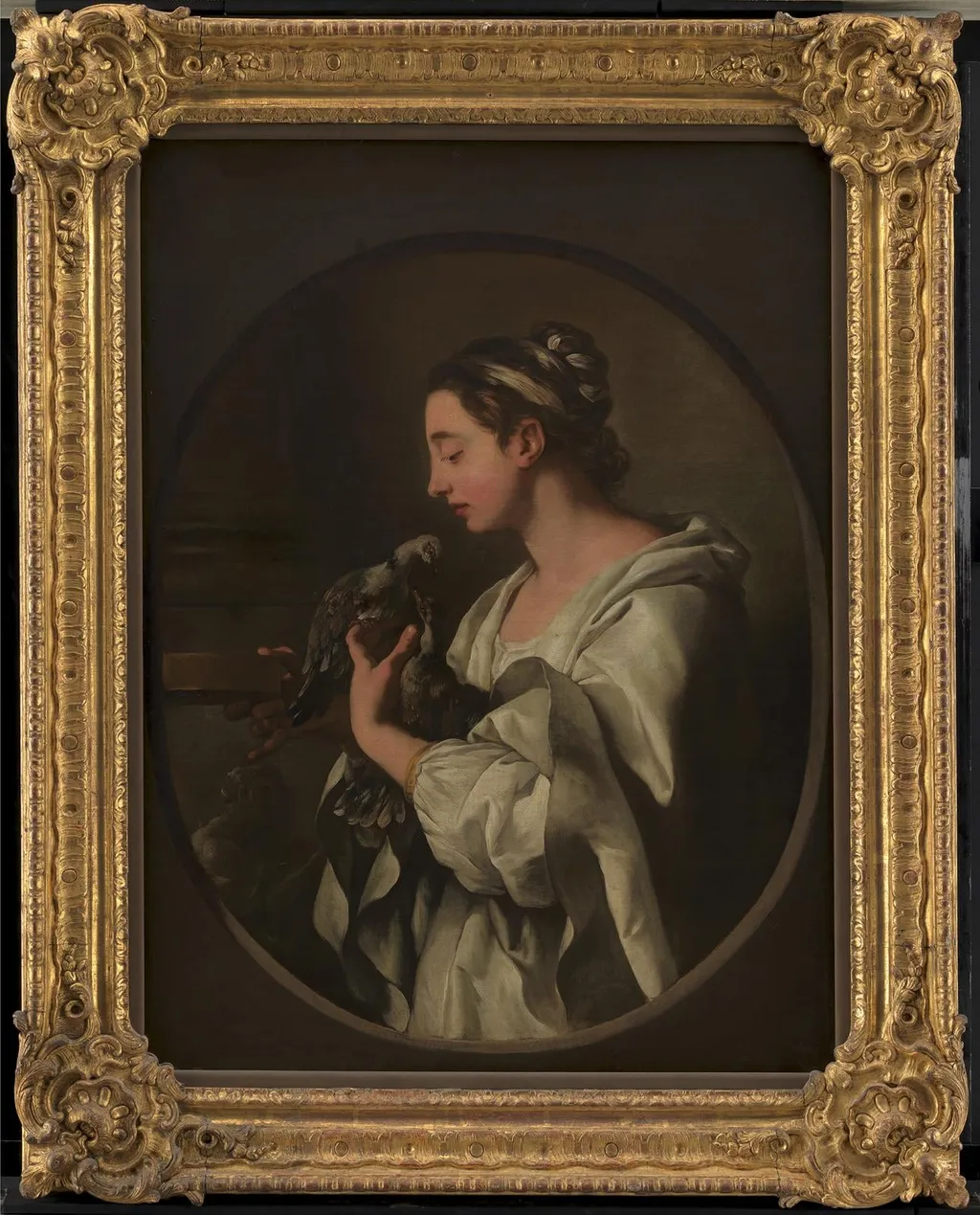
"L'Amour conjugal". A Young Woman with two Doves. An Allegory of Conjugal Love is a photography by the Baroque artist Unknown. It dates from 1741 and is held in the collection of the Statens Museum for Kunst. Created in 1741, 'L'Amour conjugal' is an allegorical painting depicting a young woman cradling two doves.
About this work
Overview
Created in 1741, 'L'Amour conjugal' is an allegorical painting depicting a young woman cradling two doves. The work belongs to a tradition of symbolic portraiture that uses natural elements to convey moral or emotional ideals. It is currently held in the collection of the Museum of Ethnography, where it is presented as an example of 18th-century visual allegory rather than a literal portrait.
Subject & Meaning
The woman’s gentle gaze and the doves she holds are conventional symbols of marital fidelity and peaceful union in European iconography.
The woman’s gentle gaze and the doves she holds are conventional symbols of marital fidelity and peaceful union in European iconography. The absence of other figures or narrative context directs attention to the quiet intimacy between the woman and the birds, suggesting an internalized, domestic virtue. The composition avoids theatricality, emphasizing restraint as a reflection of conjugal harmony.
Technique & Style
The artist employs chiaroscuro to model the woman’s face and hands with subtle gradations of light, giving them a sculptural presence against a dark, undefined background. The soft fabric of her dress and the delicate feathers of the doves are rendered with precision but without ornamental excess. The restrained palette and focused illumination serve the allegory’s solemn tone, avoiding decorative flourish.
History & Provenance
The painting’s early ownership is undocumented, but it entered the Museum of Ethnography’s collection in the late 19th century. Its attribution to a single artist remains uncertain, as no signed versions or contemporary records confirm the creator’s identity. It was likely produced in a regional studio familiar with French or Flemish allegorical traditions of the period.
Context
In mid-18th-century Europe, domestic virtue was increasingly idealized in art, especially among the bourgeoisie. Allegories of love and marriage, often featuring birds, flowers, or clasped hands, served as visual affirmations of social values. This work aligns with such themes but distinguishes itself through its quiet intimacy and lack of overt symbolism, reflecting a shift toward personal, rather than public, morality.
Legacy
Though not widely reproduced or studied in major art historical narratives, 'L'Amour conjugal' remains a quiet example of how allegory functioned in private and institutional collections. Its preservation in an ethnographic museum underscores its role as a cultural artifact of domestic ideals, valued more for its symbolic resonance than its artistic innovation.
Artist & collection

 Domestic Scene
 Giacomo and Cardinal Marco, investing Andrea, Abbot of San Zeno, with his Benefice
 The Nymph of Fontainebleau
 Portrait of a Woman
 Madonna and Child with Saints in the Enclosed Garden
 Venus and Minerva
 Family Group of Four on Sofa
 Wall painting from Room H of the Villa of P. Fannius Synistor at Boscoreale
 Portrait of a young woman
 Marie de Rège, the artist's daughter
 Portrait of a Lady
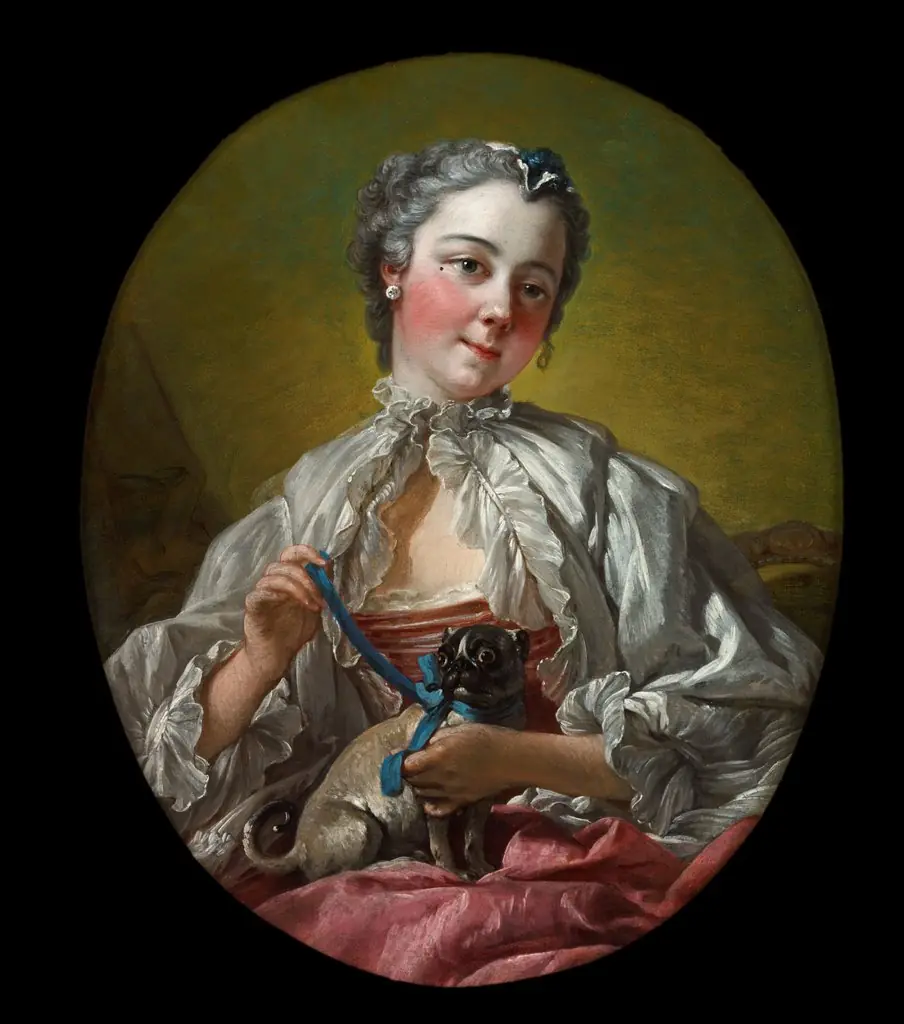 A young lady holding a pug dog
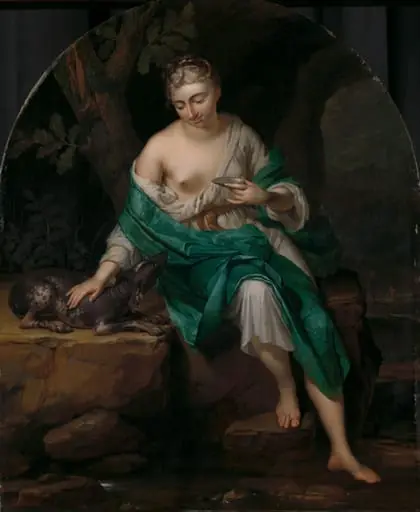 A Woman with a Dog
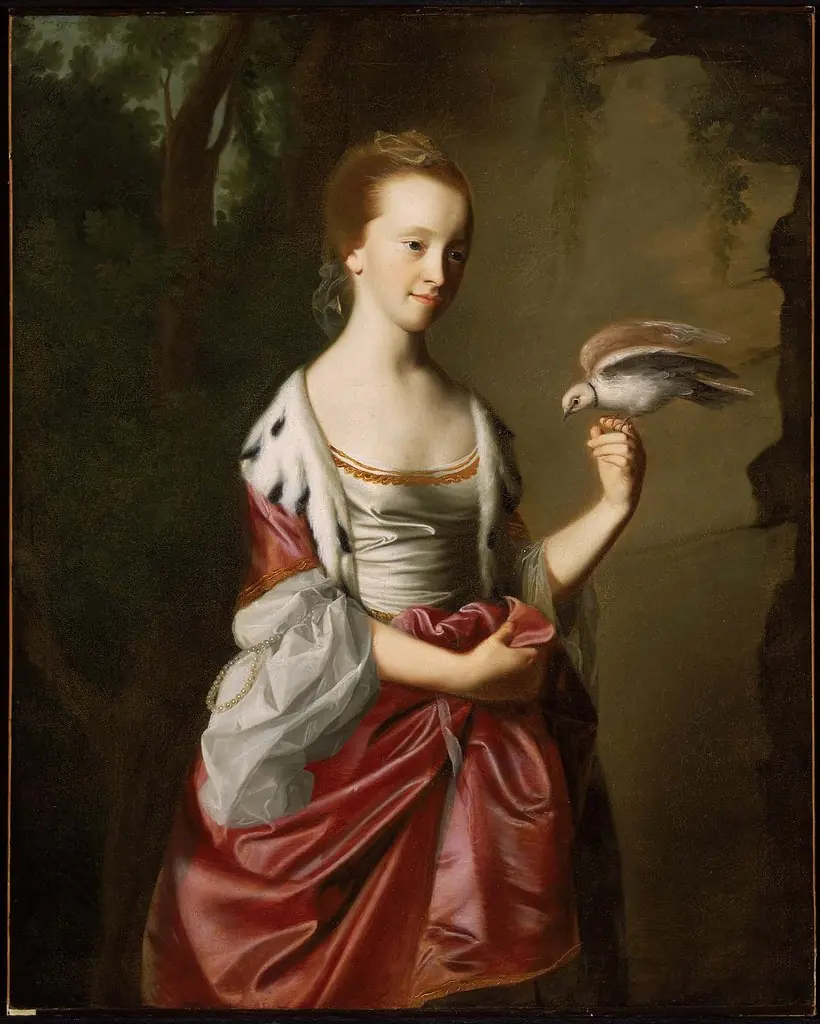 Elizabeth Ross (Mrs. William Tyng)
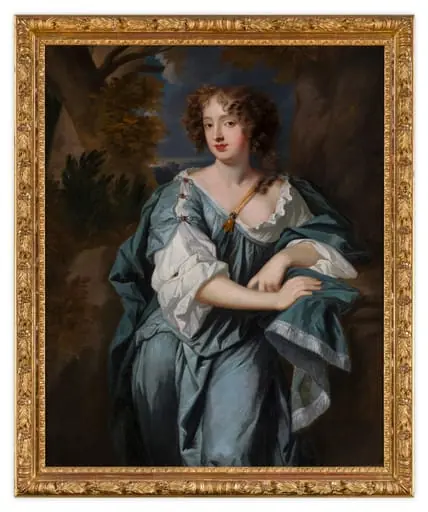 Elizabeth Wriothesley, Northumberlandin kreivitär
 Doamna D’Aguesseau
 Lovisa Ulrika, 1720-1782, drottning av Sverige prinsessa av Preussen
 Girl with low neckline
 Portrait of a Woman
 "L'Amour conjugal". A Young Woman with two Doves. An Allegory of Conjugal Love