Artwork
A Manor House on a Steep Chalk Hill
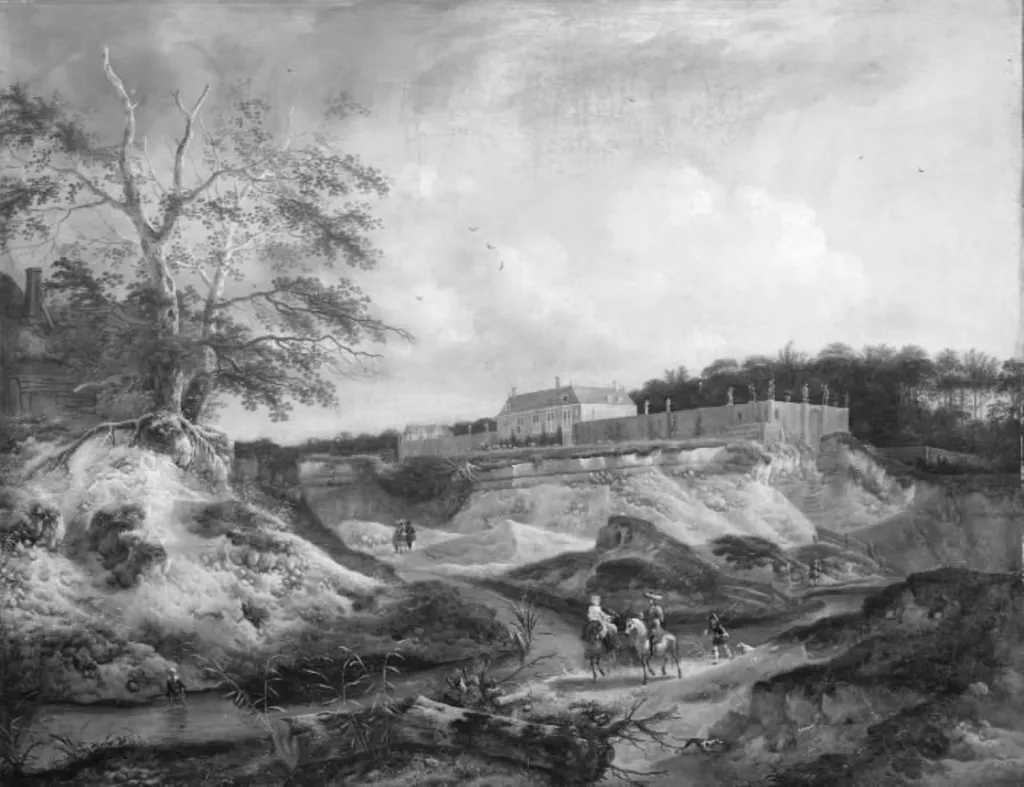
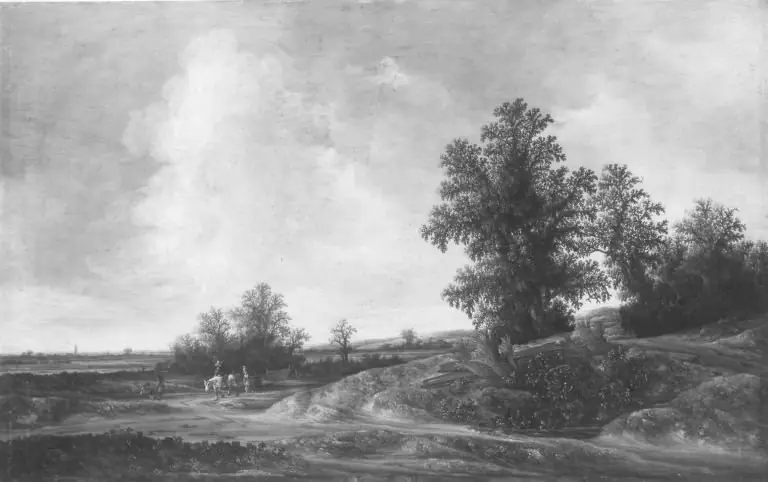
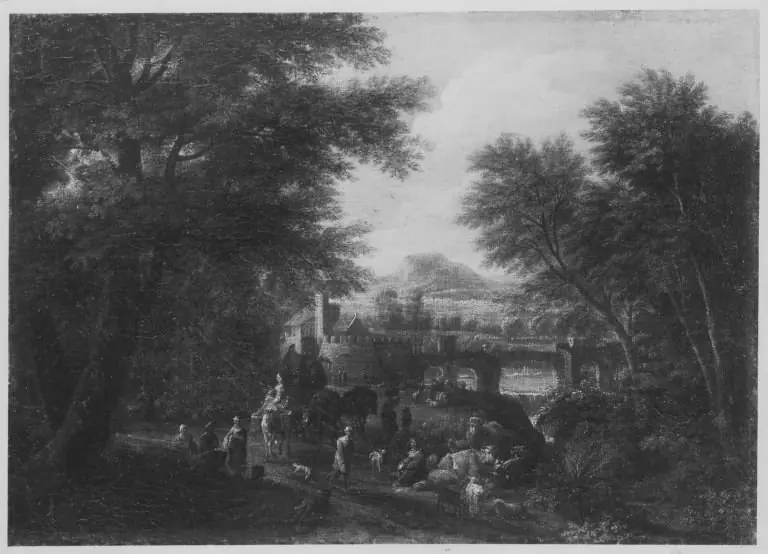
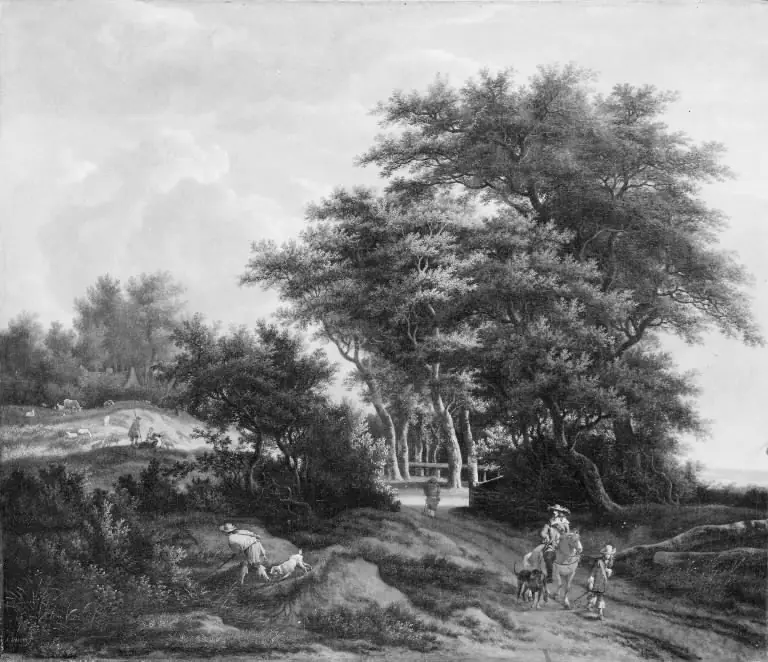
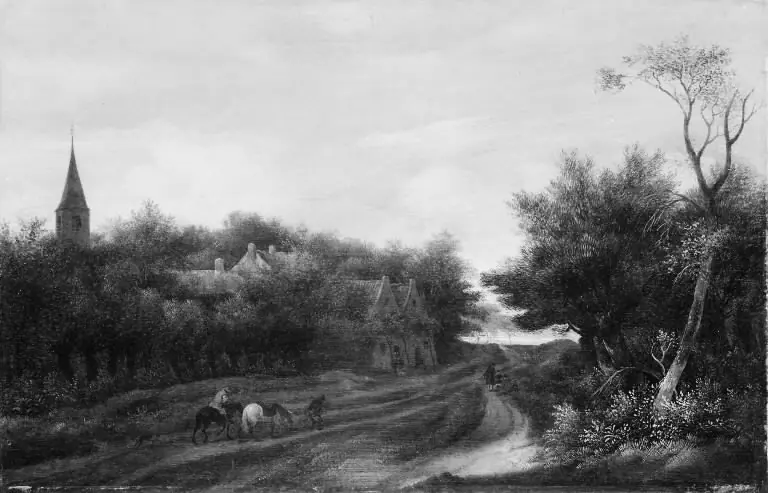
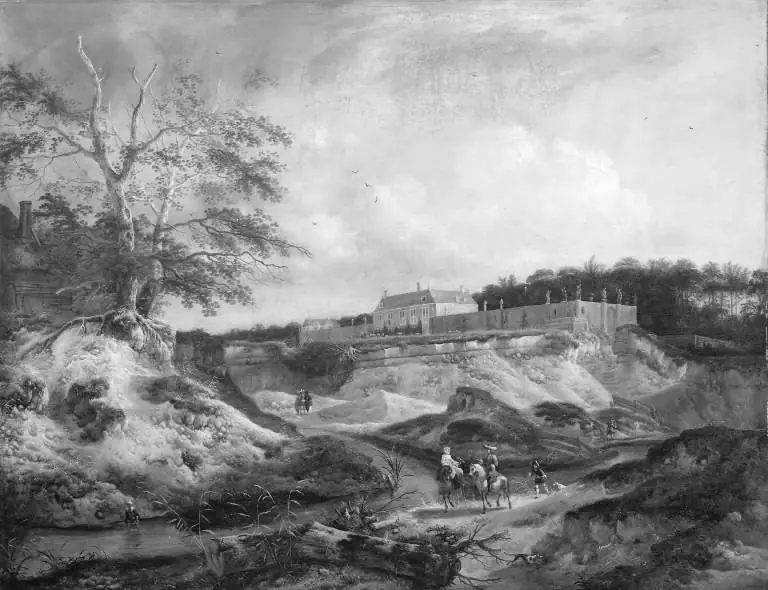
A Manor House on a Steep Chalk Hill is a photography by Unknown. It dates from 1650 and is held in the collection of the Statens Museum for Kunst. Created around 1650, this image depicts a rural English manor perched atop a steep chalk escarpment.
About this work
Overview
Created around 1650, this image depicts a rural English manor perched atop a steep chalk escarpment. The scene is rendered with quiet precision, emphasizing the relationship between architecture and natural topography. The work is part of the collection at the Museum of Ethnography, where it is preserved as a record of early modern landscape observation rather than a formal artistic statement.
Subject & Meaning
The manor house, isolated on a barren hillside, suggests a modest estate in a remote region. Figures on a winding path below imply daily movement between settlement and land, hinting at agricultural or domestic routines. The absence of grandeur or activity conveys a sense of quiet endurance, reflecting the unromanticized reality of rural life in mid-17th-century England.
Technique & Style
The artist uses subtle gradations of tone to model the chalk cliffs and path, creating a sense of volume without sharp outlines. Light filters diffusely through an overcast sky, softening contrasts and unifying the composition. The handling of shadow across rock and foliage suggests an awareness of chiaroscuro, though applied with restraint rather than theatrical effect.
History & Provenance
The work’s origins are undocumented prior to its inclusion in the Museum of Ethnography’s holdings. Its modest scale and unadorned style suggest it may have been a private study or survey sketch rather than a commissioned piece. No signatures or inscriptions are recorded, and its attribution to a specific hand remains tentative.
Context
In mid-17th-century England, topographical images of estates were often made for land management or inheritance records. This piece aligns with that tradition, capturing terrain and structure with observational accuracy. The chalk hills depicted are characteristic of southern England, particularly areas like the South Downs, where such landscapes shaped local economies and settlement patterns.
Legacy
Though not widely exhibited or studied, the image contributes to a broader archive of pre-industrial English land documentation. Its quiet realism offers insight into how ordinary landscapes were perceived and recorded before the rise of romanticized landscape painting. It remains a quiet witness to the material conditions of rural life in its time.
Artist & collection

 Domestic Scene
 Giacomo and Cardinal Marco, investing Andrea, Abbot of San Zeno, with his Benefice
 The Nymph of Fontainebleau
 Portrait of a Woman
 Madonna and Child with Saints in the Enclosed Garden
 Venus and Minerva
 Family Group of Four on Sofa
 Wall painting from Room H of the Villa of P. Fannius Synistor at Boscoreale