Artwork
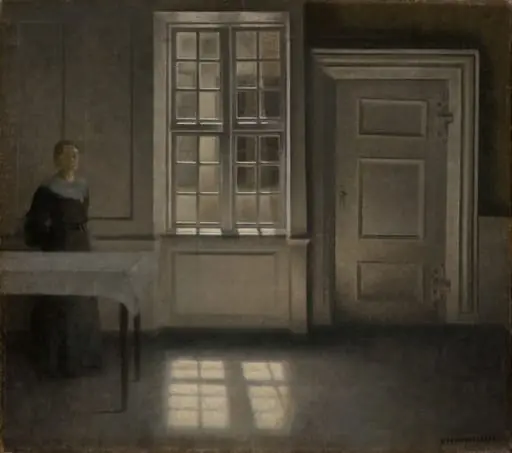
Interior with the Artist's Wife Emilie Heise
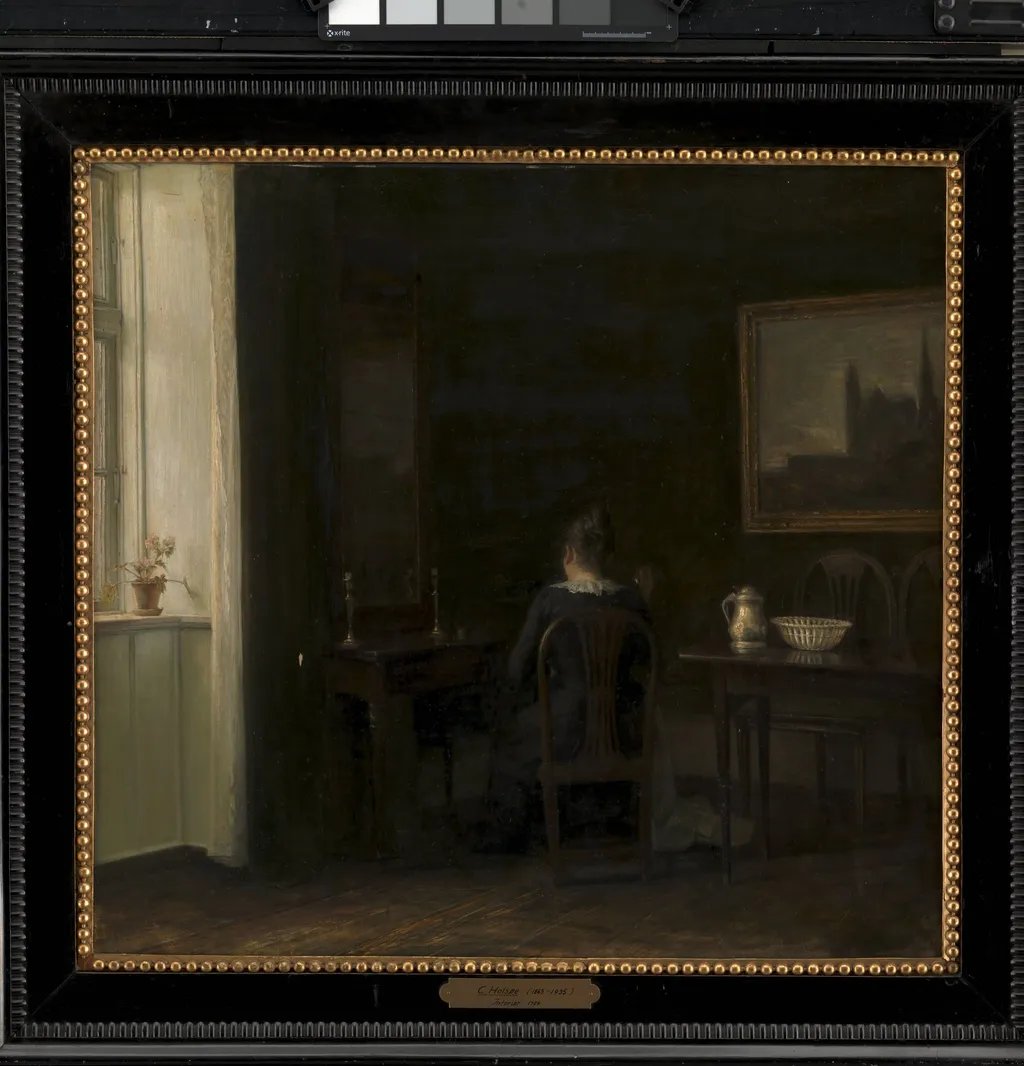
Interior with the Artist's Wife Emilie Heise is a photography by Unknown. It dates from 1903 and is held in the collection of the Statens Museum for Kunst. Painted in 1903, this interior scene captures a quiet moment in the domestic space shared by the artist and his wife, Emilie Heise.
About this work
Overview
Painted in 1903, this interior scene captures a quiet moment in the domestic space shared by the artist and his wife, Emilie Heise. The composition is restrained, focusing on ordinary objects and subdued lighting. The work is held in the collection of the Museum of Ethnography, where it is valued for its intimate portrayal of private life rather than grand narrative.
Subject & Meaning
The figure, Emilie Heise, stands with her back turned, engaged in no overt action, suggesting contemplation or stillness. The presence of a plant, a pitcher, and a basket implies daily routines, while the unoccupied space around her reinforces a sense of solitude. The painting conveys quiet intimacy, not through gesture, but through the weight of absence and the familiarity of the setting.
Technique & Style
Soft, directional light enters from a window, casting gentle shadows that model forms without harsh contrast. The artist employs chiaroscuro subtly, using gradations of tone to define space and volume. Brushwork is restrained, avoiding detail in favor of atmospheric cohesion. The palette is muted, dominated by earth tones that enhance the sense of quietude and domestic warmth.
History & Provenance
The painting remained in the artist’s possession until it entered the Museum of Ethnography’s collection. Its acquisition reflects a broader interest in early 20th-century domestic scenes as cultural artifacts. Unlike many works of the period, it was never widely exhibited, preserving its private character and limiting its public recognition.
Context
Created during a time when urban interiors became subjects of artistic inquiry, the work aligns with European trends favoring quiet, everyday moments over dramatic themes. While contemporaries like Vuillard and Bonnard explored similar spaces, this painting distinguishes itself through its understated composition and lack of decorative flourish, emphasizing emotional restraint.
Legacy
Though not widely reproduced or studied, the painting endures as a quiet testament to domestic life in early modern Europe. Its preservation in an ethnographic context underscores its value as a record of material culture and personal space. It invites viewers to consider the significance of ordinary moments rendered with sincerity and stillness.
Artist & collection

 Domestic Scene
 Giacomo and Cardinal Marco, investing Andrea, Abbot of San Zeno, with his Benefice
 The Nymph of Fontainebleau
 Portrait of a Woman
 Madonna and Child with Saints in the Enclosed Garden
 Venus and Minerva
 Family Group of Four on Sofa
 Wall painting from Room H of the Villa of P. Fannius Synistor at Boscoreale
 Interior with the Artist's Easel
 Interior with the Artist's Easel
 The Artist's Mother Ane Hedvig Brøndum in the Red Room
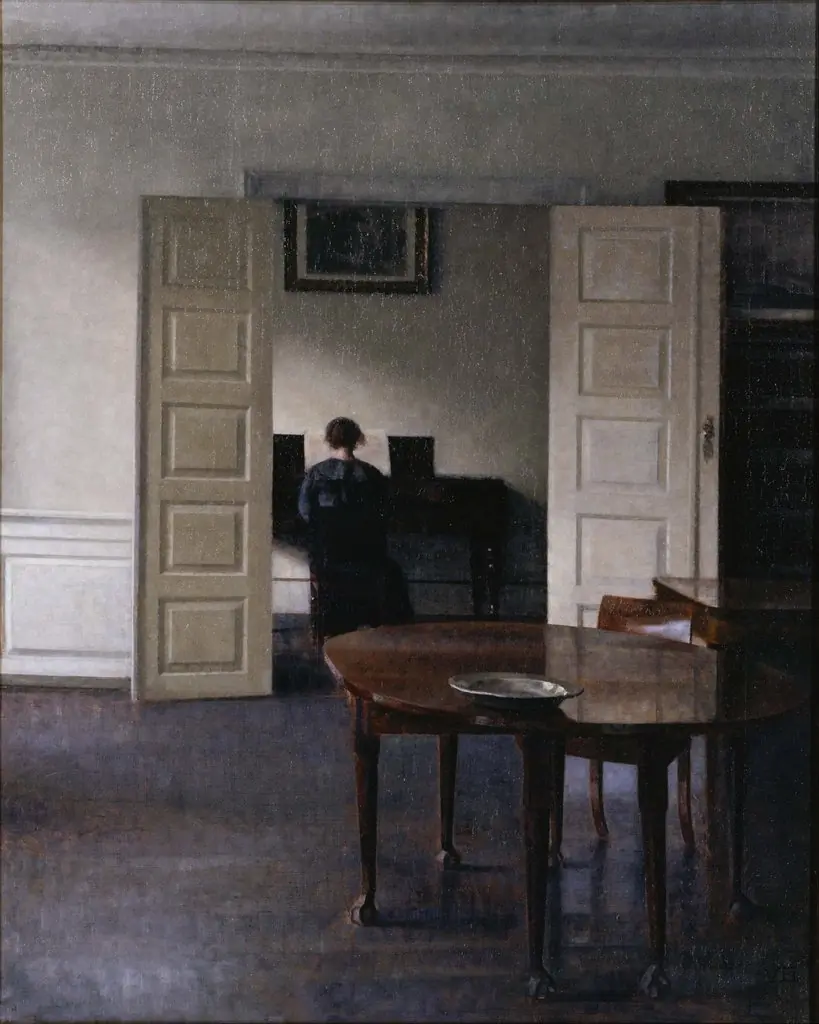 Interior with Ida Playing the Piano
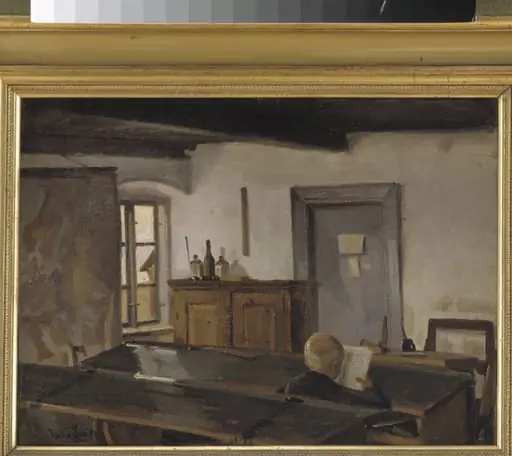 En skolestue med en læsende dreng
 Interior with a Girl Reading
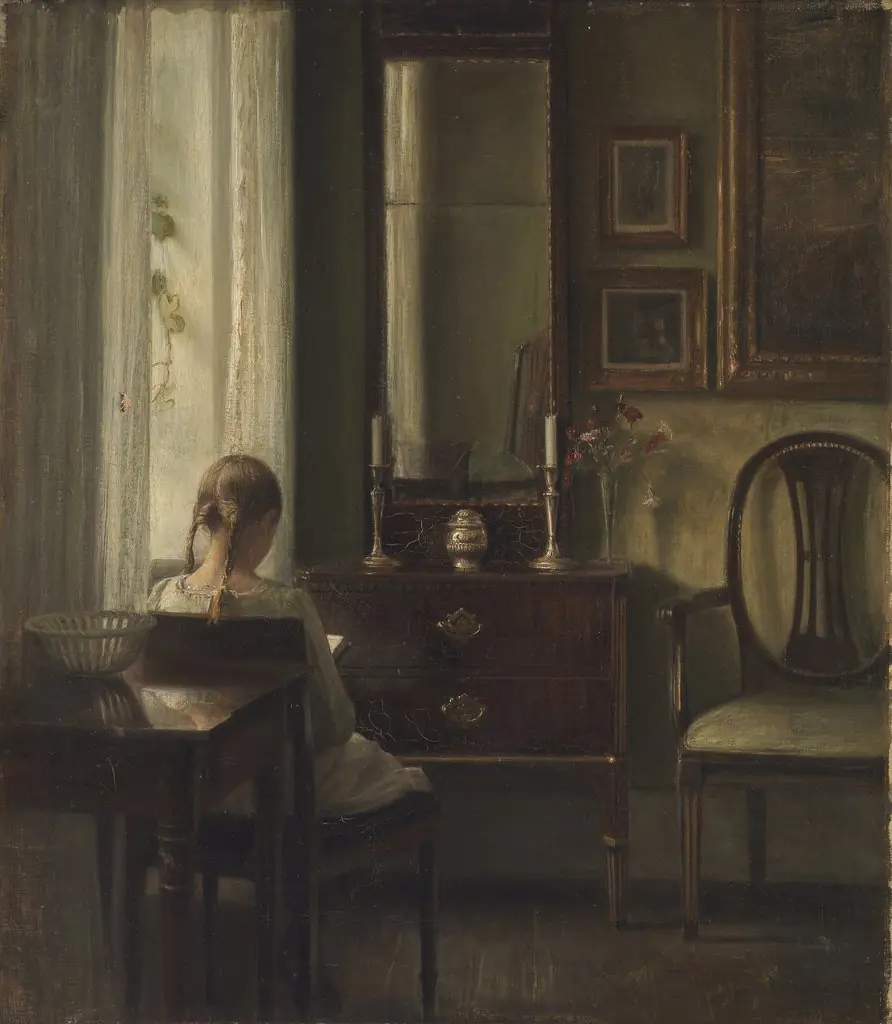 Interior with a Girl Reading
 Strandgade, Sunshine
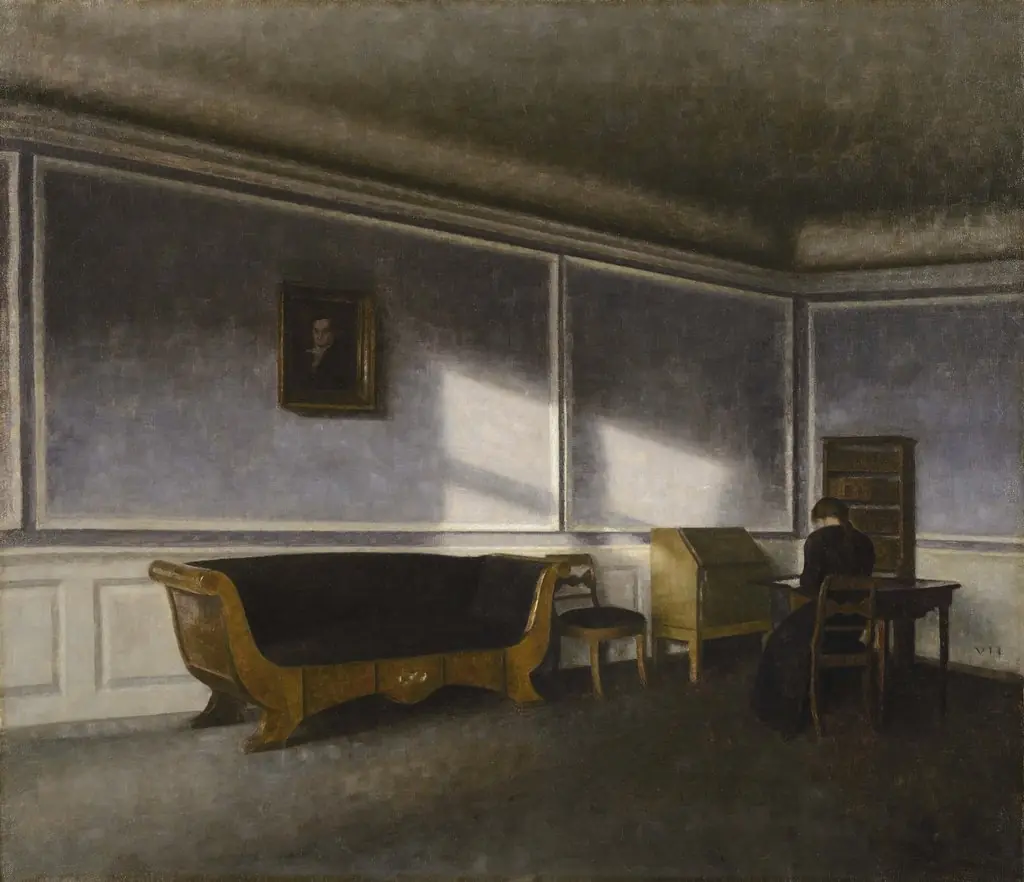 Sunshine in the Drawing Room
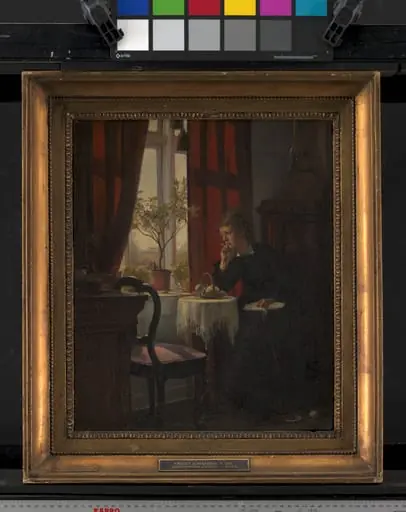 Helga Johansen, kunstnerens søster