Artwork
Mark med korntraver
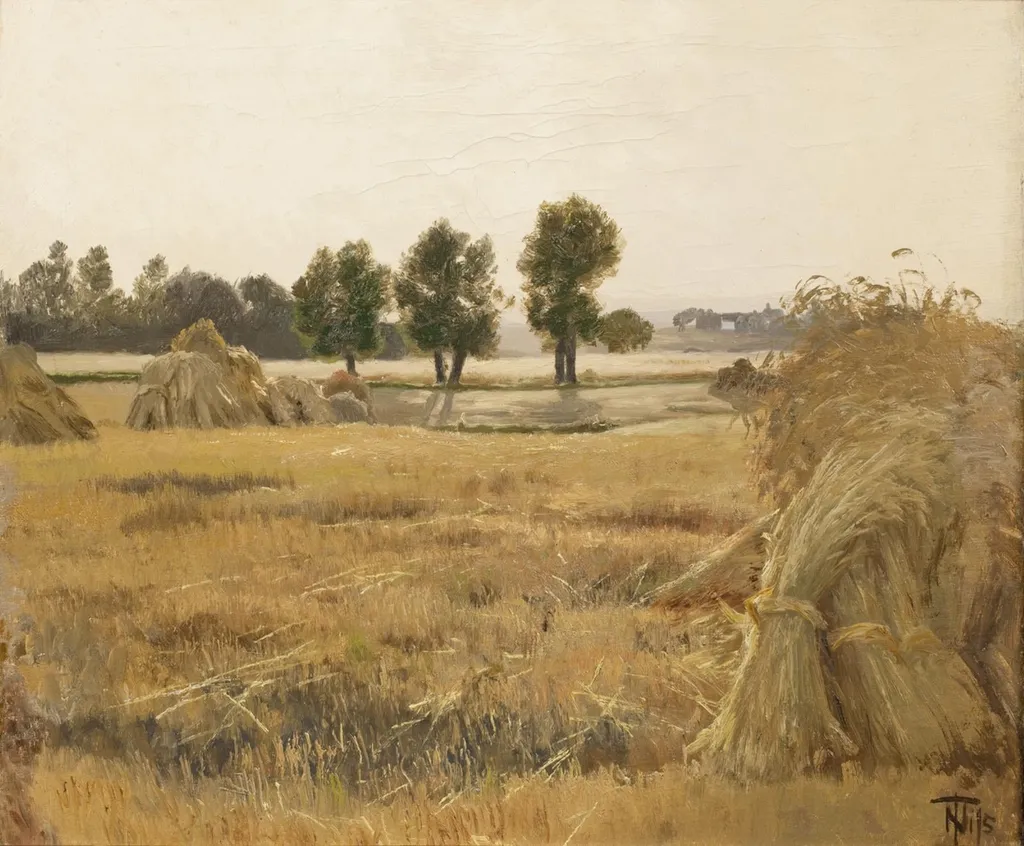
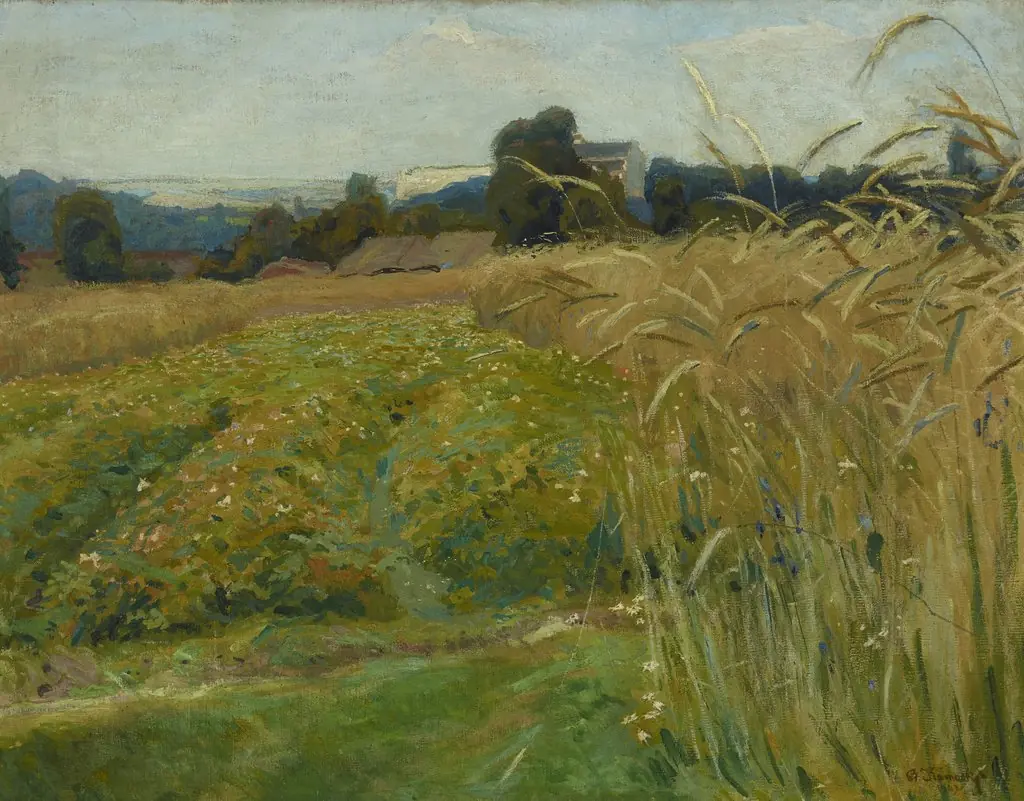
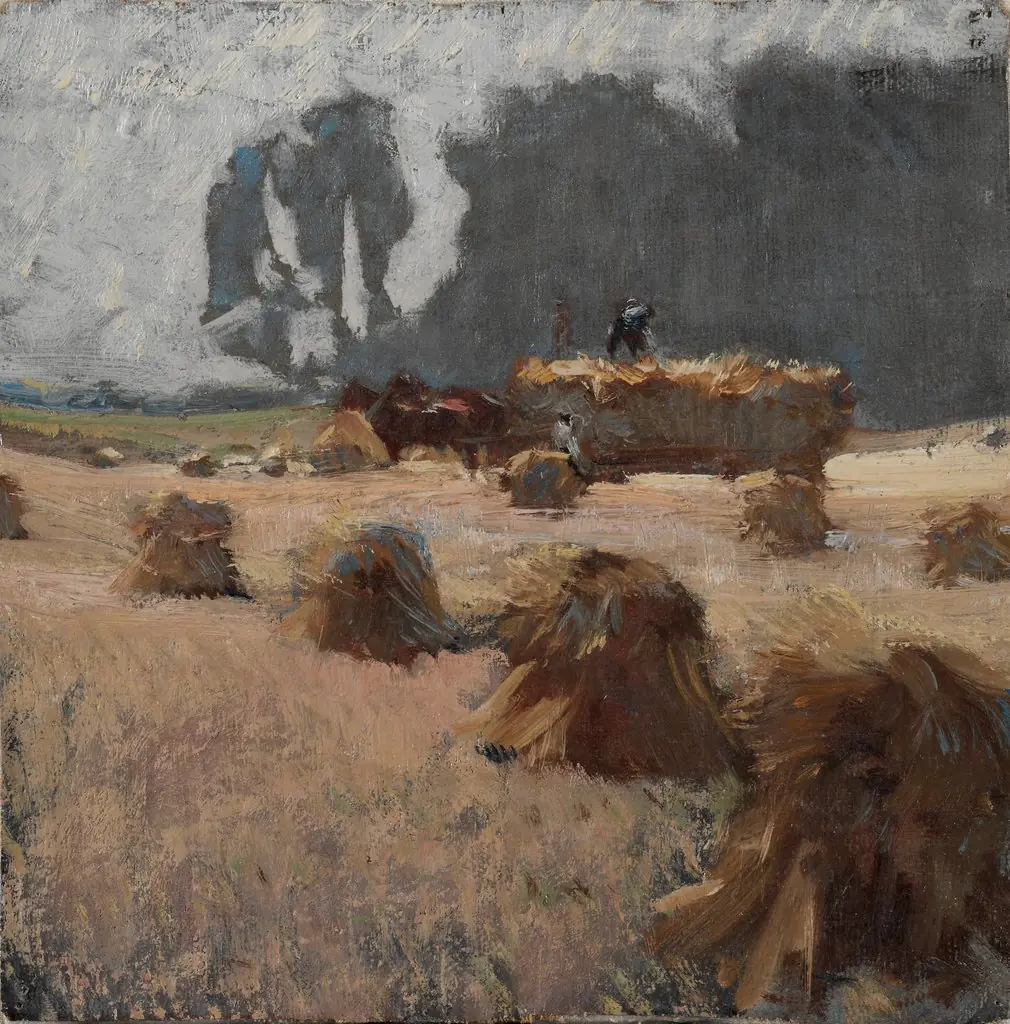
Mark med korntraver is a photography by Unknown. It dates from 1850 and is held in the collection of the Statens Museum for Kunst. Created around 1850 by 2143_person, this oil painting depicts a rural landscape devoid of human or animal presence.
About this work
Overview
Created around 1850 by 2143_person, this oil painting depicts a rural landscape devoid of human or animal presence. It is part of the collection at the Museum of Ethnography, where it is preserved as an example of 19th-century Nordic rural imagery. The composition emphasizes stillness and quietude, capturing a moment in the agricultural cycle without narrative intervention.
Subject & Meaning
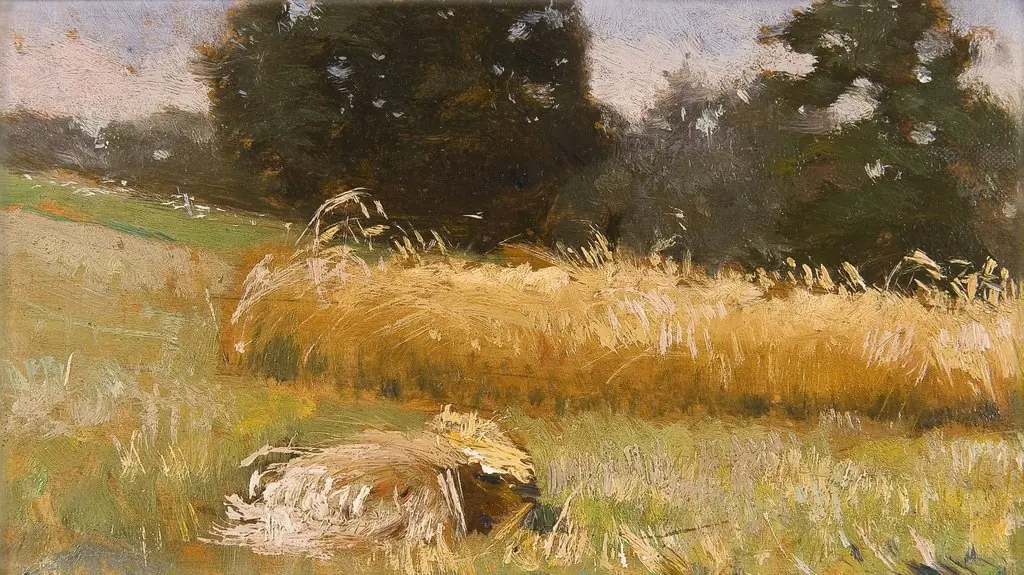
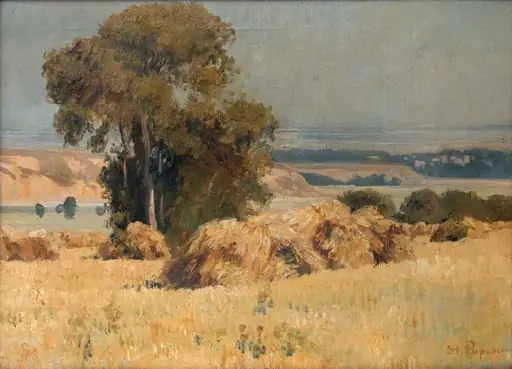
The scene centers on a harvested field with tall, clustered haystacks, indicating the conclusion of the grain season. Sparse trees and a pale sky frame the space, reinforcing a sense of seasonal transition. The absence of figures suggests a contemplative view of labor’s aftermath, where the land itself becomes the subject — a quiet testament to agrarian rhythms rather than human activity.
Technique & Style
This approach prioritizes mood over precision, aligning with emerging naturalist tendencies in Scandinavian art of the period.
Loose, fluid brushwork renders the dry grass and haystacks with a sense of texture and warmth. The palette is muted, dominated by earth tones and soft sky hues, avoiding sharp contrasts. The painter avoids detailed rendering, instead using broad strokes to evoke atmosphere. This approach prioritizes mood over precision, aligning with emerging naturalist tendencies in Scandinavian art of the period.
History & Provenance
The work entered the Museum of Ethnography’s collection in the late 19th or early 20th century, likely as part of a broader effort to document rural life in the Nordic region. Its origin as a personal or regional study is unclear, but its preservation suggests it was valued for its representation of everyday landscape rather than its artistic innovation.
Context
In mid-19th century Scandinavia, artists increasingly turned to rural scenes as national identity took shape amid industrialization. This painting reflects a broader trend of documenting the countryside not as idealized pastoral, but as lived, unembellished space. It shares affinities with contemporaneous works that sought to record the rhythms of agricultural life with quiet sincerity.
Legacy
Though not widely exhibited beyond its institutional home, the painting contributes to a regional visual archive of agrarian landscapes. Its restrained aesthetic influenced later Nordic artists who favored understated realism over romanticized depictions of the land. It remains a quiet reference point in studies of 19th-century rural representation in the Nordic context.
Artist & collection

 Domestic Scene
 Giacomo and Cardinal Marco, investing Andrea, Abbot of San Zeno, with his Benefice
 The Nymph of Fontainebleau
 Portrait of a Woman
 Madonna and Child with Saints in the Enclosed Garden
 Venus and Minerva
 Family Group of Four on Sofa
 Wall painting from Room H of the Villa of P. Fannius Synistor at Boscoreale