Artwork
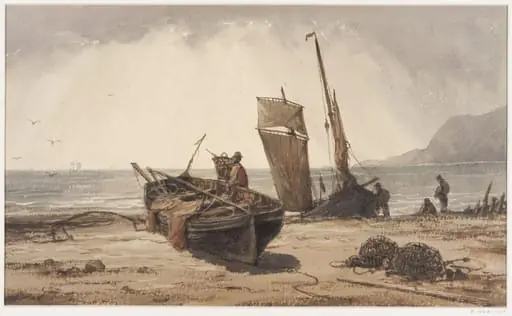
Fishing boat on the shore at Hastings
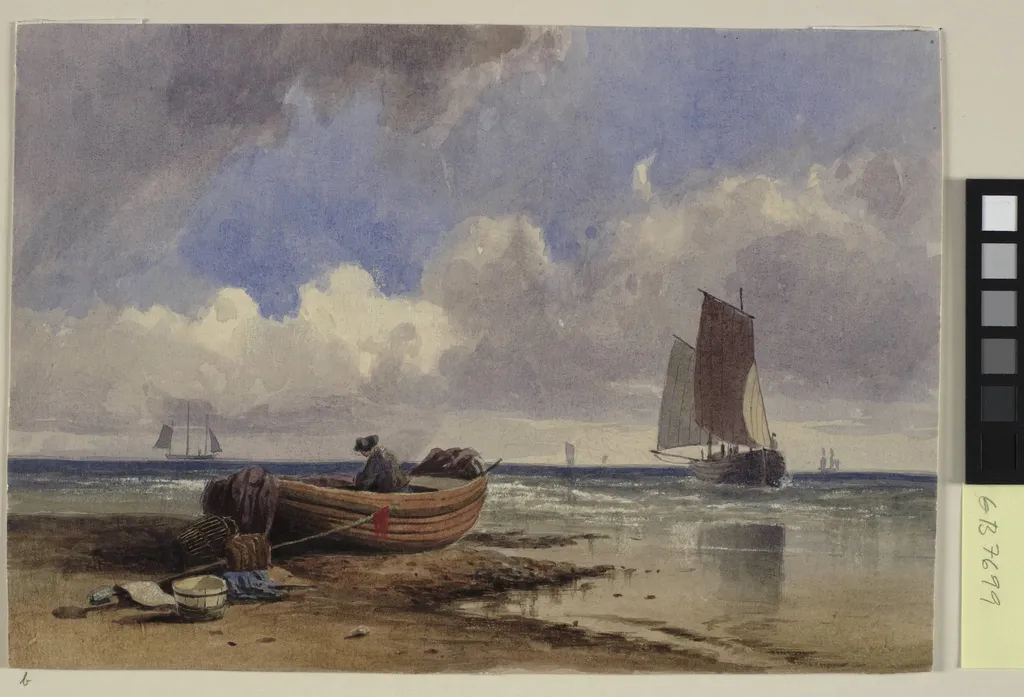
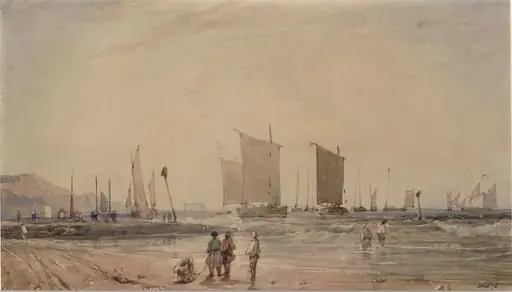
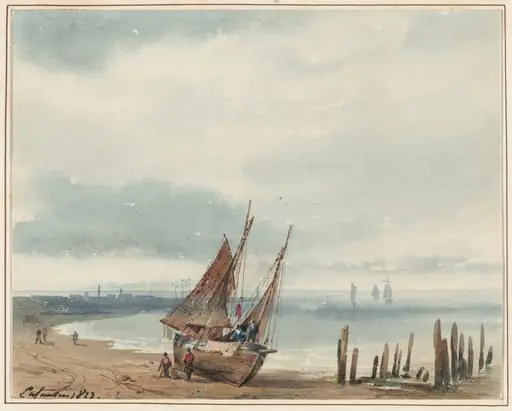
Fishing boat on the shore at Hastings is an unspecified painting by Unknown. It dates from 1850 and is held in the collection of the Statens Museum for Kunst. Created around 1850, this painting depicts a solitary fishing vessel beached on the shore near Hastings.
About this work
Overview
Created around 1850, this painting depicts a solitary fishing vessel beached on the shore near Hastings. Rendered in oil or watercolor, the work captures a moment of stillness between labor and rest. It is part of the collection at the Museum of Ethnography, where it is preserved as an example of 19th-century coastal life in southeastern England.
Subject & Meaning
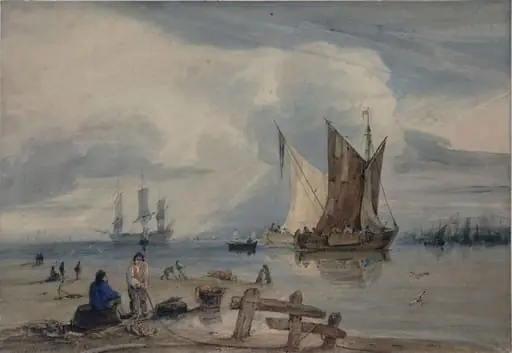
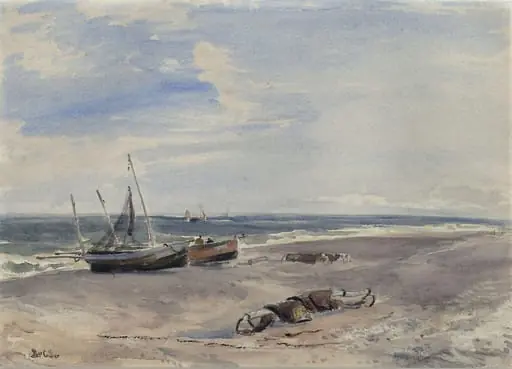
The scene centers on a single boat, its gear scattered nearby, suggesting a pause in the daily rhythm of fishing. A solitary figure sits within, neither active nor idle, reinforcing a sense of quiet endurance. The empty stretch of wet sand and distant sails imply a broader community of fishermen, while the looming clouds hint at the unpredictability of the sea.
Technique & Style
The artist employs soft, blended brushwork to render the sky and water, emphasizing atmospheric conditions over sharp detail. Light is carefully modulated to reflect off damp sand and ripple across the ocean’s surface, creating a muted, luminous effect. The composition avoids dramatic action, favoring subdued tones and a low horizon to enhance the sense of calm and immersion.
History & Provenance
The painting entered the Museum of Ethnography’s collection in the late 19th or early 20th century, likely acquired as part of a broader effort to document regional livelihoods. Its attribution to the artist 23077_person remains tentative, with no definitive records of its creation or early ownership. It has been consistently cataloged as a study of coastal labor rather than a commissioned piece.
Context
In mid-19th century England, coastal communities like Hastings relied heavily on small-scale fishing. Artworks of this period often recorded daily life with minimal idealization. This painting aligns with a growing interest in vernacular scenes, reflecting both documentary intent and the influence of emerging realist sensibilities in British art.
Legacy
Though not widely exhibited or reproduced, the work contributes to a modest but persistent body of regional coastal imagery. Its preservation in an ethnographic context underscores its value as a record of material culture and maritime routine, offering insight into the quiet rhythms of seaside life rather than grand historical narratives.
Artist & collection

 Domestic Scene
 Giacomo and Cardinal Marco, investing Andrea, Abbot of San Zeno, with his Benefice
 The Nymph of Fontainebleau
 Portrait of a Woman
 Madonna and Child with Saints in the Enclosed Garden
 Venus and Minerva
 Family Group of Four on Sofa
 Wall painting from Room H of the Villa of P. Fannius Synistor at Boscoreale