Artwork
Birgitte Søbøtker Hohlenberg, née Malling
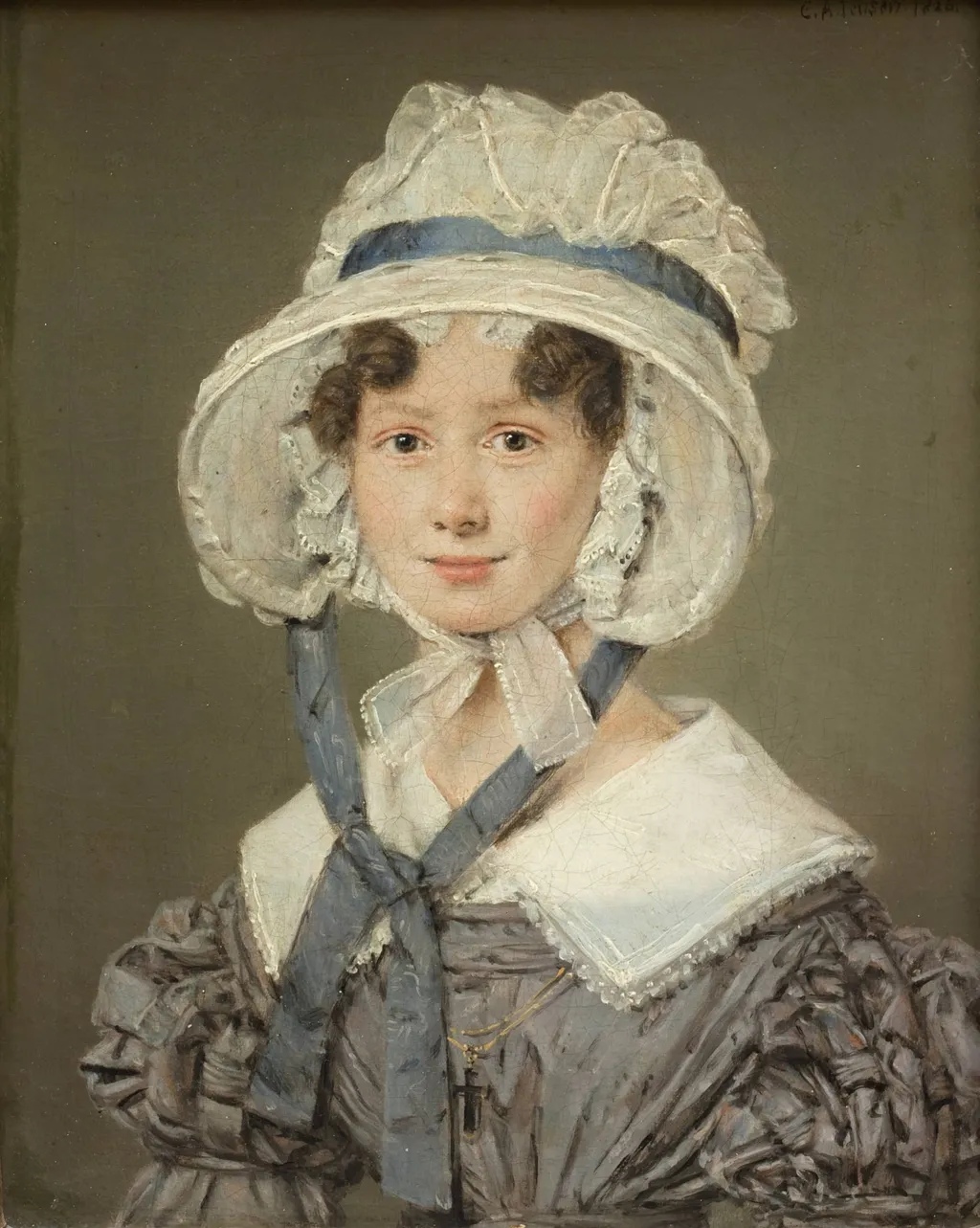
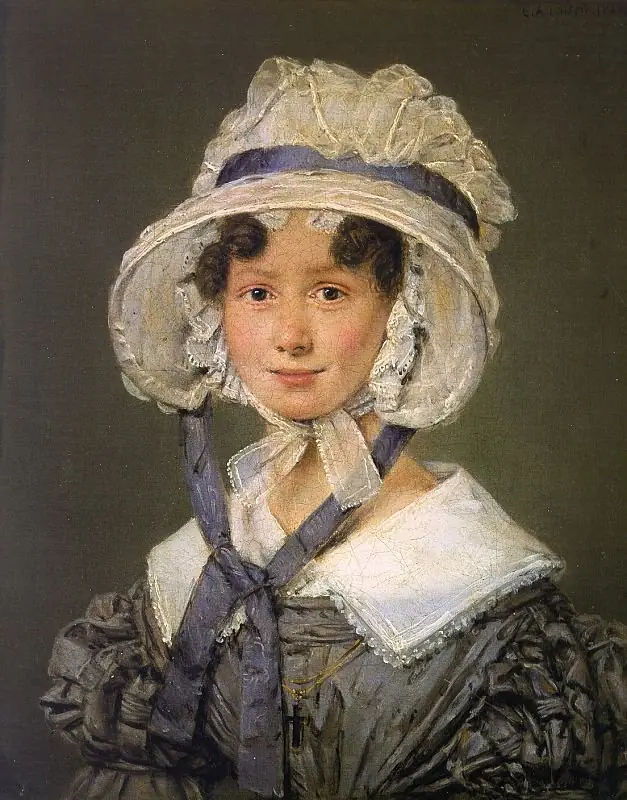
Birgitte Søbøtker Hohlenberg, née Malling is a photography by the Romanticist artist Unknown. It dates from 1826 and is held in the collection of the Statens Museum for Kunst. This 1826 portrait depicts Birgitte Søbøtker Hohlenberg, born Malling, rendered in oil on canvas.
About this work
Overview
The artist’s focus on subtle textures and restrained color creates a sense of dignified intimacy, typical of early 19th-century Danish portraiture.
This 1826 portrait depicts Birgitte Søbøtker Hohlenberg, born Malling, rendered in oil on canvas. The work is part of the Museum of Ethnography’s collection. It presents the sitter in a composed, frontal pose against a muted gray background, emphasizing her quiet presence. The artist’s focus on subtle textures and restrained color creates a sense of dignified intimacy, typical of early 19th-century Danish portraiture.
Subject & Meaning
Birgitte Søbøtker Hohlenberg, a woman of Danish aristocratic background, is portrayed without ornamentation or symbolic props. Her direct gaze and neutral expression convey composure rather than emotion. The simplicity of her attire—white bonnet, blue dress, and delicate ribbons—suggests refined taste and social standing, reflecting the values of modest elegance favored among her class during the post-Napoleonic era.
Technique & Style
The painting employs a realistic approach with careful attention to fabric folds, lace details, and the soft transition of light across skin and silk. The palette is limited to muted blues, whites, and grays, enhancing the portrait’s calm tone. Brushwork is precise but not overly polished, allowing the texture of materials to emerge naturally. The solid gray background isolates the figure, directing focus entirely to her form and attire.
History & Provenance
Commissioned in 1826, the portrait remained within the Hohlenberg family until its acquisition by the Museum of Ethnography. Its inclusion in the museum’s collection reflects a broader 19th-century interest in documenting individual identities within cultural contexts. Though not widely exhibited, it has been consistently cataloged as an example of Danish domestic portraiture from the period.
Context
Created during a time when Denmark was redefining its national identity after the loss of Norway and economic upheaval, portraits like this one served as quiet assertions of personal and social continuity. The sitter’s attire aligns with contemporary fashion trends among the urban elite, while the restrained composition echoes the influence of Neoclassical ideals, favoring clarity and restraint over theatricality.
Legacy
The portrait endures as a representative example of private portraiture in early 19th-century Denmark. It contributes to scholarly understanding of how women of the upper class presented themselves visually during a period of social transition. Though the artist’s name is not widely recognized today, the work remains a valuable record of personal and aesthetic norms of its time.
Artist & collection

 Domestic Scene
 Giacomo and Cardinal Marco, investing Andrea, Abbot of San Zeno, with his Benefice
 The Nymph of Fontainebleau
 Portrait of a Woman
 Madonna and Child with Saints in the Enclosed Garden
 Venus and Minerva
 Family Group of Four on Sofa
 Wall painting from Room H of the Villa of P. Fannius Synistor at Boscoreale
 Cathrine von Halle, née Nathanson
 Cathrine von Halle, née Nathanson
 Portrait of Mrs McCarthy, Grandmother of J.H. McCarthy
 Portrait of Tekla Osławska
 Portrait of a lady in a cap
 Portrait of Maria Adriana van der Sluys, Wife of Hermanus Martinus Eekhout
 Portrait of a Lady in Blue Dress
 Ann Phoebe Downman, aged 15
 Profile Portrait of a Young Lady
 Madame Nicolas Louis Faret
 Head of a Girl Wearing a White Hat
 Birgitte Søbøtker Hohlenberg, f. Malling, Johannes Søbøtker Hohlenbergs hustru