Artwork
Two Girls in a Field. A Summer’s Day
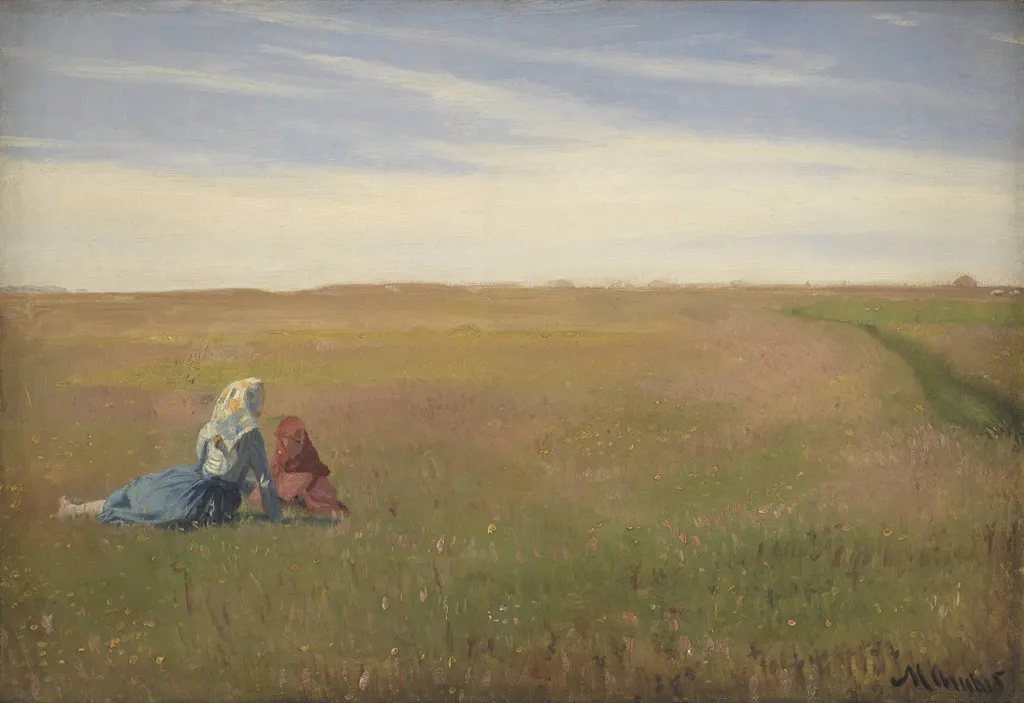
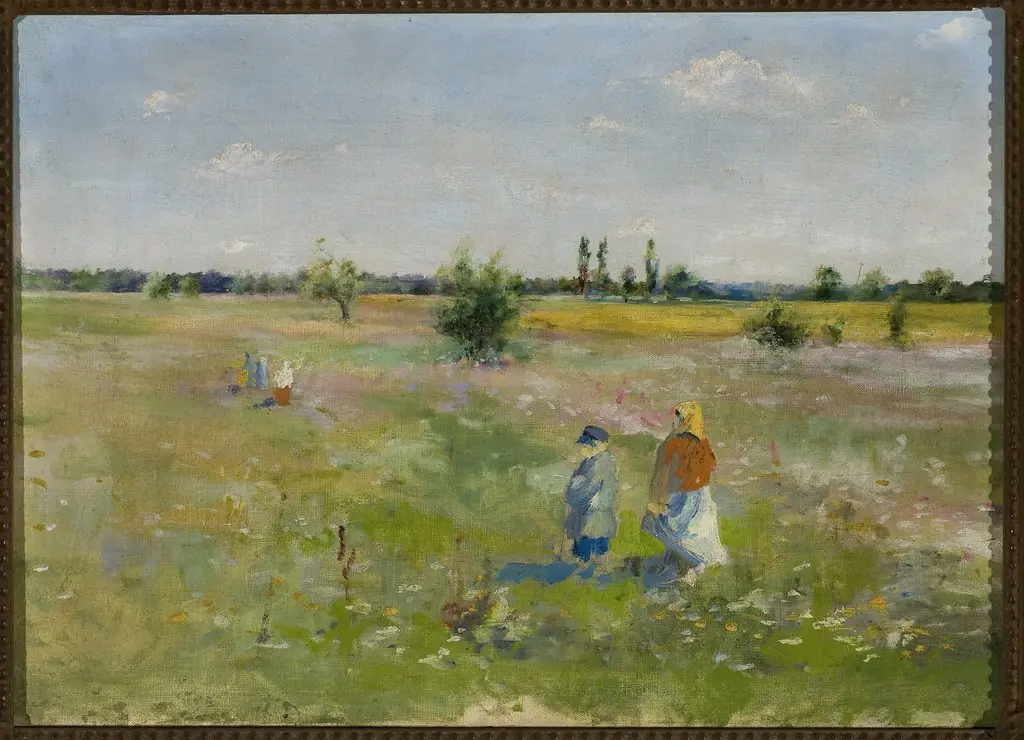
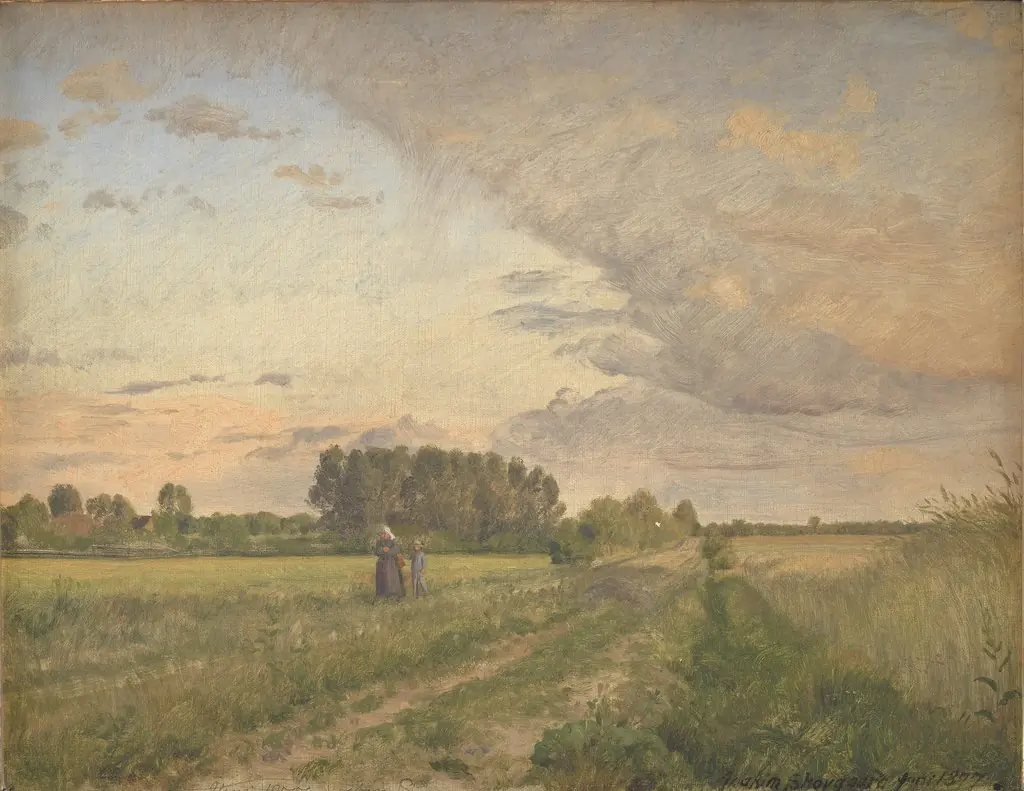
Two Girls in a Field. A Summer’s Day is a photography by Unknown. It dates from 1850 and is held in the collection of the Statens Museum for Kunst. Painted around 1850, this work depicts two girls seated in a rural field, their backs turned to the viewer.
About this work
Overview
Painted around 1850, this work depicts two girls seated in a rural field, their backs turned to the viewer. Executed in oil or tempera, the piece captures a quiet moment of stillness amid nature. It is part of the collection at the Museum of Ethnography, where it is considered an example of 19th-century observational painting focused on everyday life in a specific regional context.
Subject & Meaning
The two girls, dressed in modest, locally typical attire, appear absorbed in their own thoughts or conversation. Their posture and the absence of direct engagement with the viewer suggest introspection and solitude. The scene avoids narrative drama, instead emphasizing quiet companionship and the rhythm of rural daily life, reflecting a gentle reverence for unremarkable moments.
Technique & Style
Delicate touches of yellow flowers punctuate the composition without drawing attention, reinforcing the painting’s subdued, contemplative tone.
The artist employs soft, blended brushwork and a restrained palette of earth tones and pale hues to evoke a hazy summer atmosphere. The grasses are rendered with subtle gradations of green and brown, while the sky is lightly washed with pale blue and white. Delicate touches of yellow flowers punctuate the composition without drawing attention, reinforcing the painting’s subdued, contemplative tone.
History & Provenance
The painting entered the Museum of Ethnography’s collection in the late 19th century, likely acquired during a period of increased interest in documenting regional customs. Its attribution to the artist remains unverified in public records, and little is documented about its creation or early ownership. It has been consistently displayed as an anonymous example of vernacular genre painting.
Context
Created during a time when rural life was rapidly changing due to industrialization, the painting reflects a growing cultural interest in preserving images of traditional customs and dress. Similar works from the period often focused on children or women in domestic or agricultural settings, serving as quiet records of a world perceived as vanishing.
Legacy
Though not widely known outside institutional circles, the painting contributes to a broader archive of 19th-century ethnographic art that valued observation over idealization. It remains a quiet reference point for scholars studying how everyday life was visually recorded before the advent of photography, offering insight into regional aesthetics and social norms.
Artist & collection

 Domestic Scene
 Giacomo and Cardinal Marco, investing Andrea, Abbot of San Zeno, with his Benefice
 The Nymph of Fontainebleau
 Portrait of a Woman
 Madonna and Child with Saints in the Enclosed Garden
 Venus and Minerva
 Family Group of Four on Sofa
 Wall painting from Room H of the Villa of P. Fannius Synistor at Boscoreale