Artwork
The Raffenberg Family
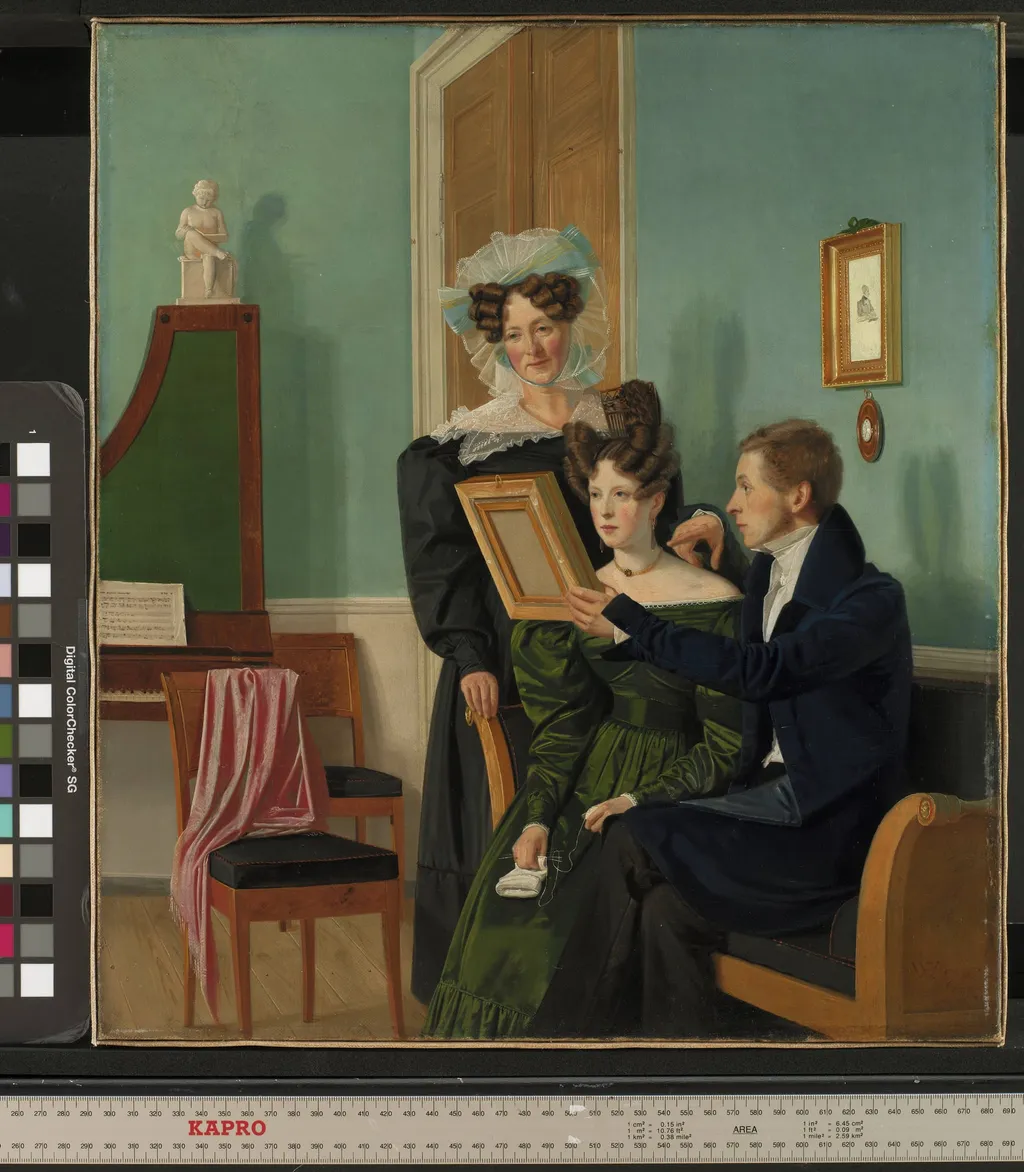
The Raffenberg Family is a photography by the Romanticist artist Unknown. It dates from 1830 and is held in the collection of the Statens Museum for Kunst.
About this work
Overview
Unlike grand historical or aristocratic portraits, it captures an unassuming household moment, emphasizing quiet intimacy over formal display.
Painted in 1830, The Raffenberg Family is a domestic portrait by 254_person, depicting three family members in a modest interior. The work is held in the collection of the Museum of Ethnography. Unlike grand historical or aristocratic portraits, it captures an unassuming household moment, emphasizing quiet intimacy over formal display. The composition is restrained, with attention to clothing, spatial arrangement, and ambient light.
Subject & Meaning
The painting presents a nuclear family—two women and a man—seated in a shared domestic space. Their postures suggest quiet companionship rather than posed formality. The woman on the left, in black with lace and a blue bonnet, may be the matriarch; the central figure in green, possibly a daughter or wife; the man in blue coat and white shirt, the patriarch. The absence of overt symbols or narrative clues invites interpretation grounded in everyday life, reflecting middle-class values of the era.
Technique & Style
The artist employs muted tones and soft, diffused lighting to cultivate a tranquil mood. Brushwork is precise but not ornate, favoring clarity over flourish. The light blue walls and wooden floor ground the scene in realism, while the piano and chair in the background suggest cultural refinement without ostentation. Color harmonies are subdued, avoiding contrast in favor of tonal unity, reinforcing the painting’s sense of stillness and domestic order.
History & Provenance
The painting entered the Museum of Ethnography’s collection in the late 19th century, likely through private donation or acquisition. Its provenance prior to that remains undocumented. Unlike many works of the period, it was never exhibited widely or reproduced in print, contributing to its relative obscurity. Its preservation suggests it was valued within the family or local community before institutional acquisition.
Context
Created during the early 19th century, the work aligns with a growing interest in domestic life among middle-class artists in Central Europe. While academic traditions favored mythological or historical subjects, smaller-scale family portraits like this one emerged as expressions of personal identity and social standing. The absence of grandeur reflects a shift toward realism and the quiet dignity of ordinary life.
Legacy
The Raffenberg Family remains a quiet example of non-elite portraiture from the period. It contributes to broader scholarly interest in how ordinary families were represented visually during a time of social change. Though not widely known, its preservation in an ethnographic museum underscores its value as a cultural artifact of daily life, offering insight into domestic aesthetics and familial relationships of the era.
Artist & collection

 Domestic Scene
 Giacomo and Cardinal Marco, investing Andrea, Abbot of San Zeno, with his Benefice
 The Nymph of Fontainebleau
 Portrait of a Woman
 Madonna and Child with Saints in the Enclosed Garden
 Venus and Minerva
 Family Group of Four on Sofa
 Wall painting from Room H of the Villa of P. Fannius Synistor at Boscoreale
 The Artist's Family Making Music Together
 Portrait of a lady seated in an armchair
 The Plaster Cast Collection in the Royal Academy of Fine Arts
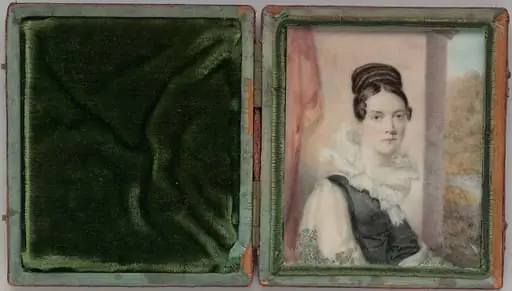 Portrait of a Lady
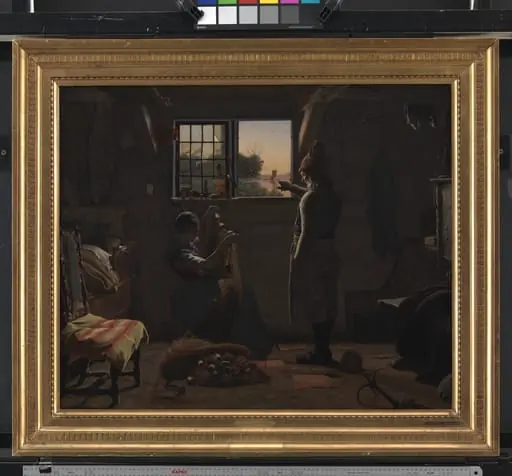 En fisker viser sin datter en bortsejlende båd
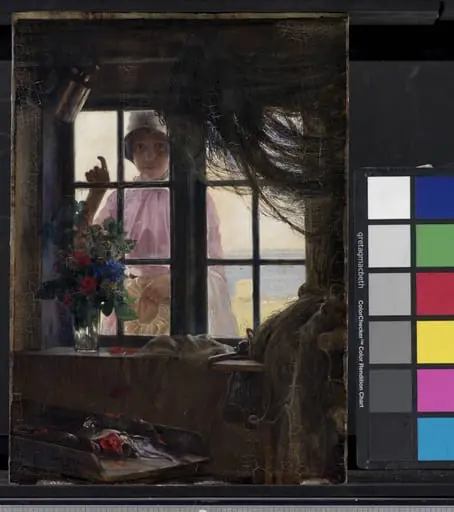 After the Bath. A Young Girl Knocking at the Fisherman's Window
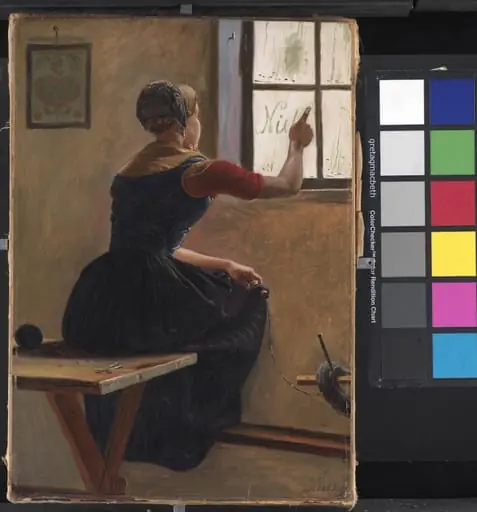 A Young Girl in Jutland Writing her Beloved's Name on a Misty Window
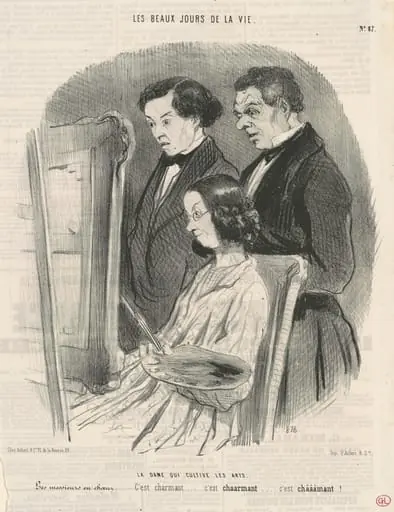 La dame qui cultive les arts
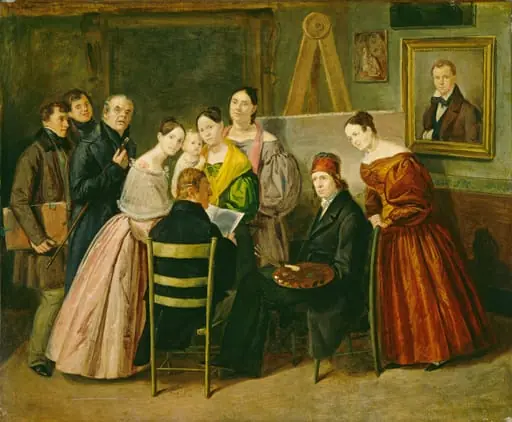 A Painter and Visitors in a Studio